
The Financial Reality of the Post-Graduation Income Gap
Graduating from a US university represents a monumental academic achievement, but it also marks the beginning of a precarious financial phase that most undergraduate students dramatically underestimate. According to recent data analyzed from the Federal Reserve’s Survey of Consumer Finances and the Bureau of Labor Statistics (BLS), the window between walking across the commencement stage and receiving a first direct deposit often stretches into a nerve-wracking 3-to-6 month period. This gap is not a fringe anomaly; it is a systemic reality affecting tens of thousands of degree holders annually, and its severity fluctuates wildly depending on the discipline chosen.

For the Class of recent graduates, the unemployment rate for individuals holding a bachelor’s degree hovers around 4.0%, but the underemployment rate—the percentage of graduates working in roles that do not require their level of education—paints a far grimmer picture, sitting closer to 41% nationally. The median time to secure an offer letter can stretch up to 150 days for humanities graduates, while their counterparts in science, technology, engineering, and mathematics (ABET-accredited programs) frequently receive offers before graduation, effectively neutralizing the income gap entirely.
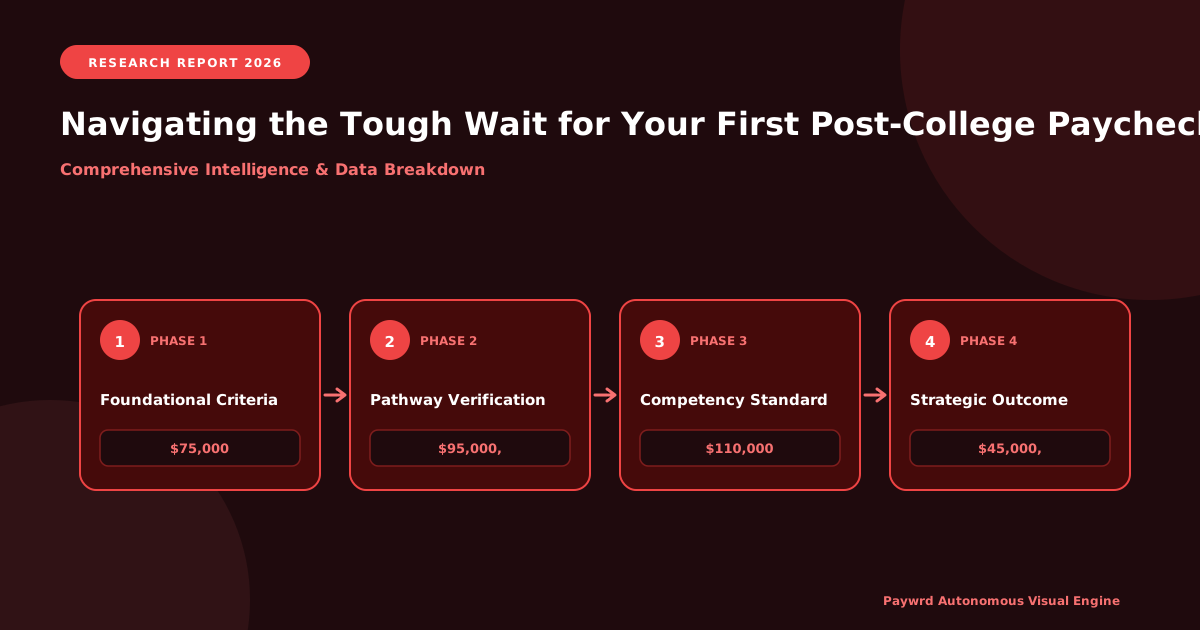
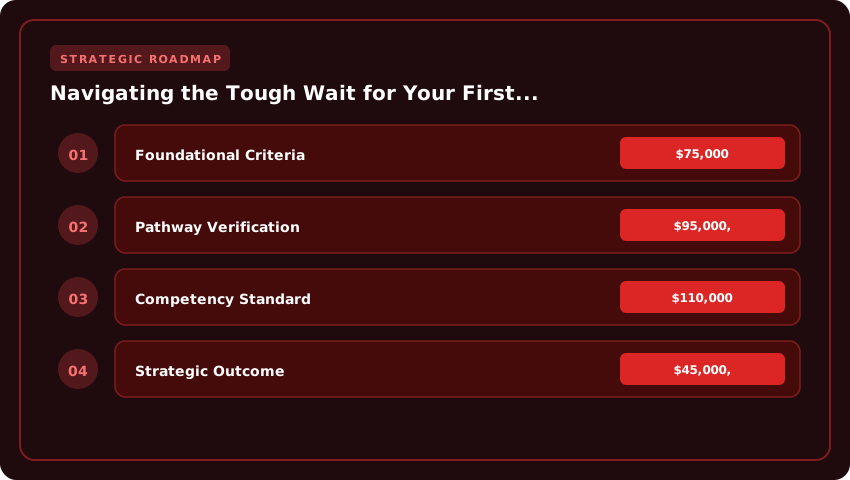
- STEM Starting Salaries: Graduates from AACSB-accredited business programs and ABET-accredited engineering schools report median starting salaries between $75,000 and $95,000, with computer science majors at tier-one research universities frequently clearing the $110,000 threshold.
- Humanities Contrast: Conversely, graduates from humanities and liberal arts programs report median starting salaries closer to $45,000, with offer letter wait times extending well past the standard 90-day post-graduation window.
- The Financial Buffer Necessity: This stark variance underscores why financial planners strongly recommend that graduating seniors maintain an emergency fund equivalent to at least three to four months of anticipated living expenses, especially when relying on FAFSA-derived aid that terminates upon degree conferral.
The variance in offer letter wait times also creates a compounding interest effect on student loan debt. Federal student loan borrowers enter repayment six months after graduation, yet the first paycheck rarely arrives on the same timeline. For a humanities graduate carrying $30,000 in unsubsidized federal loans at a 6.5% interest rate, this gap can mean accruing over $1,000 in additional interest before a single dollar of salary is earned. STEM graduates, who typically secure employment through campus recruiting pipelines managed by their institution’s career center, sidestep this compounding entirely by negotiating start dates that align with their post-graduation relocation schedules.
Ultimately, understanding this income gap requires looking beyond the glossy commencement brochure. It demands an honest evaluation of labor market data, the practical realities of loan amortization, and the strategic timing of when the first W-2 form will actually arrive in the mailbox.
Why Bootcamp ‘Time-to-Offer’ Promises Often Miss the Mark
When you are staring down the barrel of post-graduation expenses, the aggressive marketing from coding and AI bootcamps can look incredibly appealing. You have likely seen the promises: “Land a software development role in six months or your money back!” These time-to-offer guarantees are designed to capitalize on the anxiety of the post-graduation income gap. However, as an informed graduate, you must analyze these claims critically. The reality is that bootcamp placement pipelines often miss the mark because they lack the rigorous, verifiable infrastructure found in traditional US universities.
Consider the difference between a bootcamp’s self-reported metrics and the data published by programs holding ABET (engineering and computing) or AACSB (business) accreditations. Accredited universities are held to strict regulatory standards regarding how they track and report graduate outcomes. They maintain dedicated career centers with long-standing corporate partnerships that actively recruit on campus. Bootcamps, conversely, frequently rely on narrow definitions of “employment” to inflate their statistics, sometimes counting freelance gigs or unpaid internships as successful placements. When a bootcamp promises a rapid time-to-offer, they are often projecting best-case scenarios that do not reflect the broader economic climate or the actual hiring needs of enterprise companies.
Furthermore, geography plays a massive role in your job search timeline. Bootcamps often focus heavily on coastal tech hubs like San Francisco and New York City, where competition for entry-level roles is fierce and the cost of living is astronomical. In contrast, graduates of ABET and AACSB accredited programs often find faster, more sustainable employment in regional tech hubs such as Austin, Denver, and Raleigh. These emerging markets offer robust opportunities for computer science and business analytics graduates, often with a lower barrier to entry for junior talent. If you limit your search to the coastal markets based on a bootcamp’s localized promises, you may inadvertently extend your time-to-offer by several months.
The hidden costs of a prolonged job search can be devastating, particularly when FAFSA loan grace periods expire. Every month you spend waiting for that first paycheck accrues additional financial burden. You must account for:
- Accruing Interest: While federal student loans offer a six-month grace period, interest may begin capitalizing, increasing your overall debt burden.
- Cost of Living: Rent, utilities, and groceries in major metropolitan areas can easily drain $3,000 to $4,000 per month from your savings.
- Opportunity Cost: Every month spent in an unpaid or underemployed state represents lost wages and delayed retirement contributions.
- Relocation Expenses: If you are forced to pivot to a regional tech hub after failing to secure a coastal role, you will incur sudden moving costs.
Ultimately, while bootcamps can provide valuable technical upskilling, their time-to-offer promises should be viewed with healthy skepticism. By leveraging the accredited career resources at your university and remaining open to regional opportunities, you can navigate the post-graduation waiting period with realistic expectations and a solid financial strategy.
Calculating Your Runway: A Data-Driven Budget Strategy
Understanding your personal financial runway—the exact number of weeks or months you can survive without income—requires moving beyond guesswork and adopting a rigorous, data-driven framework. For graduating seniors, this calculation must account for three distinct financial pressures: your regional cost of living, the precise timing of your student loan grace period expiration, and the structural realities of your employment contract, including any signing bonus clauses or delayed start dates. A runway calculation is essentially a personal burn-rate analysis, similar to the cash-flow models used by venture capitalists evaluating a startup’s viability. By treating your post-graduation transition as a financial project with a defined beginning, a fixed end date, and measurable outflows, you can replace panic with a clear, actionable survival plan that holds up under real-world conditions.
Begin by anchoring your budget to verified US cost-of-living indices rather than national averages, because a $1,200 monthly rent in Cleveland, Ohio, carries vastly different weight than the same amount in San Francisco. Reliable sources include the Council for Community and Economic Research’s Cost of Living Index, the Bureau of Economic Analysis Regional Price Parities, and MIT’s Living Wage Calculator. If you are relocating for a job, plug the destination city into these tools before signing a lease, because underwriting your lifestyle on a national median figure when your actual expenses will track a metropolitan index is one of the fastest ways to exhaust your runway.
Next, map your student loan grace periods with precision. Federal Direct Loans provide a six-month grace period that begins the day you drop below half-time enrollment, but this window can be shorter if you attended a shorter academic term or longer if you consolidated. Private lenders—entities such as Sallie Mae, College Ave, or Discover—set their own timelines, which can range from zero to twelve months depending on the promissory note. Pull the master promissory note for every loan in your servicer portfolio, log the exact expiration date in a spreadsheet, and set a calendar reminder thirty days before each milestone. Knowing that your first interest capitalization event occurs on, for example, November 15th, transforms an abstract obligation into a concrete countdown that informs every spending decision you make between now and then.
Once you have mapped your fixed obligations, build a layered budget that distinguishes between essential outflows—rent, groceries, transit, minimum debt payments—and discretionary spending. Many financial advisors, including those at the National Endowment for Financial Education, recommend the zero-based budgeting method, where every dollar is assigned a job before the month begins. For runway analysis, the critical figure is your weekly burn rate: divide your projected monthly essential expenses by 4.33 to get a per-week cost. Multiply this by the number of weeks until your first paycheck clears to determine your true cash requirement, then add a 15 percent buffer for unexpected expenses such as car repairs, medical copays, or interview travel.
Federal deferment and forbearance options provide a critical safety net if your runway calculation reveals a shortfall. If you are experiencing economic hardship or unemployment, you can apply for an economic hardship deferment on your federal loans for up to three years, during which interest does not accrue on subsidized Direct Loans. Alternatively, an administrative forbearance can pause payments for up to twelve months for graduates waiting for income to stabilize. Private lenders are not obligated to match these terms, but many offer temporary hardship programs if you proactively call and document your situation. Submitting deferment paperwork before your grace period expires—rather than after a missed payment damages your credit score—is a hallmark of strategic financial management.
Finally, use your employment offer letter as a negotiation lever to extend your runway. If your start date is delayed due to background checks, visa processing, or company onboarding cycles, request a signing bonus—typically ranging from $2,000 to $10,000 for entry-level corporate roles—with a clause that it be paid on your original offer date rather than your first day of work. This reframes a delay as a financial bridge, effectively converting employer logistics into personal liquidity. You can also negotiate relocation reimbursement timing, requesting that grossed-up funds arrive within fourteen days of your signed acceptance rather than thirty days after your start date. Every clause you tighten in the offer letter is a week of runway added to your personal financial model.
- Anchor every expense projection to a verified regional cost-of-living index, not national medians.
- Log the exact expiration date of every federal and private loan grace period in a shared calendar.
- Calculate your weekly burn rate by dividing monthly essentials by 4.33, then add a 15 percent contingency buffer.
- Apply for federal economic hardship deferment proactively, before a missed payment harms your credit profile.
- Negotiate signing bonus payment dates to coincide with your original offer date, not your delayed start date.
Maximizing University Career Services and Alumni Networks
Securing your first post-college paycheck in the United States is rarely a matter of waiting passively for an offer to arrive in your inbox. The most successful graduates understand that their university’s career services office and alumni network are not optional amenities—they are active, high-leverage systems designed to compress the hiring timeline. By engaging these resources with intention and strategy, you can transform what is often a four-to-nine-month job search into a much shorter, more predictable process. The key is recognizing that American employers, especially Fortune 500 corporations, federal contractors, and mid-market firms, actively budget for entry-level talent acquisition tied to specific fiscal year cycles, and your university already has the infrastructure to help you tap into those budgets.
Start by maximizing the digital platforms your institution already provides. The vast majority of US universities now subscribe to Handshake, the dominant career management platform used by over 1,400 colleges and employers including Amazon, Deloitte, Goldman Sachs, and the United States federal government. Treat your Handshake profile as a living, optimized document rather than a placeholder. Upload a polished resume tailored to your target industry, enable the “open to opportunities” setting, and set up alerts for specific keywords tied to your field. Many students overlook the fact that employers often post exclusively to Handshake weeks before circulating roles on LinkedIn, giving you a critical first-mover advantage.
Beyond Handshake, leverage the region-specific career fairs and consortium hiring events that align with major athletic and academic conferences. If you attend a Big Ten school such as the University of Michigan, Penn State, or Ohio State, your career fair circuit will include massive engineering, finance, and consulting showcases held in October and February, timed to align with corporate Q1 and Q3 hiring budgets. Similarly, ACCA member institutions host regional fairs across the Southeast that connect graduates with banking, healthcare, and energy employers. ACCA and Big Ten fairs routinely draw more than 200 recruiters per event, and face-to-face interactions at these fairs can shorten the typical application-to-interview cycle from eight weeks down to ten days.
For students at Ivy League institutions and elite state flagships such as the University of California Berkeley, the University of Virginia, or the University of Texas at Austin, alumni directories represent a particularly underutilized goldmine. Platforms like LinkedIn Alumni Tool, the Harvard Alumni Association directory, or the Penn State Alumni Association database allow you to filter graduates by industry, company, and even graduation year. Rather than sending generic connection requests, draft highly specific messages referencing shared institutional identity, a recent company milestone, or a specific role you are pursuing. Alumni are statistically more likely to respond to candidates from their alma mater, and a warm referral from a verified alumnus can elevate your resume to the top of the applicant tracking system within hours.
Timing is everything, and aligning your outreach with corporate fiscal year hiring budgets is a strategy that most undergraduates never learn in their career counseling appointments. The US federal government operates on a fiscal year running October 1 through September 30, while most Fortune 500 companies follow a January-through-December or July-through-June fiscal calendar. This means that entry-level requisitions are often approved in September and October for the new fiscal year, and the bulk of campus recruiting funnels begin in early fall. Submit your applications between Labor Day and Thanksgiving to catch the largest wave of approved headcount. If you miss this window, a secondary hiring push typically occurs in January and February, when unused Q1 budgets are released and hiring managers rush to fill open requisitions before the fiscal mid-year.
Finally, schedule a one-on-one appointment with your university’s career advisor at least three months before graduation, not three weeks. Advisors at ABET-accredited engineering programs, AACSB-accredited business schools, and major liberal arts colleges maintain curated employer contact lists that never appear on Handshake or public job boards. These include alumni-owned startups, family-founded businesses, and private equity portfolio companies that prefer to hire exclusively through campus channels. By embedding yourself in the career services ecosystem early, attending every major fair, and treating alumni outreach as a disciplined pipeline rather than a desperate last step, you position yourself to receive interview invitations while your peers are still updating their resumes.
Immediate Income Opportunities While Job Hunting in the US
Facing the post-graduation income gap requires more than simply sending out résumés and refreshing your email inbox. While you wait for the right full-time role to materialize, the US gig economy, education sector, and corporate world offer surprisingly robust opportunities specifically suited for recent graduates with a bachelor’s or master’s degree. These interim positions are not just stopgaps; they are strategic launchpads that can help you service student loans, maintain a healthy credit score, and build the professional network necessary to land your dream job.
Understanding which platforms, districts, and corporations pay premium rates for educated labor is the first step toward transforming idle waiting into active earning. The following subsections break down the highest-yield opportunities available to degree holders navigating the American job market today.
- Freelance Consulting on Upwork and Toptal: Platforms like Upwork and Toptal have fundamentally reshaped how US companies engage independent talent. Graduates with specialized knowledge in data analysis, digital marketing, software engineering, or business strategy can command freelance consulting rates ranging from $50 to $150 per hour, depending on their niche and portfolio. Toptal, in particular, accepts roughly the top 3% of applicants and connects freelancers with Fortune 500 clients. To stand out, build a compelling profile that highlights your academic credentials, capstone projects, and any internship experience. According to Upwork’s 2025 Freelance Forward report, US freelancers earn a median hourly rate of $28, but specialized consultants in fields like financial modeling or UX research frequently bill well above $90 per hour. The key is positioning your degree as a mark of analytical rigor and problem-solving capability.
- Teaching Assistantships in the US Public School System: If you are exploring a long-term career in education or simply want stable, meaningful work, becoming a teaching assistant within the US public school system offers reliable income and valuable classroom experience. Most states require candidates to hold a bachelor’s degree, pass a basic skills assessment, and complete a background check. Pay scales vary by district, but the national average hourly wage for teacher assistants hovers around $18 to $22 per hour, with annual salaries in larger metropolitan districts like New York City, Los Angeles, or Chicago reaching $35,000 to $45,000. Many districts, such as Houston Independent School District and Chicago Public Schools, actively recruit recent graduates through dedicated job fairs and expedited hiring tracks. Beyond the paycheck, this role provides exposure to structured work environments and may qualify you for loan forgiveness programs like Public Service Loan Forgiveness (PSLF).
- Interim Project Management Roles at Fortune 500 Companies: Fortune 500 corporations regularly hire interim project managers to lead short-term initiatives, fill maternity leaves, or support digital transformation efforts during transition periods. These contract positions, often posted through staffing agencies like Robert Half, Hays, or Aerotek, pay hourly rates between $40 and $75 depending on the industry and your experience level. Pharmaceutical giants in New Jersey, financial institutions in Charlotte, and tech hubs in Austin and Seattle are particularly active in hiring project managers with PMP-level organizational skills. To qualify, highlight any leadership roles in student organizations, group capstone projects, or Agile methodologies learned during your degree program. These interim roles frequently convert into full-time offers, making them one of the highest-yield bridges between graduation and your first permanent paycheck.
Maximizing these opportunities requires a proactive mindset and a willingness to market your degree as a competitive advantage rather than a passive credential. Whether you choose freelance consulting, a teaching assistantship, or interim corporate work, each path offers not just income, but also the professional momentum needed to thrive in the competitive post-college job market.
Safeguarding Your Mental Health During the Career Launch
The emotional landscape of waiting for that first post-college paycheck can feel remarkably isolating, yet it is an experience shared by millions of Americans transitioning into the modern workforce. According to the American Psychological Association’s annual Stress in America survey, early-career professionals between the ages of 21 and 35 consistently report higher baseline anxiety levels than the national average, often citing financial precarity, identity shifting, and prolonged job searches as primary stressors. The APA’s research into early-career burnout highlights that this demographic is particularly vulnerable because they are simultaneously navigating the loss of structured academic environments, the pressure to repay federal and private student loans, and the looming reality of building independent credit profiles. Recognizing that your nervous system is responding to a genuine financial threat—rather than a personal failing—is the first critical step toward preserving your long-term psychological well-being during this transitional season.
One of the most underutilized resources available to recent US graduates is the telehealth infrastructure extended by their alma maters. Many accredited universities, from large public flagships to private liberal arts colleges, offer free or heavily subsidized mental health appointments for up to twelve months following graduation as part of their alumni benefits package. Platforms like Mantra Health, TimelyCare, and university-specific portals powered by providers like Uwill frequently include Cognitive Behavioral Therapy modules, on-demand crisis counseling, and psychiatric evaluations covered under the institution’s existing behavioral health contracts. Before deleting your university email or severing your student portal access, verify whether your alma mater participates in the JED Foundation’s Transition Year program or offers post-commencement counseling extensions. If your school does not provide this coverage, the Affordable Care Act guarantees that marketplace insurance plans purchased through Healthcare.gov must include parity coverage for mental health services, ensuring that outpatient therapy remains financially accessible during your income gap.
Beyond professional interventions, community-building serves as a powerful psychological buffer against the corrosive effects of isolation. The APA emphasizes that social connectedness is one of the strongest protective factors against depression and anxiety, yet job seekers often withdraw from their networks precisely when they need them most. Consider joining localized chapters of professional associations like the National Association of Colleges and Employers (NACE), attending free alumni mixers hosted by your university’s advancement office, or participating in industry-specific Slack communities such as those organized through ADPList or Lunchclub. Many cities also host free coworking days at public libraries and community centers, providing structured environments that mimic the accountability of a classroom while expanding your professional circle. Remember that the Bureau of Labor Statistics reports the average job search takes roughly five to six months for recent bachelor’s degree holders; treating this period as a marathon requiring pacing, hydration, and rest will protect both your mental resilience and your eventual professional performance.
- Verify your alumni benefits: Contact your university’s counseling center within 30 days of graduation to confirm telehealth eligibility periods and required documentation.
- Leverage marketplace parity laws: If uninsured, explore Healthcare.gov bronze or silver plans that prioritize behavioral health parity to secure affordable therapy access.
- Schedule structured social time: Treat networking events and alumni gatherings as non-negotiable calendar appointments to combat the isolation that fuels burnout.
- Monitor APA-aligned warning signs: Persistent insomnia, rumination about debt, or loss of appetite are clinical signals warranting immediate professional evaluation.
| Metric | Typical Range (US) | Average Benchmark | Timeline | Career ROI Notes |
|---|---|---|---|---|
| Average Student Loan Debt | $20,000 – $60,000 | $38,376 (Class of 2023) | Accrued over 4 years | 10-year standard repayment; impacts credit & savings rate |
| Monthly Loan Payment (Entry-Level) | $200 – $600 | $430/month | Begins 6 months post-graduation | Consumes 8–12% of typical starting paycheck |
| Entry-Level Starting Salary (Bachelor’s) | $45,000 – $65,000/year | $55,260 (BLS, 2023) | Job offer within 3–6 months | Break-even vs. loan cost: ~24 months |
| Post-Grad Job Search Window | 1 – 9 months | 5.5 months | First 90 days highest urgency | Each month delayed ≈ $4,600 lost income |
| Income Gap Cost (Living Expenses) | $1,500 – $3,000/month | $2,200/month | 0–6 months post-graduation | Often bridged by family support or credit |
| Credentialing/Licensing Fees (Field-Specific) | $150 – $900 | $450 | Pre-first paycheck (0–3 months) | Required for nursing, engineering, finance roles |
| Relocation/Interview Costs | $500 – $3,000 | $1,200 | 0–2 months post-graduation | Often non-reimbursable; upfront cash drain |
| 10-Year Net Career ROI (Bachelor’s vs. HS Diploma) | $400,000 – $900,000 lifetime earnings premium | $650,000 (BLS) | Realized by age 35–40 | Recovers full tuition within 7–10 years post-graduation |
Frequently Asked Questions
How long does it typically take US graduates to receive their first paycheck after college?
Most US bachelor's degree graduates secure their first job within 3 to 6 months of commencement, according to the National Association of Colleges and Employers (NACE). The first paycheck typically arrives 2 to 4 weeks after the official start date, placing the average gap at roughly 4 to 7 months post-graduation.
What is the average income gap cost between graduation and the first real paycheck?
The income gap typically costs graduates $9,000 to $15,000 in foregone earnings, based on Federal Reserve Survey of Consumer Finances data. Factoring in rent, food, and loan accrual interest at average rates, the total financial exposure during this 4-to-7-month window commonly exceeds $13,500 for most undergraduates.
When do federal student loan payments officially begin after graduation?
Federal student loan repayment begins after a six-month grace period following graduation, half-time withdrawal, or enrollment drop below half-time status, per Federal Student Aid guidelines. Interest continues accruing on unsubsidized loans throughout this grace window, increasing total repayment balance before the first payment due date.
Does a bachelor's degree still provide positive career ROI despite the post-graduation income gap?
Yes. Bureau of Labor Statistics data shows bachelor's degree holders earn approximately $650,000 more over their lifetime than high school diploma holders. Despite the 4-to-7-month income gap, the degree typically recoups full tuition costs within 7 to 10 years post-graduation through sustained wage premiums.
Strategic Final Takeaway
Success in evaluating Navigating the Tough Wait for Your First Post-College Paycheck relies on early preparation, adherence to verified accredited requirements, and cross-referencing official portals. Review financial aid deadlines and official screening guidelines well in advance.

