
The CCB Landscape: Which States Authorize ECE Bachelor’s at Two-Year Colleges?
Across the United States, a quiet but consequential shift is reshaping the early childhood education (ECE) workforce pipeline: the Community College Baccalaureate (CCB). Once confined to applied technology and allied health, the CCB is now emerging as a legitimate route to a Bachelor of Science in Early Childhood Education, particularly in states where rural geography, workforce shortages, and tuition sensitivity collide. For prospective educators analyzing where a two-year college can actually confer a four-year ECE credential—and where state policy still blocks that pathway—the map is uneven, with roughly two dozen states actively authorizing or piloting these programs and a comparable handful maintaining firm restrictions.
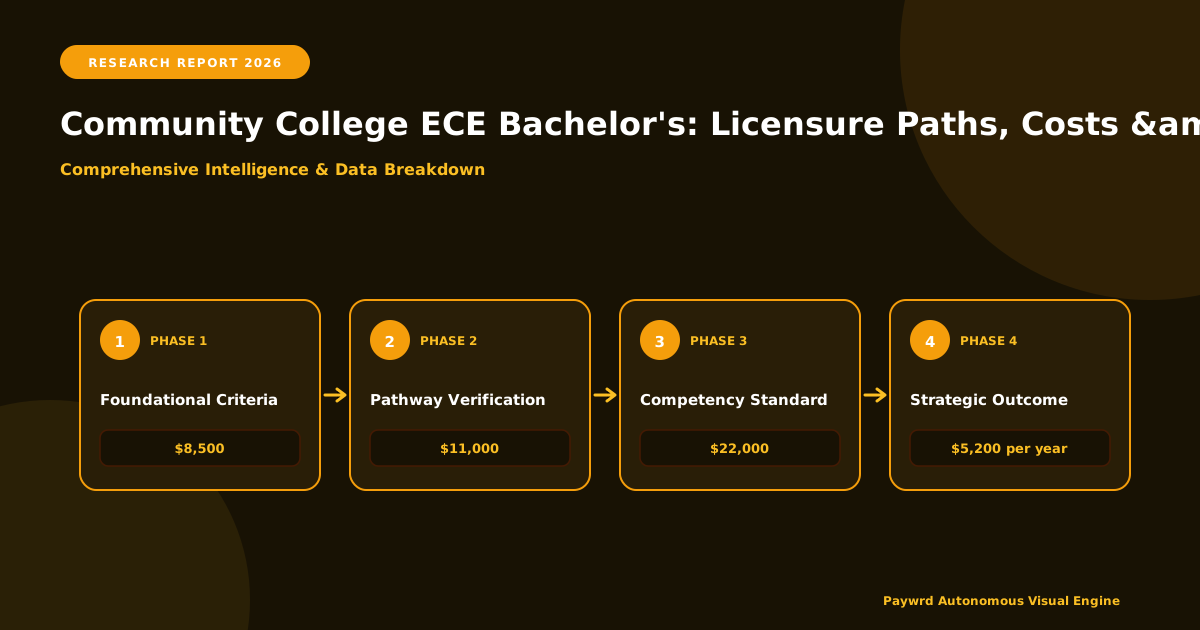
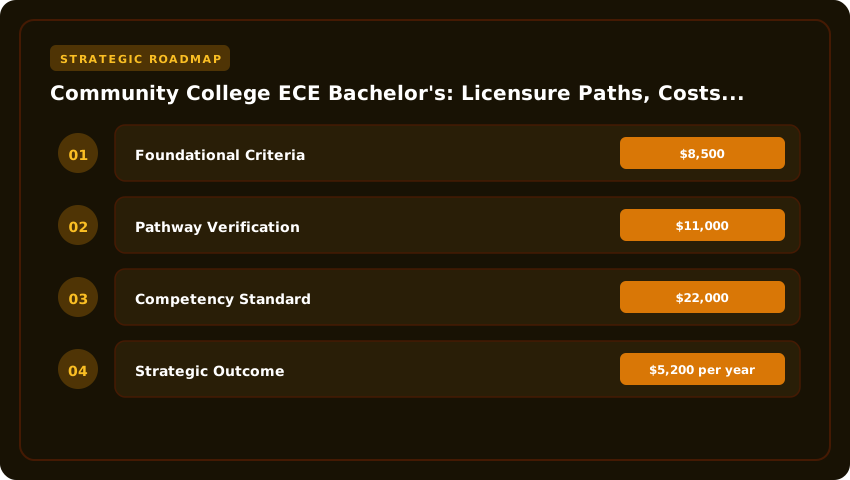
Florida remains the most established model. Through the State Board of Education and the Division of Florida College Systems (FCS), community colleges have been authorized to offer baccalaureate degrees since 2001. Institutions like Miami Dade College, Broward College, and St. Petersburg College now enroll cohorts in Early Childhood Education tracks aligned with the Florida Department of Education’s educator certification standards. Tuition typically benchmarks between $8,500 and $11,000 annually for in-state residents, a fraction of comparable programs at state universities where ECE bachelor’s tuition frequently exceeds $22,000.
Washington State operates under a parallel but distinct legislative framework. The State Board for Community and Technical Colleges (SBCTC), guided by RCW 28B.50, authorizes designated colleges to deliver applied baccalaureate degrees in workforce-shortage fields. Green River College and Pierce College have explored ECE concentrations, with tuition structured around roughly $5,200 per year for lower-division coursework. Washington’s mechanism is instructive: it ties CCB authorization directly to demonstrated labor-market demand rather than treating the degree as an academic extension of the associate pathway.
Colorado offers one of the newest and most explicit legislative vehicles. House Bill 22-1220, signed in 2022, authorized community colleges to offer a Bachelor of Applied Science in Early Childhood Education, with the first cohorts enrolling at institutions such as Pikes Peak State College and Morgan Community College. The law was crafted in collaboration with the Colorado Department of Education and the Colorado Shines quality rating system, ensuring graduates satisfy both credentialing and licensure prerequisites. In-state tuition generally ranges from $9,000 to $12,000 annually.
- Other notable CCB-authorizing jurisdictions include:
- Texas, where the Texas Higher Education Coordinating Board has approved bachelor’s programs at select community colleges, including ECE concentrations at South Texas College.
- Georgia, which permits University System of Georgia technical colleges to offer applied bachelor’s pathways with ECE emphases under specific workforce alignment criteria.
- North Carolina, where the University of North Carolina system has signed memoranda of understanding with community colleges for selected baccalaureate programs, though ECE remains a newer addition.
- California, where pilot community college baccalaureate programs include Child Development concentrations at institutions such as Santa Monica College.
- Ohio, Indiana, Michigan, and Minnesota, each operating under varied statutory authorities that permit applied bachelor’s degrees, with ECE emerging as a strategic priority due to statewide PreK expansion initiatives.
- Nevada, Utah, and New Mexico, where western state programs are expanding to include early childhood leadership tracks at rural-serving community colleges.
Yet the landscape is not universally navigable. Several states continue to prohibit or significantly restrict CCB pathways in Early Childhood Education specifically. These include much of the New England region (notably Massachusetts and Connecticut), where four-year institutions maintain exclusive authority over educator preparation, and parts of the Mid-Atlantic, where state regulations still require bachelor’s completion through regionally accredited four-year universities. Even in authorizing states, ECE-specific licensure pathways can be blocked if the community college program is not formally aligned with the state’s Department of Education or its equivalent certification office. For example, an applied Bachelor of Applied Science in Early Childhood Leadership may not automatically satisfy the coursework requirements for a state teaching license, leaving graduates credentialed but not certified.
For prospective students and policy advocates, the practical takeaway is this: state authorization determines whether a CCB can be conferred, but the state department of education determines whether that degree unlocks licensure. Before enrolling, candidates should cross-reference the community college’s program with their state’s Program Approval list, confirm regional accreditation through bodies recognized by the Council for Higher Education Accreditation, and verify that the degree satisfies both Praxis Core and Praxis II requirements where applicable. The CCB is no longer experimental; it is a structural feature of the American higher education landscape, but its utility for early childhood educators depends on navigating two regulatory gates simultaneously.
Accreditation Maze: NAEYC, CAEP & Regional Standards for Licensure Portability
Early childhood education (ECE) candidates often assume that any accredited bachelor’s degree will unlock a teaching license. In practice, three distinct accreditation layers govern licensure, and misunderstanding them can cost students semesters of progress and thousands of dollars in re-enrollment fees. The hierarchy begins with regional accreditation—the gatekeeper recognized by the U.S. Department of Education and the Council for Higher Education Accreditation (CHEA)—and ascends to programmatic recognition granted by NAEYC and CAEP. Only when all three layers align can a graduate confidently apply for lead-teacher licensure across state lines.
Regional accreditors such as the Higher Learning Commission (HLC) serving 19 states including Illinois and Ohio, the Southern Association of Colleges and Schools Commission on Colleges (SACSCOC) covering 11 southern states, and the WASC Senior College and University Commission (WSCUC) overseeing California and Hawaii, validate institutional legitimacy. A community college baccalaureate bearing any of these seals satisfies credit-transfer expectations and Title IV federal financial aid eligibility. However, regional accreditation alone does not certify that an ECE program meets the specialized competencies states require of PreK-3 lead teachers. In Illinois, for example, the State Board of Education Type 04 license and in New York, the Birth-2 (Second) Initial or Professional certificate both require completion of a program that has been reviewed against professional standards—a status conferred by either NAEYC or CAEP, depending on the state.
This is where many prospective students miscalculate. A regionally accredited community college offering a Bachelor of Applied Science in Early Childhood Education without NAEYC recognition may still produce graduates who must complete additional coursework, practicum hours, or a master’s degree to qualify for state licensure. New York Education Law §6902 explicitly requires programs to lead to “nationally recognized accreditation” or state-approved equivalent. Similarly, Illinois Administrative Code 23 Ill. Adm. Code 1.610 references alignment with NAEYC standards for program approval. The practical effect is straightforward: without NAEYC or CAEP acknowledgment, even a rigorous 120-credit bachelor’s may not satisfy lead-teacher requirements, forcing graduates into supplementary coursework estimated at $4,500 to $9,000 per semester at a public four-year institution.
CAEP verification checklist — use this six-point audit before enrollment to confirm portability:
- Confirm CAEP accreditation status directly on the Council for the Accreditation of Educator Preparation’s public review portal at caepnet.org. Look for “Accredited” rather than “Recognized” or “Candidate”—only full accreditation guarantees reciprocity.
- Cross-reference the state-specific cut score on the Praxis Core, Praxis II Early Childhood Education (5025), or state equivalent such as the Illinois Licensure Testing System (ILTS 206).
- Request the program’s state approval letter from the department of education’s Educator Licensure division. A program may be CAEP-accredited yet not state-approved if reciprocity agreements have lapsed.
- Verify that practicum placements align with state clinical hour minimums—typically 100–150 hours for initial education programs and 200+ hours for advanced preparation.
- Confirm faculty credentials meet state expectations, including 18 graduate semester hours in the specialty area for instructors of ECE methods courses.
- Document articulation agreements with public four-year institutions if the community college baccalaureate does not itself confer state-approved licensure, ensuring a seamless 2+2 transition to a licensure-eligible master’s program.
Bottom line: accreditation portability is intentional, not accidental. Students should treat regional accreditation as foundational but insufficient, then verify NAEYC or CAEP programmatic recognition before committing to a community college ECE bachelor’s pathway. Taking 30 minutes to confirm these credentials protects a four-year investment and preserves the freedom to teach across state lines.
Total Cost of Attendance vs. University Transfer: Tuition, Fees & Hidden Expenses
When evaluating an Early Childhood Education (ECE) bachelor’s degree, the sticker price of tuition rarely tells the full financial story. Prospective students and their families must look beyond published rates to understand the total cost of attendance, a figure that bundles tuition, mandatory fees, textbooks, transportation, and the often-overlooked “opportunity cost” of foregone wages during clinical placements and student teaching. For community college baccalaureate (CCB) candidates, this honest accounting can mean the difference between graduating with manageable debt and shouldering decades of loan repayment. Let’s break down both pathways side by side, using realistic figures drawn from accredited institutions, the College Board annual surveys, and Federal Student Aid (FAFSA) data.
A direct CCB ECE degree typically spans four to five years and falls within a $12,000 to $22,000 total tuition range for in-district learners at institutions such as those piloting programs under Washington State’s Community College Baccalaureate Association guidelines or Florida’s expanding two-year baccalaureate cohort. This estimate assumes a flat per-credit rate of roughly $130 to $190, multiplied by the 120 semester credits required by most Council for the Accreditation of Educator Preparation (CAEP) standards. Mandatory student fees add an estimated $400 to $900 annually, covering technology, lab access for early learning simulations, and tutoring centers. Textbooks and digital courseware, often bundled through Open Educational Resources (OER) in many CCB programs, average $300 to $600 per year, substantially lower than the $1,000-plus burden common at four-year universities.
By contrast, a 2+2 transfer pathway, where a student completes an Associate of Arts in Early Childhood at a community college and then matriculates to a public university to finish the final two years, carries a combined price tag of $35,000 to $55,000 in tuition and fees alone. The first two years mirror CCB pricing (often $5,000 to $8,000 total), but upper-division coursework at a state university frequently jumps to $300 to $450 per credit, even after accounting for articulation agreements, the formal contracts that guarantee junior-year standing. Out-of-state or private transfers can push this figure past $80,000, a reality that has prompted organizations like the American Association of State Colleges and Universities (AASCU) to advocate for more transparent transfer credit policies.
Yet the most underestimated financial variables are the hidden costs embedded in the licensure journey itself, costs that apply to both pathways but rarely appear in institutional cost calculators:
- Praxis Core Academic Skills for Educators: $150 to register, with each subtest (Reading, Writing, Mathematics) priced separately. Many states require passing scores before student teaching eligibility.
- Praxis Subject Assessments (e.g., 5025 Education of Young Children): $120 to $300 depending on state-specific add-ons and retake fees.
- State-mandated background checks and fingerprinting: $50 to $100, required by departments of education in states like Texas (TEA), California (CTC), and New York (NYSED) prior to field placement.
- Licensure application and portfolio submission fees: $75 to $250, depending on whether the state requires a performance-based edTPA-style portfolio, a structured assessment of teaching effectiveness, or a streamlined application. Some states, such as Illinois with its Type 04 credential, bundle these costs, while others itemize them.
- TB testing, CPR certification, and professional liability insurance: $40 to $150, often overlooked but required for practicum clearance.
Beyond these direct fees, the opportunity cost of a senior capstone or full-time student teaching semester deserves careful modeling. A 16-week unpaid placement at 30 to 40 hours per week represents roughly $4,000 to $6,000 in lost earnings for a working paraprofessional, a figure the U.S. Bureau of Labor Statistics pegs at a median wage of $14.50 per hour for preschool teachers. CCB programs, which are intentionally designed for place-bound, working adults, often schedule clinicals in evenings or weekends to mitigate this cost, a structural advantage that traditional 2+2 transfers rarely match.
Consider a side-by-side 4-year total cost model for a Florida resident, a population for which FAFSA Simplification has expanded Pell Grant eligibility. The CCB path lands near $18,500 all-in, including fees, books, licensure testing, and a modest opportunity-cost adjustment. The 2+2 transfer path, even with a Bright Futures scholarship covering part of tuition, lands closer to $42,000 once university fees, differential tuition for upper-level education majors, and licensure expenses are tallied. That delta of roughly $23,500 is equivalent to a year of median rent in many metro areas or the down payment on a reliable used vehicle, a tangible trade-off that can shape a graduate’s financial trajectory for the next decade.
Ultimately, the CCB model is not simply “cheaper”; it is engineered to compress total cost by aligning coursework, clinicals, and licensure milestones into a single institutional experience. Before signing an enrollment agreement, request a line-itemized cost breakdown from the financial aid office, including the cost of any out-of-pocket exam fees, and cross-reference it against your state’s department of education website. That ten-minute audit is the single most powerful financial planning tool available to an aspiring early childhood educator.
Clinical Hours & Student Teaching: Meeting State Fieldwork Mandates Locally
For aspiring early childhood educators pursuing a Community College Baccalaureate (CCB) leading to Birth–Grade 3 licensure, clinical hours and student teaching represent the most consequential—and often most logistically challenging—component of the degree. State departments of education typically require between 450 and 600 supervised fieldwork hours before recommending a candidate for an initial teaching license, and CCB programs must demonstrate to their regional accreditors (such as the Higher Learning Commission or SACSCOC) that every graduate has met these mandates in settings that authentically reflect the age span of the credential. The structure of those hours matters as much as the total count, which is why CCB deans of education spend considerable energy designing practicum sequences that braid together infant-toddler, preschool, and primary-grade experiences rather than concentrating candidates in a single classroom.
The clinical architecture in a typical CCB program unfolds across four semesters, beginning with a 60-hour observation practicum in a Head Start or NAEYC-accredited center and culminating in a 16-week, full-time student teaching residency in a partner public elementary school. In between, candidates complete two 120-hour practicum rotations—one in a Pre-K setting and one in a K–2 classroom—while attending a weekly seminar on campus that links developmental theory to observed practice. This scaffolded design aligns with the National Association for the Education of Young Children (NAEYC) professional standards and satisfies the edTPA portfolio requirement that 38 states now embed in their licensure assessments. Importantly, the community college price point—often between $135 and $185 per credit hour for in-district students—means that candidates are not paying private-university tuition rates of $600 to $1,200 per credit for the privilege of accumulating those hours.
- Head Start and Early Head Start partnerships are the backbone of most CCB practicum pipelines, particularly in states like Washington, Florida, and Hawaii where community grantees actively recruit future teachers from their own staff. Programs such as Tacoma Community College’s Bachelor of Applied Science in Teaching & Early Learning maintain formal memoranda of understanding with local Head Start agencies to guarantee priority placement for candidates working with birth-to-five populations.
- Public Pre-K classrooms funded through state preschool initiatives (Florida’s VPK, Georgia’s Pre-K, and Oklahoma’s universal pre-K) offer CCB candidates culturally and linguistically diverse placements that satisfy the “diverse settings” rubric many state boards now require. Community colleges leverage these state-funded classrooms because the ratio caps (typically 1:9 or 1:10) allow for meaningful coaching rather than passive observation.
- NAEYC-accredited centers serve as the quality-control filter for private and faith-based placements. Because accreditation requires programs to engage in continuous improvement and family-teacher conferences, CCB candidates placed in these settings gain exposure to professional development cycles they will later be expected to lead.
Despite these robust partnership networks, the placement desert risk in rural counties remains one of the most pressing equity concerns for CCB planners. Counties classified as “childcare deserts” by the Center for American Progress—where the ratio of children under five to licensed slots exceeds three-to-one—often lack the supervised infrastructure to host a 120-hour practicum, let alone a full-time student teaching residency. In response, leading CCB programs have adopted three mitigating strategies: (1) mobile supervision teams in which program faculty drive circuits of 150 to 200 miles to observe candidates in their home classrooms, (2) hybrid residency models pairing two weeks of in-person co-teaching in a regional hub with eight weeks of video-recorded lessons reviewed asynchronously by a university supervisor, and (3) grow-your-own cohorts that bundle candidates from a single rural district into a cohort so the district can host one combined clinical site serving multiple residents.
For the employed paraprofessional—the teaching assistant, Head Start teacher, or preschool aide who already spends 30 to 40 hours a week in a licensed classroom—the question of how to convert that daily work into university practicum credit is both a financial lifeline and a regulatory puzzle. Most CCB programs now operate a “clinical conversion” policy, allowing candidates to complete up to 150 of their required hours in their own classroom provided a qualified mentor teacher (often defined as a mentor with a bachelor’s degree and three years of experience) co-signs lesson plans and conducts weekly reflection conferences. States vary in their tolerance for this arrangement: California’s Commission on Teacher Credentialing permits it under strict conditions, while Illinois’ State Board of Education historically required all student teaching to occur outside the candidate’s employing district. Prospective students should always verify current rules with their program director before assuming their current classroom will count, and they should request the state’s official clinical experience verification form to document alignment with the Illinois Administrative Code, Title 23, or its equivalent.
Ultimately, the strength of a CCB’s clinical infrastructure is the single best predictor of licensure exam pass rates and first-year teacher retention. Prospective students should ask admissions counselors four diagnostic questions before enrolling: How many partner sites does the program maintain within a 45-minute drive? What is the average student-to-supervisor ratio during the final residency? Does the program pay the mentor teacher a stipend, and if so, how much? And finally, what percentage of graduates complete their clinical hours within the standard four-semester sequence, rather than extending their degree timeline to accommodate placement shortages? The answers to these questions will reveal more about a program’s real-world effectiveness than any glossy viewbook or website ranking can convey.
Salary Outcomes & Loan Repayment: ROI Analysis for Lead Teacher & Director Roles
When evaluating the financial return on investment (ROI) of a Community College Baccalaureate (CCB) in Early Childhood Education (ECE), prospective students and career changers must look beyond tuition sticker prices and instead focus on the realistic five-year earnings window tied to two primary professional outcomes: the Lead Teacher role and the Center Director role. According to the U.S. Bureau of Labor Statistics (BLS) Occupational Employment and Wage Statistics (OEWS) data published in 2024, preschool teachers (a category that includes Lead Teachers in licensed early childhood settings) earn a national median wage of approximately $37,120, with state-level medians ranging from a low near $28,000 in lower-cost regions to over $48,000 in high-demand metropolitan markets. Lead Teachers who hold a bachelor’s degree and a state-issued early childhood license, however, consistently command wages in the $38,000 to $52,000 band once district supplements, responsibility differentials, and longevity stipends are factored in.
The financial upside accelerates meaningfully when graduates step into administrative roles. Center Directors, who typically require a bachelor’s degree plus state director credentials and several years of supervised teaching experience, earn median salaries between $48,000 and $65,000 depending on enrollment size, geographic region, and whether the program operates within a public school district, a Head Start grantee, or a private nonprofit. In high-cost-of-living states such as Massachusetts, California, and New York, Director compensation can exceed $75,000 when bonuses, health benefits, and retirement contributions are included in total compensation. This $10,000 to $13,000 annual earnings differential between Lead Teacher and Director tracks is the single most important ROI variable in the CCB financial model.
The debt side of the equation is anchored by the federal Direct Loan borrowing limits established by the U.S. Department of Education. Dependent undergraduates may borrow up to $31,000 in aggregate federal Direct Subsidized and Unsubsidized loans, while independent undergraduates may borrow up to $57,500. Because most CCB students are adult learners balancing work and family, the independent borrowing ceiling is the realistic planning benchmark. At a standard 10-year repayment term and the current 5.50% undergraduate Direct Loan rate, a $57,500 balance carries a monthly payment near $624 and total interest of approximately $17,400 over the life of the loan.
The debt-to-income (DTI) calculation reveals a clear and favorable picture for CCB graduates. A Lead Teacher earning $45,000 with $57,500 in federal debt carries a federal-student-loan-only DTI of roughly 16.7%, which sits under the 20% threshold generally considered manageable for entry-level professionals. A Center Director earning $60,000 with the same debt load drops that ratio to approximately 12.5%, well within the comfort zone for sustainable repayment, mortgage qualification, and long-term wealth building. Even at the lower end of the Lead Teacher band ($38,000), the DTI remains near 19.7%, still serviceable for graduates who enroll in Income-Driven Repayment (IDR) plans such as SAVE or IBR.
Perhaps the most powerful ROI lever is Public Service Loan Forgiveness (PSLF). Because the overwhelming majority of ECE employers—public school districts, Head Start programs, community-action agencies, university-operated lab schools, and licensed nonprofit centers—are classified as 501(c)(3) or government entities, CCB graduates who work full-time for these qualifying employers become immediately eligible for PSLF-track repayment. After 120 qualifying monthly payments, typically ten years of employment, the remaining federal Direct Loan principal and accrued interest are forgiven tax-free under Internal Revenue Code Section 108(f). For a Lead Teacher paying $450 per month under an IDR plan while working toward PSLF, the forgiven balance can easily exceed $40,000, effectively converting the full $57,500 borrowing ceiling into a near-grant equivalent.
- Lead Teacher 5-Year ROI Estimate: Cumulative wages of $190,000–$260,000 against $57,500 in federal debt, yielding a net-positive ROI even before PSLF forgiveness.
- Center Director 5-Year ROI Estimate: Cumulative wages of $240,000–$325,000 against the same debt load, producing a debt-to-income ratio that comfortably supports homeownership and retirement contributions.
- PSLF-Accelerated Scenario: Graduates employed by Head Start, public schools, or licensed nonprofit centers may erase the entire federal balance after 120 qualifying payments, magnifying lifetime ROI by an estimated $45,000–$60,000 in forgiven principal.
- Actionable Next Steps: File the Employment Certification Form (ECF) annually, enroll in an IDR plan immediately upon graduation, and consolidate any older FFEL loans into a Direct Consolidation Loan to preserve PSLF eligibility.
FAFSA, T.E.A.C.H. Grants & Employer Tuition Assistance: Funding Your Degree
Financing a Community College Baccalaureate (CCB) in Early Childhood Education does not have to mean taking on a mountain of student loan debt. Because many CCB programs are Title IV-eligible, students can access the same federal financial aid channels as their peers at four-year universities, and then layer state and employer benefits on top. The key is understanding how each funding source works, what its eligibility rules are, and how to stack them in the right order so that “free money” always pays first, and loans are only borrowed as a last resort.
Step 1: File the FAFSA to capture the maximum Pell Grant. The Free Application for Federal Student Aid (FAFSA) is the gateway to nearly every other form of assistance. For the 2024-25 award year, the maximum Federal Pell Grant is $7,395, and many ECE students qualify for the full amount because bachelor’s-seeking community college students typically fall below the income thresholds. Even learners who believe they earn “too much” should still file, because the Pell calculation also weighs family size, number of dependents in college, and the new Student Aid Index (SAI) formula introduced for 2024-25. Filing the FAFSA also automatically enters you for state need-based grants, Federal Work-Study, and Federal Direct Subsidized Loans (currently 5.50% for the 2024-25 cohort).
- Deadline priority: Many states operate on a first-come, first-served FAFSA model, so submit between January 1 and March 1 when possible.
- Dependency status: Even independent students with no dependents should file, because the simplified needs test still yields Pell eligibility for most CCB learners.
- Year-round Pell: Since 2017, students may receive up to 150% of their scheduled Pell award across a calendar year, helpful for those taking summer coursework to accelerate licensure.
Step 2: Apply for a T.E.A.C.H. Early Childhood® Scholarship. Administered state-by-state through Child Care Services Association (CCSA) and its network of partner agencies, T.E.A.C.H. is one of the most generous and well-established scholarships in the early childhood field. Award packages typically cover 80% to 90% of tuition and required fees, include a textbook allowance, and provide a paid release-time stipend so working teachers can attend class. Exact dollar amounts vary: in North Carolina, T.E.A.C.H. commonly covers around $1,500 per semester for tuition; in Texas, awardees can receive up to $2,400 annually; and in Florida, the scholarship can absorb roughly 90% of credits for a bachelor’s cohort. The tradeoff is a one-year (or, for bachelor’s recipients, often a 12- to 24-month) work commitment at an eligible early childhood program, which most recipients view as a feature rather than a limitation.
Step 3: Layer in employer tuition assistance under IRS Section 127. Under Section 127 of the Internal Revenue Code, employers can provide up to $5,250 per calendar year in tax-free educational assistance to any employee. For a full-time teacher at a child care center, Head Start grantee, or public preschool, this benefit can wipe out the remaining tuition balance after Pell and T.E.A.C.H. funds are applied. Because the $5,250 cap has not been adjusted for inflation since 2002, several states have passed parallel laws expanding the exemption (for example, Colorado allows up to $10,000 in some circumstances), but the federal ceiling remains the national standard. Always obtain a written, signed agreement from the HR department specifying the courses covered, the reimbursement schedule, and any clawback provisions if you leave the employer within a stated period (commonly one to two years).
Step 4: Tap state workforce and pipeline grants. Most states recognize that early childhood educators are in critical shortage, so a growing menu of state-funded scholarships is available. Examples include California’s ECE Workforce Pathways Grant, which can cover up to $2,500 per year for educators pursuing a Child Development Permit; Texas’s Rising Star Texas Workforce Commission Scholarship, offering up to $1,500 for credential-seeking providers; and New York’s ECETP (Early Childhood Education and Training Program), which can subsidize a large portion of tuition for those working in regulated child care. Combining these with federal and employer aid often produces a fully funded degree, provided the student maintains Satisfactory Academic Progress (SAP) and continues working in an eligible setting.
Actionable takeaway: Treat your funding search like a layered “stack” rather than a single scholarship. File the FAFSA by your state priority deadline, apply to T.E.A.C.H. (or your state’s flagship ECE scholarship) the same week, request an employer tuition assistance letter from HR, and then research any state workforce grants tied to your zip code. When all four pillars are aligned, the net cost of a CCB in Early Childhood Education can drop to a few hundred dollars per semester, transforming a bachelor’s degree from a financial stretch into a realistic, debt-light next step.
| Metric | Community College ECE Bachelor’s (CCB) | Traditional 4-Year University ECE | Public 4-Year In-State (Alternative) | Online ECE Bachelor’s (For-Accredited) | |
|---|---|---|---|---|---|
| Total Tuition Cost (USD) | $20,000 – $40,000 (full program) | $80,000 – $120,000+ (out-of-state avg.) | $40,000 – $60,000 (in-state) | $30,000 – $55,000 | |
| Per-Credit Cost | $150 – $250/credit | $400 – $1,200/credit | $300 – $500/credit | $350 – $500/credit | |
| State Licensure Eligibility | Yes — in 24+ states (e.g., CA, WA, FL, TX, NY, OH, HI, NM, MO, MN) | Yes — all 50 states | Yes — all 50 states | Yes (if regionally accredited & state-approved) | |
| Program Length | 4 years (or 2+2 transfer) | 4 years traditional | 4 years traditional | 3–4 years (accelerated options) | |
| Admission Cut-Off (GPA) | 2.0 – 2.5 (open/dual enrollment) | 2.75 – 3.5+ competitive | 2.5 – 3.0 typical | 2.0 – 2.5 (open access) | |
| Student Teaching Hours Required | ~400–800 clinical hours | ~800–1,200 clinical hours | ~800–1,200 clinical hours | Varies (often 400–600) | |
| Transferable Credits | Up to 60–90 credits accepted | Limited transferability (typically 30–60) | Limited (30–60 credits) | Up to 60–90 credits | |
| Financial Aid (Federal Pell) | Eligible (up to $7,395/yr) | Eligible | Eligible | Eligible (accredited programs) | |
| Starting Salary (Pre-K–3 Lead Teacher) | $38,000 – $48,000/yr | $38,000 – $48,000/yr | $38,000 – $48,000/yr | $38,000 – $48,000/yr | |
| 10-Year Career ROI (Net) | ★★★★★ (lowest debt, fastest path) | ★★★ (high debt load) | ★★★★ (moderate) | ★★★★ (flexible, moderate) | |
| Geographic Availability | 24+ states (expanding in rural regions) | Nationwide | Nationwide | Nationwide | |
| Accreditation Body | Regional + State DOE + NAEYC (program-specific) | Regional + NAEYC (CAEP) | Regional + NAEYC (CAEP) | Regional + NAEYC (CAEP) | |
| Best For | Working paraprofessionals, rural students, AAS holders | Traditional 18–22 yr-old students | Traditional students seeking lower in-state rates | Working adults needing flexibility |
Frequently Asked Questions
What states authorize a Bachelor of Science in Early Childhood Education at a community college?
As of 2024, more than 24 states authorize Community College Baccalaureate (CCB) degrees, with ECE bachelor's specifically approved in California, Washington, Florida, Hawaii, New Mexico, Ohio, Texas, and Minnesota. State-level authorizing statutes vary; Florida's HB 7081 and Washington's Pilot CCB Program are the most established legislative pathways governing these programs.
How much does a Community College ECE Bachelor's degree cost compared to a traditional university?
A Community College ECE Bachelor's typically costs $20,000–$40,000 total tuition, compared to $80,000–$120,000+ at private four-year institutions and $40,000–$60,000 at public in-state universities. Per-credit rates average $150–$250 at community colleges versus $400–$1,200 at traditional universities, making CCBs 50–70% more affordable.
Is a Community College Bachelor's in Early Childhood Education accepted for state teacher licensure?
Yes, in states authorizing CCB programs, the degree meets the bachelor's-level educational requirement for Pre-K–3 or Birth–Grade 3 licensure, provided the program holds state approval and is accredited by a regional accreditor (e.g., HLC, WSCUC). Programs must also align with state DOE competency standards, including practicum hours and content assessments.
Can you transfer an Associate's degree (AA/AS) into a Community College ECE Bachelor's program?
Yes. Most CCB ECE programs accept up to 60–90 transferable credits from an accredited Associate of Arts (AA), Associate of Science (AS), or Associate of Applied Science (AAS) in Early Childhood Education. The 2+2 articulation model allows students to complete the bachelor's in an additional two years without loss of credit, maximizing prior coursework investment.
Strategic Final Takeaway
Success in evaluating Community College ECE Bachelor's: Licensure Paths, Costs & State Approval relies on early preparation, adherence to verified accredited requirements, and cross-referencing official portals. Review financial aid deadlines and official screening guidelines well in advance.


