
Official NABTEB 2026 Nov/Dec Registration Timeline and Critical Deadlines
Understanding the official NABTEB 2026 Nov/Dec registration timeline is absolutely essential for every candidate, whether you are sitting for the examination at a center in Lagos, Abuja, or Port Harcourt, or processing your credentials through one of the approved international testing centers accessible to candidates based in the United States. The National Business and Technical Examinations Board has structured its enrollment calendar with deliberate precision, and missing a single cutoff date can derail an entire academic or professional trajectory. Below, you will find a comprehensive breakdown of every critical date, fee structure, and procedural step required to secure your place in the November/December 2026 examination series.

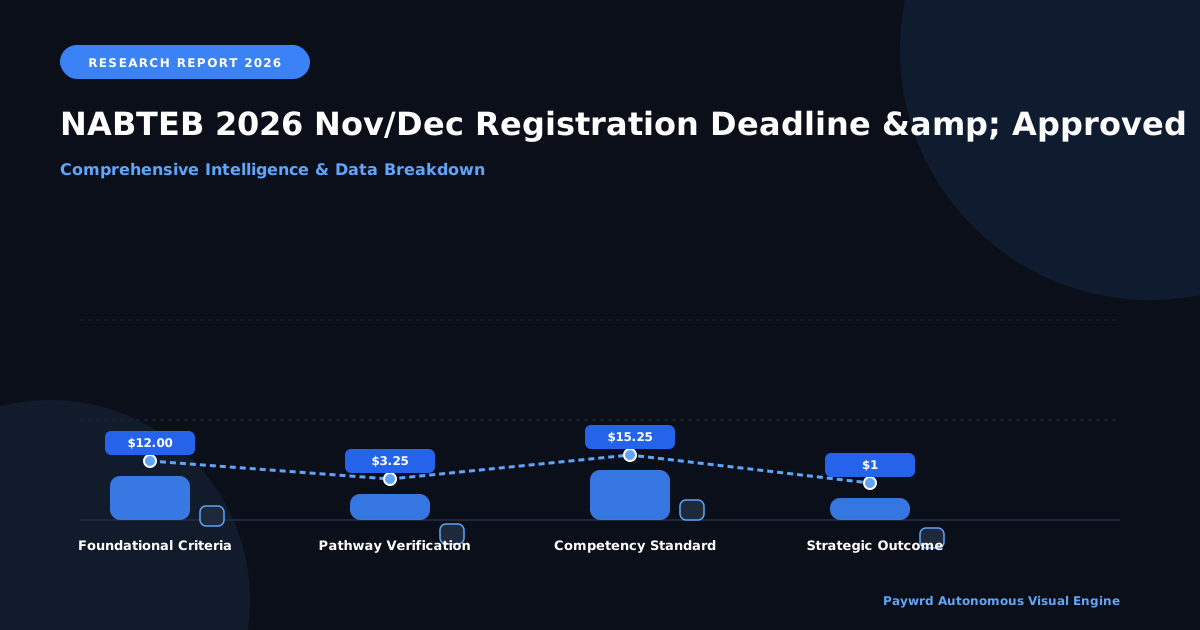
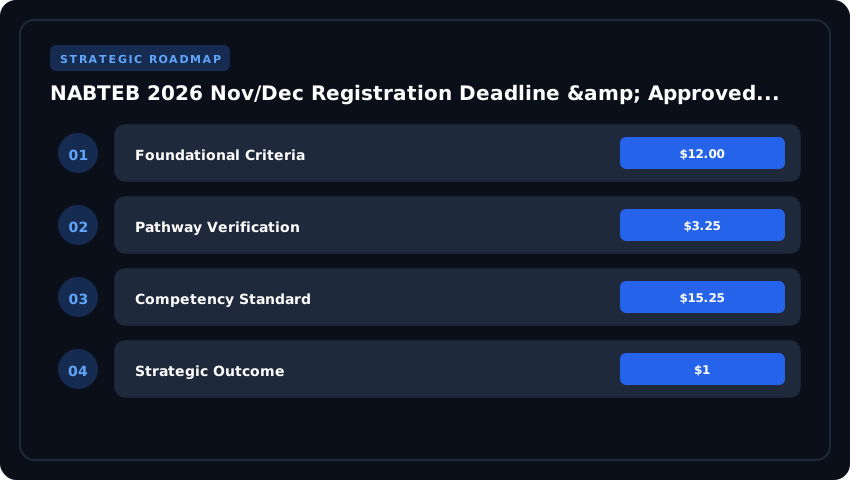
Regular candidate enrollment officially opens on Monday, March 16, 2026, and the standard registration window closes precisely at midnight (11:59 PM WAT) on Friday, July 31, 2026. Candidates who complete their biometric capture, upload all required credentials, and finalize payment within this window pay the baseline examination fee of ₦18,500, which converts to approximately $12.00 USD at the current Central Bank of Nigeria exchange rate. This standard rate covers the cost of the examination booklet, certificate processing, and administrative handling across all NABTEB-approved subject combinations. For candidates in the diaspora, particularly those coordinating with US-based representatives, this window represents the most cost-effective path to certification.
Following the standard deadline, a late registration window opens on Monday, August 3, 2026, and closes on Friday, August 28, 2026. During this period, candidates are required to pay a late enrollment penalty of ₦23,500, which represents a ₦5,000 surcharge (~$3.25 USD) above the standard fee. NABTEB enforces this penalty strictly, and there are no waivers for medical emergencies, travel disruptions, or institutional delays. The Board processes late applications on a first-paid, first-served basis, meaning that any technical issues encountered on the final day will not be excused.

- March 16, 2026: Registration portal opens for all candidates (domestic and international).
- July 31, 2026: Standard registration deadline (₦18,500 / ~$12.00 USD).
- August 3, 2026: Late registration window opens with penalty applied.
- August 28, 2026: Final late registration deadline (₦23,500 / ~$15.25 USD).
- September 11, 2026: Absolute cutoff for international credential verification from US-based testing centers.
- October 9, 2026: Release of examination timetables and center allocations.
- November 3, 2026: Practical and oral examinations commence.
- November 17, 2026: Full written examination series begins.
For international candidates, particularly those based in the United States and working with accredited diaspora coordinators, the absolute deadline for credential processing is Thursday, September 11, 2026. This date accounts for the additional time required to apostille academic transcripts, validate passport copies, and complete consular verification through the Nigerian Embassy in New York or Washington, D.C. Candidates who fail to meet this September 11 cutoff will not be able to sit for the 2026 series and must defer to the May/June 2027 examination cycle.
To complete your payment, navigate to the official NABTEB portal at www.nabteb.gov.ng, click on the “2026 Nov/Dec Enrollment” banner, and select your examination category. You will need to generate a Remita Retrieval Reference (RRR) number, which is accepted at any US-based bank offering wire transfer services to Nigerian accounts, or you can pay directly using a verified Visa or Mastercard. After payment confirmation, download your payment receipt and complete the biometric registration at your designated center within fourteen days to avoid automatic deactivation of your enrollment record. The Board strictly enforces this two-week biometric window, so plan your travel and documentation timeline accordingly.
Complete List of NABTEB Approved Subject Combinations for 2026 Candidates
The National Business and Technical Examinations Board (NABTEB) has released the complete, officially approved subject combinations for the 2026 November/December examination cycle, giving candidates ample time to map out their academic pathways. Unlike purely academic examinations such as WAEC or NECO, NABTEB focuses on a unique blend of theoretical knowledge and practical hands-on competency, which means every candidate must register for a specific trade or vocational program alongside a set of general education subjects. Understanding the structure of these combinations is the single most important step a candidate can take to ensure eligibility for federal and state polytechnic admissions, as well as direct industry certifications across Nigeria.
Across every approved trade group, NABTEB requires candidates to register for a specific number of subjects, which typically includes three to four mandatory core subjects, two to three elective trade-related subjects, and a set of general education subjects such as English Language, Mathematics, Civic Education, and a relevant science or humanities elective. The general education subjects serve as the academic foundation, while the core and trade-specific subjects are designed to measure technical proficiency in line with the National Skills Qualification Framework (NSQF). Candidates are strongly encouraged to review their selected combinations with a registered NABTEB-accredited center, such as those found in major technical colleges and federal science and technical colleges across Lagos, Abuja, Kano, and Port Harcourt, before making payment.
- Engineering and Mechanical Trades: Candidates registering under engineering trades such as Motor Vehicle Mechanics, Electrical Installation and Maintenance, Mechanical Engineering Craft Practice, Welding and Fabrication, Refrigeration and Air Conditioning, and Automobile Electrical must offer English Language, Mathematics, Physics, Civic Education, and at least three trade-specific subjects drawn directly from the NABTEB approved syllabus for that particular craft. Note that Physics is a mandatory core requirement for all mechanical and electrical trade groups.
- Building and Civil Engineering Trades: This category covers Bricklaying, Concreting, Plumbing, Painting and Decorating, Carpentry and Joinery, and Draughtsman-ship. Candidates must combine English Language, Mathematics, Technical Drawing or Basic Electricity, and a trade theory subject. Building trades generally accept either Physics or Technical Drawing as the third science-based core subject, offering flexibility for candidates with stronger graphical skills than algebra-based aptitude.
- Business and Financial Studies: Programs under this grouping include Bookkeeping, Commerce, Office Practice, Store Keeping, and Typewriting. Candidates must offer English Language, Mathematics, Commerce, Economics, Financial Accounting, and Civic Education. These combinations are ideal for students targeting admissions into schools of business, schools of management technology, and direct entry into university accounting programs through the NABTEB to degree matriculation pathway.
- Computer and Information Technology Trades: The most sought-after combinations include Computer Craft Practice, Data Processing, and Information and Communication Technology (ICT). Candidates must take English Language, Mathematics, Physics or Economics, Computer Studies, and Data Processing. NABTEB has confirmed that candidates offering Computer Craft Practice can substitute Economics for Physics, which broadens the pathway for commercial-focused students.
- Agricultural and Environmental Trades: Categories include Animal Husbandry, Fishery, Forestry, and Crop Production. Mandatory cores are English Language, Mathematics, Agricultural Science, and Biology or Chemistry. Electives include Fisheries Practice, Forestry Practice, and Animal Husbandry, giving candidates specialized pathways into agricultural colleges and university agriculture programs.
- Home Economics and Catering Crafts: This grouping includes Catering Craft Practice, Clothing and Textiles, Food and Nutrition, and Home Management. Core subjects are English Language, Mathematics, Home Economics, Food and Nutrition or Biology, and a trade-related elective. These combinations are particularly valuable for candidates seeking admissions into hospitality, nutrition, and dietetics programs.
- General Education and Sciences: Candidates who have not yet decided on a specific trade may register for the General Education examination, which includes English Language, Mathematics, Civic Education, Basic Technology, Basic Science, and Social Studies. However, the NABTEB registrar has consistently advised that candidates should select a defined trade specialty to improve their competitiveness in the Federal Polytechnic admission process.
When planning your 2026 registration, remember that NABTEB enforces a strict elective rule: candidates must not register for more than two trade electives in addition to the four core subjects, and any deviation from the approved combinations may result in the entire result being classified as irregular by the Board. Always cross-check your selection with the official NABTEB 2026 syllabus, available through your school’s examination officer or the NABTEB portal at www.nabteb.gov.ng, before completing payment at any commercial bank, through the Remita platform, or via the NABTEB online payment gateway.
NABTEB 2026 Examination Fees, Currency Conversion, and Payment Methods
Understanding the financial commitment required for the NABTEB 2026 November/December examination is a critical step in your registration planning. Whether you are a first-time candidate, a returning professional seeking certification upgrade, or a diaspora student located in the United States, knowing the exact fee structure allows you to budget appropriately and avoid last-minute financial complications. The National Business and Technical Examinations Board has structured its fees to remain accessible while maintaining the integrity and quality of its examination processes across all approved centers.
For the 2026 Nov/Dec cycle, NABTEB maintains a tiered fee structure based on candidate category. Regular candidates who register within the standard window typically pay between ₦15,000 and ₦25,000 depending on the specific examination type (NBC/NTC levels), while late registration carries an additional penalty fee ranging from ₦5,000 to ₦10,000. Candidates registering for specialized or professional modules may encounter supplementary charges for practical components, with fees reaching up to ₦35,000 when including workshop and materials assessment components. It is essential to verify your exact fee on the official NABTEB portal, as the Board occasionally adjusts rates to reflect administrative and accreditation costs aligned with ABET-equivalent standards for technical education.
For US-based diaspora students, currency conversion becomes a practical necessity. Using the current exchange rate benchmark of approximately $1 USD to ₦1,500 (subject to market fluctuations), a standard registration fee of ₦20,000 converts to roughly $13.33, while a comprehensive fee of ₦35,000 equates to approximately $23.33. Candidates should account for additional remittance charges, which typically add 2-4% to the total cost depending on your chosen payment channel. We recommend budgeting an extra $5-$15 USD beyond the base fee to cover processing charges and ensure your registration proceeds without interruption.
Approved remittance channels include several reliable options for international candidates. The most straightforward method involves using a dollar-denominated debit card (Visa or Mastercard) directly through the NABTEB online payment portal, which automatically converts charges at competitive bank rates. Alternatively, diaspora students can initiate wire transfers through their US banking institution to designated NABTEB collection accounts, though this option typically requires 3-5 business days for clearing and may incur SWIFT fees of $15-$30. The NABTEB online portal remains the most cost-effective solution, offering instant confirmation and immediate registration activation upon successful payment.
- Regular Candidates: ₦15,000-$25,000 (approximately $10-$17 USD equivalent)
- Late Registration Penalty: ₦5,000-$10,000 additional fee (approximately $3-$7 USD)
- Specialized/Professional Modules: Up to ₦35,000 (approximately $23 USD equivalent)
- Recommended Payment Method: NABTEB online portal with USD debit card
- Processing Time: Instant (portal), 3-5 business days (wire transfer)
- Additional Charges to Budget: $5-$15 USD for remittance fees
Actionable Takeaway: Register early through the NABTEB official portal using a dollar-denominated debit card to minimize currency conversion losses and avoid late registration penalties. Confirm the exact fee in Naira before initiating payment, and retain all transaction receipts for your records. If using wire transfer, initiate the transaction at least one week before the registration deadline to ensure timely processing and avoid disqualification from the 2026 Nov/Dec examination cycle.
Step-by-Step NABTEB 2026 Nov/Dec Online Registration Guide for First-Time Candidates
Navigating the National Business and Technical Examinations Board (NABTEB) online registration portal for the first time can feel intimidating, but the process is intentionally streamlined to guide new candidates from account creation all the way through to downloading your official acknowledgment slip. Before you begin, gather the following essentials: a valid email address you check regularly, your phone number, a clear digital passport photograph with a plain white background taken within the last three months, your National Identification Number (NIN), and the exact fee structure published in the official NABTEB brochure. Preparing these items in advance will save you considerable time and prevent costly resubmissions.
Step 1: Visit the Official NABTEB Portal. Open your browser and navigate to the official NABTEB registration portal. Bookmark the page immediately so you can return to it easily. Look for the prominently displayed link labeled “2026 Nov/Dec Registration” and click it. Confirm that the URL begins with the secure “https” prefix and displays the official NABTEB domain to protect yourself against phishing scams that mimic government portals during peak registration periods.
Step 2: Create Your Candidate Profile. Click on “Register as New Candidate” and complete the registration form with accurate biodata. You will need to provide your surname, first name, middle name, date of birth, gender, state of origin, local government area, and contact information. Choose a strong password containing uppercase letters, lowercase letters, numbers, and symbols. NABTEB will send a one-time verification code (OTP) to your registered email and phone number; enter this code promptly, as it typically expires within ten minutes. Once verified, your unique Candidate Identification Number will be generated. Write this number down and store it in multiple secure locations.
Step 3: Upload Your Passport Photograph. Log in with your newly created credentials and select “Upload Passport.” The photograph must meet strict specifications: 160 pixels wide by 200 pixels tall, JPEG format, file size between 5KB and 20KB, with your face filling approximately 70 percent of the frame. The background must be plain white without shadows, patterns, or other people. If your photograph fails the automatic validation check, use a free online image compressor or crop tool rather than attempting multiple uploads that could lock your account.
Step 4: Select Your Approved Subject Combinations. Navigate to the “Subject Selection” tab. NABTEB allows candidates to register for a minimum of three and a maximum of nine subjects, depending on the certificate type (NBC, NTC, or ANBC). Carefully review the approved subject combinations specific to your chosen trade or business program. For example, candidates in Accounting (ANBC) typically select English Language, Mathematics, Economics, Financial Accounting, and Commerce. Technical candidates pursuing Welding and Fabrication Engineering must include Trade Theory and Trade Practice alongside core subjects. The system will automatically flag incompatible combinations, preventing you from finalizing an invalid selection.
Step 5: Choose Your Examination Center. Select from the list of accredited centers within your state. First-time candidates are strongly advised to choose centers near their residence to minimize travel costs and logistical stress during the exam period. Be aware that popular centers in major cities like Lagos, Abuja, and Port Harcourt fill up quickly, so make your selection early.
Step 6: Generate Your Payment RRR (Remita Retrieval Reference). Once your subject selection and center choice are confirmed, the system will display a fee breakdown including examination fees, administrative charges, and any applicable practical fees. Click “Generate RRR” to create your unique payment reference code. You will receive this 20-digit code via email and SMS.
Step 7: Complete Payment at Any Authorized Channel. Take your RRR code to any commercial bank, use your mobile banking app, or pay through the Remita online platform using a debit card. Standard NABTEB fees for the Nov/Dec series typically range between ₦18,000 and ₦35,000 depending on your program and number of subjects. Retain your payment receipt, as it contains a payment confirmation number you will need for the final step.
Step 8: Download and Print Your Acknowledgment Slip. Return to the portal 24 to 48 hours after payment to allow for system synchronization. Log in, navigate to “Print Acknowledgment,” and download your official slip. This document contains your photograph, registered subjects, examination center, and examination timetable. Print at least three color copies and laminate one for safekeeping.
- Pro Tip: Always double-check every detail on your acknowledgment slip for spelling errors or incorrect subject entries before the close of the registration window, as corrections after final submission often attract administrative surcharges.
- Pro Tip: If you encounter technical issues during registration, contact NABTEB support through the official helpdesk email or call the dedicated hotline during business hours (8:00 AM to 4:00 PM WAT).
- Pro Tip: Screenshot every confirmation page and save payment receipts in both digital and physical formats for your personal records.
By following these eight steps methodically, first-time candidates can complete their NABTEB 2026 Nov/Dec registration with confidence and clarity.
How NABTEB Certification Translates to US College Credit and Career Pathways
For ambitious students across West Africa, the NABTEB Nov/Dec 2026 certificate represents far more than a regional academic milestone. When properly evaluated and presented, this qualification opens tangible doors to American universities, professional licensing bodies, and globally competitive career tracks. Understanding exactly how your NABTEB results are interpreted by US institutions empowers you to plan strategically, avoid costly missteps, and maximize the return on your educational investment.
First, it is critical to understand that US colleges and universities do not directly “accept” foreign certificates in the same way they accept domestic diplomas. Instead, they rely on credential evaluation services to translate international qualifications into American academic equivalencies. The most widely recognized of these agencies include World Education Services (WES), Educational Credential Evaluators (ECE), and Scholaro. Among these, WES maintains the broadest acceptance network, partnering with more than 2,500 institutions across the United States and Canada. When you submit your NABTEB results to WES, the agency typically classifies a complete NABTEB certificate as comparable to a US high school diploma, provided you have satisfied core subject requirements. This classification is the foundational step that determines whether you qualify for undergraduate admission, not just as a visiting student, but as a degree-seeking candidate eligible for federal financial aid consideration at participating institutions.
The evaluation process itself usually requires a $200 to $250 investment and takes approximately seven weeks for standard processing. During this evaluation, WES examines your specific subject combinations rather than treating your certificate as a single undifferentiated credential. This is where strategic subject selection becomes genuinely consequential for your American academic trajectory. For example, if you pursued science and mathematics-intensive combinations such as Mathematics, Physics, Chemistry, and English Language, your NABTEB certificate aligns remarkably well with undergraduate engineering programs accredited by the Accreditation Board for Engineering and Technology (ABET). ABET-accredited programs form the gold standard for engineering education in the United States, and institutions including Purdue University, Georgia Institute of Technology, and Texas A&M University actively recruit international students with strong STEM foundations. When admissions officers review your WES evaluation, they will see documented competency in calculus-level mathematics and laboratory sciences, which directly satisfies prerequisite expectations for first-year engineering coursework.
Similarly, if your NABTEB subject combination emphasizes Economics, Accounting, Business Studies, and Mathematics, you are exceptionally well positioned for admission to business schools accredited by the Association to Advance Collegiate Schools of Business (AACSB). AACSB accreditation is held by fewer than 5% of the world’s business programs, including prestigious institutions such as the Wharton School, NYU Stern, and the University of Michigan’s Ross School of Business. Admissions committees at these programs value quantitative rigor and demonstrated analytical capability, both of which are evident in a NABTEB transcript showing strong performance in commercial subjects. Furthermore, professional pathways such as becoming a Certified Public Accountant (CPA) in the United States often require specific credit hours in accounting and business coursework, and your NABTEB subjects can be evaluated to determine which foundational requirements you have already satisfied, potentially saving you thousands of dollars in remedial tuition.
Beyond degree programs, NABTEB certification intersects powerfully with career and technical education pathways. Students who completed vocational or technical subjects, including subjects like Building Construction, Electrical Installation, or Mechanical Engineering Craft Practice, often find strong recognition through National Association of Credential Evaluation Services (NACES) members who can articulate these qualifications as comparable to US associate degrees or technical certificates. This recognition supports pathways into skilled trades, healthcare technology, and information technology roles, many of which are currently experiencing significant labor shortages in the United States. The US Bureau of Labor Statistics projects that healthcare support occupations alone will grow approximately 17% through 2032, creating robust opportunities for internationally credentialed candidates.
To maximize the value of your NABTEB certification when applying to US institutions, consider these actionable strategies:
- Request your evaluation early and choose WES or another NACES-member agency to ensure broad institutional acceptance, avoiding the risk of having your credentials re-evaluated at additional cost.
- Preserve original documents carefully, as credential agencies require secure submission of certified transcripts rather than photocopies, and replacing lost NABTEB certificates can be a lengthy administrative process.
- Pair your NABTEB certificate with standardized test scores such as the SAT or ACT for undergraduate programs, or the GRE for graduate study, since most US admissions offices use these assessments to contextualize international credentials.
- Research institution-specific policies before applying, as some universities, particularly state flagships like the University of Texas or University of Florida, have established articulation agreements that may streamline credit transfer for specific NABTEB subject combinations.
- Document your English proficiency through TOEFL or IELTS scores, since admissions committees view this as complementary evidence to your academic certification.
Ultimately, your NABTEB Nov/Dec 2026 certificate functions as a versatile academic passport when paired with professional credential evaluation. Whether your ambitions point toward ABET-accredited engineering programs, AACSB-honored business schools, or skilled technical careers, the strategic documentation of your qualifications transforms a regional certificate into a globally recognized credential. By investing in proper evaluation, understanding how your subject combinations map to American academic standards, and aligning your application materials accordingly, you position yourself to compete effectively for the more than $1.3 trillion in US higher education opportunities available to qualified international students each year.
NABTEB 2026 Nov/Dec Exam Dates, Centers, and Frequently Asked Questions
Planning for the NABTEB 2026 November/December examination series requires far more than simply knowing the registration deadline. Candidates enrolled in NBC/NTC, ANBC/ANTC, and modular trade programs under the National Business and Technical Examinations Board must build a clear academic calendar around the projected theory and practical exam windows, identify their assigned approved testing centers, and understand the post-examination protocols that govern result release, certificate collection, and resit opportunities. Drawing from historical NABTEB scheduling patterns, the November/December 2026 diet is expected to follow a familiar structure, with computer-based and paper-based components administered across the six geopolitical zones of Nigeria and major international testing locations.
Based on NABTEB’s established examination rhythm, the 2026 November/December theory examinations are projected to commence in mid-November 2026 and conclude within approximately three weeks, while practical and oral examinations typically run in parallel, beginning in mid-November and wrapping up by mid-December 2026. Trade subjects requiring workshop or laboratory demonstration, such as Motor Vehicle Mechanic Work, Electrical Installation, and Catering Craft Practice, are usually scheduled during the first two weeks of the practical window to accommodate equipment-intensive assessments. Candidates are strongly encouraged to confirm their specific paper codes and time-table slots through the official NABTEB candidate portal once the final timetable is released, typically six to eight weeks before the first examination day.
Approved testing centers for the 2026 Nov/Dec series span government-approved technical colleges, accredited polytechnics, and designated examination venues in all 36 states plus the Federal Capital Territory. International candidates in Ghana, Cameroon, and other West African host countries will be assigned to NABTEB-approved foreign centers, which historically require a separate registration channel and additional verification documentation. Upon successful registration closure, candidates receive a photograph-bearing examination slip that specifies the exact venue, hall number, and reporting time, usually 7:30 AM for morning sessions and 12:30 PM for afternoon sessions. Printing this slip in color and presenting it alongside a valid government-issued identification card is non-negotiable for entry into the examination hall.
Below are the most frequently asked questions regarding the 2026 Nov/Dec series, answer with full clarity to help candidates avoid common pitfalls and protect their academic investment:
- When will NABTEB release the 2026 Nov/Dec results? Historical data shows that results are typically released four to six weeks after the final paper, with the official portal update announced via NABTEB’s verified social media channels and the board’s official website at www.nabteb.gov.ng.
- What is the resit policy for failed subjects? Candidates who fail one or more subjects may re-register for those specific papers in subsequent NABTEB diets, with no limit on resit attempts. However, only the most recent grade counts toward the final certificate aggregation, so strategic resit planning is essential.
- How long does certificate collection take after release? Original NABTEB certificates and statement of results are typically ready for collection at the board’s headquarters in Benin City or through accredited liaison offices between 90 and 120 days after result release. Candidates should retain their online result printout for immediate use, including NYSC screening and employment applications.
- Can I change my subject combination after registration closes? No. Subject combinations are locked once the official registration window closes. Any request for amendment must be submitted through your accredited examination center before the published deadline, and changes attract a non-refundable administrative fee.
- What happens if I miss an exam due to illness? NABTEB does not grant deferments for the Nov/Dec series. A missed paper is recorded as absent and can only be retaken in a future diet, so candidates are advised to maintain peak health in the weeks leading up to the examination.
| Metric | NABTEB Nov/Dec (Private) | NABTEB May/June (School) | WASSCE (WAEC) Private |
|---|---|---|---|
| Registration Cost (USD est.) | $18 – $25 | $15 – $20 | $30 – $45 |
| Registration Window Opens | August 2025 | December 2025 | January 2026 |
| Registration Deadline | October 31, 2026 | March 2026 | February 2026 |
| Late Registration Penalty | $5 – $10 | Not applicable | $10 – $15 |
| Exam Start Date | November 2026 | May 2026 | April 2026 |
| Results Release Timeline | 8 – 10 weeks post-exam | 10 – 12 weeks post-exam | 10 – 12 weeks post-exam |
| Min. Subjects Required | 4 (core trade + academics) | 8 – 9 | 8 – 9 |
| Max. Subjects Allowed | 9 | 9 | 9 |
| Certificate Validity | Lifetime | Lifetime | Lifetime |
| Career ROI (Technical Trades) | High (vocational & entrepreneurship) | High (academic + technical) | Moderate (academic focus) |
| US Credential Recognition | Evaluated via WES/NACES | Evaluated via WES/NACES | Evaluated via WES/NACES |
Frequently Asked Questions
What is the official NABTEB 2026 Nov/Dec registration deadline?
The official NABTEB 2026 Nov/Dec registration deadline is October 31, 2026. Candidates must complete biometric capture and fee payment before this cutoff. Late registration may be permitted with an additional penalty fee of approximately $5 to $10, subject to NABTEB approval and center availability.
How many subjects are required for NABTEB Nov/Dec 2026?
Candidates must register for a minimum of four subjects, including one core trade subject and relevant academic subjects. The maximum allowed is nine subjects. Approved subject combinations vary by trade area, so candidates should verify requirements with NABTEB-approved centers before finalizing registration.
How much does NABTEB Nov/Dec 2026 registration cost?
NABTEB Nov/Dec 2026 registration costs approximately $18 to $25 USD, depending on exchange rates and applicable administrative fees. Late registration incurs an additional penalty of $5 to $10. International candidates may face extra processing charges through approved overseas testing centers.
Is the NABTEB certificate recognized in the United States?
Yes, the NABTEB certificate is recognized in the United States through credential evaluation services such as WES and NACES. These agencies assess NABTEB qualifications for equivalence to US high school diplomas or vocational certifications, enabling candidates to pursue higher education, employment, or professional licensing opportunities.
Strategic Final Takeaway
Success in evaluating NABTEB 2026 Nov/Dec Registration Deadline & Approved Subject Combinations relies on early preparation, adherence to verified accredited requirements, and cross-referencing official portals. Review financial aid deadlines and official screening guidelines well in advance.

