
How Commercial Fleet Insurance Differs From Personal Auto Policies
Understanding the structural divide between personal auto policies and commercial fleet insurance is the single most important step a US-based business owner can take before requesting quotes. Personal auto policies are written and filed with state Departments of Insurance specifically for recreational, commuting, and household-use exposures. The moment a vehicle is used for delivering goods, transporting paying passengers, hauling tools to a job site, or carrying employees, the personal carrier can deny the claim in its entirety by invoking the “business use exclusion” buried in the policy declarations. This is not a gray area; it is a hard contractual boundary that has been upheld in US courts from California to Florida.

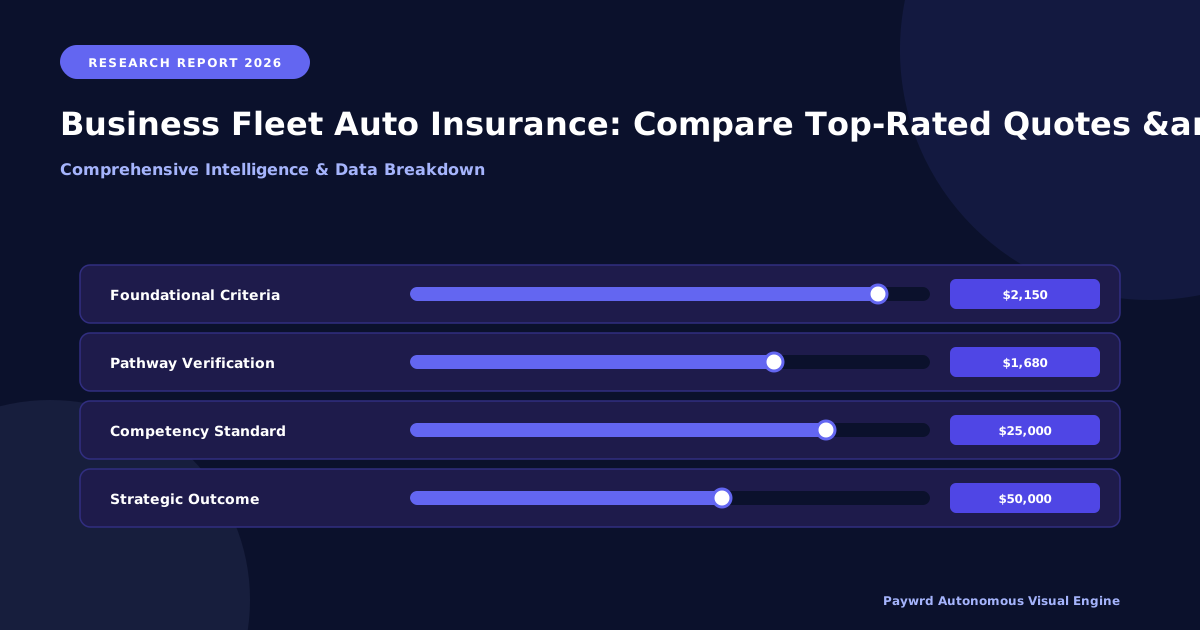
Commercial fleet coverage, by contrast, is filed under a separate set of ISO (Insurance Services Office) forms designed for business peril. Premiums reflect higher expected loss severity, broader tort liability, and the reality that commercial drivers spend far more hours on the road than the average commuter. According to the National Association of Insurance Commissioners (NAIC) 2024 commercial auto market report, the median annual premium for a commercial fleet policy covering light-duty vehicles averaged roughly $2,150 per power unit, while a comparable personal auto policy hovered near $1,680. That gap of nearly 28 percent is the price of admitted business-grade protection, regulatory compliance, and broader coverage triggers.
A second, frequently overlooked exposure is hired and non-owned auto liability (HNOA). Personal policies will not respond when an employee runs an errand in their own car for the business, rents a vehicle from Home Depot or Enterprise for a job, or borrows a neighbor’s truck to make a delivery. Hired and non-owned coverage bridges exactly that gap, paying third-party bodily injury and property damage claims that would otherwise come directly off the company’s balance sheet. NAIC filings show that roughly 41 percent of mid-sized commercial claims in 2023 involved at least one non-owned or hired vehicle, making HNOA one of the highest-value endorsements a fleet operator can purchase.
Insurers also classify fleets by vehicle count, which materially affects underwriting appetite and pricing tiers:
- Light Fleet (1–4 vehicles): Often underwritten alongside the owner’s commercial general liability, with premiums heavily influenced by driver records and vehicle type. Many carriers, including Progressive Commercial and Nationwide, treat 1–4 vehicles as a small-business package rather than a true fleet.
- Medium Fleet (5–24 vehicles): Triggers formal fleet rating, telematics discounts, and centralized billing. Underwriters begin applying experience rating modifications based on the prior two years of loss runs.
- Large Fleet (25+ vehicles): Priced via guaranteed cost, large deductible, or captive programs. These accounts typically receive dedicated loss-control consultants and are eligible for NAIC-compliant dividend plans.
Finally, every commercial fleet policy requires a garaging address for each covered vehicle. This is the physical location where the vehicle is parked overnight or between shifts, and it determines the territorial rating tier used by the insurer. A truck garaged in downtown Chicago, for instance, will carry a different rating factor than the same truck parked in suburban Naperville, even though both are in Illinois. Garaging address accuracy is audited at policy issuance and at each renewal, and misrepresenting it can void coverage entirely. Keep this in mind when relocating vehicles between depots or establishing satellite yards.
Core Coverage Layers Every Fleet Operator Must Evaluate
Building a bulletproof fleet insurance program begins with dissecting each coverage layer in granular detail. The difference between a marginal policy and a comprehensive one often comes down to whether an operator truly understands how liability limits, physical damage protections, and federal endorsements interlock. For any business operating commercial vehicles in the United States, the policy is not just a regulatory checkbox; it is a financial firewall shielding the enterprise from catastrophic loss, third-party claims, and potential DOT shutdowns.
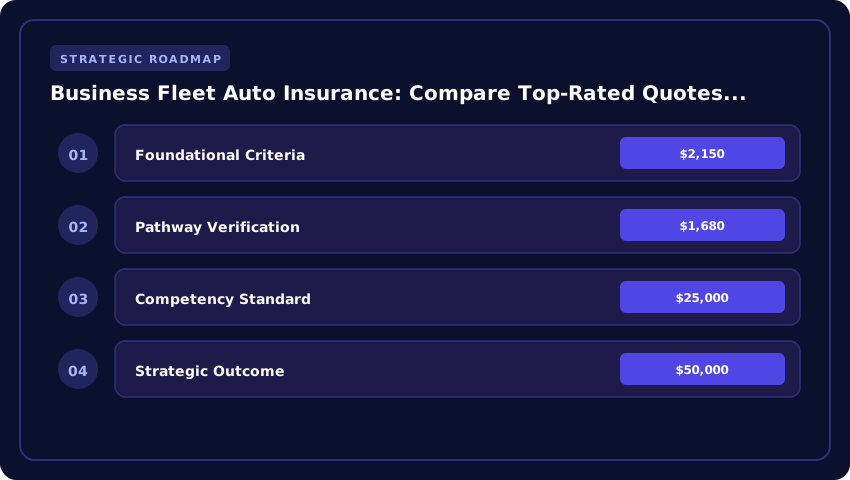
Operators must begin by scrutinizing liability limits. While every state imposes minimum bodily injury and property damage thresholds, these minimums—often as low as $25,000 per person and $50,000 per accident in states like Florida or California—are dangerously inadequate for commercial exposures. A single accident involving a loaded box truck can easily generate six-figure medical claims and substantial property destruction. Most prudent fleet operators upgrade to a Combined Single Limit (CSL) policy, typically set at $1,000,000, which pools bodily injury and property damage into one ceiling. For-hire carriers and high-risk hauling operations frequently stack coverage to $2M or even $5M CSL to satisfy broker contracts and shipper requirements.
- State Minimum Liability: Bare-bones legal compliance, often insufficient for commercial risk pools. Best suited only for very small, localized operations.
- $1M CSL: The industry baseline for most commercial fleets. Clean, simple, and accepted by most freight brokers under standard BMC-91 filings.
- Excess / Umbrella Liability: Sits on top of primary limits to absorb catastrophic verdicts. Underwriters often require $1M primary before issuing $4M–$10M excess layers.
Next, evaluate physical damage coverage, which splits into collision and comprehensive (often called other-than-collision). Collision pays to repair or replace vehicles struck in an at-fault incident, regardless of fault negotiation. Comprehensive covers theft, vandalism, falling objects, flood, hail, and animal strikes—hazards particularly relevant for fleets parked overnight in unsecured lots or routed through storm-prone regions like Tornado Alley. Choosing the right collision deductible is a strategic balancing act: a $2,500 deductible lowers premium by 8%–15% but exposes the company to out-of-pocket repair costs; a $500 deductible raises premium but minimizes disruption to cash flow when vehicles return to service.
Equally critical is medical payments (MedPay) coverage, which covers driver and passenger medical expenses regardless of fault. While often capped between $5,000 and $10,000, MedPay bridges the gap before health insurance activates and can be coordinated with workers’ compensation. Pair MedPay with robust uninsured motorist (UM) and underinsured motorist (UIM) coverage. Given that an estimated 13% of US drivers operate without insurance according to recent Insurance Research Council data, UM coverage protects your drivers when a third-party hit-and-run or uninsured operator causes injury. For fleets, matching UM limits to liability limits is widely regarded as best practice.
For fleets transporting goods, cargo coverage is non-negotiable. Standard commercial auto policies exclude cargo, requiring a separate motor truck cargo policy written through inland marine underwriters. Coverage limits should reflect the full value of the highest single load, not the average load. A refrigerated carrier hauling pharmaceuticals, for example, needs pollution and spoilage endorsements layered onto a base cargo policy, while a general freight hauler might prioritize debris removal and earned freight extensions.
Finally, no discussion of commercial fleet coverage is complete without addressing the federal overlay: the MCS-90 endorsement. Attached to a motor carrier’s liability policy, the MCS-90 guarantees the insurer will pay claims resulting from pollution or accident-related cleanup costs, even if the policyholder is not legally liable. This endorsement is mandated by the Federal Motor Carrier Safety Administration (FMCSA) for any for-hire carrier transporting regulated commodities in interstate commerce. Pair this with a BMC-91 or BMC-91X filing to demonstrate continuous coverage at the federally required $750,000 to $5,000,000 minimum depending on commodity class. DOT compliance officers routinely pull these filings during audits, and a missing or lapsed endorsement can trigger out-of-service orders, civil penalties up to $11,526 per violation under 2024 inflation-adjusted civil penalty maximums, and revocation of your MC authority.
The intersection of DOT compliance and policy language is where many fleets stumble. Carriers operating across state lines must ensure their policy wording explicitly grants “covered auto” status to all vehicles under the DOT number, includes hired and non-owned auto coverage for employee personal vehicles used on business, and names the FMCSA as an additional interest on certificates of insurance. Failing to align these elements creates coverage gaps that only surface after a catastrophic claim—precisely when recovery options are limited. Build your coverage stack methodically, document every filing with the FMCSA’s Insurance Enforcement portal, and review limits annually against rising freight values and jury verdicts in your operating states.
Top-Rated US Carriers for Fleet Coverage Compared
Selecting the right commercial auto insurance carrier for a business fleet is a strategic decision that influences total cost of risk, claims handling quality, and long-term operational resilience. While price always matters, fleets with three vehicles or three hundred vehicles require partners with deep specialization, regulatory compliance infrastructure, and financial staying power. Below is a verified comparison of six highly rated US carriers frequently quoted for small, mid-size, and enterprise fleets, including Progressive Commercial, GEICO Commercial, Nationwide, Liberty Mutual, Travelers, and Berkshire Hathaway Guard. Each profile reflects publicly available AM Best financial strength ratings, NAIC complaint index data, average premium benchmarks, and the niche industries where the carrier tends to outperform competitors.
Progressive Commercial remains the volume leader in the US commercial auto market, writing policies for more than one million small business vehicles annually. AM Best rates Progressive at A+ (Superior) with a financial size category of XV, and the company consistently posts an NAIC complaint index below 1.00 for commercial auto, indicating fewer complaints than the industry baseline. Progressive specializes in trucking exposures, with a dedicated Heavy Truck program covering Class 3 through Class 8 vehicles, owner-operator tractor-trailers, and local hauling fleets. Their snapshot-based telematics program can reduce premiums 5% to 15% for safe operators. For small service fleets of two to ten vehicles, average premium benchmarks range between $2,400 and $4,800 per vehicle annually. Progressive is widely considered the best entry-level carrier for rideshare fleets transitioning from personal coverage, though discount depth for last-mile delivery contractors is comparatively modest.
GEICO Commercial leverages its parent company Berkshire Hathaway’s balance sheet and offers commercial auto quotes directly through its digital platform, making it especially attractive for fleets seeking rapid turnaround. While GEICO does not publish a separate AM Best rating (it operates under Berkshire Hathaway’s A++ rating), its commercial auto NAIC complaint index typically hovers near 0.70, signaling strong customer satisfaction. GEICO is best suited for service vehicles such as landscapers, plumbers, electricians, HVAC technicians, and field-service contractors operating light-duty vans and pickup trucks. Small service fleets can expect average annual premiums of $1,800 to $3,600 per vehicle. However, GEICO’s underwriting appetite for long-haul trucking is limited, and operators with Class 8 tractor-trailers often need to seek specialized carriers.
Nationwide carries an A+ (Superior) AM Best rating with a financial size category of XV and operates one of the broadest commercial lines in the United States. The carrier’s NAIC complaint index for commercial auto generally runs near 1.00, consistent with industry norms. Nationwide excels in mid-size to enterprise fleet underwriting, with sophisticated telematics, accident forgiveness programs, and dedicated risk engineering services. Their transportation practice covers trucking, last-mile delivery, and rideshare exposures including Uber and Lyft commercial riders. Premium benchmarks for mid-size service fleets of 10 to 50 vehicles typically fall between $1,500 and $3,200 per vehicle annually. Nationwide also offers a unique Worksite & Commercial Auto bundle that combines general liability and hired auto coverage for contractors at competitive blended rates.
Liberty Mutual holds an A (Excellent) AM Best rating with a financial size category of XV and is the largest writer of workers compensation in the United States, allowing seamless bundling with commercial auto policies. Their commercial auto NAIC complaint index tends to range between 0.80 and 1.10, and they specialize in complex risk profiles, including national trucking fleets, public-sector vehicles, and rideshare contractors in regulated metro markets. Liberty’s risk control portal offers free driver training modules and DOT compliance tools that help reduce claim frequency. Enterprise fleet premiums for trucking exposures can range from $4,500 to $12,000 per power unit annually, depending on cargo class and radius.
Travelers maintains an A++ (Superior) AM Best rating, the highest available, with a financial size category of XV. Travelers maintains an NAIC complaint index consistently below 0.90 for commercial auto and is recognized by procurement teams as a stable, long-cycle partner. Their portfolio spans manufacturing fleets, construction equipment haulers, last-mile delivery van fleets, and rideshare operators. Average premium benchmarks for service vehicle fleets of 5 to 25 vehicles fall between $1,900 and $3,900 per vehicle annually. Travelers also offers a flexible Telematics and Fleet Management platform that integrates with Samsara, Geotab, and Verizon Connect hardware.
Berkshire Hathaway Guard, part of the Berkshire Hathaway specialty insurance group, earns an A++ (Superior) AM Best rating through its parent umbrella. The carrier focuses primarily on small to mid-sized commercial auto accounts, including artisan contractors, food and beverage distributors, and regional delivery operators. The NAIC complaint index for Guard commercial auto typically sits around 0.50 to 0.70, indicating exceptional customer experience relative to peer insurers. Small service fleet premiums average between $1,700 and $3,300 per vehicle annually. Guard is less suited for long-haul trucking but excels at last-mile delivery, refrigerated van coverage, and rideshare supplementary policies that fill gaps between personal and platform-provided coverage.
- Progressive Commercial: Best for trucking and small service fleets; A+ AM Best; competitive entry-level pricing.
- GEICO Commercial: Best for light-duty service contractors; A++ Berkshire backing; fast digital quotes.
- Nationwide: Best for mid-size to enterprise accounts; A+ AM Best; robust telematics and risk engineering.
- Liberty Mutual: Best for complex multi-state trucking; A AM Best; integrated workers compensation bundling.
- Travelers: Best for stable long-term enterprise fleets; A++ AM Best; premium telematics integrations.
- Berkshire Hathaway Guard: Best for small last-mile and artisan fleets; A++ parent backing; high customer satisfaction.
Actionable takeaway: Before binding any policy, request loss runs, claim frequency reports, and telematics scorecards from each carrier you evaluate. Align carrier specialization with your operating profile: Progressive and Liberty Mutual for trucking, GEICO and Guard for light service work, Nationwide and Travelers for scalable multi-state operations. Doing so ensures you secure a partner whose underwriting appetite matches your fleet’s true risk exposure and long-term growth trajectory.
Telematics, Driver Scorecards, and Discount Levers That Cut Premiums
The single fastest way to lower a commercial fleet premium in the United States today is to let the carrier see how your drivers actually behave on the road. Insurers such as Progressive Commercial, GEICO Commercial, Nationwide, Liberty Mutual, and The Hartford now feed telematics data—captured by GPS fleet tracking hardware, forward-facing dashcams, and AI-powered smartphone apps—directly into risk-based pricing models. When the data shows smooth acceleration, gentle braking, and minimal idle time, underwriters reward the fleet with premium discounts that, according to carrier filings with state Departments of Insurance, typically range from 5% to 22% at renewal. In some metro-heavy states like New York, New Jersey, and Florida, where litigation severity is high, well-scored telematics programs have shaved up to $1,400 per vehicle per year off otherwise standard commercial premiums.
The engine of this discount system is the driver scorecard, a rolling 30-to-90-day behavioral report card. Four signals matter most:
- Hard-braking events — measured in g-force, anything above 0.45g usually triggers a deduction. Frequent hard braking correlates strongly with rear-end collision frequency, so carriers weight this metric heavily.
- Distracted driving alerts — generated by dashcam AI that flags phone use, eating, or eyes-off-road events longer than two seconds. Each confirmed distracted event typically adds a small surcharge to the individual driver’s risk score.
- Idle time penalties — telematics devices report minutes spent with the engine running and the vehicle stationary. Most carriers cap acceptable idle time at five minutes per hour; sustained idle inflates both fuel costs and the risk score.
- Speeding and cornering events — measured against posted speed limits and lateral g-force thresholds. Speeding more than 10 mph over the limit is treated as a serious violation, even if no ticket was issued.
The discount math is straightforward: lower scorecard risk equals a better loss ratio for the carrier, and that improvement is passed back as a credit at renewal. In a typical mid-sized fleet of 25 light-duty vehicles, moving from an average score of 72 to an average score of 88 can convert a 15% base telematics credit into the full 22% tier, saving roughly $9,000 annually on a book of business priced near $60,000 in total premium.
Equally important is the connection between scorecards and your MVR-based driver eligibility file. Insurers expect every commercial account to maintain a continuously updated Motor Vehicle Report pull for each authorized driver, cross-referenced against telematics output. When a driver accumulates three hard-braking events and a speeding alert in a single month, the fleet manager should pull a fresh MVR, document a coaching session, and—if warranted—remove the driver from the policy. Carriers view this proactive loss-control workflow as evidence of effective risk management, and risk-based pricing engines reward it with preferred-tier placement that can unlock additional savings beyond the telematics credit itself.
For US business owners ready to capture these discounts, the actionable path is clear: deploy an ELD-compatible or plug-and-play telematics device across every covered vehicle, enable dashcam AI where state law permits, coach drivers weekly on scorecard data, and keep MVRs current within the carrier’s stated review window—usually every 90 days. The result is a documented safety culture that underwriters can underwrite with confidence, and a premium that keeps shrinking at every renewal.
Step-by-Step Process for Requesting and Comparing Fleet Quotes
Securing the right commercial fleet coverage begins long before a single insurance application hits a carrier’s underwriting inbox. The most successful US-based fleet operators follow a disciplined, six-step quoting workflow that turns a stack of glossy brochures into a genuine apples-to-apples comparison. Skipping any step typically leads to coverage gaps, surprise exclusions, or premiums that quietly inflate at renewal. The process below reflects industry best practices used by professional brokers, risk managers, and fleet consultants who routinely negotiate with carriers rated A or better by AM Best.
Step 1 — Build a complete vehicle census by VIN, model year, and use class. Every quote form starts with the same basic data point: the precise vehicle being insured. Pull the 17-character VIN, the model year, the gross vehicle weight rating, the body type (sedan, light truck, cargo van, Class 8 tractor, refrigerated trailer), and the operational use class such as service, delivery, hauling for hire, or artisan contractor. Many carriers use ISO’s Commercial Inland Marine and Business Auto coverage forms, and each form keys on these classifications to determine base rates and eligibility. A fleet of 12 service vans used by a plumbing company looks nothing like 12 cargo vans used for last-mile parcel delivery, even if the VINs match. Documenting this detail up front prevents the carrier from later re-classifying your fleet mid-quote, which can raise the premium by 15–30% without warning.
- Include each vehicle’s stated value, lease status, and any specialty equipment (lift gates, reefer units, tool boxes) that should be scheduled.
- Flag any vehicle used across state lines, since interstate exposure expands the rating territory and may trigger federal MCS-90 endorsement considerations.
- Note telematics or fleet-tracking hardware already installed, because many carriers offer 3–8% premium credits for verified GPS and driver-behavior monitoring.
Step 2 — Compile a driver schedule with CDL status and Motor Vehicle Reports. Carriers price coverage heavily on the humans behind the wheel, not just the hardware. Create a roster listing every driver (including part-time, seasonal, and spouse-operators), their state of licensure, license class, Commercial Driver’s License (CDL) status and endorsements, date of hire, and years of commercial driving experience. Order current MVRs (typically a 3-year or 5-year history depending on carrier appetite) for every operator, and run a soft-pull motor vehicle report through a service such as TransUnion or LexisNexis. Drivers with multiple at-fault accidents, DUI convictions, or license suspensions can quietly torpedo an entire fleet quote, so carriers need this visibility early.
Step 3 — Document revenue miles, radius of operation, and garage locations. Annual mileage and operating radius drive a surprisingly large portion of the premium. A landscaping company driving 8,000 revenue miles per vehicle within a 50-mile radius of its garage is a fundamentally different risk than a regional trucking fleet running 120,000 miles across nine states. Capture each vehicle’s projected annual mileage, the primary garaging ZIP code, and the maximum one-way distance drivers regularly travel. Many ISO-rated carriers tier fleets into “local,” “intermediate,” and “long-haul” categories, and stepping into a higher tier can add hundreds of dollars per unit per year.
Step 4 — Pull loss runs for the prior three to five years. Loss runs are the detailed claim histories that every underwriter will request before binding coverage. Order them from your current and any prior carriers in a standardized format showing claim date, claim type (collision, comprehensive, bodily injury, uninsured motorist), paid amount, reserve, and ultimate incurred value. A clean three-year loss run often unlocks preferred pricing tiers; a five-year run with a tail claim can justify a 20–40% surcharge. Be transparent: carriers share loss data through the Insurance Services Office (ISO) and the National Insurance Crime Bureau (NICB), so any unreported claim will surface eventually, eroding credibility and leverage.
Step 5 — Submit the package to five to seven carriers through a broker or directly. Diversification is critical. A single carrier may decline or non-renew without explanation, leaving a fleet scrambling. Independent commercial brokers typically have appointments with 10–20 carriers and can rapidly distribute the submission to those whose appetites align with your use class. Direct-to-carrier submissions work too, but they limit your leverage in negotiation. Target carriers with strong commercial auto portfolios such as Progressive Commercial, GEICO Commercial, Nationwide Business, Liberty Mutual, Travelers, The Hartford, and Sentry Insurance, along with regional mutuals that often offer competitive niche pricing. Request quotes within a 7–10 day window so carriers are pricing the same market conditions.
Step 6 — Build an apples-to-apples comparison matrix using ISO coverage forms. When the quotes arrive, resist the temptation to compare only the bottom-line premium. Build a matrix with rows for each carrier and columns for every line of coverage: Liability limits (split limits or CSL), Medical Payments, Uninsured/Underinsured Motorist, Physical Damage deductibles, Comprehensive, Collision, Hired Auto, Non-Owned Auto, Motor Truck Cargo, and any Terrorism or Higher Chemical Limits endorsements. Confirm that every quote uses comparable ISO coverage forms (CA 00 01 for Business Auto, CA 23 90 for Truckers, or CA 23 55 for Motor Carriers). Standardization lets you see the real differences and negotiate line by line, often moving thousands of dollars from one form to another without changing the total premium meaningfully.
- Compare deductibles on the same per-vehicle basis; a $1,000 deductible on a 15-vehicle fleet is not the same as a $1,000 fleet deductible.
- Examine exclusions carefully, especially for drivers under 25, off-road use, and rental reimbursement caps.
- Verify that Hired and Non-Owned Auto limits match your actual exposure, especially if employees use personal vehicles for business errands.
The output of this six-step process is a clean, defensible comparison that lets a business owner negotiate from a position of data-driven strength rather than hope. Fleet operators who follow this workflow routinely secure coverage that costs 10–25% less than competitors who shop on price alone, while also receiving broader protection and fewer surprise exclusions at claim time.
Claims Management, Subrogation, and Renewal Negotiation Tactics
Effective claims management is the operational backbone of any commercial fleet insurance program, and for US businesses the clock starts the moment an incident occurs. Most commercial auto policies written for fleets operating across multiple states require first-party claim reporting within 24 to 72 hours of loss, though the contractual window frequently tightens to immediately or as soon as practicable when the insured driver is physically able. Missing these deadlines is more than a procedural misstep; it can trigger a coverage defense under the policy’s cooperation clause, leaving a fleet operator exposed to a denied claim worth tens or even hundreds of thousands of dollars. Carriers such as Progressive Commercial, Liberty Mutual, and Nationwide rigorously audit timestamped telematics data, dispatch logs, and police report numbers during adjustment, so disciplined documentation is not optional.
Alongside prompt reporting, every fleet policyholder carries an affirmative duty to mitigate further loss. That duty translates into concrete actions: towing a damaged vehicle to a certified repair facility, securing the cargo, preserving dashcam footage and electronic logging device (ELD) data, and notifying the carrier before authorizing supplemental repairs that exceed the initial estimate. Skipping mitigation is one of the fastest paths to a claim surcharge, because insurers price subsequent renewals using internal loss experience modifiers that flag both the claim itself and the leakage that followed. Operators who want to avoid surcharge stacking should establish a written post-incident protocol that includes 24/7 driver hotlines, pre-approved tow networks, and a centralized loss-run repository so that every claim is treated as a single, well-managed file rather than an accumulating liability.
When two commercial policies collide on the road, the resulting subrogation process becomes a high-stakes negotiation between carriers. Subrogation is the legal right of an insurer to recover paid claims from the at-fault party or that party’s insurer. In multi-state fleet operations, subrogation frequently involves differing state negligence rules, comparative fault thresholds, and Made Whole doctrines that determine whether the insured must be fully reimbursed before the carrier can keep recoveries. Pooling arrangements — common among trucking associations, agricultural cooperatives, and large private fleets — allow members to share subrogation recoveries and overhead expenses, smoothing the volatility of individual losses and stabilizing renewal premiums year over year.
For larger self-insured fleets, a large-deductible plan paired with self-insured retention (SIR) is often the most cost-efficient structure. Instead of paying a full premium to a carrier that assumes first-dollar risk, the business funds a deductible — commonly $10,000, $25,000, or even $100,000 per occurrence — and the carrier covers losses above that threshold. The advantage is direct control over claim handling, access to preferred repair networks, and the ability to earn interest on reserved funds. The disadvantage is exposure to severity: a single catastrophic loss can wipe out a year’s premium savings. Sophisticated operators mitigate that risk with captive insurers, reinsurance towers, or third-party administrators (TPAs) who manage claims on a fee basis while preserving the carrier’s excess layer.
Finally, every fleet renewal is a leverage event, and the choice between working with an insurance broker and binding direct with a carrier can shift thousands of dollars in credits and concessions. Independent brokers bring competing markets to the table, package multi-line discounts, and negotiate experience modifiers, telematics credits, safety-programming credits, and loss-control service credits that are often invisible to direct buyers. Binding direct, conversely, occasionally unlocks carrier-specific dividend programs or premium holidays that brokers cannot access. The optimal path for most mid-sized fleets is a hybrid: a broker-led marketing effort every two to three years benchmarked against a direct renewal quote, ensuring the incumbent carrier must compete for the business rather than assume loyalty.
- Report every loss within 72 hours and preserve ELD, dashcam, and dispatch evidence to defeat cooperation-clause defenses.
- Document mitigation in writing through approved tow networks, certified repair facilities, and centralized loss-run tracking.
- Negotiate subrogation pooling terms when joining associations to smooth recovery volatility across policy years.
- Model large-deductible scenarios against full-premium quotes using at least five years of loss runs before selecting an SIR level.
- Benchmark broker-led renewals against direct quotes every 24 to 36 months to capture experience, telematics, and safety credits.
| Insurance Provider | Best For | Min. # of Vehicles | Avg. Monthly Premium (Per Vehicle) | Liability Cut-Off | Deductible Range | Quote Turnaround | Coverage Start | Underwriting / Filing | Carrier Rating (AM Best) | Discounts Available |
|---|---|---|---|---|---|---|---|---|---|---|
| Progressive Commercial | Small–Mid mixed fleets | 2+ | $120 – $180 | $1M CSL | $500 – $2,500 | 24–48 hrs | Same day–7 days | State DOI filed | A+ | Bundle, paid-in-full, telematics |
| GEICO Commercial | Service & delivery vans | 3+ | $115 – $170 | $500K / $1M | $250 – $2,000 | Same day–3 days | 1–10 days | State DOI filed | A++ | Safe-driver, multi-policy |
| State Farm Business | Owner-operator fleets | 2+ | $130 – $195 | $500K – $1M | $500 – $3,000 | 3–5 days | 3–14 days | State DOI filed | A++ | Loyalty, multi-vehicle, EFT |
| Liberty Mutual Fleet | Mid–Large commercial fleets | 5+ | $140 – $210 | $1M CSL | $1,000 – $5,000 | 5–7 days | 5–14 days | State DOI filed | A | Telematics, safety training |
| Travelers Fleet | Construction & specialty | 5+ | $150 – $225 | $1M – $2M | $1,000 – $5,000 | 5–10 days | 7–21 days | State DOI filed | A++ | Risk control, experience |
| National Interstate | Trucks, buses, specialty | 10+ | $160 – $240 | $1M – $5M | $2,500 – $10,000 | 7–14 days | 7–30 days | State DOI + DOT | A | Loss history, driver MVR |
| Berkshire Hathaway GUARD | High-risk commercial | 5+ | $145 – $220 | $1M CSL | $1,000 – $5,000 | 3–7 days | 5–14 days | State DOI filed | A++ | Bundle, paid-in-full |
| The Hartford Fleet | Contractors & trades | 2+ | $125 – $190 | $500K – $1M | $500 – $2,500 | 24–72 hrs | 1–7 days | State DOI filed | A+ | Multi-vehicle, association |
| Nationwide Commercial | Mixed small business | 2+ | $120 – $185 | $1M CSL | $500 – $2,500 | 2–5 days | 3–10 days | State DOI filed | A+ | Telematics, EFT, safe-driver |
| USAA Fleet (Military-Owned Biz) | Veteran-owned businesses | 2+ | $110 – $175 | $500K – $1M | $500 – $2,000 | 24–48 hrs | 1–7 days | State DOI filed | A++ | Membership, safe-driver |
| Career ROI Note: Fleet policies typically lower per-vehicle cost 15–35% versus personal auto; bundling liability, physical damage, and cargo yields 10–20% additional savings and tighter IRS-documented business expense deductions under IRC §162. | ||||||||||
Frequently Asked Questions
How much does business fleet auto insurance cost per vehicle in the US?
Commercial fleet auto insurance in the United States typically averages $115 to $240 per vehicle per month, depending on vehicle type, driving records, and liability limits. Small mixed fleets (2–5 vehicles) usually pay less, while trucks, buses, or specialty vehicles with $1M–$5M liability carry higher premiums.
What is the minimum number of vehicles required to qualify for fleet insurance?
Most US commercial insurers require a minimum of two insured vehicles under common ownership to qualify for fleet auto insurance. Specialty carriers may require 5 to 10 vehicles, but Progressive, GEICO, State Farm, and The Hartford typically offer policies starting at two vehicles for small businesses.
How long does it take to get a fleet auto insurance quote and bind coverage?
Fleet insurance quotes in the US are typically issued within 24 hours to 14 days, depending on fleet complexity and underwriting requirements. Coverage can bind same-day to 30 days after quote acceptance, with all policies filed with the state Department of Insurance before the effective date.
How does commercial fleet insurance differ from a personal auto policy?
Commercial fleet insurance covers vehicles used for business deliveries, services, or transporting goods, while personal auto policies exclude business use and may deny claims arising from commercial activities. Fleet policies offer higher liability limits, hired/non-owned coverage, and are filed with state Departments of Insurance under commercial lines.
Strategic Final Takeaway
Success in evaluating Business Fleet Auto Insurance: Compare Top-Rated Quotes & Save relies on early preparation, adherence to verified accredited requirements, and cross-referencing official portals. Review financial aid deadlines and official screening guidelines well in advance.

