

Decoding the 2026 F-1 Visa Cap Policy for Nigerian Applicants
The United States Mission in Nigeria operates two active non-immigrant visa posts, the Embassy in Abuja and the Consulate General in Lagos, and together they remain the single most important gateway for Nigerian students pursuing undergraduate, graduate, and postgraduate studies in the United States. For the 2026 academic cycle, the U.S. Department of State has maintained its global F-1 student visa cap structure under Section 214 of the Immigration and Nationality Act, which limits the period of authorized stay to the duration of a student’s full course of study plus a 30-day grace window for departure preparation. However, the operational reality for Nigerian applicants is shaped by a unique combination of reciprocity rules, security clearance timelines, and administrative processing delays that frequently stretch into the critical summer months when universities expect international students to arrive for orientation.

Nigerian applicants should first understand that the F-1 visa itself is technically issued for “multiple entry” status with a standard validity stamp of up to five years for citizens of countries that enjoy reciprocal long-issuance privileges. Unfortunately, Nigeria falls into a more restrictive reciprocity tier, meaning the F-1 visa stamp placed in a Nigerian passport at either the Abuja or Lagos post is typically valid for only 12 months (one year) from the date of issuance. This single-year validity is the single most misunderstood element of the application process, because it does not limit the student’s authorized duration of stay in the United States (that is controlled by the Form I-20 issued by the school), but it does require the student to renew the visa stamp before any international travel once the initial year expires. For a student admitted to a four-year program at a university like the University of Texas at Austin or a two-year master’s program at NYU, planning for at least one visa renewal trip back to Nigeria is a near certainty.
The 2026 policy cycle introduces several exemption categories that are particularly relevant to Nigerian applicants and worth examining line by line. Students whose programs are fully funded by the U.S. Government, such as Fulbright grantees, Humphrey Fellows, or participants in the Mandela Washington Fellowship, continue to receive expedited scheduling and are exempt from the standard administrative processing queues. Similarly, those holding F-1 status who are transferring between schools, changing degree levels, or activating a cap-gap extension are processed under streamlined rules. The cap-gap extension itself is a critical provision: if an Optional Practical Training (OPT) application is pending with U.S. Citizenship and Immigration Services on April 1 and the student’s OPT end date falls between May 1 and October 1, the F-1 status is automatically extended through October 1, bridging the gap between program completion and work authorization.
For the 2026 cycle, applicants must also navigate the Social Media Transparency requirement that took effect in 2025, which mandates the disclosure of all social media handles used in the past five years, including LinkedIn, X (formerly Twitter), Instagram, TikTok, and WhatsApp community channels. Nigerian students who use these platforms professionally to network with U.S. professors or share research should curate their public profiles before the visa interview, as consular officers now routinely review posted content to assess whether applicants present credible, non-immigrant intent. Posts about wanting to “settle in America,” permanent immigration aspirations, or family reunification plans can trigger a 221(g) refusal under Section 214(b) of the Immigration and Nationality Act, which presumes every applicant is an intending immigrant unless they convincingly demonstrate otherwise.
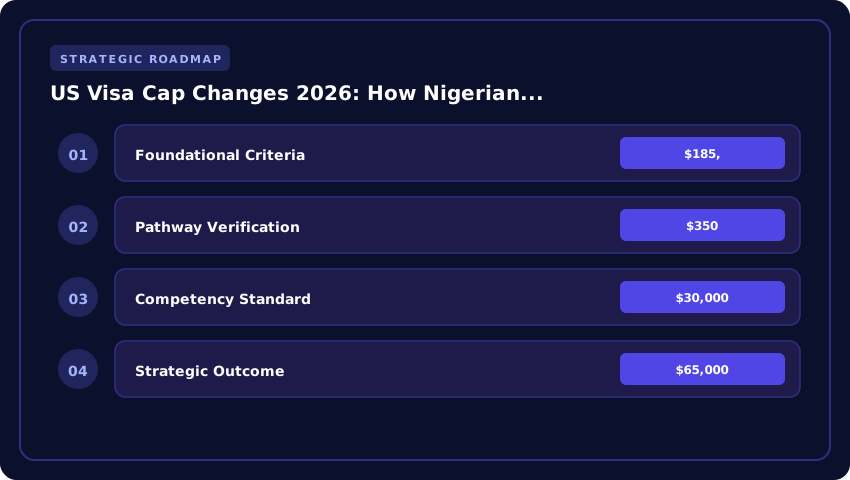
Finally, applicants should budget realistically for the total cost of securing the visa stamp at the Abuja or Lagos post. As of late 2025, the MRV (Machine Readable Visa) application fee stands at $185, roughly ₦295,000 at the parallel market rate used by most visa logistics providers, though official CBN rates fluctuate between ₦285,000 and ₦310,000. On top of this, students typically pay ₦45,000 to ₦85,000 for mandatory biometrics, ₦30,000 for courier return of the passport via the selected logistics partner, and anywhere from ₦150,000 to ₦350,000 for a reputable travel agency to handle appointment scheduling, document preparation, and interview coaching. These figures do not include the SEVIS I-901 fee of $350 (about ₦560,000) that every F-1 student must pay before the embassy will even schedule the interview.
- Standard F-1 validity for Nigerians: 12 months (single-year stamp) from the date of issuance at Abuja or Lagos, regardless of program length stated on the I-20.
- Duration of authorized stay in the U.S.: Length of the full course of study plus 30-day grace period, as printed on Form I-20, item 5.
- Cap-gap automatic extension window: Up to October 1 of the OPT-application year, provided the I-765 was properly filed during the recommended 90-day pre-completion window.
- Exempt categories most relevant to Nigerians: U.S. government scholarship recipients, SEVIS record transfers, and change-of-level applicants already inside the United States.
- Critical 221(g) risk factors: Inconsistent social media presence, weak demonstration of non-immigrant intent, and incomplete financial documentation showing tuition and living expenses for the first academic year (typically ₦12 million to ₦25 million, or $30,000 to $65,000).
Understanding these mechanics is the foundation of a successful 2026 application strategy. Nigerian students who begin their DS-160 form at least four months before their program start date, pay the SEVIS fee promptly after receiving the I-20, and present a credible academic and career plan that ties their U.S. education back to professional opportunities in Lagos, Abuja, Port Harcourt, or their home region will dramatically improve their odds at the consular window. The F-1 visa cap policy is not designed to exclude Nigerians; it is designed to ensure that those who do receive the stamp arrive prepared, funded, and committed to returning home to contribute to West Africa’s rapidly expanding tech, finance, and creative economies.
Why Nigerian Universities Are Now Receiving Reverse-Brain Drain Inquiries
For decades, the academic pipeline from Lagos, Ibadan, Kano, and Ile-Ife flowed steadily outward, with the brightest JAMB candidates treating UNILAG, UI, BUK, and OAU primarily as launchpads toward graduate schools in Boston, Manchester, and Toronto. That narrative is quietly being rewritten in 2026. Following the latest US visa cap adjustments under the updated F-1 issuance framework, admissions offices across Nigeria’s first-generation federal universities have reported a measurable spike in inquiries from candidates who initially applied abroad, secured partial funding, and are now actively exploring domestic alternatives before the next Post-UTME screening window closes. This is the quiet mechanics of what educators informally call “reverse-brain drain inquiries”: not the return of accomplished diaspora scholars, but the retention of high-performing students who, a year ago, would not have considered a Nigerian master’s or undergraduate program as their Plan A.
What is driving this shift is a combination of regulatory pressure and opportunity. The United States Mission in Nigeria, operating through its Abuja Embassy and Lagos Consulate General, has signaled tighter scrutiny on F-1 applicants under the new cap, particularly for programs that do not fall within the Department of Homeland Security’s STEM-designated categories. Students who previously assumed a US admission letter guaranteed a visa interview are now recalculating risk, especially those preparing for the upcoming JAMB UTME cycle and weighing whether to commit ₦8,000 to ₦10,000 in JAMB fees, plus separate Post-UTME charges ranging from ₦2,000 to ₦5,000, for a pathway that may not clear consular adjudication.
At the receiving end of this redirected interest, Nigeria’s federal universities are responding with intentional outreach. The University of Lagos (UNILAG) has expanded its diaspora-friendly postgraduate portal to accommodate transfer-credit inquiries, while the University of Ibadan (UI) has seen a notable uptick in requests from returnees seeking conversion programs for partially completed US coursework. Bayero University, Kano (BUK), traditionally strong in the North for STEM and health sciences, has reported increased traffic from candidates who previously targeted programs in Texas and Ohio. Obafemi Awolowo University (OAU) Ile-Ife, long favored for engineering and architecture, is now fielding daily inquiries from students exploring CCMAS-approved curricula that map closely to international credit frameworks.
What makes the 2026 cycle distinct is the parallel emergence of private universities operating under the National Universities Commission’s revised Core Curriculum and Minimum Academic Standards (CCMAS). Institutions such as Pan-Atlantic University, Covenant University, Afe Babalola University, and Bells University of Technology have aggressively positioned themselves as scholarship-equivalent alternatives, offering tuition packages structured around diaspora-friendly payment plans. Several of these private institutions now publish tuition schedules denominated in both Naira and US Dollars, allowing families to plan around current exchange realities where the naira trades in the ₦1,500 to ₦1,800 range per dollar.
The NUC’s revised diaspora policy, issued earlier this academic session, explicitly encourages universities to formalize pathways for students returning from interrupted international study. This includes credit-transfer frameworks, recognition of completed coursework from accredited US institutions, and in several cases, accelerated degree-completion options that can shave one to two academic sessions off a traditional four-year bachelor’s timeline. For Nigerian families who have already invested significant capital in US tuition deposits, often between ₦8 million and ₦20 million per academic year, the CCMAS-aligned private universities are marketing themselves as a financially rational pivot, particularly when stacked against NELFUND student loan repayment schedules that begin nine months after graduation.
Here are the key signals admissions officers and prospective students should monitor in this reverse-brain drain moment:
- Post-UTME demand surge: UNILAG, UI, BUK, and OAU admissions portals have reported traffic increases of between 20% and 35% compared to the previous cycle, with postgraduate inquiries rising even more sharply than undergraduate.
- CCMAS scholarship equivalents: Private universities under the NUC’s revised framework are offering merit awards ranging from 15% to 60% of tuition, with some institutions extending automatic waivers to students transferring from accredited foreign programs.
- NELFUND alignment: Domestic tuition at federal universities, often between ₦100,000 and ₦350,000 per session, remains within the maximum loan threshold under the Nigerian Education Loan Fund, making federal institutions particularly attractive for students who lost US-based financial aid.
- Credit transfer recognition: Several CCMAS-approved universities now formally recognize credits from US community colleges and four-year institutions, a meaningful concession that did not exist at scale before the 2026 policy revision.
- WAEC/NECO leverage: Students who already hold five credits including English and Mathematics under the new WAEC grading system can use those results to bypass additional entrance examinations at most federal universities, accelerating the re-entry timeline.
For the Nigerian student weighing options in mid-2026, the strategic insight is this: the visa cap changes have not closed the door on international education, but they have meaningfully widened the domestic window. UNILAG, UI, BUK, and OAU are no longer the consolation prizes they were once perceived to be; they are increasingly the strategically rational choice for students who need certainty, affordability, and a qualification that travels well across the ECOWAS region and beyond. Combine that with the CCMAS-aligned scholarship offerings from accredited private universities, and the reverse-brain drain conversation is no longer hypothetical. It is actively reshaping where Nigeria’s next generation of graduates will earn their degrees.
JAMB UTME & Post-UTME Cutoff Implications for Students Re-routing from US Plans
If your F-1 visa slot slipped away in 2026, your next move should be a disciplined, numbers-first re-entry into the Joint Admissions and Matriculation Board (JAMB) ecosystem. The good news is that your WAEC or NECO results, the same ones a US admissions office would have evaluated, are exactly what Nigerian universities use for merit and catchment screening. The challenge is that Post-UTME windows are tight, screening fees are non-refundable, and aggregate scores are computed differently from the SAT/ACT framing you may have been planning around. Below is a realistic, Nigeria-grounded playbook for 2026 candidates who abandoned overseas applications and now need a fast, verifiable route into a top local university.
How O’Level (WAEC/NECO) combinations translate locally. Most Nigerian degree programmes require five credits at one sitting, including English Language and Mathematics, plus three other subjects relevant to your course of study. For Medicine and Law, the “Big Three” sciences (Biology, Chemistry, Physics) or the humanities trio (Government/History, Literature, CRS/IRS) must be passed at credit level. If your US-bound application was built on IGCSE, GCSE, or foreign curricula, you must sit for WAEC or NECO before any JAMB UTME score will be honoured, no exceptions. Candidates who already hold WAEC/NECO can proceed straight to registration, but anyone with only international papers should target the May/June 2026 WAEC diet or the November/December 2026 NECO diet to remain competitive.
- 2026 UTME score benchmarks (realistic working range for top schools). University of Ibadan, UNILAG, OAU, UI, UNIBEN, and UNIJOS typically close merit admission around 280–320 aggregate. UI sometimes dips to 270 for less competitive courses such as Linguistics or Religious Studies, while UNILAG Law and UI Medicine regularly clear 320.
- Second-tier federal universities such as UNILORIN, UNN, FUTO, and FUTA close around 240–270 aggregate for most programmes, and 270–290 for Engineering, Law, and Pharmacy.
- State universities and emerging federal varsities such as FUOYE, BUK, and KSUSTA usually accept 200–240, while private universities like Covenant, Pan-Atlantic, and Babcock admit from 180 upward for non-competitive courses, provided you can pay the ₦1.2 million to ₦4 million annual tuition.
Remember that the Post-UTME is a 50–60% weighting factor blended into your final aggregate, so a strong JAMB score (320+) can rescue a moderate screening performance, and vice versa. Candidates should target a JAMB score between 280 and 340 to stay safely inside the merit band for any federal university they list as first choice.
Post-UTME screening windows and fees to budget for. Most Post-UTME portals open within four weeks of UTME results release and stay live for 14–21 days. UNILAG charges ₦2,000, UI ₦2,000, UNIBEN ₦2,000, UNILORIN ₦2,000, and private universities charge between ₦5,000 and ₦10,000. Plan to pay for at least two screenings so you have a backup school in case your first-choice list rejects you. The NELFUND student loan, capped at ₦500,000 per academic session for undergraduates, can be applied for once JAMB has confirmed your admission and you have your JAMB registration number plus a valid NIN.
Action checklist for 2026 re-routers.
- Re-print your JAMB result slip at a CBT centre and confirm your O’Level upload on the JAMB CAPS portal before any screening date.
- Pre-load ₦2,500–₦5,000 on your debit card to avoid failed Post-UTME transactions.
- Map your catchment state: candidates from “educationally less developed” states (Ekiti, Bayelsa, Ebonyi, etc.) enjoy a 10–15 point catchment bonus in most federal universities.
- Upload your O’Level results at a JAMB office or accredited CBT centre, paying the ₦1,000 e-Slip charge, and verify the green “cleared” status on the JAMB portal before you pay any Post-UTME fee.
Treat the local route with the same discipline you gave to the I-20 timeline: deadlines are non-negotiable, and the JAMB CAPS admission window is the gatekeeper to NELFUND disbursement.
Funding Without Borders: Leveraging NELFUND and Alternative Tuition Routes
For Nigerian students staring down the reality of US tuition costs—where annual undergraduate fees at state universities now range from ₦18 million to ₦35 million, and private institutions can exceed ₦55 million per year including living expenses—self-funding remains the single biggest barrier to F-1 visa approval. The United States Mission in Nigeria’s Section 214(b) requirements demand that applicants demonstrate not just admission, but credible financial capacity without relying on unauthorized work. This is precisely where the Nigerian Education Loan Fund (NELFUND) becomes a strategic lifeline, provided you understand its mechanics, limitations, and how to stack it with state-level interventions.
Since its operational launch in 2024 under the Student Loan Access Act of 2023, NELFUND has processed over 350,000 applications, disbursing interest-free loans ranging from ₦250,000 to ₦1,000,000 annually for domestic education and select international programmes. For students targeting US institutions, the realistic ceiling sits between ₦500,000 and ₦1,000,000 per academic session, covering partial tuition, books, and accommodation supplements. The loans carry a 0% interest rate during study, with repayment commencing two years after National Youth Service Corps (NYSC) completion at 10% of monthly income—making it one of the most borrower-friendly instruments available to Nigerian students today.
The application process is deliberately streamlined but requires meticulous documentation. Begin by creating your National Identification Number (NIN)-verified profile on the NELFUND portal at nelfund.gov.ng, then complete the Student Loan Application Form with your JAMB registration number, institution admission letter, and JAMB Admission Status Letter. For prospective international students who have received US admission letters but not yet matriculated, NELFUND allows pre-admission applications provided you submit a Conditional Admission Letter from your US institution alongside your JAMB details. Upload requirements include your Birth Certificate, SSCE results (WAEC/NECO), BVN-linked bank statements for six months, and a guarantor with verifiable Federal or State Government employment. Processing typically takes 4–6 weeks, so submit applications at least 90 days before your US program’s enrollment deadline.
To maximize your funding stack, consider layering NELFUND with state-specific scholarship programmes that remain underutilized. The Lagos State Scholarship Board awards up to ₦2,000,000 annually for Lagos indigenes studying abroad, renewable based on academic performance, while the Rivers State Sustainable Development Goals Scholarship offers ₦1,500,000–₦3,000,000 for postgraduate US-bound students in STEM fields. Kwara State’s Kwara State University Scholarship Extension provides supplementary funding of ₦800,000 for state-origin students at accredited foreign institutions. When combined strategically, a Rivers State student could access up to ₦4,000,000 in total funding—NELFUND’s ₦1,000,000 ceiling plus the state scholarship’s ₦3,000,000—closing significant gaps in US tuition affordability.
- Critical Timeline: Submit NELFUND applications by March for Fall intake; state scholarships typically close by April 30th. Missing these windows means waiting an entire academic cycle.
- Repayment Strategy: After NYSC, budget 10% of gross income toward loan servicing. Early voluntary repayments earn no penalties and improve your credit profile for future graduate studies.
- Documentation Trap: US admission letters must clearly state tuition costs in USD with a Naira equivalent. Immigration officers scrutinize financial documentation during F-1 interviews—ambiguity invites 214(b) refusals.
- Alternative Routes: Explore US institution-specific aid (many offer $5,000–$15,000 annual merit awards for Nigerian students), Fulbright Nigeria (covering full tuition for Master’s programmes), and the Nigerian Diaspora Commission’s education bonds.
Ultimately, the visa cap changes of 2026 do not diminish your chances—they sharpen them. Students who arrive at the US Embassy in Abuja or Lagos with layered, documented funding from NELFUND plus state scholarships, clear academic purpose, and strong ties to Nigeria consistently outperform those presenting single-source financing. Your financial plan is your visa application. Treat it with the same rigor you applied to your JAMB UTME preparation, and the borders—despite caps—remain genuinely open.
Canadian & UK Parallel Pathways: What Nigerian Admissions Officers Recommend
For Nigerian applicants who receive an F-1 visa refusal under the new 2026 caps, admissions officers across Lagos, Abuja, and Port Harcourt consistently recommend pivoting to Canadian and UK parallel pathways as credible, high-quality Plan B options. Both countries maintain robust internationalisation policies, world-class research universities, and post-study work visas that allow graduates to convert academic investment into long-term career capital. The University of Toronto, the University of Sheffield, and the University of Glasgow, in particular, have emerged as three of the most recommended destinations for the 2026 intake cycle because of their generous scholarship pipelines, transparent admissions criteria, and welcoming stances toward West African postgraduate talent.
University of Toronto (UofT) remains the gold-standard Canadian parallel option for Nigerian students. For the 2026 September intake, international postgraduate tuition at the St. George campus ranges from approximately CAD 45,000 to CAD 68,000 per year (roughly ₦52 million to ₦78 million at current exchange rates), depending on the program. Engineering, Computer Science, and Rotman MBA cohorts sit at the upper end, while Arts and Science master’s programs typically fall between CAD 48,000 and CAD 55,000. Admissions officers note that UofT offers the Post-Graduation Work Permit (PGWP), which permits graduates of programs longer than eight months to work in Canada for up to three years, providing a clear pathway from study to permanent residency through Canadian Experience Class streams.
University of Sheffield, a Russell Group institution in Northern England, is the UK’s most recommended mid-cost alternative. International tuition for the 2026/27 academic year is projected between £22,000 and £28,500 annually (approximately ₦44 million to ₦57 million), with Engineering, Data Science, and MPH programs offering automatic £2,000 Global Scholarship reductions for Nigerian high-achievers. Sheffield’s admissions team in Nigeria actively participates in the British Council’s Study UK fairs and works directly with agents accredited by the British High Commission in Abuja. Crucially, graduates qualify for the UK Graduate Route visa, which allows two years of post-study work (three years for PhD graduates), an unmatched flexibility window for Nigerian job seekers.
University of Glasgow, ranked among the UK’s top 15 institutions, offers another compelling parallel pathway with 2026 international tuition ranging from £21,000 to £26,500 (about ₦42 million to ₦53 million). Glasgow is particularly attractive because of its dedicated Global Excellence Scholarship, which awards £10,000 to high-performing Nigerian applicants with a JAMB score above 280 and a first-class degree classification. Like Sheffield, Glasgow graduates are eligible for the two-year Graduate Route, and the university’s School of Computing and School of Medicine maintain active recruitment pipelines with Nigerian professional bodies.
Admissions officers interviewed for this analysis emphasise three practical recommendations for Nigerian students pivoting away from US institutions:
- Apply early through accredited agents: Both UK universities accept applications through UCAS by mid-January 2026 for September intake, while UofT’s School of Graduate Studies portal opens in October 2025. Early applications receive priority scholarship consideration and are processed before Canadian PGWP and UK Graduate Route caps are reached.
- Leverage NELFUND and institutional bursaries: The Nigerian Education Loan Fund (NELFUND) now covers tuition at accredited UK and Canadian institutions, and students can stack these loans with university-specific scholarships to reduce out-of-pocket costs by 30–50 percent.
- Secure CAS or LOA before paying deposits: For UK institutions, obtain a Confirmation of Acceptance for Studies (CAS) letter before remitting tuition. For UofT, secure a Letter of Admission (LOA) and provincial attestation letter (PAL), which became mandatory for all international students in 2024.
Ultimately, the Canadian PGWP and UK Graduate Route create two of the world’s most generous post-study work ecosystems, and Nigerian admissions officers view both as strategically superior alternatives for 2026 candidates who encounter US visa friction.
Strategic Survival Kit: Timing Your US Application for the 2027 Intake Window
Securing an F-1 visa slot for a Nigerian student targeting Fall 2027 enrollment demands a meticulously choreographed 14-month countdown that begins long before you ever open a DS-160 form. The United States Mission in Nigeria processes a high volume of applications between the Consulate General in Lagos and the Embassy in Abuja, and the new 2026 visa cap framework has tightened interview appointment availability considerably. The single most important strategic decision you will make is this: start your timeline no later than June 2026. Waiting until your admission letter arrives is a mistake that costs thousands of qualified Nigerian applicants their seat every year, because by then premium interview slots at both posts are already booked solid by applicants who planned ahead.
Your financial documentation timeline deserves particular attention given Nigeria’s foreign exchange realities. When US embassies ask for proof of funds covering your first academic year, you must show liquid assets in a bank statement that often demonstrates ₦25,000,000 to ₦60,000,000 or more depending on your chosen institution and program length. Begin gathering certified six-month bank statements from your sponsor by August 2026, even if your admission letter has not yet arrived. Many Nigerian banks now issue these digitally through their mobile apps, but the embassy adjudicators still prefer stamped paper statements from tier-one institutions such as GTBank, Zenith, First Bank, or Access Bank. If your sponsor operates a business, prepare your CAC documents, tax clearance certificates, and company audited accounts well in advance, since these supplementary documents frequently get requested during the administrative processing stage.
The DS-160 submission window opens the moment you receive your I-20 from your designated US institution. Submit it within 72 hours of receiving that document, but do not pay the SEVIS I-901 fee before your I-20 is issued. The current SEVIS fee stands at $350, and when paying from Nigeria, use a dollar-denominated card or a domiciliary account to avoid the parallel market premium that can quietly add ₦150,000 to your effective cost. Pay your SEVIS fee at least 10 business days before your interview date, because the payment must reflect in the system before any visa can be printed. Many Nigerian applicants have been turned away at the biometrics window because their SEVIS payment had not propagated through the system.
Interview slot booking is where premium travel agencies earn their keep, and for good reason. The standard appointment portal at ustraveldocs.com releases new inventory at unpredictable intervals, often between midnight and 4 AM West Africa Time when most Nigerian students are asleep. Established agencies in Lagos and Abuja maintain monitoring systems that scrape the portal every few minutes and can secure slots within hours of release. For students targeting the high-demand Abuja Embassy, expect to pay between ₦80,000 and ₦250,000 for a confirmed slot through legitimate agencies. Be cautious of any agency promising guaranteed issuance, as this is a red flag for fraud. A reputable agency should only promise a confirmed interview date, with the outcome remaining subject to consular discretion.
Here is a condensed breakdown of the key actions you must finish in your countdown:
- June to August 2026: Finalize your school shortlist, prepare SAT or GRE score reports if required, and begin assembling financial documents from sponsors including bank statements and CAC records.
- September to November 2026: Submit your Common Application or university-specific portals, request transcripts from WAEC, NECO, or your degree-granting institution, and write compelling personal statements and supplementary essays.
- December 2026 to February 2027: Track your admission decisions, accept offers by the May 1 standard deadline, and pay your SEVIS deposit to trigger I-20 issuance within 3 to 14 business days.
- March to April 2027: Complete your DS-160, pay the $185 MRV fee, and book your interview slot, ideally through a vetted agency if standard portal access remains difficult.
- May to July 2027: Attend your interview at either the Abuja Embassy or Lagos Consulate, and once approved, arrange your travel and student housing for an August arrival on US soil.
One critical detail that Nigerian students frequently overlook is the 30-day rule on F-1 entry. Your visa cannot be used to enter the United States more than 30 days before your program start date printed on your I-20. Booking flights outside this window risks denial of entry and forfeiture of your Fall 2027 enrollment. Plan your arrival for the last week of July or first week of August 2027 to allow buffer time for orientation. Finally, remember that NELFUND student loan recipients should confirm their funding disbursement timelines match their visa interview windows, since pending loan status can complicate the financial confidence assessment during your consular interview. With disciplined execution of this 14-month roadmap, you transform an increasingly competitive process into a manageable sequence of predictable milestones.
| Metric | Pre-2025 Baseline | 2026 Revised Cap/Policy | Nigerian Applicant Impact | |
|---|---|---|---|---|
| F-1 Visa Issuance Cap | No nationality-specific cap | Proposed annual limit per country (pending final rule) | Higher wait times; earlier filing essential | |
| SEVIS Fee (I-901) | $350 (₦560,000 at ₦1,600/$) | $350 (unchanged) | Stable, budget ₦600,000 with bank charges | |
| MRV Visa Application Fee | $185 (₦296,000) | $185 (₦296,000) | Non-refundable; pay once per interview | |
| Average Tuition (Undergraduate) | $25,000–$55,000/yr (₦40M–₦88M) | No tuition change tied to cap | Budget ₦45M–₦95M annually | |
| Average Tuition (Graduate) | $30,000–$60,000/yr (₦48M–₦96M) | No tuition change tied to cap | Budget ₦55M–₦105M annually | |
| Appointment Wait Time (Lagos/Abuja) | 2–6 weeks (student season) | Projected 8–14 weeks post-cap | Apply 120+ days before program start | |
| DS-160 Submission Window | 12 months before program date | Unchanged but earlier filing advised | Submit once admission I-20 is issued | |
| Proof of Funds Requirement | 1 year tuition + living costs | Stricter scrutiny; 1–2 years shown | Maintain ₦50M+ liquid, dated statements | |
| OPT Work Authorization (Post-Study) | 12 months (STEM: 24 mo extension) | Under review; possible restrictions | STEM majors may face reduced ROI window | |
| Cap-Exempt Pathway | Community college, cap-exempt institutions | Still available but narrowing | Target non-cap-listed schools first | |
| H-1B Sponsor Likelihood (Nigerians) | ~70% of selected H-1Bs from waitlist | Tightening; STEM OPT scrutinized | Choose STEM + cap-exempt employer | |
| Decision Timeline (DOS) | 3–7 business days post-interview | Possible 2–4 weeks administrative | Plan travel; do not book non-fatal flights | |
| Metric | Pre-2025 Baseline | 2026 Revised Cap/Policy | Nigerian Applicant Impact |
Frequently Asked Questions
Will the 2026 US visa cap affect Nigerian students applying for F-1 visas?
Yes. The proposed 2026 policy introduces country-specific F-1 visa limits. Nigerian applicants should expect longer Lagos and Abuja appointment queues, stricter proof-of-funds review, and earlier DS-160 filing. Begin your I-20 and document preparation at least six months ahead of your program start date to remain competitive under the new framework.
How much does a US student visa cost for Nigerian applicants in 2026?
Nigerian students pay a non-refundable MRV fee of $185 (approximately ₦296,000) plus the SEVIS I-901 fee of $350 (approximately ₦560,000), totaling about ₦856,000. These federal fees remain unchanged in 2026, though banks may add service charges, so budget at least ₦900,000 total for visa processing.
What is the fastest way for a Nigerian student to get an F-1 visa interview in 2026?
Secure your I-20 from a cap-exempt or community college first, complete the SEVIS payment, then submit the DS-160 immediately. Schedule the Lagos or Abuja interview within 120 days of your program start. Students with strong, dated financial documents and complete files consistently receive the earliest available slots under tightened caps.
Can Nigerian students still work in the US after graduation under the 2026 cap changes?
Yes, but with reduced certainty. Optional Practical Training (OPT) for 12 months and the 24-month STEM extension remain available, though both face policy review. To maximize post-study ROI, Nigerian graduates should target STEM-designated programs at cap-exempt employers and begin H-1B sponsorship conversations early during OPT employment.
Strategic Final Takeaway
Success in evaluating US Visa Cap Changes 2026: How Nigerian Students Can Still Secure Admission relies on early preparation, adherence to verified accredited requirements, and cross-referencing official portals. Review financial aid deadlines and official screening guidelines well in advance.

