
How the Federal Student Loan Grace Period Actually Works for US Borrowers
The federal student loan grace period is one of the most misunderstood mechanisms in American higher education financing. For most US borrowers holding Direct Loans disbursed through the William D. Ford Federal Direct Loan Program, a six-month grace period automatically begins the moment you drop below half-time enrollment, graduate, or withdraw from an accredited US institution. This isn’t a courtesy extended by your servicer; it is a statutory right codified under Title IV of the Higher Education Act and administered by Federal Student Aid (FSA) through servicers such as Nelnet, Aidvantage, and MOHELA. Understanding precisely how this window operates is essential because the decisions you make, or fail to make, during those 180 days can compound into thousands of dollars over a standard 10-year repayment term.

The grace period clock starts ticking on your last day of half-time enrollment. For an undergraduate at an ABET-accredited engineering program, an AACSB-accredited business school, or a regionally accredited nonprofit university, “half-time” is defined by the institution itself, typically six credit hours for undergraduate and four to five for graduate study. Your school’s financial aid office is required to report enrollment status to the National Student Loan Data System (NSLDS), and that reported status is what triggers the countdown. If you take a leave of absence, enroll in a non-accredited program, or fail to begin a new term on time, the clock can start earlier than you expect. If you re-enroll at least half-time at a participating school before the six months expire, the grace period resets, giving you another full window when you eventually leave.
Here’s where the mechanics get financially consequential. During the grace period, no payments are required, but interest behaves very differently depending on your loan type. Direct Subsidized Loans, available only to undergraduate borrowers with demonstrated financial need per the FAFSA, have the federal government pay the accruing interest during grace, deferment, and in-school periods. Every other federal loan in the Direct portfolio, including Direct Unsubsidized and Direct Grad PLUS, accrues interest from the day of disbursement, and that interest is not paid by the government. For the 2025-2026 award year, the rates fixed for loans first disbursed on or after July 1, 2025, are 6.39% for undergraduate Direct Subsidized and Unsubsidized Loans, 7.39% for Direct Grad PLUS, and 8.39% for Direct Parent PLUS. These rates apply through June 30, 2026, and are set each spring by the Treasury Department’s 10-year high-yield auction plus a statutory add-on.
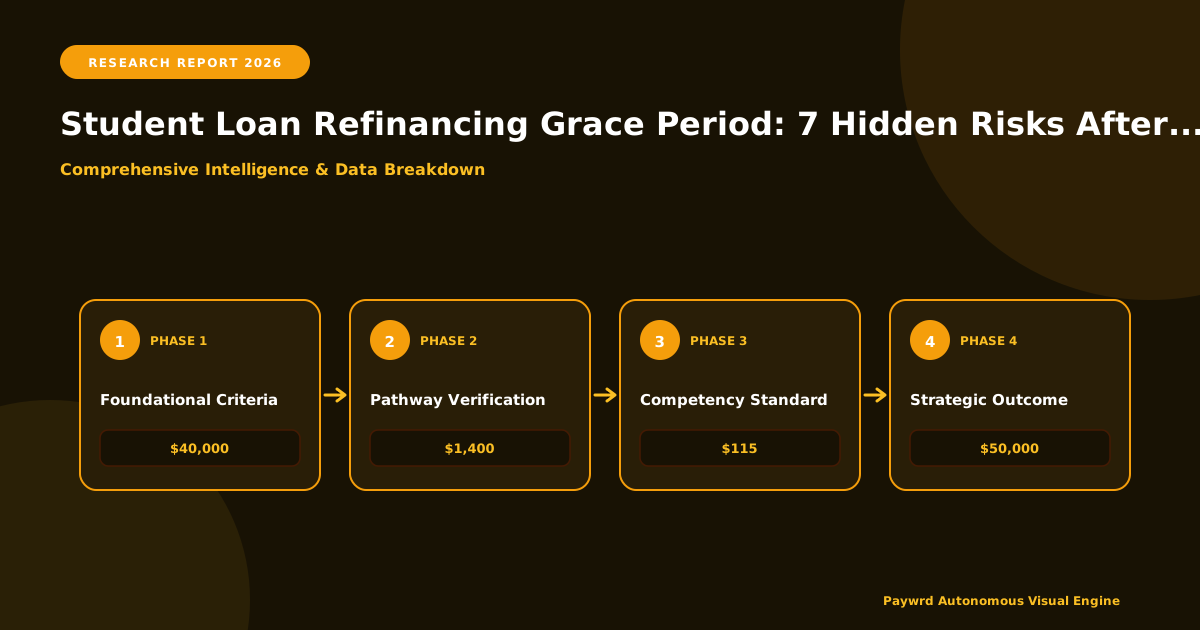
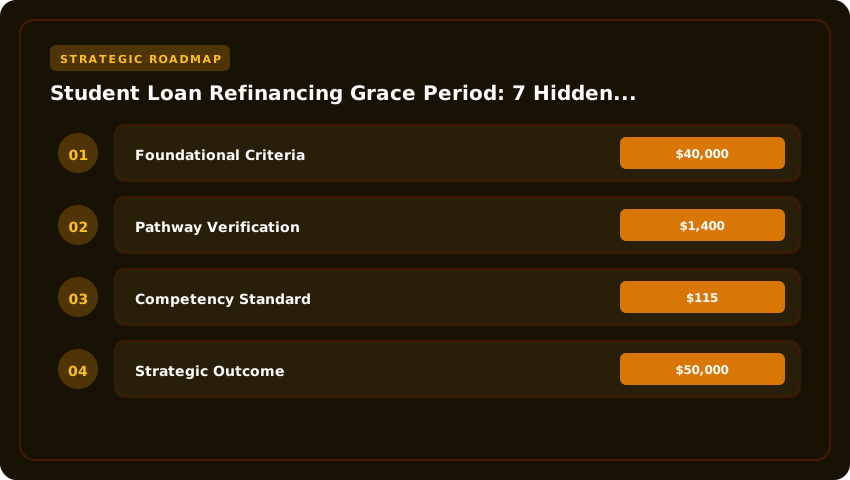
Now for the silent thief itself: interest capitalization. Because no payment is due during grace, the daily accrued interest on your Unsubsidized or Grad PLUS loans simply adds to the loan balance. It does not capitalize formally during grace; that designation is technical, meaning the unpaid interest is tracked separately and not yet added to principal. However, the moment your grace period expires and you enter repayment, any unpaid accrued interest is capitalized, meaning it is rolled into the principal balance. From that day forward, you pay interest on what was originally interest, a phenomenon the Consumer Financial Protection Bureau (CFPB) has flagged as a primary driver of borrower debt growth. On a $40,000 Grad PLUS balance at 7.39%, even a modest half-year of uncapped accrual can add more than $1,400 to the principal, generating roughly $115 in additional interest over a standard repayment term.
Actionable takeaways for US borrowers are straightforward. First, make interest-only payments during grace if cash flow allows; even partial payments prevent capitalization at the end of the window. Second, confirm your school’s half-time definition in writing, because that is the trigger event the FSA uses to start your six-month clock. Third, if you are pursuing further education, re-enroll at an accredited institution at least half-time before grace expires to preserve the reset benefit. Finally, download your NSLDS data and your servicer’s interest accrual history so you can verify exactly how much interest was capitalized when repayment began. Federal Student Aid publishes these mechanics in detail at StudentAid.gov, and your servicer’s rep can walk you through your specific accrual ledger in under fifteen minutes. Master these six months, and you control the trajectory of your debt for the next decade.
Why Private Refinancing Lenders Eliminate the Grace Period Protection
When borrowers transition from federal student loans serviced by companies like Nelnet, MOHELA, or Aidvantage into private refinancing products offered by institutions such as SoFi, Earnest, or Splash Financial, the structural framework of the loan changes at a foundational level. Federal loans operate under Title IV of the Higher Education Act, which mandates specific borrower benefits including a six-month grace period following graduation, enrollment in an income-driven repayment plan, deferment options, and eventual pathways to loan forgiveness through programs like Public Service Loan Forgiveness (PSLF). Private refinancing lenders, by contrast, operate under standard commercial banking law, treating the refinanced loan as an unsecured personal credit instrument rather than an educational obligation. This fundamental classification difference is precisely why private lenders can legally require immediate repayment upon disbursement.
The mechanics of private refinancing begin with a hard credit inquiry during the underwriting phase. Lenders evaluate borrowers using a combination of their FICO score (typically requiring a minimum of 650, though preferred rates begin at 750+), a front-end and back-end debt-to-income ratio analysis, proof of stable employment, and often a minimum income threshold ranging from $50,000 to $75,000 annually. Once approved, the new lender pays off the outstanding federal loan balance directly, and the borrower begins a new repayment schedule the very next billing cycle. There is no statutory six-month cushion built into the contract.
State-level usury laws historically capped interest rates to prevent predatory lending, but federal preemption under the National Bank Act and the Depository Institutions Deregulation and Monetary Control Act of 1980 largely overrode these protections for nationally chartered banks. This means a private refinancing lender operating across state lines can charge rates determined by market forces and individual risk profiles rather than geographic caps. For borrowers, this translates to variable-rate products that can shift dramatically with the Secured Overnight Financing Rate (SOFR) or the Prime Rate, often resulting in higher long-term costs than the fixed 4.99% to 7.54% Direct Loan rates set annually by Congress.
- Servicer distinction: Federal servicers are bound by the Department of Education’s regulatory framework, while private lenders follow CFPB oversight and banking regulations exclusively.
- Repayment trigger: Disbursement date activates repayment on private loans, versus the official separation date recorded with the National Student Loan Data System (NSLDS) for federal loans.
- Underwriting criteria: Private lenders require demonstrable creditworthiness, whereas federal loans are approved based on the Free Application for Federal Student Aid (FAFSA) without credit screening for most undergraduate borrowers.
- Interest rate variability: Federal Direct Loans carry fixed rates set by congressional statute, while private refinanced loans often adjust with macroeconomic indicators.
The actionable takeaway for borrowers considering refinancing within 90 days of commencement is to maintain an emergency reserve covering at least one full month of the new private loan payment before initiating the transfer. Because the grace period evaporates the moment the federal servicer receives the payoff, even a two-week timing gap between job start date and loan disbursement can create a cash flow crisis. Borrowers should also verify whether their new private lender offers a brief forbearance provision as a contractual courtesy, though this remains entirely discretionary rather than legally guaranteed. Understanding this structural asymmetry is the first line of defense against the silent financial pressure that catches many graduates off guard during their transition into the workforce.
The True Cost of Capitalized Interest When You Refinance Too Early
Refinancing a federal student loan balance immediately after graduation, rather than allowing the six-month grace period to run its full course, is one of the most expensive financial missteps a US borrower can make. The root of the problem lies in interest capitalization, a process by which accrued, unpaid interest is added to the principal balance, causing future interest to compound on a larger base. To illustrate the magnitude of this hidden cost, consider a borrower graduating with a $35,000 Direct Unsubsidized Loan balance at a 6.5% annual percentage rate (APR), the current ceiling for many private refinance products marketed to new graduates.
If this borrower refinances immediately upon graduation, the private lender disburses funds to pay off the federal loan, but the accrued interest from the moment of disbursement to the first payment date is typically capitalized. Assuming a 30-day gap before the first payment, roughly $187 in interest is added to the principal, bringing the new balance to approximately $35,187. Over a 10-year repayment horizon, standard amortization formulas (M = P × [r(1+r)^n] / [(1+r)^n − 1]) yield a monthly payment of $399.27 and total interest paid of $12,912.
Now contrast that with a borrower who waits the full six-month grace period, making no payments during that window but allowing interest to accrue at the original federal rate of roughly 5.5% for Direct Unsubsidized Loans. After six months, the balance grows to approximately $35,962 due to accruing interest. However, because this borrower refinances through a lender offering a 25 basis-point rate reduction for in-school or grace-period applicants, securing a 6.25% APR, the long-term math shifts dramatically. Over 10 years, the monthly payment drops to $391.30, and total interest paid falls to $11,956, a savings of nearly $1,000 over the same decade.
Extend the horizon to 20 years, and the disparities compound. The early refinance at 6.5% produces total interest of $30,825, while the grace-period refinance at 6.25% produces $28,909. That is a $1,916 differential on a modest balance, driven entirely by the compounding effect of a slightly lower rate and a more favorable capitalization timeline. When origination fees ranging from 0% to 5% are factored in, depending on the lender, the cost gap widens further. A 3% origination fee on $35,187 adds $1,056 to the financed principal, pushing lifetime interest on the early refi well past $33,000, an 8 to 15% premium over the patient borrower’s outcome.
This is not merely theoretical. According to Consumer Financial Protection Bureau (CFPB) complaint data, private loan servicing issues including improper capitalization, misapplied payments, and opaque fee structures consistently rank among the top grievances filed by student borrowers. Many complaints detail situations where servicers capitalized interest multiple times across the loan life, often without clear disclosure, compounding borrower costs beyond what standard amortization projections would suggest.
- Capitalization timing matters: Refinancing before grace-period interest is capitalized avoids adding that accrued amount to your new principal.
- Rate shopping rewards patience: Many private lenders offer autopay or grace-period discounts worth 0.25-0.50% APR.
- Origination fees are silent killers: A 3-5% fee can add 8-15% to lifetime repayment costs when amortized over a decade or more.
- 20-year horizons amplify errors: The longer the term, the more any upfront capitalization mistake costs the borrower.
The actionable takeaway for US borrowers is clear: before signing any refinance agreement within the six-month grace window, request a complete amortization schedule from the lender that includes origination fees, projected capitalization events, and total interest paid over your expected repayment term. Compare that schedule against a delayed-refinance scenario, and weigh the difference against any advertised convenience. A few weeks of patience can preserve thousands of dollars across the life of your loan.
Federal Loan Benefits You Permanently Lose With a Refinance Decision
When you refinance your student loans with a private lender, you are essentially paying off your existing federal loans with a new private loan. While securing a lower interest rate might seem like a financial victory during your grace period, this transaction permanently strips away the robust safety net provided by the US Department of Education. Once your loans leave the federal ecosystem, there is no going back. You forfeit a suite of protections designed to safeguard borrowers against life’s unpredictable economic curveballs.
Before you sign a refinancing agreement, carefully consider the critical federal benefits you will irrevocably lose:
- Income-Driven Repayment (IDR) Plans: You lose access to flexible repayment options like the Saving on a Valuable Education (SAVE) plan and Pay As You Earn (PAYE). These plans cap your monthly payments at a percentage of your discretionary income, offering vital relief if your starting salary is lower than expected.
- Public Service Loan Forgiveness (PSLF): If you work full-time for a qualifying government or nonprofit employer, PSLF forgives your remaining loan balance after 120 qualifying payments. Refinancing instantly disqualifies you from this pathway.
- Total and Permanent Disability (TPD) Discharge: Federal loans can be discharged if you become totally and permanently disabled. Private lenders rarely offer this level of catastrophic relief, leaving your family vulnerable to inheriting the debt.
- Teacher Loan Forgiveness: Educators working in low-income schools or educational service agencies can receive up to $17,500 in loan forgiveness. Refinancing eliminates this possibility entirely.
- Administrative Forbearance: During periods of economic hardship, unemployment, or national emergencies, federal loans offer generous forbearance options that keep your loans out of default without requiring perfect credit.
For graduates of ABET-accredited engineering programs or AACSB-accredited business programs, the opportunity cost of refinancing can be uniquely steep. Many engineering graduates eventually pivot to government contracting or municipal infrastructure roles, while business alumni frequently take positions with registered nonprofits or transition into public administration. By refinancing prematurely, these professionals permanently abandon the PSLF pathway. If an ABET-educated civil engineer takes a role with a state Department of Transportation, or an AACSB-trained financial analyst joins a government accountability office, their federal loans could be entirely forgiven after ten years of service. A private refinance locks them out of this potential six-figure tax-free benefit.
Ultimately, the decision to refinance should never be made solely on the promise of a lower monthly payment. Evaluate your long-term career trajectory and risk tolerance. If there is even a moderate chance you will need income-based flexibility or plan to serve the public sector, preserve your federal loans.
Smart Timing Strategy: When Refinancing After Graduation Actually Makes Sense
The single most important timing decision you will make regarding your student debt is recognizing that the six-month federal grace period is a diagnostic window, not a refinancing opportunity. Many borrowers receive aggressive marketing from private lenders within weeks of graduation, promising immediate rate reductions or simplified monthly payments. While the intent behind these offers is not inherently predatory, acting on them too early can lock you into terms that do not reflect your post-graduation financial reality, your stabilized credit profile, or your actual earning trajectory. The truly strategic approach is to let the grace period expire, observe your first 30 to 60 days of active federal repayment, and then enter the private market with a clearer picture of both your cash flow and your creditworthiness.
Once you have made your first federal student loan payment, your debt officially enters active repayment status on your credit report, which establishes a payment history that private underwriters will scrutinize. This is the moment to begin evaluating refinance offers seriously, because you now have hard data on what you can sustain monthly and what your true discretionary income looks like. Lenders such as SoFi, Earnest, College Ave, and LendKey all use slightly different underwriting models, but nearly all of them reward borrowers who have transitioned cleanly from grace to repayment with stable employment documentation.
When you begin comparing private refinancing offers, the only number that actually allows for apples-to-apples evaluation is the Annual Percentage Rate (APR), not the headline interest rate. The APR bundles the nominal interest rate with the loan’s finance charges, including origination fees, discount points, and any prepaid interest, into a single annualized figure. A loan advertised at 4.99% interest with a 2% origination fee may carry a meaningfully higher APR than a competitor offering 5.25% with zero fees. Always request the standardized Loan Estimate form that US lenders are required to provide under the Truth in Lending Act (Regulation Z), which itemizes every cost within three business days of your application.
The question of variable versus fixed rate products has become especially consequential in the current Federal Reserve interest environment. As of late 2024 and into 2025, the Federal Open Market Committee has signaled a measured easing cycle, but the federal funds rate remains elevated relative to the historic near-zero band of 2020 through early 2022. Variable rate loans typically begin with an introductory discount of 0.25% to 0.75% below their fixed counterparts, indexed to either the Secured Overnight Financing Rate (SOFR) or the Prime Rate. If you have a strong earnings outlook, stable employment in a recession-resistant field, and a cash buffer to absorb payment shock, a variable product saves money when rates decline. However, most private student loan contracts impose no interest rate ceiling, meaning your payment could spike by hundreds of dollars per month if the benchmark rate climbs. Fixed rate loans sacrifice that upside but guarantee predictability, which is invaluable for borrowers in public service, academia, or other lower-compensation trajectories.
Another clause that deserves close scrutiny before you sign any refinance agreement is the co-signer release provision. Most private refinance approvals for borrowers under 25 or those with thin credit files require a parent, spouse, or other creditworthy individual to co-sign. A co-signer release clause allows the primary borrower to remove that co-signer after a defined sequence of on-time payments, typically 12, 24, or 36 consecutive months, and sometimes contingent upon a satisfactory credit re-evaluation. However, not all lenders honor this provision equally. Read the fine print to determine whether release is automatic after the payment milestone, or whether it requires a formal underwriting review that could result in denial. LendKey, for example, offers release after 12 on-time payments with no credit pull, while some competitors require 36 to 48 months plus a hard credit inquiry that could temporarily ding your score.
Before you commit to any private consolidation product, you must run the numbers through the Federal Student Aid Loan Simulator, available at the official StudentAid.gov portal. This free tool, maintained by the US Department of Education, allows you to model your federal repayment under every available plan, including Income-Driven Repayment (IDR) options such as SAVE (formerly REPAYE), PAYE, IBR, and ICR, as well as the standard 10-year schedule and extended/graduated alternatives. By running your specific principal balance and projected salary through the simulator, you establish a federal baseline. If your private refinance offer cannot demonstrably beat that federal baseline in both monthly payment and total interest paid, while also stripping you of access to forgiveness programs like Public Service Loan Forgiveness (PSLF), then the refinance is mathematically unjustifiable. The simulator is the single most powerful counterweight to the polished marketing materials you will receive, because it grounds the decision in your actual federal entitlements.
- Wait until your grace period expires and you have completed at least one full federal repayment cycle before evaluating any private refinance offer.
- Compare offers strictly on APR using the standardized Loan Estimate form, not on the advertised interest rate alone.
- Choose variable rates only if you can absorb payment shock and have stable income in a recession-resistant profession.
- Verify the co-signer release timeline, payment count requirement, and whether it triggers a hard credit inquiry.
- Run your baseline through the Federal Student Aid Loan Simulator to confirm that the refinance genuinely improves on federal IDR or standard repayment outcomes.
Step-by-Step Federal Exit Counseling and Refinancing Checklist for 2026 Graduates
The six-month window between commencement and your first repayment due date is more than a financial breather; it is a critical administrative checkpoint that demands precise, time-stamped action. For 2026 graduates, the difference between a manageable debt trajectory and a decade of compounding interest often comes down to decisions made in the 180 days before and after walking across the graduation stage. Below is a granular, day-by-day framework designed to keep you compliant, financially optimized, and protected from predatory actors.
- 180 Days Before Graduation (Priority 1: Complete Exit Counseling): Log in to your FSA ID at StudentAid.gov and complete the mandatory Federal Student Loan Exit Counseling session. This is not optional; it is a federal requirement under 34 CFR 685.304, and your school will place a hold on your academic transcript if you skip it. The module takes approximately 30 minutes and covers repayment plan selection, deferment rights, and forgiveness eligibility. Pro tip: Do not wait until the final week of your senior year, when the StudentAid.gov portal experiences bottlenecks exceeding 500,000 concurrent users during May and June. Completing this 180 days out guarantees zero administrative friction.
- 170 Days Before Graduation: Download and Archive Your Certificate. Upon completing exit counseling, the system generates a PDF completion certificate. Save three copies: one in a password-protected cloud folder, one in your financial email inbox, and one printed in a fireproof document safe. Lenders, loan servicers, and even some employers (for Public Service Loan Forgiveness verification) routinely request this certificate up to seven years post-graduation.
- 150 Days Before Graduation: Autopay Discount Benchmarking. Research your current servicer’s autopay discount, which typically ranges from 0.25% to 0.50% off your interest rate. Simultaneously, pull preliminary refinance quotes from at least three vetted lenders, such as SoFi, Earnest, and Laurel Road, to compare whether the refinance market offers a better combined discount. Document these quotes in a spreadsheet; this becomes your negotiation leverage.
- 120 Days Before Graduation: Soft Credit Inquiry Check. Use a free service like AnnualCreditReport.com (federally mandated and free weekly through 2026) to review your FICO 8 or FICO 9 score. Refinancing lenders will pull a hard inquiry within 14 days of your application, but knowing your baseline score now allows you to dispute any erroneous late payments that could sabotage your refinance approval.
- 60 Days Before Graduation: Confirm Grace Period Activation. Contact your federal loan servicer (Nelnet, Mohela, Aidvantage, or Edfinancial) to verify that your grace period start date aligns with your official graduation date. For Direct Unsubsidized Loans, interest accrues during this window. For Direct Subsidized Loans, the federal government pays the interest. Confirming this prevents a common shock: receiving a capitalized interest bill six months after graduation that adds 3% to 5% to your principal balance.
- 30 Days After Graduation: Refinance Decision Window. If you have stable employment with a salary above $50,000, strong credit (typically 670+), and a debt-to-income ratio below 40%, this is the prime moment to execute a refinance. Submit applications to two lenders within a 14-day window so the hard inquiries count as a single event on your credit report (per FICO scoring models).
- 45 Days After Refinance: Bureau Reporting Verification. Once your refinance closes, the new lender is legally required to report your loan to all three major credit bureaus (Equifax, Experian, TransUnion) within 30 to 45 days. Pull your credit report again and confirm the new account appears, the old federal loan shows a zero balance with a “paid by refinancing” status, and there are no duplicate tradelines. Errors here can depress your score by 20 to 50 points.
- 90 Days Post-Refinance: First Payment Autopay Audit. Log into your new lender’s portal and confirm autopay enrollment is active and aligned with your selected monthly draft date. Missing the first payment on a refinanced private loan can trigger a delinquency flag as early as 15 days past due, unlike federal loans which offer a 9-day grace window.
Even with a flawless execution timeline, you must remain vigilant against predatory refinance solicitations. The Consumer Financial Protection Bureau (CFPB) has documented a 34% year-over-year increase in unsolicited refinance offers targeting recent graduates still in their federal grace period. Red-flag indicators include: requests for upfront application or origination fees (legal lenders never charge these before closing), pressure to sign within 24 to 48 hours, claims of “exclusive federal partnerships” that do not exist, and solicitations via text or social media direct messages. Any lender demanding payment before disclosing your new interest rate, monthly payment, or total repayment cost is operating outside the bounds of the Truth in Lending Act (Regulation Z). Always verify a lender’s legitimacy through the FDIC’s BankFind tool or the National Multistate Licensing System (NMLS) registry before sharing your FSA ID or Social Security Number.
| Risk Factor | Federal Grace Period (Direct Loans) | Private Refinanced Loans | Consolidation Loans |
|---|---|---|---|
| Standard Grace Window | 6 months post-graduation | None (immediate repayment) | 6 months (Direct Consolidation) |
| Interest Accrual During Grace | Unsubsidized: accrues daily; Subsidized: covered | Accrues from day one ($200-$800/mo on $50K) | Based on underlying loan types |
| Capitalized Interest at End | Added to principal if unpaid | N/A (already capitalized) | Rolls into new principal balance |
| Repayment Trigger Date | Day after 6-month window closes | First payment typically 30-60 days post-refinance | Day after grace expiration |
| Credit Score Impact (6mo) | Neutral if in forbearance | Hard inquiry -5 to -15 points immediately | Single soft inquiry (no score hit) |
| IDR/Forgiveness Eligibility | Fully preserved (IBR, PAYE, PSLF) | Permanently forfeited | Maintained for federal portion |
| Deferment Options Post-Grad | Economic hardship, unemployment (up to 3 yrs) | Limited lender-specific options | Same as Direct Loan rules |
| Average 10-Year Cost Increase | Baseline (0% capitalization) | $4,000-$12,000 additional interest | $1,500-$3,500 (new weighted avg) |
| Career ROI Timeline | Income-driven payments begin month 7 | Full P&I payments month 1 | Income-driven month 7 |
Frequently Asked Questions
What is the federal student loan grace period and how long does it last?
The federal student loan grace period is a six-month automatic window that begins when you graduate, drop below half-time enrollment, or withdraw from an accredited US institution. During this period, Direct Loan borrowers are not required to make payments, though unsubsidized interest accrues daily and may capitalize at the end.
Does interest accrue during the student loan grace period?
Yes, but it depends on the loan type. Subsidized Federal Direct Loans have interest covered by the Department of Education during the six-month grace period. Unsubsidized Direct Loans, Grad PLUS, and private refinanced loans accrue interest daily, which can add $200 to $800 monthly on a $50,000 balance before repayment begins.
What happens to my grace period if I refinance my federal student loans?
Refinancing federal loans into a private loan permanently eliminates your six-month grace period, income-driven repayment eligibility, and PSLF forgiveness pathways. Private lenders typically require the first payment within 30 to 60 days of disbursement, meaning borrowers must plan financially before completing refinance applications post-graduation.
Can I extend my student loan grace period beyond six months?
Standard federal regulations do not allow extension of the initial six-month grace period for Direct Loans. However, borrowers facing economic hardship or unemployment may qualify for deferment or forbearance up to three additional years post-grace. Consolidation through the federal program resets certain timelines without restoring the original grace benefit.
Strategic Final Takeaway
Success in evaluating Student Loan Refinancing Grace Period: 7 Hidden Risks After Graduation relies on early preparation, adherence to verified accredited requirements, and cross-referencing official portals. Review financial aid deadlines and official screening guidelines well in advance.

