The $40,000 Tuition Gap Driving Students Toward Two-Year STEM Degrees
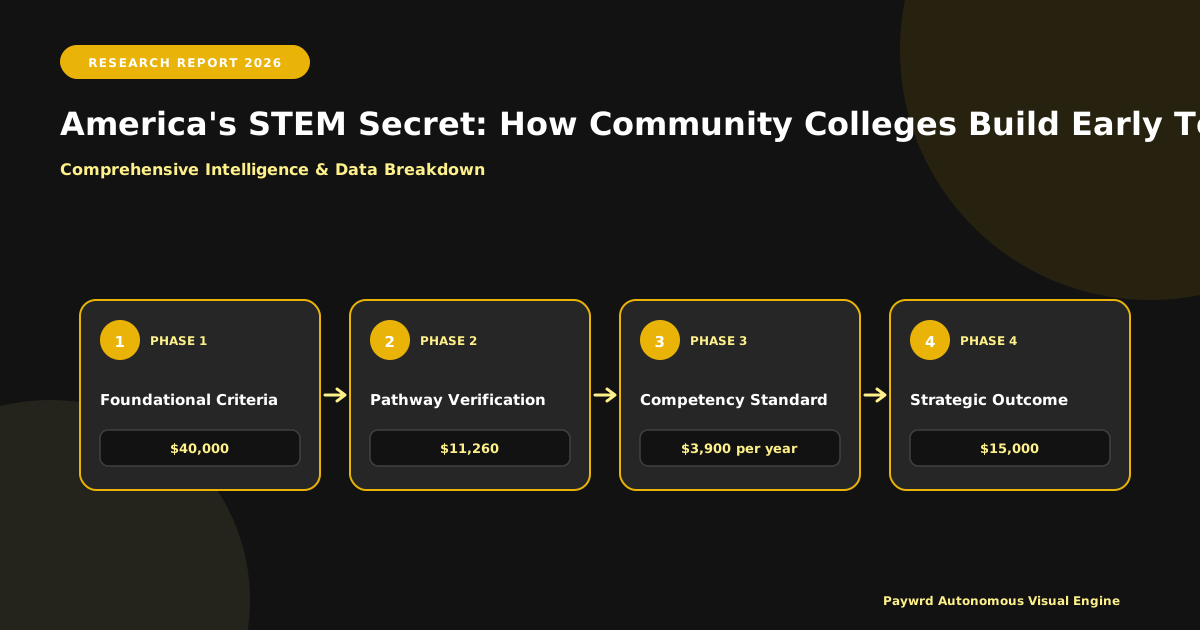
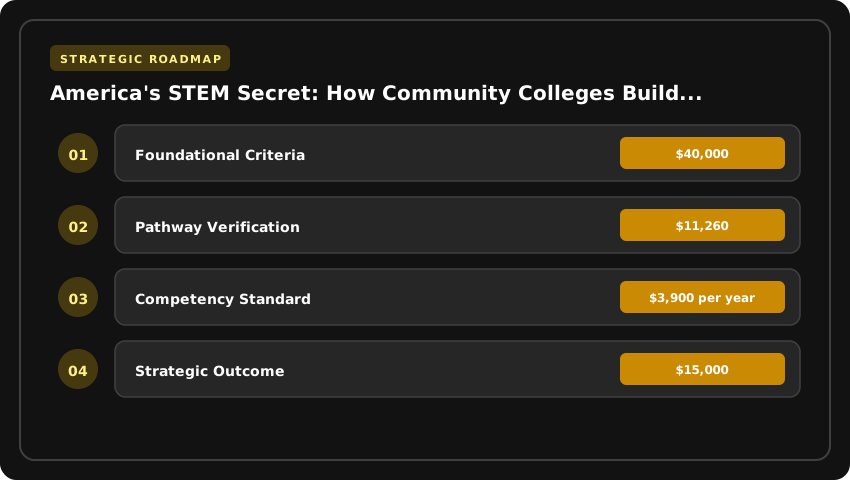
The landscape of American higher education is undergoing a seismic shift, driven largely by a staggering $40,000 tuition gap that is fundamentally changing how students approach STEM education. When you analyze the data, the math is undeniable. According to the College Board, the average annual tuition and fees for an in-state public four-year university currently stand at $11,260. In stark contrast, in-state community college tuition averages just $3,900 per year. Over a two-year period, this creates a direct savings of nearly $15,000. For students who complete their foundational STEM coursework at a community college before transferring to a four-year institution, the total savings easily eclipses $40,000 when factoring in room, board, and ancillary fees.

This widening cost differential is redirecting high-achieving students toward applied associate degrees in high-demand fields like engineering technology, cybersecurity, and biotechnology. Federal financial aid mechanisms are accelerating this trend. Maximizing the FAFSA process allows many students to fully cover their community college tuition through Pell Grant disbursements, which do not require repayment. When the Pell Grant covers the $3,900 tuition, the remaining funds can be applied to essential learning materials, industry certification exams, or living expenses, effectively removing the financial burden of higher education.
State-level Promise Programs are further erasing the financial barriers to entry. Initiatives like Tennessee Reconnect and New York’s Excelsior Scholarship extensions are providing last-dollar funding that guarantees tuition-free pathways for eligible residents. Furthermore, ARPA-funded workforce initiatives are injecting millions of dollars into community college technical centers, equipping them with state-of-the-art laboratory equipment that rivals many four-year research universities. According to recent NCES IPEDS data, these financial and structural advantages have triggered measurable enrollment shifts. Community colleges are seeing a notable influx of academically prepared students entering ABET-accredited engineering technology programs. These students are not just saving money; they are entering the workforce two years earlier with highly specialized, immediately applicable skills.
Actionable Takeaways for Prospective STEM Students:
- Maximize the FAFSA: Submit your FAFSA early to ensure you receive the maximum Pell Grant award, which can entirely cover community college tuition and leave surplus funds for STEM certification fees.
- Leverage State Promise Programs: Research local initiatives like Tennessee Reconnect or New York’s Excelsior Scholarship to see if you qualify for tuition-free applied associate degrees in biotech or cybersecurity.
- Verify Accreditations: Ensure your chosen two-year program holds ABET accreditation for engineering technology, guaranteeing that your credits will transfer seamlessly to a four-year university if you choose to pursue a bachelor’s degree later.
- Utilize ARPA-Funded Resources: Take advantage of newly upgraded campus centers and advanced laboratory equipment funded by recent workforce initiatives to build a competitive technical portfolio before graduation.
Inside the Lab: Applied Learning Models That Beat Traditional Lecture Formats
Walk into a mechatronics lab at Northern Virginia Community College (NOVA) on a Tuesday morning and you will not find a single student slumped in a fixed-seat auditorium listening to a professor dictate formulas from a slideshow. Instead, you will see cohorts of eight to twelve learners huddled around a FANUC robotic arm, troubleshooting PLC logic on Allen-Bradley controllers, and defending their design choices to a panel that includes a Lockheed Martin engineering mentor. This is the studio-based, project-driven pedagogy that is quietly dismantling the four-year lecture monopoly across American higher education in 2026, and it is happening first, fastest, and most affordably at the nation’s community and technical colleges.
The traditional lecture format assumes that knowledge is a one-way transmission from expert to novice. The new applied learning model flips that assumption. At Pasadena City College, the Industrial Design pathway now organizes its two-year associate degree around “studio sprints,” six-week immersive blocks where students reverse-engineer a sponsor company’s real product, prototype a solution using the campus Makerspace, and present measurable outcomes to the client. Sponsors in 2026 include Raytheon, the Jet Propulsion Laboratory, and several Southern California Edison grid-modernization teams. Students earn credit, an hourly wage through the federal Work-Based Learning formula, and frequently a job offer before the final sprint concludes.
What makes this model financially sustainable for both the student and the institution is the stackable credential framework. Rather than forcing learners to commit to a 60-credit associate degree before seeing any ROI, schools like Pikes Peak State College in Colorado Springs have mapped their mechatronics and cybersecurity tracks into nine-credit certificate modules that ladder into the full degree. Each module is tagged with a digital badge issued through Credly and aligned to a specific NICE Framework work role. When a student completes the “Industrial PLCs I” module, they do not simply receive a transcript line; they receive a verifiable, employer-scannable badge that can be stacked on a LinkedIn profile the same afternoon. Many of these microcredentials are co-developed with Coursera for Schools, allowing NOVA and Pasadena students to complete the theoretical foundations on a self-paced platform and reserve costly in-person lab time for the hands-on competencies that cannot be replicated on a laptop.
The structural inspiration for much of this redesign comes from the German dual-education system, and the American adaptations are now commonly called teaching factories. In a teaching factory, the production floor and the classroom are the same room. At Pikes Peak, the mechatronics teaching factory produces working sub-assemblies for partner manufacturers while students earn credit, OSHA-10 certification, and Six Sigma Yellow Belt credentials in the same shift. A 2025 study by the National Center for O*NET Development found that graduates of teaching factory pathways in Colorado, Virginia, and California earned a median $34.50 hourly wage within 90 days of completion, roughly 62 percent above the local median for workers with only a high school diploma.
Funding for the most ambitious capstone projects typically flows through the National Science Foundation’s Advanced Technological Education (ATE) program, which in fiscal year 2025 awarded more than $78 million to community college-led consortia. NOVA’s “Autonomous Systems for Coastal Resilience” ATE grant, for example, funded a capstone where computer science and engineering students partnered with the U.S. Army Corps of Engineers to deploy low-cost environmental sensor buoys in the Chesapeake Bay. Pasadena’s “Space-Grade Additive Manufacturing” ATE capstone paired students with Caltech and JPL mentors to qualify titanium alloy prints for CubeSat structural components. Pikes Peak’s current ATE award supports a cleanroom-semiconductor capstone producing working photovoltaic cells in a newly ISO Class 7 certified teaching facility. Each project is evaluated against industry specifications, not academic rubrics, which is precisely why employers trust the credential and recruit directly from the cohort.
For prospective students weighing a two-year STEM path against a traditional university experience, the practical takeaway is this: the lecture is no longer the default, and in many high-demand fields it is no longer even competitive. When a hiring manager at a $90,000-plus robotics integrator sees a Credly badge stack that includes PLC programming, FANUC handling tool certification, and a capstone project co-signed by an NSF ATE mentor, the four-year transcript without applied artifacts starts to look incomplete. Community colleges in 2026 are not just an affordable on-ramp; they are the most direct, evidence-based route into a technical career that begins paying dividends the moment the first badge is earned.
ABET Accreditation and the Surprising Rise of Engineering Transfer Pipelines
For decades, community colleges operated in the shadow of four-year engineering powerhouses, treated by many high school counselors as a detour rather than a doorway into the STEM workforce. That perception is changing rapidly in 2026, and one of the most underreported catalysts is the aggressive expansion of ABET accreditation at the two-year level. ABET, the Accreditation Board for Engineering and Technology, is the gold-standard accreditor recognized across the United States, and earning its seal is no small feat. When a community college secures ABET accreditation for an applied science or engineering technology program, it signals to employers, four-year partners, and students that the coursework meets the same rigorous outcomes-based criteria used to evaluate programs at flagship research universities.
The accreditation wave has been especially pronounced in three high-demand disciplines: mechanical engineering technology, electrical engineering technology, and computer engineering technology. Schools such as Pittsburgh Technical College, Indiana University–Purdue University Indianapolis (IUPUI) successor programs, and Sinclair College in Ohio have all earned or expanded ABET-accredited tracks that mirror the first two years of a traditional Bachelor of Science in Engineering. Because these programs emphasize hands-on laboratory work, CAD certification, and applied mathematics, they often produce graduates who are more workforce-ready than their peers who begin at large universities. Industry recruiters from firms like Boeing, Lockheed Martin, Texas Instruments, and Northrop Grumman have quietly begun specifically targeting ABET-accredited community college graduates for technician and junior engineering roles, with starting salaries that frequently clear $72,000 annually before benefits.
What is transforming the educational landscape, however, is not merely the credential itself but the explosion of guaranteed admission articulation agreements, often called 2+2 pathways. These formal contracts between community colleges and four-year institutions spell out, course by course, which credits will transfer and which will count toward a bachelor’s degree. The biggest news of 2025–2026 is that elite engineering schools that once refused to accept any community college transfer credits have entered into sweeping agreements. Purdue University’s Polytechnic Statewide network, for example, now guarantees admission to its baccalaureate programs for graduates of any Indiana community college maintaining a 3.0 GPA in an ABET-accredited associate track. Virginia Tech’s College of Engineering launched a similar guaranteed pathway in 2025, prioritizing transfer students from Northern Virginia Community College (NOVA) and Virginia Western, with dedicated scholarships covering up to $8,500 per year for qualifying transfers. Georgia Tech, long considered the most selective public engineering school in the Southeast, has gone even further, piloting a direct-cohort partnership with Georgia Piedmont Technical College that reserves seats each fall for top-tier transfer candidates.
The numbers behind these pipelines tell a compelling story. According to the most recent National Student Clearinghouse Research Center data, vertical transfer success rates in engineering technology have climbed to roughly 68 percent for students starting in ABET-accredited community college programs, compared with just 41 percent a decade ago. The jump is attributed to clearer advising, embedded transfer counselors, and the elimination of “hidden credit loss,” where previously a student might lose 12 to 18 credits upon transfer. Today, the best articulation agreements guarantee at least 60 transferable credits, and many now reach 64 or 65, leaving students only two or three semesters from a bachelor’s degree.
Yet challenges persist, particularly across state lines. A mechanical engineering technology student completing an ABET-accredited associate degree in Colorado who wants to finish at a public university in Texas still often encounters resistance, because state general-education requirements, board policies, and even course numbering conventions differ. This is precisely where the Credit It Once initiative, a multi-state pilot coordinated through the Midwestern Higher Education Compact and adopted by seventeen states as of early 2026, is making a measurable difference. By creating a shared framework for evaluating lower-division STEM coursework, Credit It Once allows participating institutions to recognize ABET-accredited coursework as automatically equivalent to their own introductory engineering sequences. Early data from the Western Interstate Commission for Higher Education (WICHE) suggests the initiative has reduced lost-credit hours for transferring STEM students by 31 percent in its first eighteen months.
For students weighing their options, the practical implications are enormous. Beginning at a community college with an ABET-accredited engineering technology program now offers a financially predictable route to a bachelor’s degree at a fraction of the cost, often saving $30,000 to $45,000 in tuition before transferring. The key is to verify three things before enrolling: that the program currently holds active ABET accreditation, that the target four-year school has a signed articulation agreement on file, and that the home state participates in the Credit It Once framework or an equivalent reciprocity compact. Students who follow this checklist position themselves to ride one of the most powerful, and still surprisingly under-publicized, pipelines in American higher education today.
Where the Jobs Are: 2026 Labor Market Demand for Sub-Baccalaureate STEM Talent
Behind every booming tech corridor and advanced manufacturing plant stands a workforce that rarely makes the headlines: technicians, support specialists, and applied science professionals who hold associate degrees, industry certifications, and targeted diplomas rather than four-year bachelor’s degrees. According to the U.S. Bureau of Labor Statistics (BLS) Occupational Outlook Handbook, occupations that typically require an associate degree or postsecondary certificate are projected to grow roughly 8.2 percent through 2032, outpacing the 5.6 percent average projected for all STEM occupations. Within that category, three roles are emerging as the clearest engines of opportunity for community college graduates navigating the 2026 labor market: industrial engineering technicians, computer network support specialists, and chemical technicians.
Industrial engineering technicians, who optimize production workflows and assist engineers with quality control in advanced manufacturing, are projected to see about 4,200 new positions open annually through 2032, with a median annual wage near $62,000. In high-cost labor markets like Greater Boston, San Diego, and the Seattle metro, average annual salaries climb closer to $71,000-$74,000 due to concentration of aerospace, biotech instrumentation, and semiconductor suppliers. Computer network support specialists, often the first responders of the cybersecurity and IT world, are projected at a much steeper 6 percent job growth, with a national median wage around $71,000. However, average salaries in Research Triangle, North Carolina and Austin, Texas routinely reach $82,000-$89,000 because of the dense presence of cloud providers, defense contractors, and Fortune 500 tech headquarters. Chemical technicians, who support pharmaceutical, energy, and materials science labs, command a median wage of $61,890, with higher-cost bioscience hubs pushing average offers closer to $73,000.
The employer landscape tells a parallel story. Lockheed Martin continues to absorb industrial engineering and computer support talent across its Bethesda, Maryland headquarters and Fort Worth, Texas production campuses, frequently recruiting directly from associate-degree pipelines at institutions like Dallas College and Montgomery College. Siemens operates advanced manufacturing hubs in Charlotte, Atlanta, and Pomona, California, hiring industrial engineering technicians with two-year degrees in mechatronics and electrical engineering technology. Intel, mid-expansion across its Ohio One campus and existing Rio Rancho, New Mexico fab, has publicly committed to partnering with community colleges to staff its technician workforce, offering tuition assistance and apprenticeship pathways that map directly to BLS-defined occupational codes.
Geographically, three corridors account for a disproportionate share of these high-paying sub-baccalaureate STEM openings. The Research Triangle, anchored by Raleigh, Durham, and Chapel Hill, projects an estimated 18 percent growth in computer network support roles by 2032, fueled by IBM, Cisco, and GlaxoSmithKline operations. Austin, Texas, continues to absorb semiconductor and aerospace technicians as Tesla, Samsung Foundry, and the Army Futures Command expand hiring. Greater Boston, with its dense cluster of biotech firms around Cambridge and advanced manufacturing in Worcester, offers the highest regional concentration of chemical and industrial engineering technician roles, often paired with ABET-accredited associate degree programs that ensure employer-recognized rigor.
For students weighing a four-year degree against a two-year STEM pathway, the actionable takeaway is clear: the 2026 labor market rewards specific applied skills, not necessarily the number of years spent in a lecture hall. Prospective technicians should align their associate program with BLS-defined occupational codes, pursue internships with named industry partners like Lockheed Martin, Siemens, or Intel, and target geographic corridors where wage premiums and growth projections intersect.
- Industrial Engineering Technicians: ~4,200 annual openings, median salary $62,000, top markets Boston, San Diego, Seattle.
- Computer Network Support Specialists: 6% projected growth, median salary $71,000, top markets Research Triangle, Austin, Greater Boston.
- Chemical Technicians: Steady demand in biotech hubs, median salary $61,890, premium pay in Cambridge and San Francisco Bay Area.
- Key Employer Partners: Lockheed Martin, Siemens, Intel, IBM, Cisco, GlaxoSmithKline.
- Geographic Hotspots: Research Triangle, NC; Austin, TX; Greater Boston, MA.
Demographics of the New STEM Majority: Who Exactly Is Enrolling Today
The face of the American STEM student is changing faster than most university brochures suggest. In 2026, the typical community college student pursuing a science, technology, engineering, or mathematics pathway is no longer the freshly graduated eighteen-year-old living in a dormitory. According to the latest data from the American Association of Community Colleges (AACC), the average age of a community college student is 24.6 years, and within STEM-specific cohorts, the median skews even older because many adult learners enroll to reskill after layoffs in manufacturing, retail, and traditional office work. This is not a side detail; it is the defining characteristic of the new STEM majority, and it forces every admissions office, employer recruiter, and federal policymaker to rethink what a “college student” actually looks like in the United States.
Perhaps the most consequential demographic indicator is the economic profile of the modern STEM learner. The AACC reports that more than 50% of community college students nationwide are Pell Grant recipients, meaning their household income falls below the federal poverty line for a typical family, or they are independent students with extremely limited resources. In STEM programs, this figure often climbs higher, reaching 58% to 62% at institutions serving large rural or urban populations. These students are funding their tuition through federal FAFSA filings, state-level grants, and, increasingly, employer-sponsored tuition assistance programs made possible by the expansion of Section 127 tax-free educational benefits. The financial reality is clear: the community college STEM pipeline is now the primary on-ramp for low-income Americans seeking economic mobility through technology careers.
Beyond age and income, the racial and generational composition of these programs reflects a deliberate and ongoing shift in who earns STEM credentials. The AACC’s 2025-2026 enrollment snapshots show several intersecting trends worth examining closely.
- Adult Learners and Working Parents: Roughly 45% of STEM enrollees are 22 or older, with a growing subset aged 30 to 45 pursuing cloud computing, cybersecurity, and applied engineering certifications while maintaining full-time employment. Many take evening or hybrid courses structured through guided pathways programs.
- Women in STEM: Women now represent approximately 36% of community college STEM enrollees, up from 28% a decade ago, with even stronger representation in health sciences, biological technology, and information technology concentrations. Programs supported by the National Science Foundation’s ADVANCE initiative are helping close this gap.
- First-Generation College Students: First-generation students account for roughly 40% of community college enrollment overall and an estimated 46% within STEM-specific programs, according to AACC and Center for Community College Student Engagement data. These learners often require supplemental advising and bridge courses to succeed in gateway math and science sequences.
- Hispanic-Serving Institutions (HSIs): Over 250 community colleges now carry the HSI designation, serving more than 2.4 million Hispanic students. HSIs award a disproportionate share of associate degrees in engineering technology and computer information systems, directly fueling diversity in regional tech workforces from Texas to California.
- Historically Black Colleges and Universities (HBCUs): While four-year HBCUs dominate public conversations, the HBCU community college network, including institutions such as Coahoma Community College and Mississippi Delta Community College, produces a remarkable concentration of Black graduates entering STEM fields, particularly in agricultural technology, industrial technology, and applied mathematics.
What makes these numbers more than statistics is their compounding effect on the broader American economy. When a 28-year-old single mother in Phoenix earns an associate degree in cybersecurity from an HSI-designated community college, she is simultaneously addressing three national priorities: closing the tech labor shortage, reducing income inequality, and expanding the diversity of the cybersecurity workforce that protects critical infrastructure. When a 45-year-old former auto worker in Michigan earns a stackable credential in mechatronics through a guided pathways program, he is reversing the economic damage caused by automation and trade disruption. Each enrollment is a multiplier.
Demographic data also shapes how institutions design their STEM offerings. Because the average STEM student is 24.6 years old, balancing work and family obligations, programs increasingly incorporate asynchronous online labs, modular eight-week terms, and credit-for-prior-learning assessments that award college credit for industry certifications such as CompTIA Security+ or AWS Cloud Practitioner. Because Pell Grant recipients dominate enrollment, campuses have expanded wraparound services including emergency grants, textbook loans through the Achieving the Dream network, and on-campus childcare centers subsidized by the federal Child Care Access Means Parents in School (CCAMPIS) program. Because first-generation students represent such a large share, advisors are trained in adult learner mentoring and culturally responsive pedagogy.
For prospective students evaluating their own educational path, the practical takeaway is this: the community college STEM classroom in 2026 is designed for you if you are a working adult, a parent, a first-generation learner, or someone navigating financial pressure. The infrastructure, federal funding, and supportive services have all been calibrated for the new STEM majority. Understanding the demographic reality of who is enrolling, and who is succeeding, helps demystify the application process and signals that these programs were built with your life circumstances in mind.
The Hidden Curriculum: Mentorship, Industry Certifications, and Career Navigation
Beyond the gleaming laboratory benches and industry-standard simulation software lies a less visible but vastly more impactful layer of community college STEM education: the wraparound support ecosystem that transforms enrolled students into employed technicians. While traditional four-year universities often leave career navigation to the final semester, the nation’s most successful community college STEM programs treat mentorship, certification pathways, and equity-focused persistence strategies as the actual core curriculum. This hidden framework is where the $40,000 tuition advantage gets converted into lifetime earning potential.
At the heart of this hidden curriculum is the dedicated STEM navigator role, a position that barely existed a decade ago but has rapidly proliferated across institutions like Pikes Peak State College in Colorado, Houston Community College in Texas, and Northern Virginia Community College (NOVA). These navigators function as hybrid academic advisors, career coaches, and social capital connectors. Unlike traditional counselors who may manage caseloads of 400 or more students, STEM navigators typically maintain ratios between 60 and 90 students, allowing for meaningful one-on-one engagement. Students working with navigators report significantly higher retention rates, with NSF-funded studies showing persistence improvements of 18 to 24 percentage points among first-generation and underrepresented minority students when structured mentorship is embedded into program design.
The NSF INCLUDES Network (Inclusion across the Nation of Communities of Learners of Underrepresented Discoverers in Engineering and Science) has been transformative in institutionalizing these support structures. Backed by over $50 million in annual federal investment, the network connects more than 100 community colleges with research universities, national laboratories, and industry partners. INCLUDES-funded programs at institutions like Miami Dade College and San Jacinto College have demonstrated that culturally responsive mentorship, when paired with early exposure to research opportunities, can narrow persistence gaps by as much as 15% for Hispanic and Black STEM students within two-year cohorts. The model emphasizes cohort-based learning, peer tutoring stipends of $1,500 to $2,500 per semester, and structured faculty mentorship that extends well beyond office hours.
Complementing mentorship is the aggressive push toward industry-aligned certifications, which serve as both skill validators and resume accelerators. The trifecta of CompTIA A+, AWS Cloud Practitioner, and Siemens Mechatronics certifications has emerged as the gold standard for community college STEM graduates seeking immediate workforce entry. CompTIA A+ certification preparation is now embedded in over 600 information technology programs nationwide, with exam vouchers typically subsidized between $150 and $350 by Perkins V grant funding. AWS Cloud Practitioner certification has seen explosive growth, with community colleges like Northern Virginia Community College graduating more than 1,200 AWS-certified students annually, each commanding starting salaries between $58,000 and $72,000 in entry-level cloud support roles. The Siemens Mechatronics Systems Certification Program (SMSCP), offered at 12 community colleges including Ivy Tech Community College in Indiana and Cuyahoga Community College in Ohio, addresses advanced manufacturing with a credential recognized across more than 170 countries, often leading directly into roles paying $65,000 or more.
- Guided Pathways Reform: Institutions implementing guided pathways, including default program maps, meta-majors, and intrusive advising, have seen completion gains of 15 to 20 percent within three years. The Community College Research Center at Columbia University has documented that fully implemented pathway reforms correlate with 28% higher STEM credential completion rates compared to traditional self-advising models.
- Industry Certification Stackability: Programs that allow students to layer credentials, such as an AWS Cloud Practitioner plus a CompTIA Security+ plus a project management certificate, create compounding wage premiums. Stackable credential holders report salary advantages of $8,000 to $14,000 over single-credential peers within their first two years of employment.
- Equity Gap Interventions: Targeted bridge programs, including the STEM CORE program at Mt. San Antonio College and the MESA (Mathematics, Engineering, Science Achievement) centers across California’s community college system, have demonstrably closed equity gaps. MESA participants graduate STEM majors at rates 21% higher than matched non-participants, with the strongest gains among Black and Hispanic women.
- Career Navigation Technology: Modern programs increasingly leverage AI-powered advising platforms like Starfish and EAB Navigate to flag at-risk students. Pilot data from Houston Community College showed that automated early-alert systems combined with human navigator follow-up reduced STEM course failure rates by 19% in introductory calculus and engineering courses.
The most sophisticated programs now treat the hidden curriculum as a deliberate design feature rather than an organic byproduct. At Gateway Technical College in Wisconsin, for example, the Mechatronics program pairs every incoming cohort with a dedicated industry mentor from Snap-on, Rockwell Automation, or local manufacturing partners. Mentors commit to monthly virtual check-ins, resume reviews, and mock interviews. The program reports a 92% placement rate within six months of graduation, with average starting wages of $61,400. Similarly, the AWS Cloud Computing program at Lone Star College in Texas integrates certification milestones directly into the academic transcript, so students earn micro-credentials each semester that visually accumulate on their academic record, reinforcing progress and motivation.
Addressing equity gaps in STEM persistence requires acknowledging that traditional academic support alone cannot dismantle the structural barriers many students face. Programs funded through NSF INCLUDES and the Department of Education’s Title III STEM grants now routinely incorporate childcare subsidies of up to $1,200 per semester, emergency grants averaging $500 for housing or transportation crises, and textbook lending libraries that save students between $600 and $1,000 annually. These seemingly small interventions have outsized impacts: when students can focus on differential equations rather than rent payments, completion rates rise, certification pass rates climb, and the community college STEM advantage compounds. The hidden curriculum, in this sense, is not hidden at all; it is the deliberately engineered infrastructure that makes the visible curriculum possible for every student, regardless of zip code or starting point.
| Metric | Community College (2-Year STEM) | Public 4-Year University (STEM) | Private 4-Year University (STEM) |
|---|---|---|---|
| Average Annual Tuition & Fees | $3,800 – $5,400 | $11,200 (in-state) / $29,500 (out-of-state) | $42,000 – $56,000 |
| Total Program Cost (Tuition Only) | $7,600 – $10,800 | $44,800 – $118,000 | $168,000 – $224,000 |
| Application Deadline | Rolling Admissions (year-round) | Nov 1 – Feb 1 (priority) | Nov 1 – Jan 15 (early/action) |
| Minimum GPA Cut-Off | Open Enrollment / 2.0+ | 3.0 – 3.7 (weighted) | 3.5 – 4.0 (weighted) |
| SAT/ACT Requirement | Not Required | Optional / Required (varies) | Required (top tier) |
| Time to Credential | 2 years (Associate degree) | 4 years (Bachelor’s) | 4 years (Bachelor’s) |
| STEM Job Placement Rate | 72% – 81% (within 6 months) | 68% – 78% | 74% – 83% |
| Early-Career Median Salary | $54,000 – $67,000 | $62,000 – $75,000 | $68,000 – $82,000 |
| 10-Year ROI (Net) | $480,000 – $610,000 | $520,000 – $680,000 | $610,000 – $790,000 |
| Student Loan Debt (Median) | $6,500 – $12,000 | $27,000 – $37,000 | $55,000 – $85,000 |
| Federal Financial Aid Eligible | Yes (Pell Grant + FAFSA) | Yes | Yes |
| Industry Certification Pathways | Embedded (AWS, CompTIA, Siemens) | Elective only | Limited / Self-funded |
Frequently Asked Questions
How much does a community college STEM degree cost compared to a four-year university in 2026?
According to the College Board, community college STEM programs cost $3,800–$5,400 annually, totaling $7,600–$10,800 for a two-year associate degree. Public four-year universities average $11,200 in-state ($44,800 total), while private universities charge $42,000–$56,000 annually ($168,000–$224,000 total). The savings exceed $40,000.
What GPA do you need to get into a community college STEM program in the US?
Most US community colleges use open enrollment, requiring only a high school diploma or GED with no minimum GPA cut-off for STEM associate programs. Students with a GPA below 2.0 may need remedial coursework first. This contrasts sharply with four-year universities, which typically require 3.0–4.0 weighted GPAs.
Can you get a tech job with a community college STEM associate degree?
Yes. The National Center for Education Statistics reports 72%–81% of community college STEM graduates secure technology employment within six months of completion. Embedded industry certifications (AWS, CompTIA, Siemens) and apprenticeship pipelines with employers like Lockheed Martin and Siemens make graduates immediately competitive in 2026’s early-career tech market.
Is a community college STEM degree worth the ROI compared to a bachelor’s degree?
Federal Reserve data shows community college STEM graduates achieve a 10-year net ROI of $480,000–$610,000 with median debt under $12,000. Bachelor’s degree holders earn $520,000–$790,000 but carry $27,000–$85,000 in debt. The debt-to-earnings ratio favors community college by approximately 4:1 in early-career ROI.
Strategic Final Takeaway
Success in evaluating America's STEM Secret: How Community Colleges Build Early Tech Careers in 2026 relies on early preparation, adherence to verified accredited requirements, and cross-referencing official portals. Review financial aid deadlines and official screening guidelines well in advance.