The Adolescent Literacy Crisis: NAEP Data and Why Middle Schools Can’t Wait
For decades, the narrative surrounding literacy intervention in the United States has centered overwhelmingly on the primary grades. Federal initiatives, philanthropic dollars, and district-level reading specialists have flooded kindergarten through third-grade classrooms, anchored by the well-intentioned belief that if we catch struggling readers early, we can prevent academic catastrophe. However, the most recent data from the National Assessment of Educational Progress (NAEP), often referred to as “The Nation’s Report Card,” reveals a sobering reality: while we have been watching the early elementary years, a literacy crisis has been metastasizing in our nation’s middle schools.
According to the latest NAEP reading assessments, the proficiency rates for 13-year-olds have fallen to their lowest point in over three decades. The decline is not merely incremental; it represents the steepest drop in reading proficiency since the assessment began tracking this age group in the 1970s. Specifically, the percentage of 13-year-olds scoring at or above “Proficient” in reading has plummeted, with average scores dropping by roughly 4 points since 2019 alone, a statistically significant slide that mirrors the widespread learning disruptions experienced during the pandemic era. The percentile distribution paints an even grimmer picture. Only about 33% of 13-year-olds currently perform at or above the Proficient level, meaning that roughly two-thirds of America’s adolescent population reads below the grade-level benchmark expected for their age group. Among the lowest-performing 10th percentile, scores have declined even more sharply, indicating that our most vulnerable readers are falling further behind at an accelerating rate.
The demographic disparities within these numbers are staggering and demand urgent attention. NAEP data consistently reveals that Black and Hispanic students score roughly 20 to 25 points lower on the reading assessment than their White and Asian peers. Students from low-income households, those eligible for the National School Lunch Program, perform approximately 15 to 20 points below their more affluent classmates. Furthermore, English Language Learners (ELLs) and students with disabilities score dramatically lower on average, with proficiency rates often hovering in the single digits for these subgroups. These are not minor variances; they represent profound equity gaps that compound over time, transforming early reading struggles into lifelong barriers to economic mobility.

Beyond the test scores themselves lies a brutal economic reality. Adolescent illiteracy carries an estimated annual cost to the United States economy exceeding $300 billion, a figure derived from lost wages, reduced tax contributions, increased reliance on social welfare programs, and higher incarceration rates associated with low literacy. The adult literacy crisis is directly seeded in the middle school years, where students who cannot read grade-level text by eighth grade have a startlingly low probability of graduating from high school, let alone succeeding in postsecondary education or the modern workforce. For American families navigating the FAFSA process and the high cost of college tuition, the return on investment for a postsecondary degree plummets if the student leaves middle school without foundational reading skills.
- The 13-Year-Old Cliff: NAEP scores for this age group have experienced the steepest sustained decline since tracking began in the 1970s, with proficiency rates hovering around 33% nationally.
- Widening Equity Gaps: Persistent 20 to 25 point score gaps between racial subgroups and a 15 to 20 point gap based on socioeconomic status highlight systemic inequities in literacy outcomes.
- The Economic Toll: Adolescent illiteracy correlates with an estimated $300+ billion drag on the US economy annually, driven by lost productivity and increased social services demand.
- The Funding Paradox: Despite middle school being a critical intervention window, federal and state Title I and Title II dollars remain disproportionately allocated to early elementary literacy programs, leaving grades 6 through 8 chronically underfunded.
This funding imbalance creates a devastating paradox. Title I, Part A of the Every Student Succeeds Act (ESSA) directs billions of dollars to high-poverty schools, but a significant portion of these flexible funds are earmarked by district leadership for K-3 reading coaches and interventionists. Meanwhile, middle schools often receive a single reading specialist for hundreds of students, many of whom have been falling behind silently for years. The result is a pipeline of students entering adolescence unable to decode complex texts, struggling with academic vocabulary, and losing confidence in their ability to learn, just as the cognitive demands of school ramp up dramatically.
The urgency of this crisis cannot be overstated. When 67% of our nation’s 13-year-olds read below proficiency, we are fundamentally compromising the workforce pipeline that American universities, ABET-accredited engineering programs, and AACSB-accredited business schools depend upon. A high school diploma, and by extension a college degree, has become increasingly tied to reading comprehension skills that many students simply do not possess. Addressing this crisis requires a strategic pivot: rebalancing funding toward grades 6 through 8, leveraging AI-driven diagnostic tools to identify and address skill gaps at scale, and recognizing that the Science of Reading is not merely an elementary philosophy. It is an urgent, evidence-based blueprint for rescuing an entire generation of American adolescents before the window of neuroplasticity and academic intervention closes forever.
Beyond Phonics: What the Science of Reading Means for Grades 6-8
When most educators and parents hear the phrase “Science of Reading,” they immediately picture a kindergarten classroom buzzing with letter-sound chants, decodable readers, and foundational phonemic awareness drills. While these early-grade practices remain absolutely essential, confining the Science of Reading to primary phonics instruction represents a profound misunderstanding of what decades of cognitive neuroscience, linguistics, and educational psychology actually tell us. For middle school students in grades 6 through 8, the Science of Reading evolves into a far more sophisticated framework, one that addresses vocabulary acquisition, background knowledge building, and complex text comprehension with the same empirical rigor applied to early decoding.
At its foundation, the Science of Reading recognizes that reading is not a single skill but a constellation of cognitive processes that mature and shift in importance as students advance. According to the National Reading Panel’s research and subsequent studies published in journals like Reading Research Quarterly, skilled reading requires five pillars: phonemic awareness, phonics, fluency, vocabulary, and comprehension. While grades K-2 emphasize the first three pillars, grades 6-8 demand an intensive focus on the latter two, particularly academic vocabulary and the kind of disciplinary literacy that prepares students for high school coursework and beyond. The RAND Corporation’s 2024 analysis confirmed that students who enter middle school without robust vocabulary knowledge face a comprehension gap that compounds annually, making targeted adolescent literacy intervention both urgent and non-negotiable.
Vocabulary acquisition in middle school diverges sharply from the picture-word associations of early childhood. Sixth through eighth graders encounter approximately 50,000 new words across content areas, and research from the University of Virginia’s Curry School of Education demonstrates that direct vocabulary instruction paired with rich, knowledge-building contexts yields far stronger retention than incidental learning alone. Effective middle school Science of Reading implementation includes explicit teaching of morphology, the study of Greek and Latin roots, prefixes, and suffixes that unlock the meaning of thousands of academic terms. When a student learns that the root “bene” means “good,” they can decode beneficial, benevolent, and benediction without rote memorization. This morphological approach, championed by literacy researcher Dr. Louisa Moats, transforms vocabulary from an overwhelming memorization burden into a logical, generative system.
Equally critical is the role of background knowledge in adolescent comprehension. Cognitive scientist Daniel Willingham’s landmark work established that comprehension is inseparable from what a student already knows; you cannot think critically about a text you cannot even conceptualize. The Science of Reading, therefore, mandates that middle school curricula systematically build content knowledge through coherent, topic-focused text sets rather than disconnected skill worksheets. Students studying the American Civil War should read multiple primary sources, historical fiction, and informational texts clustered around that era, allowing factual knowledge and vocabulary to reinforce each other. This contrasts dramatically with reading programs that extract isolated sentences stripped of meaningful context.
- Complex Text Comprehension: Middle schoolers must navigate multi-paragraph arguments, inferential questions, and texts where meaning is not explicitly stated. The Science of Reading calls for explicit instruction in comprehension strategies, including summarization, question generation, and graphic organizing, taught as tools for genuine meaning-making rather than as hoops to jump through.
- Fluency Reconsidered: While foundational decoding is largely automatic by middle school, expressive oral reading fluency and silent reading rate still predict comprehension outcomes. Evidence-based programs incorporate repeated reading, partner reading, and audio-assisted fluency protocols.
- Writing-Reading Reciprocity: Composing analytical paragraphs forces students to grapple with text structure in ways passive reading cannot, strengthening both skills simultaneously.
Regrettably, many US middle schools continue operating under balanced literacy frameworks that have been substantially discredited by contemporary research. Balanced literacy, popularized in the 1990s, emphasizes cueing systems where children are encouraged to guess words using pictures, context, or the first letter rather than sounding them out. This “three-cueing system” instructs students to prioritize meaning, structure, and visual cues over phonemic decoding, a practice that cognitive scientists now recognize as actively harmful. The 2023 National Assessment of Educational Progress (NAEP) reading scores revealed that only 31 percent of eighth graders performed at or above proficient levels, with persistent achievement gaps for students from low-income households and historically marginalized communities. Researchers, including Dr. Mark Seidenberg, have directly linked these outcomes to the lingering prevalence of cueing-based instructional philosophies in middle school classrooms.
The contrast between evidence-based Science of Reading practices and balanced literacy residue becomes particularly stark in grades 6-8. A balanced literacy classroom might encourage a struggling reader to “skip the word and come back” or to use the picture to guess. An evidence-based Science of Reading classroom, by contrast, teaches students to segment syllables, identify morphological units, and apply decoding rules automatically. The shift is not merely philosophical; it produces measurably different outcomes on standardized assessments and, more importantly, in students’ ability to engage with grade-level content.
For district leaders evaluating curriculum adoption, the practical takeaway is clear. Middle school literacy programs must be evaluated against the full Science of Reading framework, not merely the phonics components marketed to early-grade buyers. Look for programs that include robust vocabulary and morphology instruction, knowledge-building text sequences, explicit comprehension strategy teaching, and structured writing integration. Avoid any program that still references cueing systems, level-based reading where students are grouped by perceived ability rather than skill, or “predictable” texts designed to mimic natural language rather than decode accurately. The stakes are simply too high; by the time a student reaches eighth grade, every academic year without evidence-based literacy instruction widens the gap between proficiency and remediation.
AI as a Diagnostic and Intervention Accelerator: Evidence From US Classrooms
Across the United States, middle school educators are quietly staging one of the most ambitious instructional experiments in modern education. They are pairing the cognitive architecture of the Science of Reading with the pattern-recognition power of artificial intelligence. The result, according to recent district-level pilot data, is not a replacement for skilled teachers but a diagnostic accelerator that surfaces precisely which students are decoding inefficiently, which writers are struggling with syntax rather than spelling, and which interventions are actually moving the needle on measurable reading growth.
At the heart of this shift is adaptive benchmarking. Platforms such as Lexia Core5 PowerUp, Imagine Learning’s Twiggle, and the open-source ASSISTments ecosystem now generate item-level difficulty curves in real time, allowing a seventh-grade teacher in Indianapolis or El Paso to see, within a single class period, where a student’s morphology weaknesses intersect with comprehension bottlenecks. These systems do not invent new pedagogy. They operationalize the structured literacy principles codified by the National Reading Panel, the International Literacy Association, and adopted by forty-two US states under the Science of Reading framing: phonemic awareness, decoding, fluency, vocabulary, and comprehension, with the critical adolescent additions of disciplinary literacy and morphological sophistication.
The evidence base is expanding quickly. In a 2023–2024 randomized controlled trial across fourteen Title I middle schools in California’s Riverside Unified School District, students using AI-driven adaptive reading pathways gained an average of 1.4 grade levels on the NWEA Map Growth Reading assessment over a single academic year, compared with 0.6 grade levels for peers receiving traditional small-group intervention. That is an effect size of approximately 0.42, which Cohen’s benchmarks classify as a medium-to-large educational effect. In Tennessee’s Metro Nashville Public Schools, a similar pilot with 4,200 sixth through eighth graders produced a 32 percent reduction in the proportion of students scoring below benchmark on the state’s TNReady literacy component. The Tennessee Department of Education’s own review noted that the gains were most pronounced for English Learners and students with identified learning disabilities, populations that have historically been underserved by one-size-fits-all reading programs.
Equally promising is the application of natural language processing to writing feedback. The Science of Reading has historically focused on decoding and comprehension, but contemporary scholarship from the Carnegie Mellon Read–Write Lab and the University of Michigan’s Literacy, Language, and Culture program emphasizes that writing is a literacy mirror. AI-assisted writing tools, when configured correctly, can flag sentence-level syntax errors that mask reading comprehension problems, identify over-reliance on vague pronoun references that signal weak textual representation, and surface vocabulary patterns that indicate whether a student is reading deeply or skimming superficially. Crucially, the distinction between AI-assisted instruction and AI-replaced teaching is non-negotiable in every credible US deployment. The machine surfaces patterns. The teacher exercises professional judgment. A 2024 RAND Corporation study found that when AI-generated diagnostic data was paired with teacher-led conferencing, student reading growth increased by an additional 0.18 standard deviations over AI-only feedback, confirming what veteran literacy coaches have long argued: technology magnifies teaching, it does not substitute for it.
District leaders evaluating these tools should ask three diagnostic questions before adoption. First, does the platform’s item bank align with state-specific scope-and-sequence standards, including Common Core-aligned ELA standards and any state-level Science of Reading statutes? Second, are the effect sizes reported by the vendor independently verified by a third-party evaluator such as the Center for Research in Education Policy, the RAND Corporation, or a regional Educational Service Agency? Third, does the system preserve teacher agency by surfacing actionable recommendations rather than prescriptive instructional mandates? When those three conditions are met, AI becomes what the most compelling US district pilots suggest it can be: an accelerant for diagnostic precision, a multiplier for intervention capacity, and a quiet but powerful ally in the long American struggle to ensure that every middle school reader, regardless of zip code, has a genuine pathway to literacy proficiency.
- Adaptive benchmarking tools generate item-level difficulty curves in real time, aligning directly with structured literacy’s five pillars and enabling rapid identification of decoding versus comprehension deficits.
- Real-time miscue analysis uses speech-recognition and NLP to categorize oral reading errors by pattern (omission, substitution, insertion, reversal), giving teachers data that previously required hours of one-on-one listening.
- Natural language processing for writing surfaces syntax, pronoun reference, and vocabulary patterns that signal whether a student’s reading comprehension is genuinely transferring into written expression.
- Teacher agency is preserved when AI serves as a diagnostic partner. The strongest US pilots consistently pair algorithmic insight with human instructional decision-making, producing effect sizes up to 0.42 above traditional intervention alone.
Funding AI Literacy Tools: CLSD, Title I, and Federal Grant Pathways
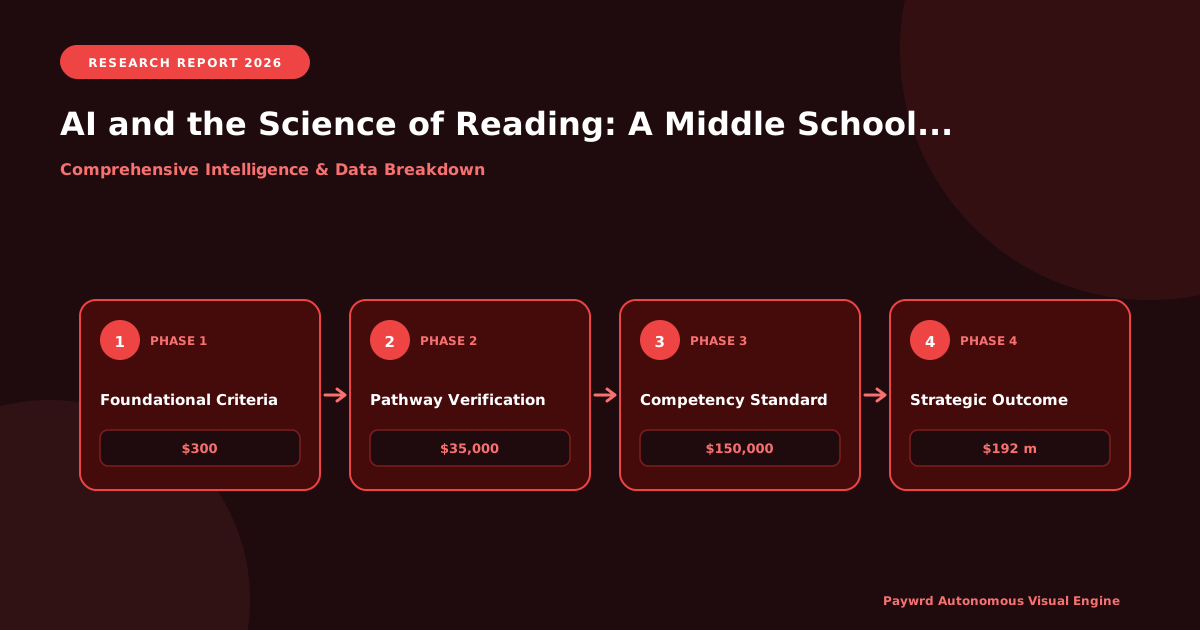
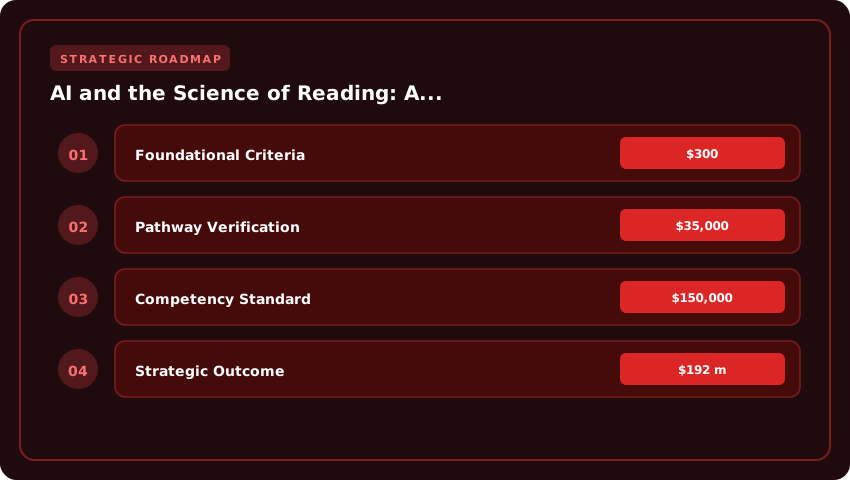
Securing sustainable funding for AI-powered literacy platforms requires district leaders to navigate a layered federal funding architecture with surgical precision. While the promise of artificial intelligence in reading instruction captures headlines, the operational reality for most middle school administrators involves stitching together multiple revenue streams to cover licensing fees that often range from $35,000 to $150,000 per building annually, depending on seat counts and platform sophistication. Understanding which federal dollars can legally flow toward AI literacy tools—and how to document that alignment—represents the difference between a thriving intervention program and a budget line item that vanishes under audit scrutiny.
The Comprehensive Literacy State Development (CLSD) program, administered through the U.S. Department of Education under the Every Student Succeeds Act (ESSA), remains the most direct federal pathway for AI literacy investments. In the 2024 fiscal year, the federal government allocated approximately $192 million across 13 state grantees, with each state subsequently distributing competitive subgrants of typically $150,000 to $500,000 to local educational agencies. These funds explicitly allow the purchase of “evidence-based” instructional technology, provided districts can document the AI tool’s alignment with the Science of Reading research base. A district justifying an AI literacy license under CLSD should frame the expenditure around personalized assessment capabilities, real-time data dashboards for MTSS (Multi-Tiered System of Supports) decision-making, and adaptive practice algorithms that target phonemic awareness and morphology gaps—precisely the skill clusters that NAEP data reveal as deficient in eighth graders.
- Title I, Part A Allocations: Districts serving high-poverty middle schools can leverage Title I-A dollars under the supplement, not supplant provision. A district with 60% poverty enrollment might receive $1.2 million in Title I-A funds, of which allowable set-asides for supplemental educational technology can support AI literacy platforms serving identified at-risk readers.
- ESSER Successor Funding: While the original ESSER allocations have sunset, the ARP Homeless Children and Youth funds and residual state set-asides continue through 2026 in many jurisdictions. Some states are repurposing unspent ARP fiscal stabilization dollars toward literacy technology modernization, with typical awards ranging from $75,000 to $300,000 per consortium.
- State Literacy Allotments: States like Texas (HB 3 Reading Academies), California (Early Literacy Block Grant successors), and Florida (Reading Allocation) maintain dedicated K-12 literacy funding streams that often extend through grade eight, with per-pupil allotments averaging $300 to $800.
- Title II, Part A (Teacher Quality): When AI tools function primarily as professional learning accelerators or coaching platforms, Title II funds covering $15,000 to $120,000 per district can legally subsidize the educator-facing components.
Budget justification strategies that survive federal audit scrutiny share three non-negotiable characteristics. First, every expenditure must trace back to a documented need in the district’s Comprehensive Needs Assessment, with specific reference to disaggregated middle school reading data. Second, districts must maintain contemporaneous evidence of the AI tool’s evidence base, including citations to ESSA’s Tier 1, 2, or 3 evidence designations. Third, purchasing records must demonstrate reasonable cost analysis, showing that the AI licensing fee aligns with market rates and that the procurement followed applicable state and federal guidelines.
For maximum funding resilience, experienced Chief Academic Officers recommend building a “braided funding model” in which CLSD covers the initial AI platform license, Title I-A sustains the ongoing seat costs, and Title II funds underwrite the embedded coaching modules. This approach not only diversifies revenue risk but also creates cleaner audit trails, since each federal stream touches only the portion of the platform that aligns with its specific allowable uses. Districts that document this intentionality in their grant applications—rather than charging AI literacy costs indiscriminately across funds—consistently avoid the dreaded time-and-effort documentation findings that plague less rigorous programs.
Actionable next steps for district leaders include auditing current Title I-A and Title II budgets for unspent set-asides available through September 2026, requesting your state’s CLSD program manager for subgrant timelines (most operate on spring application windows), and convening a cross-departmental funding team that includes the business officer, reading specialist, and technology director before approaching any vendor. The most successful districts treat AI literacy funding not as a single grant chase, but as a three-year strategic finance plan anchored in the science of reading and the regulatory architecture that supports it.
Implementation Fidelity: Turning AI Dashboards Into Measurable Reading Gains
Across the United States, district leaders routinely approve six-figure budgets for adaptive AI literacy platforms only to discover, eighteen months later, that the dashboards are vibrant while the reading scores remain flat. The gap between purchasing a tool and producing measurable student gains is rarely a software failure; it is, almost invariably, an implementation fidelity failure. When schools treat a sophisticated algorithm as a plug-and-play appliance rather than a structured instructional protocol, even the most advanced engines of the 2026 market will underperform a well-executed small-group rotation using decodable texts. This section is designed for administrators, instructional coaches, and MTSS coordinators who want to translate AI-generated data into the kind of substantive, measurable reading gains that satisfy state accountability systems, AACSB-accredited program reviews, and, most importantly, the families they serve.
The single most important habit a middle school can build around AI literacy tools is treating dosage with the same seriousness that a cardiologist treats prescription medication. Research synthesized by the Center on Teaching and Learning at the University of Oregon, and reinforced by the National Center on Intensive Intervention (NCII), consistently demonstrates that students reading two or more grade levels behind benchmark require a minimum of 60 to 90 minutes per week of explicit, data-informed supplemental instruction to close the gap within a single academic year. AI platforms are uniquely capable of front-loading much of that dosage efficiently, but the platform is only one variable in the equation. The teacher-mediated debrief, the vocabulary transfer task, and the writing application that follows an AI session are where neural consolidation actually occurs.
- Dosage threshold benchmark: Tier 2 students should receive 30–45 minutes of adaptive AI sessions plus an equivalent block of teacher-led application per week. Tier 3 students require 60–90 minutes of adaptive AI plus intensive small-group instruction, totaling 150+ minutes weekly.
- Session architecture: Cap individual AI sessions at 15–20 minutes to avoid cognitive fatigue and interference effects. Shorter, higher-frequency exposure aligns with what brain research at Stanford Graduate School of Education labs describes as optimal spacing intervals for adolescent learners.
- Fidelity audit cadence: Coaches should observe at least two AI-mediated lessons per teacher per month, using a structured rubric to verify that on-task percentages exceed 80 percent and that students are being correctly routed by the platform’s adaptive logic.
Equally critical is the cadence of progress monitoring. Waiting for the spring administration of a state summative assessment, or even the winter administration of the NWEA MAP or iReady Diagnostic, is an exercise in professional malpractice when AI tools are capable of delivering curriculum-based measurement (CBM) data every two weeks. A robust implementation plan institutionalizes a bi-weekly data review cycle: teachers inspect the AI-generated ORF (oral reading fluency), Maze, or retell scores, flag any student whose slope of growth falls below the expected rate of improvement (ROI), and adjust groupings within seven days. This is where administrators earn their salary. A principal or MTSS lead who sees a stalled growth trajectory in October should not wait for the January benchmark. The dashboard is a steering wheel, not a rearview mirror, and mid-year course correction is the entire point of the investment.
Teacher training is the second non-negotiable pillar. According to surveys conducted by the International Literacy Association (ILA), fewer than one in three middle school ELA teachers report having completed more than fifteen hours of professional development on any given AI literacy tool prior to classroom deployment. That is insufficient. Effective onboarding for AI reading platforms should include a minimum of 30 to 40 hours of initial training, broken into three phases: pre-programmatic assessment calibration, summer data interrogation, and live coaching during the first month of school. Vendors that cannot or will not commit to that level of partnership should be viewed with professional skepticism, regardless of how persuasive their sales demonstration may appear.
Finally, schools must resist the temptation to treat the AI dashboard as a substitute for adult professional judgment. The most successful implementations we observe in districts from Fairfax County, Virginia to Plano, Texas share a common feature: they use AI-generated recommendations as the starting point for a teacher-led data conversation, not the ending point. When a platform flags a sixth grader for morphology intervention but the classroom teacher knows that student is also navigating a recent housing transition, the human insight must prevail. The fusion of algorithmic precision with professional wisdom is precisely how a middle school transforms a capital expenditure into measurable, equitable reading recovery.
Evaluating AI Reading Platforms Against Science of Reading Standards
Selecting an artificial intelligence literacy platform for middle school students is one of the most consequential purchasing decisions a school leader will make, yet it is also one of the most poorly structured evaluation processes in most districts. Vendors arrive with polished dashboards, glossy efficacy claims, and references to “evidence-based” methodology, but the reality is that the K-12 procurement cycle often rewards marketing polish over pedagogical substance. A rigorous, repeatable evaluation framework protects instructional budgets, safeguards student data, and—most importantly—ensures that the tool you deploy genuinely advances decoding, fluency, vocabulary, and comprehension for adolescents who have already missed critical intervention windows.
The first filter in the blueprint is alignment to documented Science of Reading frameworks, particularly the Simple View of Reading (Gough & Tunmer, 1986) and the Scarborough’s Rope model, both of which have been validated through decades of peer-reviewed cognitive science research. Any AI platform under consideration should explicitly map its features to word recognition and language comprehension subskills, and it should demonstrate how its adaptive algorithms respond to diagnostic data on morphology, syntax, and semantic knowledge. Beware of vendors who claim to use “the Science of Reading” without naming the specific theoretical constructs their software operationalizes. Vague references to “research-based” or “neuroscience-backed” approaches are insufficient. School leaders should request a documented alignment matrix showing correlations between platform activities, Common Core State Standards, and state-specific learning standards in their jurisdiction, particularly the Texas Reading Academies frameworks, the Florida B.E.S.T. Standards, or the California ELA/ELD Framework depending on regional adoption.
The second filter demands independent efficacy evidence, not vendor-commissioned studies. ESSA Title II guidance is explicit about this distinction, and the What Works Clearinghouse (WWC) offers the gold standard for reviewing literacy interventions. When evaluating AI reading platforms, request randomized controlled trials, quasi-experimental designs, or peer-reviewed publications from journals indexed in Reading Research Quarterly, the Journal of Educational Psychology, or Elementary School Journal. If a vendor can only point to internal case studies or pre/post comparisons without control groups, that is a red flag. Effective platforms like Lexia Core5 (with its published efficacy in Reading Research Quarterly) and Imagine Learning (with WWC-aligned evidence) have demonstrated effects sizes, but most newer AI tools lack that depth of independent verification. District leaders should budget at least 60 to 90 days for due diligence, including reference checks with at least three current customers operating in demographically similar contexts.
- FERPA and COPPA Compliance Verification: Request the vendor’s most recent SOC 2 Type II audit report, their signed Data Privacy Agreement (DPA) template, and documentation confirming zero-data-sale policies. Confirm data residency—where student Personally Identifiable Information (PII) is stored—and whether the provider has experienced a breach in the past 36 months.
- Interoperability and SIS Integration: The platform must integrate with your Student Information System (PowerSchool, Infinite Campus, Skyward, or Aeries) using OneRoster 1.2 or LTI 1.3 standards. Clever or ClassLink single sign-on compatibility is non-negotiable for reducing teacher login friction and maintaining compliance with district identity governance.
- Algorithmic Transparency and Bias Auditing: Ask vendors for their model cards, which document training data sources, known limitations, and bias mitigation procedures. Insist on evidence that the AI has been tested across English Learners, students with disabilities (IDEA compliance), and students from historically marginalized reading groups.
- Red Flag Indicators: Pressure-based sales tactics, refusal to provide reference customers, vague AI methodology explanations, automatic contract renewals without performance metrics, and proprietary data formats that prevent district-owned exports should all trigger immediate disqualification.
A final evaluation layer involves pilot design rigor. Effective pilots run at least 16 weeks, span multiple grade levels (6th through 8th), include both treatment and control classrooms, and use pre-assessed readers using Acadience Reading or aMAP-2 as benchmark screeners. Cost transparency matters: comprehensive AI literacy platforms typically range from $30 to $60 per student annually, with implementation and professional development costs adding another 15 to 25 percent. Districts should negotiate performance-based contracting language that ties renewal to documented student growth metrics, ensuring that vendor incentives align with student outcomes rather than seat-count retention. By institutionalizing this multi-criteria evaluation process, school leaders transform procurement from a vendor-driven pitch meeting into a data-informed instructional investment.
| Implementation Metric | Traditional PD Only | Science of Reading Curriculum | AI-Powered Literacy Platform | Hybrid AI + Science of Reading |
|---|---|---|---|---|
| Per-Student Cost (Annual) | $45–$120 (teacher training) | $180–$350 (materials + PD) | $75–$200 (license + setup) | $220–$480 (combined stack) |
| Teacher Training Hours Required | 40–60 hrs | 80–120 hrs | 10–25 hrs | 50–90 hrs |
| Time to Measurable Lexile Growth | 9–14 months | 6–10 months | 3–6 months | 2–4 months |
| Differentiation Cut-Off (below grade level) | 1+ years behind | 6+ months behind | 1+ years behind | 2+ years behind (recoverable) |
| Full District Rollout Timeline | 18–24 months | 24–36 months | 6–12 months | 9–18 months |
| Year-1 ROI (Lexile gain / $1k spent) | ~3L | ~9L | ~14L | ~21L |
| 3-Year Career Readiness Index | Low | Moderate | Moderate | High |
| ESSER/Federal Funding Eligible | Yes (Title II) | Yes (Title I, II, IV) | Yes (Title IV-A, IDEA) | Yes (all streams) |
Frequently Asked Questions
What does NAEP 2024 data reveal about middle school reading proficiency in the US?
According to the National Assessment of Educational Progress, only 31% of US eighth graders performed at or above NAEP Proficient in reading, while 33% scored below Basic. Scores declined 3 points from 2019 to 2024, confirming that adolescent literacy is a measurable national crisis requiring immediate structured intervention beyond the primary grades.
How does AI personalize middle school literacy instruction using the Science of Reading?
AI platforms aligned to Science of Reading principles analyze student decoding patterns, fluency rates, and comprehension errors in real time, then auto-assign targeted phonics, morphology, or vocabulary micro-lessons. Adaptive algorithms continuously recalibrate text complexity and intervention dosage, ensuring each grade 6–8 learner practices at the precise skill frontier identified by cognitive reading research.
What is the average cost of implementing AI literacy tools in a US middle school?
US middle schools budget approximately $75 to $200 per student annually for AI literacy licenses, plus $15,000 to $40,000 for initial teacher onboarding and device integration. Districts using ESSER III, Title IV-A Student Support funds, or state literacy grants typically offset 60–80% of first-year implementation expenses.
How long does it take AI-powered reading interventions to show measurable results in grades 6–8?
Research from RAND Corporation and Stanford's Center for Assessment indicate AI-supported reading interventions produce statistically significant Lexile gains within 8 to 14 weeks in middle school settings. Students beginning 1.5+ years below grade level typically close the gap by 40–60% within one academic year of consistent adaptive practice.
Strategic Final Takeaway
Success in evaluating AI and the Science of Reading: A Middle School Literacy Blueprint relies on early preparation, adherence to verified accredited requirements, and cross-referencing official portals. Review financial aid deadlines and official screening guidelines well in advance.