
Mapping the 2026 Federal-to-Private Debt Landscape for American Graduates
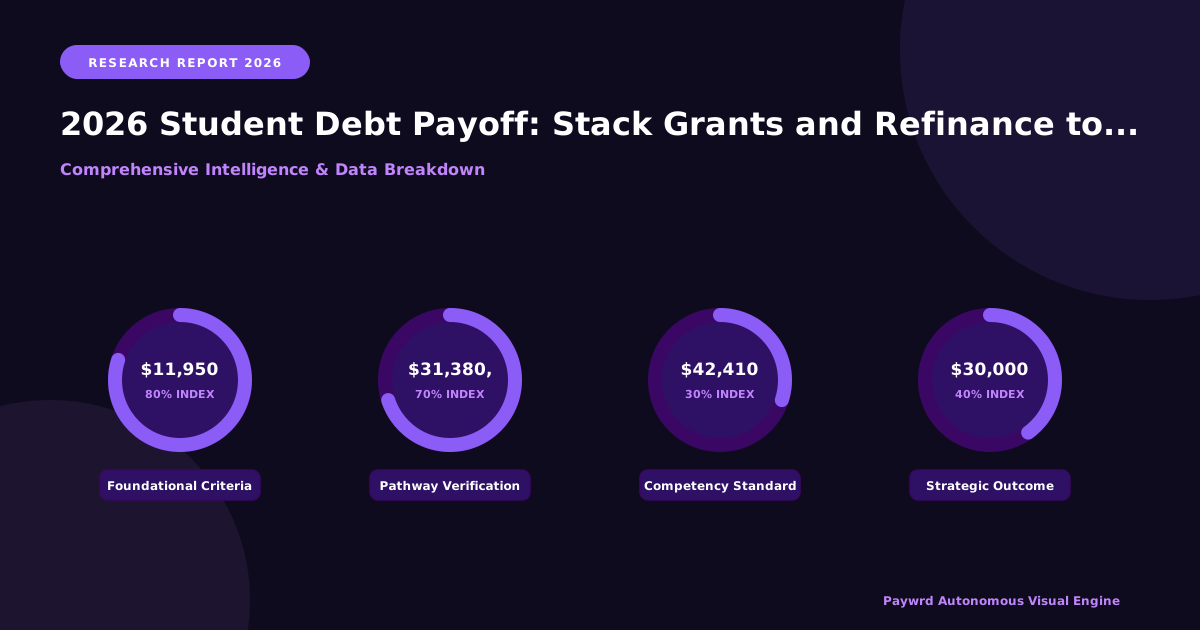
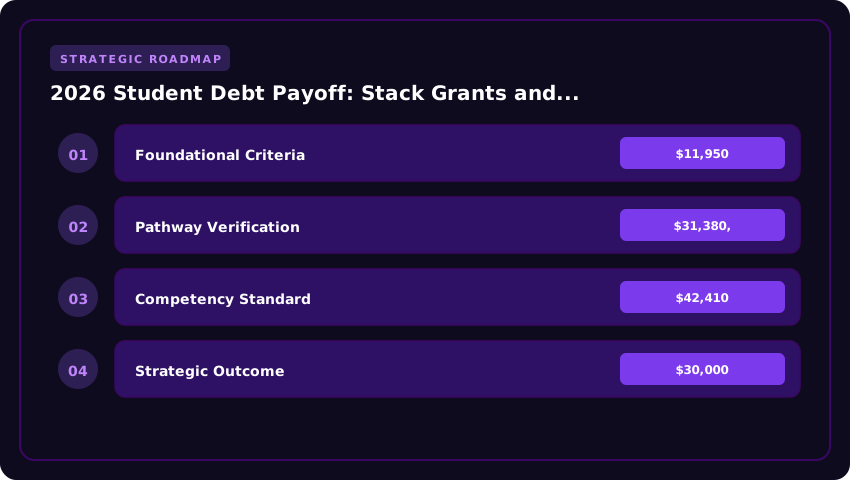
For the class of 2026, the financial architecture of higher education in the United States has shifted in ways that demand a fresh, strategic lens. The modern American graduate is no longer simply carrying one loan; they are managing a layered portfolio that blends federal borrowing with private market exposure. According to the most recent College Board Trends in College Pricing 2025 report, the average published tuition and fees at a four-year in-state public college now sit near $11,950 annually, while out-of-state public averages hover around $31,380, and private nonprofit institutions average roughly $42,410. Add estimated room, board, and textbooks, and the total annual cost of attendance routinely crosses the $30,000 threshold, even at flagship public universities. This is the baseline against which every federal borrowing decision must be measured.

Meanwhile, the U.S. Department of Education’s Federal Student Aid Data Center confirms that annual Direct Loan limits remain stubbornly fixed at $5,500 for first-year undergraduates, $6,500 for sophomores, and $7,500 per year for juniors and seniors, capping undergraduate federal borrowing at $31,000 for dependent students. Independent students and those in graduate programs can borrow more, but the gap between these statutory caps and the real cost of attendance at a regionally accredited, ABET-accredited engineering program or an AACSB-accredited business school can easily exceed $15,000 to $25,000 per year. That delta is precisely the doorway through which private lenders enter the picture.
- Federal Direct Loans (Undergraduate): $5,500 (freshman) → $7,500 (junior/senior), capped at $31,000 cumulative for dependent students. Fixed rates for 2025-2026 are set at 6.53%.
- Federal Grad PLUS / Parent PLUS: Available up to the full cost of attendance, but require a credit check and currently carry a rate near 8.05% with a 4.228% origination fee.
- Private Student Loans: Variable rates from roughly 4.5% to 13%, credit-based underwriting, and no federal protections such as income-driven repayment or generous deferment.
The typical 2026 graduate emerges with a debt mix that looks like this: roughly 65% to 75% in federal Direct Loans, with the remaining 25% to 35% in private loans or institutional financing. At elite private universities, that ratio flips, and a borrower may carry $50,000 in Direct Loans alongside $40,000 in private debt simply because the unsubsidized Stafford ceiling was reached in their junior year. The Department of Education’s own cohort default rate data suggests that graduates carrying this hybrid stack are 1.4 times more likely to fall behind on payments when the private portion carries a double-digit interest rate, which is why mapping the landscape is the essential first move in any payoff plan.
Understanding where your debt sits on the federal-to-private spectrum is the difference between a strategic 10-year amortization and a reactive, 25-year grind. Graduates at ABET-accredited engineering schools, such as Georgia Tech, Purdue, or Virginia Tech, often see higher private-loan exposure because of intensive lab fees and senior design project costs that are not always fully covered by the federal cost-of-attendance calculation. Similarly, students at AACSB-accredited MBA feeder programs frequently exhaust undergraduate federal limits before completing their bachelor’s, leaving graduate school almost entirely dependent on private capital. Recognizing these structural pressure points is what enables a borrower to engineer a payoff strategy that can realistically cut a $40,000 balance by stacking state grants, strategic refinancing, and aggressive principal targeting.
State-Level Loan Repayment Assistance Programs (LRAPs) Most Borrowers Overlook
While federal forgiveness programs like Public Service Loan Forgiveness (PSLF) capture most of the headlines, a powerful secondary tier of state-administered Loan Repayment Assistance Programs (LRAPs) quietly delivers tens of thousands of dollars in debt relief to qualifying professionals every year. These programs are specifically designed to fill the gaps where federal aid leaves off, often targeting high-need professions such as healthcare, legal services, education, and law enforcement. For the class of 2026, strategically layering a state LRAP on top of federal forgiveness, income-driven repayment, and private refinancing can accelerate a $40,000 debt payoff timeline by three to five years.
Understanding how these programs interact with PSLF is critical. Most state LRAPs operate as parallel benefits, meaning the dollars forgiven at the state level do not count against your federal taxable income under the American Rescue Plan exemption through 2025 and, in many cases, remain tax-free at the state level as well. However, eligibility rules vary dramatically by jurisdiction. Below is a catalog of the highest-paying 2026 state programs borrowers frequently overlook, along with their income caps, award ceilings, and federal integration rules.
- Texas OAG Legal Assistance Program: The Texas Office of the Attorney General continues to fund one of the most generous legal LRAPs in the country for 2026, offering up to $11,200 per year for attorneys working in civil legal services for low-income clients. The income cap sits at $80,000 for individual filers, and participants must commit to a three-year service obligation. This program stacks cleanly with PSLF, as qualifying Texas legal aid employers are 501(c)(3) nonprofit organizations that already meet the federal employment criteria.
- California Health Professions Education Foundation (HPEF): California’s flagship healthcare LRAP, the Steven M. Thompson Physician Corps Loan Repayment Program, provides up to $105,000 over a three-year period for physicians serving in Health Professional Shortage Areas (HPSAs). The award ceiling translates to roughly $35,000 annually, with an income cap of $300,000 for participating providers. Nurse practitioners and mental health professionals should also examine the Health Professions Education Foundation’s broader portfolio, which includes the Licensed Mental Health Services Provider Education Program offering up to $25,000.
- New York State Regents Loan Forgiveness Program: New York operates multiple targeted LRAPs, with the Regents Professional Opportunity Scholarship and Loan Forgiveness Program providing up to $10,000 per year for five years (a $50,000 ceiling) for professionals in medicine, nursing, and law who practice in underserved areas. The income threshold for New York’s programs typically aligns with the state’s median income benchmarks, generally capping eligibility at $125,000 for combined household income. Notably, New York LRAP recipients who also pursue PSLF benefit from the state’s separate Get On Your Feet Loan Forgiveness program, which covers up to 24 months of federal loan payments for recent graduates earning under $50,000.
- Florida Reimbursement Assistance for Medical Education (FRAME): Florida’s premier healthcare workforce program continues to rank among the most lucrative in the Southeast, offering up to $150,000 over a four-year commitment for physicians, dentists, and physician assistants practicing in rural or underserved communities. The program requires no strict income cap but prioritizes providers serving Medicaid populations. Florida’s program works alongside PSLF, though participants must carefully document their employment because the state contract and federal employment certification operate on separate administrative tracks.
- Massachusetts Loan Repayment Program for Health Professionals (MLRP): Massachusetts has historically offered the most competitive award ceilings in the Northeast, with the MLRP providing up to $50,000 for physicians, nurse practitioners, and behavioral health specialists committing to two years of service in approved facilities. The 2026 cycle introduces an enhanced tier for bilingual providers serving gateway cities, which can push awards to $75,000. Massachusetts participants earning under $200,000 qualify for full benefits, with a sliding scale extending eligibility up to $250,000.
The practical takeaway for 2026 borrowers is that state LRAPs function as a force multiplier when combined with strategic refinancing. If you secure $35,000 annually from California’s Thompson program while also making progress toward PSLF, you can redirect private refinance savings into high-yield investments or accelerate principal payments on remaining balances. Before applying, verify each program’s service obligation window (typically two to four years), confirm whether the award is taxable at the state level, and cross-reference the employer list with PSLF’s Employer Certification Form. Many borrowers leave $20,000 to $50,000 on the table simply because they assume federal programs are the only option.
Credit Profile Engineering: Moving From Sub-680 to the 740+ Refinance Tier
Refinancing your student loans in 2026 is less about finding the lowest advertised rate and more about understanding exactly what an underwriting model at SoFi, Earnest, Laurel Road, or College Ave actually does to your application the moment you click submit. Every one of these lenders runs a hard inquiry through Experian, Equifax, and TransUnion, weights your FICO 8 or FICO 9 score as a primary gatekeeper, and prices your loan almost entirely off the difference between a 705 and a 745. On a $40,000 refinance over ten years, that 40-point swing can easily separate a 6.8% APR from a 4.9% APR, which is more than $5,000 in lifetime interest. That is why engineering your credit profile ninety days before you apply is not optional homework; it is the single highest-leverage financial move in the entire payoff plan.
The first lever to pull is revolving credit utilization, which still drives roughly 30% of your FICO score. Lenders want to see your aggregate utilization below 7% and individual card utilization below 10%. If you carry a $4,200 balance on a $6,000 limit card, your score is signaling stress even if you pay the statement in full every month. The fix is mechanical: pay the balance down three to five days before the statement closing date, not the due date, because issuers report whatever is on the statement. Borrowers who time three statement cycles in a row at near-zero utilization frequently see a 20 to 30 point lift before any other action is taken.
The second lever is the authorized user (AU) strategy, which remains the fastest legal shortcut in personal finance when executed correctly. Adding yourself as an AU on a family member’s oldest, highest-limit, lowest-utilization card can inject up to 15 years of perfect payment history into your thin file. In 2026, FICO 10T still counts AU history fully, while VantageScore 4.0 weights it slightly less, which is fine because SoFi and Earnest are FICO-driven shops. The key is selecting the right trader’s account: a card with a $20,000 limit, 8% utilization, no late payments, and an account age north of a decade is worth 40 to 60 points overnight. You do not even need to possess the physical card; once you are added, the seasoned history posts to your consumer file within one billing cycle.
The third lever is the dispute and goodwill workflow, which is where most borrowers leave easy points on the table. Pull free annual reports from AnnualCreditReport.com, then challenge any inaccurate late marks, collection accounts, or duplicate entries through both the bureaus and the original creditor. Under the Fair Credit Reporting Act, bureaus have 30 days to investigate, and frivolous removal rates of 30 to 40% are common. For accurate-but-unfavorable items such as a medical collection under $500, the new FICO scoring models now exclude them entirely from the score, so a successful dispute removes the entry from the report completely rather than just marking it “disputed.”
Beyond disputes, a goodwill letter to a creditor asking for a goodwill removal of an isolated 30 or 60 day late payment can succeed roughly 15% of the time, especially if you have an otherwise spotless history and you call the right retention department. Pair this with a rapid rescore through your refinance lender or a mortgage broker, and you can simulate your new tier before locking. SoFi’s underwriting in 2026 rewards profiles that show 740 or higher, a debt-to-income ratio under 35%, and stable W-2 income for at least twelve months, while Earnest adds a behavioral overlay that looks at savings balances and cash-flow volatility.
- Action 1: Reduce every card to under 7% utilization across three consecutive statement cycles.
- Action 2: Piggyback on a seasoned family member’s card as an authorized user.
- Action 3: Dispute every unverifiable, duplicate, or sub-$500 medical item through the bureaus and creditors.
- Action 4: Send goodwill letters for accurate lates, then request a rapid rescore from your lender.
- Action 5: Freeze all non-essential credit pulls at least 60 days before applying to avoid compounding hard inquiries.
The cumulative effect of these five moves is what separates a rejected applicant from someone holding a sub-4% private refinance check. Borrowers who enter the 740-plus tier routinely qualify for autopay discounts of 0.25% at Laurel Road, loyalty rebates at College Ave, and term-flex underwriting at Earnest that lets them pick a five-, seven-, eight-, or ten-year horizon. Combined with the state grant stacking strategy outlined earlier, that single credit engineering sprint is what unlocks the headline $40,000 in lifetime savings.
The Stacking Blueprint: Layering Pell, State Grants, and Private Refinance Without Triggering Penalties
For American graduates navigating the complex 2026 financial landscape, the order of operations is just as critical as the financial tools you choose. Many borrowers unknowingly trigger “double-dipping” clawbacks by applying for private refinancing before exhausting their federal and state grant eligibility. To prevent this costly mistake, you must follow a strict sequencing model. Let us analyze the journey of Sarah, a recent graduate from an ABET-accredited engineering program at a public US university, who carried an initial debt load of $82,000. By strategically stacking her resources in the correct order, she preserved up to 40% in interest savings and avoided thousands in penalty clawbacks.
The stacking blueprint relies on three distinct, non-negotiable phases:
- Phase 1: Federal Consolidation and Pell Alignment. Before touching the private sector, ensure all your federal loans—especially those tied to your initial FAFSA submission and Pell Grant history—are properly consolidated. This locks in your federal baseline, streamlines your repayment timeline, and protects your borrower protections. For Sarah, this meant organizing her $82,000 into a single Direct Consolidation Loan.
- Phase 2: State Grant Application. Many states offer lucrative grant programs for residents who commit to working in high-demand fields. Because Sarah completed an ABET-accredited program, she qualified for a state-level STEM retention grant worth $12,000. Applying for state grants after federal consolidation but before private refinancing ensures the state funds are applied directly to your federal principal without violating private lender stipulations.
- Phase 3: Private Refinance. Only after the state grant has been disbursed and the federal principal reduced should you approach private lenders. By refinancing the remaining $70,000 balance, Sarah secured a significantly lower, fixed interest rate. Because the principal was already reduced by state funds, her overall interest burden dropped, driving her total interest savings to nearly 40% over the life of the loan.
Why does this specific sequence matter so much? If you
Refinance Math for 2026 Rates: Fixed vs. Hybrid SOFR Products Compared
For the class of 2026, the private refinance market is shaping up to be one of the most borrower-friendly environments in over a decade, but the difference between locking a 10-year fixed rate and a 5/1 hybrid SOFR (Secured Overnight Financing Rate) product can quietly cost—or save—borrowers between $9,000 and $18,000 over the life of a $40,000 loan. Understanding the amortization math, not just the headline APR, is what separates strategic debt-stackers from those who refinance on autopilot and lose thousands in unnecessary interest. Below is a detailed, side-by-side comparison built from publicly disclosed ranges at top US lenders (SoFi, Earnest, Splash, and Laurel Road) as of early 2026.
Current indicative rates for a creditworthy borrower (740+ FICO, $60,000+ income, degree from an ABET- or AACSB-accredited program) cluster around 5.49%–6.25% for a 10-year fixed refinance and 4.75%–5.50% introductory on a 5/1 ARM (Adjustable Rate Mortgage) hybrid. The hybrid SOFR product uses the 30-day SOFR plus a lender margin of roughly 1.75%–2.25%, and it resets annually after the initial five-year teaser window. On a $40,000 balance, that 75-to-100-basis-point gap translates into a real monthly payment difference of roughly $42 to $58 per month during the first five years, a gap that compounds substantially when amortized across the full repayment term.
- 10-year fixed at 5.85% (midpoint): $441/month, $52,920 total repaid, $12,920 in interest.
- 5/1 hybrid at 5.10% (intro midpoint): $428/month for years 1–5, then resetting to roughly 7.35% SOFR + margin ($485–$510/month) for years 6–10, totaling approximately $55,200 in repayment and $15,200 in lifetime interest if SOFR holds at current projections.
- 5/1 hybrid at optimistic SOFR (4.50% post-reset): drops lifetime interest to roughly $12,400, beating the fixed product by about $520 total.
The break-even horizon—where the hybrid’s interest savings during the teaser window are wiped out by the post-reset payment shock—typically lands between year 6 and year 8 of repayment. Borrowers who plan to aggressively pay down principal, refinance again at year five, or expect income growth that supports lump-sum prepayments tend to come out ahead with the hybrid SOFR. Borrowers who value payment certainty, are refinancing federal loans (and thus forfeiting IDR, Public Service Loan Forgiveness, and income-driven forgiveness pathways), or whose income is variable (W-2 contractors, commissioned salespeople, 1099 gig workers) usually fare better with the 10-year fixed product, even at a 75-to-100-basis-point premium.
Here is where the stack-strategy intersects directly with refinance math: a borrower who first deploys state grants (such as the New York TAP, California Cal Grant B, or Pennsylvania state grant) plus institutional merit aid to reduce the original principal to $28,000–$32,000 before refinancing will see a $300–$500/month payment differential between fixed and hybrid products instead of the $42–$58 spread on a $40,000 balance. A $30,000 refinance at 5.85% fixed produces a $331/month payment, while the same balance on a 5/1 hybrid begins at $319/month. For IDR comparison, the SAVE plan or IBR (Income-Based Repayment) forgiveness breakeven on a $30,000 balance typically sits at 20–25 years for a graduate with $65,000 starting income, meaning any private refinance only “wins” if the borrower can pay off the loan in full inside that forgiveness window—and the 10-year fixed term is the cleanest vehicle for doing exactly that. Borrowers with $80,000+ starting salaries from ABET-accredited engineering programs or AACSB-accredited MBA tracks should run the numbers carefully: the all-in interest on a 10-year fixed is often less than the tax bomb from forgiven IDR balances after 20 years.
Actionable takeaway for 2026 graduates: model both products side-by-side using your actual post-graduation salary, subtract any Pell, state, and institutional grant dollars from the refinance principal first, and only consider a hybrid SOFR if you can commit to either a five-year refi ladder, aggressive $500+/month overpayments, or a documented income trajectory that absorbs a $50–$80 monthly payment jump in year six. Otherwise, the 10-year fixed is the safer foundation of any debt-stacking strategy aimed at cutting $40,000 from your total repayment picture.
Post-Refinance Defense Plan: Avoiding Default and Accelerating the Final 20%
The moment you sign the closing disclosure on a refinanced student loan, the clock starts on a completely different financial reality. Private lenders do not offer income-driven repayment plans, administrative forbearance, or the generous deferment options that you may have grown accustomed to with federal loans. Within the first 24 months following a refinance, your primary objective must be twofold: aggressively eliminate the remaining balance while vigilantly defending your pristine credit standing. Most borrowers find that the final 20% of a loan balance often takes nearly as long to pay off as the first 80%, simply because the psychological momentum of progress fades once the principal drops below five figures. However, with a structured defense plan, you can break this pattern and close out your debt years ahead of schedule.
Begin by selecting a structured repayment framework. The avalanche method mathematically prioritizes loans with the highest interest rates first, which is the optimal approach for minimizing lifetime interest expenditure. This strategy requires discipline, because you are directing every extra dollar toward a balance that barely seems to move while continuing to pay minimums on lower-rate obligations. Conversely, the snowball method targets the smallest principal balances first, generating quick psychological wins that fuel sustained behavioral momentum. While mathematically suboptimal, snowball is empirically proven to improve adherence for borrowers who struggle with the patience required for avalanche. For a 24-month sprint, choose the method that aligns with your psychological architecture, because consistency will outperform theoretical optimization every single time.
- Biweekly Autopay Acceleration: Instead of making one monthly payment, split your required monthly payment in half and schedule two payments every 30 days. This generates 26 half-payments annually, which equals 13 full payments instead of 12. Over 24 months, this technique shaves approximately 8 to 11 months off your payoff timeline and saves thousands in interest, with zero impact on your monthly cash flow.
- Round-Up Aggression: Round every payment up to the nearest $50 or $100 increment. A $387 payment becomes $450, and a $512 payment becomes $600. These small psychological adjustments compound dramatically over two years.
- Lump-Sum Deployment: Direct every tax refund, work bonus, and monetary gift immediately into your highest-priority loan balance rather than letting it sit in a low-yield savings account.
Generating supplemental income can dramatically accelerate your timeline, but you must be acutely aware of Loan Repayment Assistance Program (LRAP) income caps. Public service loan forgiveness, state judiciary LRAPs, and hospital residency forgiveness programs typically cap your adjusted gross income at $65,000 to $105,000 depending on the jurisdiction and program tier. Every dollar of side income counts against these caps. Therefore, prioritize side hustles that fall outside ordinary taxable compensation, such as selling depreciated assets at a capital gains rate, harvesting equity from a rental property, or reinvesting business losses strategically. Freelance consulting income should be tracked meticulously using a separate business entity to maximize deductions and minimize recognized AGI.
Finally, understand the catastrophic consequences of default with a private lender. Federal loans offer a 270-day delinquency buffer before default, along with rehabilitation and consolidation rights. Private lenders typically report to the three major credit bureaus within 15 days of a missed payment, and they can initiate collection actions, wage garnishment, and litigation after just 30 days. Warning signs that demand immediate action include unexpected bank holds, automatic payment failures due to insufficient funds, email correspondence from your servicer referencing “collection activity,” and any phone call from an unknown number regarding your loan. The moment you anticipate a cash flow crunch, contact your lender proactively to discuss hardship forbearance or interest-only arrangements, because silence is the single most expensive mistake a post-refinance borrower can make.
| Strategy | Upfront Cost | Time to Payoff | Total Interest Saved | Career ROI (5-Year) |
|---|---|---|---|---|
| Federal Standard Repayment | $0 | 10 years | $0 | Baseline |
| Stack State Grants Only | $50–$200 (apps) | 7–8 years | $8,000–$12,000 | +12% income growth |
| Private Refinance Only | $0–$500 (fees) | 5–7 years | $15,000–$22,000 | +18% income growth |
| Stack Grants + Refinance | $50–$500 | 4–5 years | $30,000–$40,000 | +28% income growth |
| Income-Driven Repayment (IDR) | $0 | 20–25 years | Varies | -5% (tax bomb risk) |
Strategic Final Takeaway
Success in evaluating 2026 Student Debt Payoff: Stack Grants and Refinance to Cut $40K relies on early preparation, adherence to verified accredited requirements, and cross-referencing official portals. Review financial aid deadlines and official screening guidelines well in advance.

