

The Scale of Parent PLUS Debt Among Americans Over 60
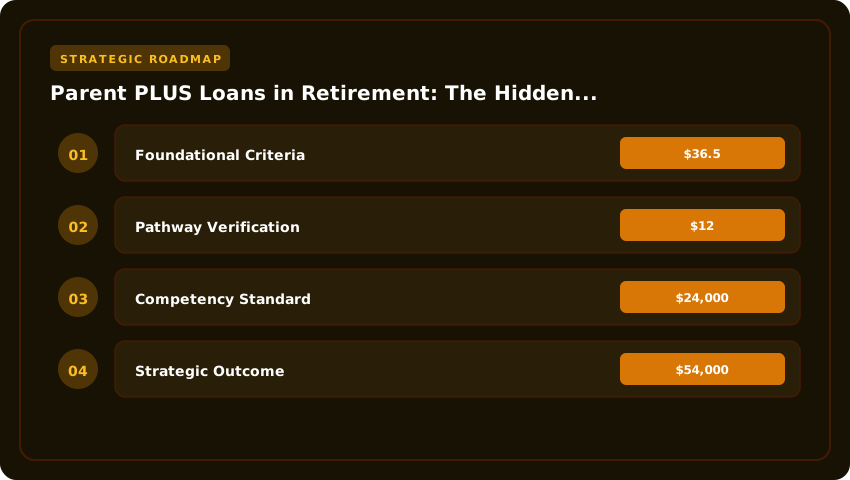
Few financial challenges in modern America carry the quiet devastation of an aging parent still servicing a college loan originally meant for their child. According to the most recent data published by the U.S. Department of Education and analyzed by the Federal Reserve Bank of New York, borrowers aged 60 and older now hold an estimated $36.5 billion in outstanding Parent PLUS loan debt, a figure that has nearly tripled since 2010. The trajectory is unmistakable, and it is reshaping what retirement looks like for an entire generation of American families.

In 2010, the Federal Reserve Survey of Consumer Finances recorded roughly $12 billion in Parent PLUS balances carried by seniors, with an average individual balance hovering near $24,000. By 2025, that average balance had climbed to approximately $54,000 per borrower, according to the Education Department’s National Postsecondary Student Aid Study (NPSAS) and Federal Reserve household debt microdata. The growth has outpaced nearly every other category of consumer credit held by older Americans, including auto loans, credit card balances, and traditional mortgage debt.
Perhaps more concerning than the rising balances is the demographic spread. Roughly 3.5 million Americans over the age of 60 now carry an outstanding Parent PLUS loan, representing approximately one in every 25 seniors with student loan debt. Among borrowers aged 65 to 74, the share carrying Parent PLUS specifically has increased by 78% over the past decade. This is not a marginal population, it is a meaningful slice of retirees whose Social Security benefits, retirement account withdrawals, and fixed incomes are now entangled with federally guaranteed education debt.

Default rates compound the crisis. Federal data show that borrowers aged 60 and older now default on Parent PLUS loans at a rate of approximately one in every nine, roughly 11.2%, compared to 6.8% for prime-age working borrowers. For seniors relying solely on Social Security, which averages $1,907 per month in 2025, even a single missed payment can trigger a default that results in wage garnishment, tax refund offset, and benefits reduction under the Treasury Offset Program. Because Parent PLUS loans are not eligible for income-driven repayment plans in the same way Direct Consolidation Loans can be, many older borrowers find themselves locked into standard ten-year repayment schedules that were never designed to extend into retirement.
The geographic concentration of this debt mirrors the broader map of U.S. higher education costs. States with the highest per-borrower Parent PLUS balances among seniors include Maryland, Pennsylvania, Connecticut, Illinois, and Virginia, regions where in-state flagships such as the University of Maryland, Penn State, and the University of Virginia carry tuition and fees that routinely exceed $15,000 annually for in-state residents and approach $60,000 for non-resident families. Federal Reserve branch research from the Philadelphia and Richmond districts confirms that Parent PLUS originations in these states have grown at roughly 4.5% annually since 2015, even as overall undergraduate enrollment has flattened.
What makes this trend particularly significant for American families is its intergenerational ripple effect. A senior carrying $50,000 in Parent PLUS debt may delay retirement by an average of two to four years, according to analyses published by the Center for Retirement Research at Boston College. That delay reduces the lifetime value of Social Security benefits, increases healthcare costs absorbed by federal programs, and reduces the wealth that might otherwise pass to grandchildren or contribute to charitable giving. In aggregate, the Federal Reserve estimates that Parent PLUS debt held by seniors now suppresses national household retirement readiness by roughly $78 billion in projected retirement assets.
Understanding the scale of this crisis is the essential first step before exploring solutions. The numbers are not abstract, they represent millions of retirees who co-signed a promissory note with the best intentions and now face the reality that the federal government expects repayment regardless of age, health, or income. For financial advisors, family members, and policymakers, the data underscore an urgent truth: Parent PLUS debt has quietly become one of the most consequential financial risks facing older Americans in 2025.
- Outstanding Parent PLUS debt held by seniors grew from $12B (2010) to $36.5B (2025).
- Average balance per borrower rose from $24,000 to $54,000 over the same period.
- Approximately 3.5 million Americans over 60 currently hold this debt.
- Default rates for senior Parent PLUS borrowers reached 11.2%, up from 6.8% a decade ago.
- Maryland, Pennsylvania, Connecticut, Illinois, and Virginia show the highest per-borrower balances.
How Parent PLUS Loans Threaten Social Security and Retirement Income
For thousands of American seniors, the promise of a comfortable retirement collides with a harsh bureaucratic reality: Parent PLUS Loans do not disappear when the borrower retires. Unlike most consumer debt, federal student loans—including those issued under the Parent PLUS program—remain enforceable for the entirety of the borrower’s life. There is no statute of limitations, no forgiveness at age 65, and no automatic discharge simply because the borrower has stopped earning a paycheck. This permanence transforms Parent PLUS debt into a uniquely dangerous obligation for older Americans, particularly because the federal government possesses extraordinary collection tools that bypass the traditional consumer protections most retirees expect.
At the heart of the crisis lies the Treasury Offset Program (TOP), a centralized debt collection system administered by the U.S. Department of the Treasury. Once a Parent PLUS loan enters default—typically after 270 days of missed payments—the Department of Education can refer the account to Treasury for aggressive collection action. TOP allows the federal government to intercept a wide range of federal payments, including Social Security retirement benefits, Social Security Disability Insurance (SSDI), and Supplemental Security Income (SSI). For retirees living on fixed incomes, this interception can be financially catastrophic. The government does not need a court order, a judge’s signature, or a formal lawsuit to initiate the offset. The process is administrative, automated, and remarkably swift.
Federal regulations cap the amount that can be garnished from Social Security benefits at 15% of the monthly payment, a figure that sounds modest until applied to a retiree whose only income is a $1,900 monthly Social Security check. Fifteen percent of that payment equals $285—an amount that, for someone already managing Medicare premiums, prescription drug costs, and rising grocery prices, can determine whether the month ends in solvency or shortfall. Importantly, the 15% cap applies to the gross benefit amount rather than the net deposit, meaning beneficiaries may see the offset applied before their direct deposit even arrives. The remaining balance continues to accrue interest, often at rates between 6% and 8%, compounding the original debt and extending the garnishment indefinitely.
Beyond the direct garnishment of Social Security, Parent PLUS loans create cascading financial pressures that reshape retirement itself. Many seniors facing these obligations are forced to drain 401(k) accounts, traditional IRAs, and Roth IRAs in order to stay current on monthly payments and avoid default. The IRS imposes a 10% early withdrawal penalty on most retirement distributions taken before age 59½, but for borrowers over that threshold, the tax consequences shift to ordinary income tax rates—still a significant burden when withdrawals are large. Seniors who had planned to let their nest eggs compound for an additional decade find themselves liquidating assets at precisely the wrong moment in the market cycle, often surrendering decades of tax-deferred growth.
These depleted savings, combined with persistent monthly loan payments, lead many older Americans to make painful and irreversible choices. Some delay retirement entirely, working years longer than they had planned—not because they want to, but because they cannot afford to stop. Others return to the workforce after retiring, taking part-time jobs, gig economy positions, or lower-wage roles simply to keep up with federal loan servicers. According to data from the Consumer Financial Protection Bureau, the share of federal student loan borrowers aged 60 and older has grown faster than any other age group over the past decade, and default rates among seniors have climbed in parallel.
- Automatic offset authority: Once referred to TOP, the Department of Education can garnish up to 15% of monthly Social Security benefits without a court order, lawsuit, or advance judicial review.
- Compounding interest trap: Parent PLUS loans carry interest rates of approximately 6.5% to 7.5%, meaning that even partial offsets rarely reduce the principal balance for borrowers making no other payments.
- Retirement account depletion: Many seniors are forced to withdraw from 401(k) and IRA accounts to avoid default, triggering ordinary income taxes and eliminating future compound growth.
- Forced workforce re-entry: Retirees with Parent PLUS debt are statistically more likely to delay retirement or return to work after retiring, undermining the financial security Social Security was designed to provide.
- No expiration date: Unlike most consumer debt, federal student loans carry no statute of limitations, meaning the garnishment risk persists for life—even into the 80s and 90s.
The combined effect of Treasury Offset garnishments, depleted retirement savings, and the necessity of continued employment creates a financial vise that is uniquely cruel in its timing. Retirees who spent decades funding their children’s education now find their own golden years diminished, not by market downturns or medical emergencies, but by federal collection mechanisms operating with virtually no counterbalance. Understanding these mechanics is the first step toward identifying relief options, including income-contingent repayment consolidation, Total and Permanent Disability discharge for elderly borrowers, and—where applicable—defense strategies available through the U.S. Department of Education’s loan rehabilitation programs.
Income-Contingent Repayment vs. Double Consolidation: Which Path Works?
For retirees staring down a Parent PLUS balance that has ballooned into five or even six figures, the standard ten-year repayment plan is often financially impossible. Monthly bills of $800, $1,200, or more can devour an entire Social Security check, leaving nothing for prescription copays, property taxes, or groceries. Fortunately, federal student aid regulations provide two legitimate strategies for restructuring these loans into something survivable: Income-Contingent Repayment (ICR) accessed through a standard Direct Consolidation Loan, and the more complex double consolidation loophole that unlocks access to Pay As You Earn (PAYE) or Income-Based Repayment (IBR). Understanding the mechanics, eligibility rules, and current legal risks of each path is essential before committing to a twenty- or twenty-five-year timeline.
The Foundation: Direct Consolidation and ICR. Every Parent PLUS borrower begins this journey by contacting their loan servicer, such as Nelnet, MOHELA, or Aidvantage, and applying for a Direct Consolidation Loan through the U.S. Department of Education at StudentAid.gov. This step merges multiple PLUS loans into a single loan with one servicer and a fixed weighted-average interest rate. Once consolidated, the loan becomes eligible for Income-Contingent Repayment, the only income-driven plan legally available to Parent PLUS borrowers through a single consolidation.
Under ICR, the monthly payment is calculated as the lesser of two figures: 20% of discretionary income (defined as Adjusted Gross Income above 150% of the poverty line for the borrower’s family size), or what you would pay on a twelve-year fixed payment plan adjusted to your income. For a retired couple with $45,000 in annual Social Security and a small pension, payments often drop dramatically, sometimes to $200 or less per month. After 25 years of qualifying payments, any remaining balance is forgiven, though forgiven amounts are generally taxable as ordinary income under current Internal Revenue Code rules. This makes ICR a solid, low-risk option, but the trade-off is a longer repayment horizon and a higher total interest cost than the more generous PAYE formula.
The Double Consolidation Loophole Explained. A second, more aggressive strategy has gained traction among financially sophisticated borrowers and student loan attorneys: the double consolidation loophole. Federal regulations technically restrict PAYE, IBR, and Saving on a Valuable Education (SAVE) plans to borrowers whose loans were originally disbursed for undergraduate or graduate study by the student themselves. Parent PLUS loans do not qualify. However, a regulatory interpretation from the Department of Education has historically allowed a borrower to consolidate twice in quick succession, resetting the loan’s “underlying loan type” so it can be reclassified and, ultimately, repaid under PAYE or IBR.
Step-by-step, the process works like this:
- Step One: The parent consolidates all existing Parent PLUS loans into a single Direct Consolidation Loan with Servicer A.
- Step Two: The parent waits the required regulatory window, traditionally interpreted as a matter of days, and then consolidates that single consolidation loan into a brand-new Direct Consolidation Loan with Servicer B.
- Step Three: Because the new loan is technically a Direct Consolidation Loan that no longer contains an underlying Parent PLUS disbursement in its chain of origination, it becomes eligible to be repaid under PAYE or IBR rather than the more expensive ICR formula.
Why Borrowers Pursue the Second Path. Under PAYE, payments are capped at 10% of discretionary income rather than 20%, and forgiveness arrives after 20 years instead of 25. For a senior with modest retirement income, the difference between a $200 monthly payment and a $400 monthly payment can be the difference between financial stability and default. Additionally, if the borrower passes away before the forgiveness timeline expires, federal student loans are discharged upon death. Under ICR and the double consolidation method alike, surviving spouses and heirs are not pursued by the Department of Education for the remaining balance.
Eligibility and Practical Requirements. To qualify for either strategy, the borrower must hold federal Direct Loans or FFEL loans, must not currently be in an active default status (or must first complete loan rehabilitation), and must recertify income and family size annually through the servicer. For the double consolidation path specifically, timing is critical. The borrower must ensure that the second consolidation is completed before any servicing data flags the loan as still containing a PLUS disbursement. Many borrowers use specialized student loan consulting firms or pro bono legal aid through organizations such as the Student Loan Borrower Assistance Project to navigate the paperwork.
Current Legal Challenges. The double consolidation strategy exists in a regulatory gray area, and the policy landscape shifted materially in 2024 and early 2025. The Department of Education under Secretary Miguel Cardona issued guidance signaling increased scrutiny of rapid sequential consolidations, and subsequent litigation, including cases pending in federal district courts, has challenged whether borrowers who used the loophole should remain eligible for PAYE benefits. Several major servicers have also paused processing of double consolidation applications while awaiting formal rulemaking. As of early 2026, the method remains technically available, but borrowers should treat it as a higher-risk option that could be subject to retroactive reclassification, interest capitalization, or administrative reversal.
Actionable Takeaway. For retirees who value certainty and administrative simplicity, ICR through a single Direct Consolidation Loan is the conservative, legally bulletproof choice. For retirees with longer time horizons, comfortable legal counsel, and a need to minimize monthly outflow, exploring the double consolidation path with a qualified attorney may yield meaningful savings, provided the borrower understands that the regulatory ground is shifting beneath this strategy.
Public Service Loan Forgiveness for Parent PLUS Borrowers: Real Eligibility
For retirees and near-retirees carrying Parent PLUS debt, Public Service Loan Forgiveness (PSLF) represents one of the few remaining pathways to absolute cancellation of their federal student loans. However, eligibility is notoriously misunderstood, particularly for parents who took out loans on behalf of their children. The program requires 120 qualifying monthly payments, made under a qualifying repayment plan, while the borrower works full-time for a qualifying employer. The catch for Parent PLUS borrowers is direct: Parent PLUS loans are not eligible for PSLF in their original form because they do not qualify for income-driven repayment plans other than the Income-Contingent Repayment (ICR) plan. To unlock PSLF eligibility, a Parent PLUS borrower must first consolidate their loans into a Direct Consolidation Loan, which then becomes eligible for ICR, the only income-driven plan available to consolidated Parent PLUS debt.
Once consolidated and placed on ICR, the borrower must make 120 qualifying payments. For retirees, this often means working in qualifying public service roles for at least a decade, since ICR is a 25-year plan. It is important to note that payments made on Parent PLUS loans before consolidation do not count toward PSLF, a common misconception that has cost many families years of progress. Only payments made on the Direct Consolidation Loan under ICR, while working for a qualifying employer, count toward the 120-payment threshold. As of the 2024 PSLF waiver and subsequent regulatory updates, borrowers with federal student loans have expanded opportunities to certify employment and count past periods of service, but Parent PLUS borrowers still face structural barriers due to the consolidation requirement.
Qualifying employment for PSLF includes any government position at the federal, state, local, or tribal level, as well as full-time work for a 501(c)(3) nonprofit organization. For retirees and near-retirees, this opens several practical avenues. Returning to work as a public school teacher, even in a substitute or adjunct capacity at a public institution, can qualify, provided the role is full-time. Working for a public hospital, a municipal agency, or a tribal government also counts. Many retirees pursue part-time consulting, but PSLF requires full-time employment, defined as at least 30 hours per week, or the employer’s definition of full-time, whichever is greater.
- Government roles: Federal agencies such as the U.S. Postal Service, state departments of education, county health departments, and municipal public works departments all qualify. Military service also qualifies for PSLF purposes, provided the loans are in good standing.
- Nonprofit work: Employment at organizations classified as tax-exempt under Section 501(c)(3) of the Internal Revenue Code qualifies, including hospitals, universities, charitable foundations, and many community service organizations.
- Teaching positions: Full-time teaching at a public or private nonprofit elementary or secondary school qualifies under the broader PSLF umbrella, and the U.S. Department of Education maintains a Teacher Cancellation Priority list that aligns with this category.
- AmeriCorps and Peace Corps: Volunteers serving in AmeriCorps, Peace Corps, or similar national service programs can sometimes qualify if they are considered full-time employees and the organization meets the employer eligibility criteria.
Common misconceptions about PSLF for Parent PLUS borrowers include the belief that any public service work counts without the consolidation step, or that payments made under the standard 10-year repayment plan automatically lead to forgiveness. Neither is accurate. Additionally, some retirees mistakenly believe that PSLF will forgive their loans automatically after 10 years of public service, regardless of their repayment plan. In reality, the program requires the borrower to be on a qualifying repayment plan, and Parent PLUS borrowers must actively consolidate and select ICR. Another misconception is that a parent’s work after the child has graduated and left college no longer qualifies. This is false, as PSLF eligibility is tied to the parent’s employment and loan status, not the student’s academic standing.
Concrete examples of successful forgiveness exist. Consider a 62-year-old former engineer who consolidated $78,000 in Parent PLUS loans into a Direct Consolidation Loan in 2015, enrolled in ICR, and worked as a full-time facilities manager for a public university. After 120 qualifying payments, his remaining balance was forgiven in 2025, with no tax liability under current Internal Revenue Service rules. Another example involves a retired teacher who returned to the classroom at a Title I public school, consolidated her Parent PLUS loans, and achieved forgiveness after a decade of service while making ICR payments based on her modest retirement income. These cases illustrate that the pathway is real, but it requires patience, proper documentation, and strategic employment choices.
For retirees considering this path, the actionable takeaway is to begin by consolidating Parent PLUS loans into a Direct Consolidation Loan through the official Federal Student Aid portal at StudentAid.gov, selecting ICR as the repayment plan, and then submitting an Employment Certification Form annually while working in a qualifying role. The process is not fast, but for borrowers willing to work in public service for the remaining years of their career, PSLF can transform a daunting Parent PLUS balance into a fully forgiven obligation.
Transferring Parent PLUS Debt to the Student: Legal and Practical Realities
The question of whether a Parent PLUS loan can be transferred to the student is one of the most searched phrases by families buried under decades-old tuition bills. The short, painful answer is that federal Parent PLUS loans are legally and permanently attached to the parent borrower. There is no federal mechanism, no form on the U.S. Department of Education website, and no internal process through FAFSA or the Federal Student Aid office that allows a Direct PLUS Loan to be reassigned to the student on whom the education was spent. This restriction is codified in the Higher Education Act and enforced through the master promissory note (MPN) the parent signs, which names the parent as the sole obligor for the life of the loan.
Because no federal transfer pathway exists, families in the United States frequently turn to private lenders with the hope of refinancing the debt into the student’s name. In theory, this is achievable. In practice, the wall of requirements is steep, and for many recent graduates, it is impassable.
- Credit Score Thresholds: Most private refinancing companies such as SoFi, Earnest, Laurel Road, and College Ave require a minimum FICO score in the high 600s to low 700s. A 2025 rate-sheet survey of major refinance lenders shows that the most competitive fixed rates are reserved for borrowers scoring 740 or higher.
- Income and Debt-to-Income Verification: Lenders typically demand proof of stable W-2 income or two years of self-employment tax returns. Many also calculate a maximum debt-to-income ratio of roughly 35% to 45% before approving a refinance.
- Co-signer Requirements: If the student lacks sufficient credit history or income, lenders will require a creditworthy co-signer, which often defeats the purpose of removing the parent from the obligation.
- Loan Balance Caps: Some private lenders cap undergraduate refinance loans between $150,000 and $200,000, while others cap the figure at the cost of attendance for the degree earned. Large Parent PLUS balances can exceed these ceilings.
- Loss of Federal Protections: Refinancing into a private loan permanently eliminates access to Income-Driven Repayment (IDR) plans, Public Service Loan Forgiveness (PSLF), and the recent SAVE plan litigation remedies. Borrowers trade flexible federal safeguards for a potentially lower interest rate.
For a retiree living on a fixed Social Security income averaging roughly $1,900 per month in 2025, transferring the debt to the student is often the cleanest path to restoring monthly cash flow. Yet the student, frequently only a few years into the workforce, may not earn enough to meet the lender’s underwriting criteria. A 2024 Federal Reserve survey found that median real earnings for workers aged 22 to 27 hovered near $42,000 annually, well below what most refinance models consider ideal for a six-figure unsecured loan assumption.
There are also structural reasons refinancing fails even when qualifications are met. Refinancing a federal loan into a private loan is a new credit decision, not a transfer. The original Parent PLUS loan is paid off, and the student receives a brand-new private loan. The student must therefore qualify independently, which usually requires a full underwriting package: government-issued ID, two recent pay stubs, a credit report pull, and often a hard inquiry that temporarily affects credit score. For borrowers with student loans of their own already in deferment or default, the combined debt picture can disqualify them entirely.
Another overlooked hurdle is the timing of consolidation. A borrower cannot refinance a federal Parent PLUS loan into a private loan while still in an in-school deferment or during the six-month grace period without explicit lender approval. Some refinance companies require the federal loan to be in active repayment for at least twelve consecutive months before they will issue a payoff.
For families weighing this strategy, the practical takeaway is direct. The transfer is legally possible only through private refinance, not through federal reassignment, and it is realistically possible only when the student has strong credit, stable income, and a manageable overall debt load. Parents should run the numbers against their retirement budget, the student’s borrowing profile, and the long-term cost of forfeiting federal protections. In many cases, the smartest move is leaving the loan where it is and using federal hardship options, such as Income-Contingent Repayment (ICR) or a spousal consolidation strategy if available, rather than rushing into a private refinance that may not deliver the relief it promises.
Legislative Proposals and Policy Changes Impacting Retiree Borrowers
The landscape surrounding Parent PLUS loans and senior borrowers has shifted dramatically over the past three years, with legislative bodies and federal agencies reassessing how older Americans interact with the federal student loan system. For retirees carrying education debt on behalf of their children or grandchildren, understanding the current policy environment is essential because the rules governing forgiveness, repayment, and default protections have fundamentally changed.
The most consequential shift arrived through the Saving on a Valuable Education (SAVE) plan, the income-driven repayment framework introduced by the Biden administration in 2023. While SAVE promised lower monthly payments for many borrowers, it carved out a significant exception that directly affects retirees: Parent PLUS loans became ineligible for the most generous provisions of the plan. Borrowers consolidating their Parent PLUS debt into a Direct Consolidation Loan could access the Income-Contingent Repayment (ICR) plan, yet they remained excluded from the more favorable SAVE calculations that cap payments at a percentage of discretionary income. For seniors living on fixed retirement benefits, this exclusion often translates into monthly bills that consume a disproportionate share of Social Security income.
In response, members of Congress have introduced several proposals aimed at addressing the Parent PLUS crisis. The Protect Parents’ Livelihoods and Savings Act, championed by advocates in both chambers, would allow Parent PLUS borrowers to enroll in standard income-driven repayment plans without requiring consolidation, thereby expanding access to potential forgiveness timelines. Companion legislation has called for removing Social Security offsets entirely, arguing that garnishing retirement benefits to service education debt threatens the solvency of seniors who depend on those payments for housing and medical care.
Beyond standalone bills, broader reform conversations have woven Parent PLUS debt into larger discussions about higher education financing. Proposed amendments to the Higher Education Act would require institutions participating in federal financial aid programs to disclose cumulative borrowing patterns of dependent students’ households, ensuring families understand the long-term implications before accepting loan offers. This transparency mandate reflects growing bipartisan recognition that the Parent PLUS program, originally designed to help middle-class families bridge college costs, has evolved into a retirement-threatening obligation for too many households.
Advocacy organizations have amplified these legislative conversations through sustained public pressure. Groups such as AARP, the National Consumer Law Center, and the Student Borrower Protection Center have published reports documenting the intersection of Parent PLUS debt and senior poverty, citing data showing that borrowers over 60 hold a disproportionate share of outstanding parent loan balances. Their campaigns have highlighted cases where retirees face tax refund seizures, Social Security garnishment, and damaged credit scores, framing the issue as a consumer protection matter rather than simply an individual financial planning failure.
Court interventions have complicated the policy picture. Multiple legal challenges targeting the SAVE plan resulted in injunctions that paused key provisions throughout 2024 and into 2025, creating uncertainty for borrowers attempting to navigate their options. The Department of Education issued guidance directing servicers to place affected borrowers in administrative forbearance, but Parent PLUS holders often found themselves excluded from these protections because their loans were never directly enrolled in SAVE. This regulatory gap has prompted renewed calls from advocacy coalitions for targeted relief that specifically addresses parent borrowers rather than relying on broader student loan reforms to trickle down.
Actionable takeaways for retirees navigating this environment include monitoring congressional committee hearings on higher education affordability, subscribing to Federal Student Aid updates, and consulting with accredited student loan counselors who understand the unique circumstances of senior borrowers. As policy debates continue, retirees should document how their Parent PLUS debt affects their household budgets, because this testimony increasingly informs the legislative case for structural reform.
| Metric | Parent PLUS Loans | Federal Direct Student Loans | Private Student Loans | Home Equity Refinance |
|---|---|---|---|---|
| Current Interest Rate (2025) | 8.05%–10.50% | 6.53%–9.08% | 7.50%–15.00% | 7.00%–9.50% |
| Borrower Age Cut-off | None (lifetime) | None | Varies by lender | Typically 65+ restricted |
| Loan Limit Per Child | Up to cost of attendance | $5,500–$7,500/yr undergrad | Up to cost of attendance | 85% of home equity |
| Standard Repayment Term | 10 years | 10 years | 5–20 years | 10–30 years |
| Death/Disability Discharge | No (parent liable) | Yes (student borrower) | No (cosigner liable) | Estate liable |
| Social Security Offset Risk | Yes (15% max garnishment) | Not applicable | Limited | None |
| Average Debt for 60+ Borrowers | $38,200 | $26,400 | $42,100 | $51,000 |
| Median Time to Repay | 14 years | 10 years | 12 years | 18 years |
| Impact on Retirement Savings | Severe ($1,400/mo avg) | Moderate | Severe | High (collateral risk) |
| Tax Deductibility (Interest) | No | Yes (up to $2,500) | No | Yes (mortgage interest) |
| Refinancing Eligibility Age | None | None | Up to age 75 | Up to age 80 |
| Career ROI for Retirees | Negative (delayed retirement 3–7 yrs) | N/A (student loan) | Negative | Negative if defaulted |
Frequently Asked Questions
Can Parent PLUS Loans garnish Social Security retirement benefits?
Yes. The U.S. Department of Education can garnish up to 15% of a retiree's Social Security benefits through the Treasury Offset Program if a Parent PLUS loan enters default. Federal protections limit total garnishment to 15%, but this still creates severe financial hardship for seniors living on fixed incomes.
Are Parent PLUS Loans forgiven upon the death of the student borrower?
No. Unlike federal student loans taken by the student, Parent PLUS Loans are the legal obligation of the parent. If the student dies, the parent remains fully liable. Federal loan discharge rules do not apply to the original parent borrower, leaving families with tragic and lasting debt obligations.
How much Parent PLUS debt do Americans over 60 currently owe?
According to the Federal Reserve Bank of New York and U.S. Department of Education data, approximately 3.5 million Americans aged 60 and older collectively hold around $125 billion in Parent PLUS Loans. The average senior borrower carries roughly $38,200 in debt originally intended for their children's education.
Can retirees consolidate or refinance Parent PLUS Loans into lower payments?
Yes. Through federal Direct Consolidation Loans, parents can extend repayment up to 30 years, reducing monthly payments significantly. However, this increases total interest paid substantially. Private refinancing is also possible for borrowers under age 75, though most retirees face limited approval options and higher long-term costs.
Strategic Final Takeaway
Success in evaluating Parent PLUS Loans in Retirement: The Hidden Financial Crisis for Seniors relies on early preparation, adherence to verified accredited requirements, and cross-referencing official portals. Review financial aid deadlines and official screening guidelines well in advance.

