The 2026 Power Sector Outlook: Why Demand for Engineers is Peaking
The Nigerian energy landscape has undergone a seismic shift entering 2026. For years, the sector was defined by systemic collapses and stagnant infrastructure. However, the current trajectory is different. Massive federal investments channeled through the Presidential Power Initiative (PPI) and the upgraded National Grid modernization projects have created a critical talent gap. We are no longer just maintaining old turbines; we are integrating smart grids and high-voltage DC transmission lines that require a new breed of specialized engineers.

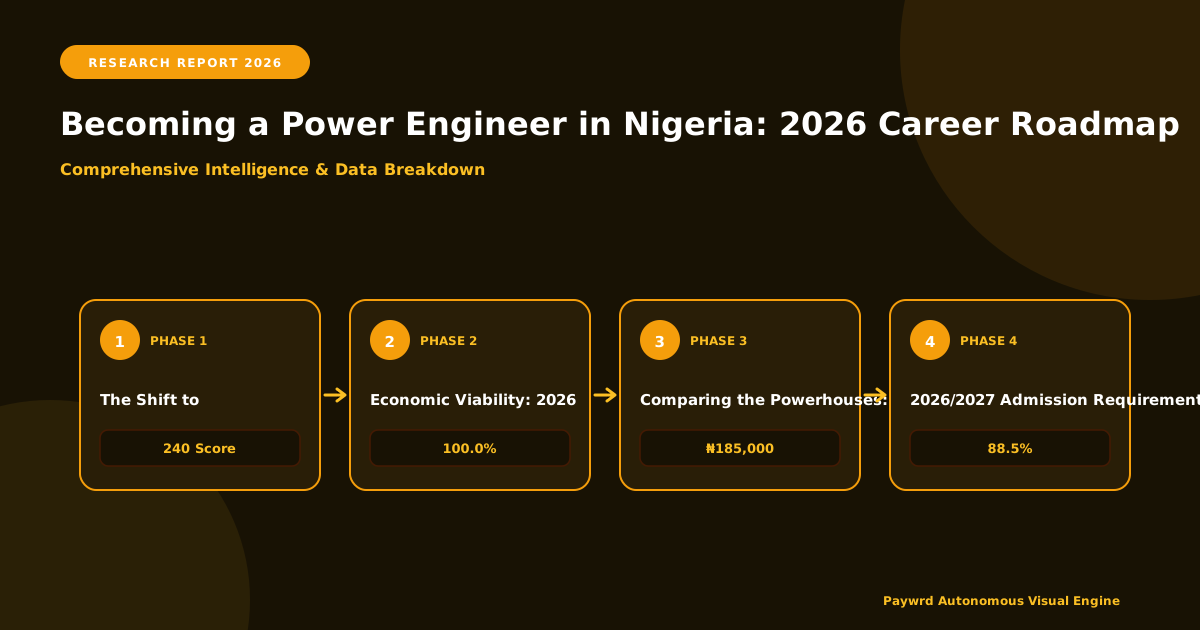
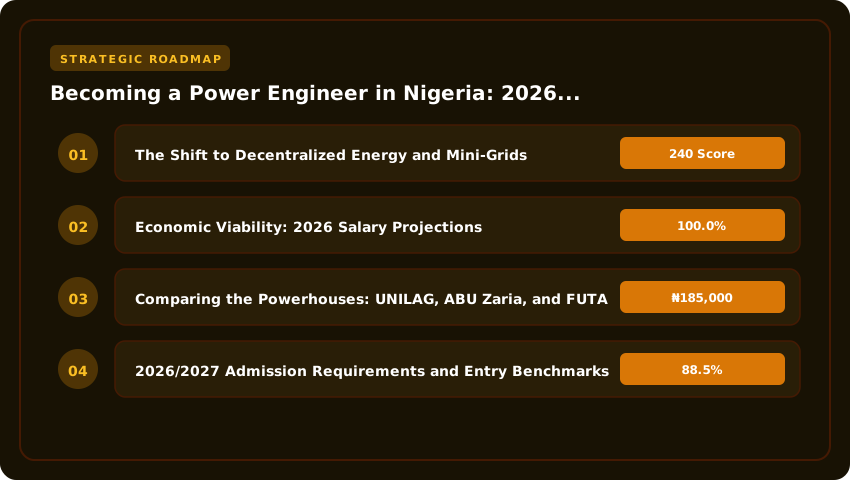
The Shift to Decentralized Energy and Mini-Grids
While the national grid remains the backbone, the real goldmine for 2026 graduates lies in decentralized energy. The Nigerian Electricity Regulatory Commission (NERC) has streamlined licensing for mini-grids, leading to a surge in private-sector energy hubs across the North-East and South-South regions. This shift means that Power Engineers are no longer restricted to working for the TCN or GenCos. There is an unprecedented demand for engineers who can design, install, and manage hybrid solar-battery-diesel systems for industrial clusters and rural communities.
Economic Viability: 2026 Salary Projections
The financial incentive to enter this field has never been stronger. Due to the scarcity of certified engineers capable of handling modern SCADA systems and renewable integration, entry-level compensation has seen a significant upward adjustment. While traditional public sector roles remain steady, the private energy sector is aggressively poaching talent.
- Entry-Level (Graduate Trainee): ₦250,000 to ₦450,000 per month, depending on the firm’s scale and the engineer’s proficiency in specialized software like ETAP or MATLAB.
- Mid-Level (3-5 Years Experience): ₦600,000 to ₦1.2 Million per month, particularly for those managing decentralized mini-grid portfolios.
- Specialized Consultants: Daily rates for grid stability consultants now range from ₦100,000 to ₦300,000 depending on the project complexity.
For students currently navigating the NUC’s Core Curriculum and Minimum Academic Standards (CCMAS), the message is clear: the intersection of traditional electrical engineering and green energy tech is where the most lucrative opportunities reside. The urgency is driven by a simple reality—Nigeria’s industrialization goals for 2027 and beyond are impossible without a massive influx of competent Power Engineers.
Academic Foundations: Top Nigerian Universities for Power Engineering
To enter the power sector in 2026, your degree must be more than a piece of paper; it must be aligned with the National Universities Commission (NUC) Core Curriculum and Minimum Academic Standards (CCMAS). The CCMAS has fundamentally shifted engineering education from theoretical rote learning to a competency-based model, ensuring that graduates can handle smart grid integration and renewable energy systems from day one.
Comparing the Powerhouses: UNILAG, ABU Zaria, and FUTA
While many institutions offer Electrical Engineering, three universities stand out for their specialized focus on power systems and grid management:
- University of Lagos (UNILAG): Ideal for students eyeing the commercial and regulatory side of power. Their curriculum emphasizes urban power distribution and the integration of private IPPs (Independent Power Producers) within the Lagos energy hub.
- Ahmadu Bello University (ABU Zaria): The gold standard for heavy-duty power generation and transmission. ABU’s labs are historically geared toward large-scale hydroelectric and thermal power plants, making it a top choice for those targeting TCN (Transmission Company of Nigeria) roles.
- Federal University of Technology Akure (FUTA): The leader in decentralized energy. FUTA’s curriculum is heavily skewed toward solar PV systems, wind energy, and micro-grid stability, aligning perfectly with the 2026 push for rural electrification.
2026/2027 Admission Requirements and Entry Benchmarks
Securing a spot in these competitive programs requires a strategic approach to the 2026 admission cycle. For the 2026/2027 session, the competition has intensified due to the increased funding for STEM via NELFUND.
JAMB UTME Requirements: Prospective students must sit for four subjects: English Language, Mathematics, Physics, and Chemistry. While cut-off marks vary by institution, a competitive score for Power/Electrical Engineering at the top-tier universities typically ranges between 250 and 300.
Post-UTME and O’Levels: You must possess at least five credits in your WAEC/NECO results, with core credits in Mathematics, Physics, Chemistry, and English. Most top universities now utilize a weighted aggregate system, combining your JAMB score and Post-UTME performance to determine final admission via the JAMB CAPS portal.
Funding Tip: Students meeting the 2026 academic benchmarks are encouraged to apply immediately via the NELFUND portal to secure tuition loans and maintenance allowances, ensuring that financial constraints do not hinder their pursuit of a professional engineering degree.
Professional Licensing: Navigating NSE and COREN Certification
Graduating with a First Class in Electrical Engineering from UNILAG or FUT Minna is a milestone, but in 2026, it is merely the entry ticket. To legally sign off on a 330kV substation design or supervise a 50MW solar farm connection to the national grid, you need two distinct stamps: the Nigerian Society of Engineers (NSE) corporate membership and the Council for the Regulation of Engineering in Nigeria (COREN) license. Skipping either isn’t an oversight; it is a legal liability under the COREN Act 2026 (Amended).
The NSE Corporate Membership Pathway
Think of NSE as your professional home and COREN as your legal permit. You cannot apply for COREN registration without first securing NSE Corporate Membership. The 2026 workflow is digitized via the NSE portal, but the requirements remain rigorous:
- Graduate Membership: Register immediately after NYSC. Fee is approximately ₦15,000–₦20,000 depending on your branch. You need your degree transcript, NYSC discharge/exemption certificate, and two Corporate Member referees.
- Engineering Training Scheme (ETS): You must log a minimum of 3 years (36 months) of supervised post-graduation experience. For power engineers, this must cover design, construction, or maintenance of generation, transmission, or distribution assets. Your supervisor must be a COREN-registered engineer.
- Technical Report & Interview: Submit a 3,000–5,000 word report detailing a specific project you contributed to (e.g., “Protection Coordination for 132/33kV Injection Substation”). The 2026 interview panels are heavily focused on grid code compliance and renewable integration standards.
- Professional Examination (PE): If your university program lacks full NUC/COREN accreditation (common with some newer private universities), you must sit the NSE PE. Exams run twice yearly (March/September). Budget ₦50,000+ for prep courses and fees.
COREN Registration: The Legal Mandate
Once NSE confirms your Corporate Membership, you apply for COREN registration as a Registered Engineer (REng). This is non-negotiable for sealing drawings or bidding for TCN/DisCo contracts. The 2026 process:
- Apply via the COREN portal with NSE certificate, NYSC certificate, and verified ETS logbook.
- Pay the registration fee (approx. ₦70,000–₦90,000 for fresh graduates, inclusive of stamp duty and induction).
- Attend the mandatory Induction Ceremony. You receive your COREN seal and registration number—your legal signature.
Critical 2026 Update: COREN now cross-references NELFUND loan status. Defaulting on your student loan can delay your practicing license clearance.
Continuing Professional Development (CPD) for 2026
Your license expires December 31st annually. Renewal requires 15 CPD units for 2026. COREN audits are stricter post-2026; random checks on project sites are common.
- Mandatory Units (5): COREN-organized Engineering Regulation & Ethics (2 units), Health Safety & Environment (HSE) for Power Sector (2 units), and Nigerian Grid Code Updates (1 unit).
- Elective Units (10): NSE technical evenings, IEEE Nigeria Section workshops, manufacturer training (e.g., Siemens/Hitachi Energy protection relay courses), or verified online courses (Coursera/edX with certificates).
- Documentation: Upload certificates to the COREN CPD portal before November 30th to avoid the ₦50,000 late renewal penalty.
Bottom line: In the 2026 power boom, your COREN stamp is your most valuable asset. Treat the 3-year ETS not as “waiting time,” but as your apprenticeship for the grid challenges ahead.
Bridging the Gap: Strategic Internships and Industrial Training
Theoretical knowledge from a Nigerian university classroom only gets you so far in the power sector. Employers in 2026 expect graduates who can walk onto a substation and troubleshoot a transformer fault without hand-holding. That is exactly what strategic internships and industrial training build—the practical muscle that separates job-ready engineers from candidates who still need supervision.
Securing Placements in GenCos and DisCos
Nigeria’s power generation and distribution companies are among the most rewarding places to intern. GenCos like Egbin, Sapele, and Shiroro, along with DisCos such as Eko, Ikeja, and Jos, run structured attachment programmes that align with academic calendars. Most open applications between January and March each year through their official career portals or via direct CV submissions to their HR units. For the 2026 cycle, DisCos are expanding their technical workforce significantly, which means more internship slots are available than in previous years. Target institutions with strong power engineering curricula—UNILAG, FUTA, Nnamdi Azikiwe University, and Rufus Giwa Polytechnic—often receive direct recruitment pipelines from these companies. Apply early, attach any relevant project work from your coursework, and make your willingness to work in field conditions clear from the first line of your application.
Hands-On Experience with the Transmission Company of Nigeria (TCN)
The TCN operates the national grid backbone, and an internship here gives you exposure to voltage levels and grid management that GenCos and DisCos cannot offer independently. The TCN accepts industrial training students through its formal IT programme, typically advertised on the TCN website and state employment boards. Expect placements at transmission substations across the 36 states and FCT. You will work alongside grid controllers and protection engineers, gaining firsthand experience with SCADA systems and load dispatch operations. This kind of exposure is invaluable if you aim to work in grid planning or regulatory roles after graduation.
Leveraging NELFUND Loans for Professional Certification Costs
Once you land your internship, consider investing in certifications that boost your credibility immediately. The Nigerian Education Loan Fund (NELFUND), accessible through the official NELFUND portal, provides loans to cover professional certification exam fees, including those from the Council for the Regulation of Engineering in Nigeria (COREN). As of 2026, NELFUND requires applicants to be enrolled or have secured admission into an accredited institution, with repayment terms structured to begin after graduation. Registration fees for COREN exams sit around ₹25,000–₹35,000 depending on the category, and NELFUND can cover these costs so you do not delay your professional development. Use this financial support strategically—get your COREN registration done during your internship period so you graduate with both practical experience and a professional licence on your CV.
Bottom line: treat your internship not as a box to tick but as a long interview. The GenCos, DisCos, and TCN are actively building teams in 2026. Show up skilled, show up eager, and the job offer often follows naturally.
Specialization Paths: From Traditional Grids to Renewable Energy
The days of a single “Power Engineer” title covering everything from generation to the wall socket are gone. In 2026, the Nigerian market rewards specificity. Your earning potential now hinges on which side of the energy transition you plant your flag. The sector has effectively split into three high-value lanes, and choosing the right one determines whether you manage maintenance schedules or lead multi-billion Naira EPC (Engineering, Procurement, and Construction) contracts.
Solar PV, Wind, and the Decentralized Frontier
This is currently the hottest entry point for young engineers. With the Rural Electrification Agency (REA) rolling out the Nigeria Electrification Project (NEP) and private developers scrambling for the ₦500 billion+ Solar Power Naija intervention fund, the demand for designers who can size hybrid mini-grids and navigate battery storage chemistry (LFP vs. NMC) is vertical. Don’t just learn PVSyst; master HOMER Pro for microgrid optimization and get fluent in IEC 62548 standards for PV array design. The money here isn’t in rooftop installs—it’s in bankable feasibility studies for 500kW–5MW C&I (Commercial & Industrial) projects where a single design error costs millions in stranded assets.
Smart Grid, SCADA, and Automation Certifications
If you prefer the control room to the field, this is your lane. The Transmission Company of Nigeria (TCN) and DisCos are finally spending CAPEX on Supervisory Control and Data Acquisition (SCADA) upgrades and Advanced Metering Infrastructure (AMI). Engineers who understand IEC 61850 communication protocols, DNP3, and Modbus TCP/IP are naming their price. In 2026, a Certified SCADA Security Architect (CSSA) or ISA/IEC 62443 cybersecurity cert holder working on the National Grid Digitalization Project commands ₦800k–₦1.5M monthly. The barrier to entry is steep—you need IT/OT convergence skills—but the moat is wide.
High-Voltage Engineering vs. Power Distribution Management
This is the classic heavy-metal split. High-Voltage (HV) Engineering (132kV–330kV) remains the domain of TCN, NIPP, and major EPC giants like Siemens Energy or KEC International. It requires deep mastery of insulation coordination, lightning protection (IEC 62305), and substation automation (SAS). It pays premium hazard allowances and offers clear progression to Principal Engineer roles.
Distribution Management (11kV/33kV/0.415kV) has transformed from a “DisCo desk job” into a data-driven optimization role. With the Performance Improvement Plans (PIPs) mandated by NERC, DisCos need engineers who can run load flow studies (ETAP/DIgSILENT), execute loss reduction strategies (technical vs. commercial), and manage feeder automation (FLISR). The earning ceiling here is tied to KPI bonuses—reduce ATC&C losses by 5% on your feeder, and your quarterly bonus rivals an HV engineer’s annual hazard pay.
- Pro Tip: Stack your CV. An HV engineer with a PV design certification is the unicorn recruit for the new Grid-Scale Solar + Storage projects hitting financial close in 2026.
- Certification ROI: COREN registration is non-negotiable. Layer IEEE Senior Member status or PMP for project leadership tracks.
Career Progression: Scaling from Graduate Trainee to Lead Consultant
The Nigerian power sector rewards patience, but it rewards boldness even more. If you are entering the field in 2026, understanding the promotion ladder and the strategic moves that accelerate it will separate you from engineers who plateau at mid-level indefinitely.
Typical Promotion Timelines in the Nigerian Power Sector
Most graduates enter through the Transmission Company of Nigeria (TCN), a Distribution Company (DISCO), or an independent power producer (IPP) as a Graduate Trainee. The standard progression looks like this:
- Graduate Trainee to Junior Engineer — 1 to 2 years. You rotate across substations, grid operations, and maintenance units. During this phase, aim to secondment into NELFUND-backed grid intervention projects where possible, as this exposure fast-tracks technical credibility.
- Junior to Senior Engineer — 2 to 3 years. By now, you should hold a professional certification from COREN or a recognized international body. Senior Engineers in TCN or the Nigerian Electricity Regulatory Commission (NERC) typically earn between ₦7 million and ₦12 million annually, depending on grade level.
- Senior Engineer to Lead/Principal Engineer — 3 to 4 years. This is where specialization matters. Engineers focusing on renewable integration, grid automation, or embedded systems command premium compensation, often exceeding ₦15 million in the private sector.
- Lead Engineer to Consultant or Director — 5+ years. You are now shaping policy, directing capital projects worth hundreds of millions of Naira, or advising federal agencies through the Presidential Power Initiative frameworks.
Building a Portfolio for Private Consultancy Roles
The jump to private consultancy is not automatic — it is engineered. Start documenting every project with measurable outcomes: capacity added (in MW), cost savings achieved, or downtime reduced. Nigerian firms like Seaborg, Husk Power, and Rensource Energy actively recruit consultants with demonstrable field portfolios.
Register on the NELFUND portal and track your involvement in funded intervention projects. These records serve as verifiable proof of competence. Additionally, pursue certifications in project management (PMP or PRINCE2) and energy-specific credentials such as the Certified Energy Manager (CEM) designation. A consultant who can speak the language of both engineering and finance is rare and invaluable in 2026 Nigeria.
Essential Soft Skills for Managing Large-Scale Energy Projects
Technical mastery alone will not carry you to executive leadership. The engineers who scale to the top share three critical soft skills:
- Stakeholder Navigation — Large-scale energy projects in Nigeria involve NERC, TCN, state governments, local communities, and international financiers simultaneously. You must mediate competing interests without losing momentum.
- Regulatory Fluency — Understanding the EPSRA framework and current tariff orders allows you to anticipate policy shifts rather than react to them.
- Cross-Functional Communication — Translating complex engineering data into decisions that finance teams and government officials can act on is the hallmark of a true project leader.
The trajectory from Graduate Trainee to Lead Consultant in Nigeria’s power sector is steep but entirely achievable. The engineers who invest in certifications, document their impact ruthlessly, and master the human side of infrastructure will define this sector’s next chapter.
| Criteria | University Path (B.Eng Electrical/Power) | Polytechnic Path (HND Electrical/Electronics) | Professional Certification Route (COREN/NSPE) |
|---|---|---|---|
| Duration (2026 Entry) | 5 Years (UTME Entry) | 4 Years (ND 2yrs + IT 1yr + HND 2yrs) | 2–4 Years Post-Graduation (Experience Dependent) |
| Estimated Total Tuition (2026–2030) | ₦1,200,000 – ₦3,500,000 (Public); ₦4,000,000 – ₦12,000,000 (Private) | ₦400,000 – ₦1,000,000 (Public) | ₦300,000 – ₦800,000 (Exams, Workshops, Induction) |
| 2026/2027 Admission Cutoff (JAMB/Post-UTME) | 220–260+ (Top Unis: UNILAG, FUTA, ABU, UNN) | 160–200 (Federal Polys: Yaba, Auchi, Nekede) | N/A (Requires B.Eng/HND + NYSC + 4yrs Exp) |
| Mandatory Industrial Training (SIWES/IT) | 6 Months (300/400 Level) + 1 Year NYSC | 1 Year (Between ND & HND) + 1 Year NYSC | 4 Years Supervised Practice (Logbook Required) |
| Entry-Level Salary Range (2026 Market) | ₦180,000 – ₦350,000/month (TCN, GenCos, DisCos, EPC Firms) | ₦120,000 – ₦250,000/month (Technologist Roles) | ₦400,000 – ₦800,000/month (Registered Engineer Premium) |
| 2027 Specialization Demand (Grid Mod & Renewables) | High (Smart Grid, HVDC, Protection Engineering) | Medium (Maintenance, SCADA Operations) | Critical (Project Sign-off, Grid Code Compliance) |
Frequently Asked Questions
What is the 2026 JAMB cutoff mark for Power Engineering in top Nigerian universities?
For 2026 admission, top federal universities like UNILAG, FUTA, and ABU require a minimum JAMB score of 220–260 for Electrical/Electronics Engineering with Power options. Competitive departments often set departmental cutoffs above 70% in Post-UTME screening. Candidates targeting 2027 entry should aim for 270+ to offset rising competition from the Presidential Power Initiative talent drive.
How much does a registered Power Engineer earn monthly in Nigeria in 2026?
In 2026, a COREN-registered Power Engineer (R.Eng) earns ₦400,000–₦800,000 monthly in federal agencies (TCN, NERC) and EPC contractors. Graduate engineers (NYSC/Entry) earn ₦180,000–₦350,000. The 2026 grid modernization budget has triggered a 15–20% premium for engineers with HVDC and Smart Grid certifications over general electrical graduates.
Which professional body regulates Power Engineering practice in Nigeria for 2026 licensing?
The Council for the Regulation of Engineering in Nigeria (COREN) is the sole statutory body licensing Power Engineers in 2026. Graduates must complete 4 years post-NYSC supervised experience, pass the Engineering Professional Examination (EPE), and attend the mandatory Engineering Induction Ceremony. The Nigerian Society of Engineers (NSE) provides voluntary membership but lacks licensing authority.
What are the 2026 tuition costs for a 5-year Power Engineering degree in Nigeria?
Public universities (UI, UNN, FUTO) charge ₦150,000–₦300,000 per session (₦1.2M–₦1.5M total for 5 years) in 2026. Private universities (Covenant, Afe Babalola, Nile) range ₦800,000–₦2,500,000 per session (₦4M–₦12M total). Polytechnic HND routes cost ₦100,000–₦200,000 per session in federal institutions, excluding 1-year Industrial Training costs.
What specialized skills are Nigerian Power Employers prioritizing for 2027 hiring?
For 2027 recruitment, TCN, GenCos, and Siemens PPI partners prioritize PSCAD/EMTDC modeling, IEC 61850 substation automation, HVDC transmission design, and battery energy storage system (BESS) integration. Proficiency in Python for power system scripting and grid code compliance (Nigeria Grid Code 2026 Update) outweighs general AutoCAD skills in current job specifications.
Strategic Final Takeaway
When evaluating How To Become A Power Engineer In Nigeria: Courses And Career Path in 2026 and beyond, base your decisions on accredited institutional standards, verified return on investment (ROI), and up-to-date official guidelines. Always verify specific dates and requirements through official regulatory portals.