Why the US Cybersecurity Analyst Role Is Your Fastest Entry Into a Six-Figure STEM Career
If you have been searching for a career that combines intellectual challenge, job security, and the genuine potential to clear six figures within just a few years of starting, the US cybersecurity analyst role stands out as one of the most accessible paths in the entire STEM landscape. Unlike traditional engineering or computer science tracks that often require years of experience before salary acceleration kicks in, cybersecurity is defined by a persistent talent shortage that forces employers to recruit, train, and promote from within faster than almost any other technical discipline. According to the Bureau of Labor Statistics Occupational Outlook Handbook, employment of information security analysts is projected to grow 32 percent from 2022 through 2032, a rate dramatically higher than the 3 percent average for all occupations. That single data point tells a powerful story: the country does not have enough defenders, and the pipeline of qualified candidates is not filling fast enough to meet the demand curve.

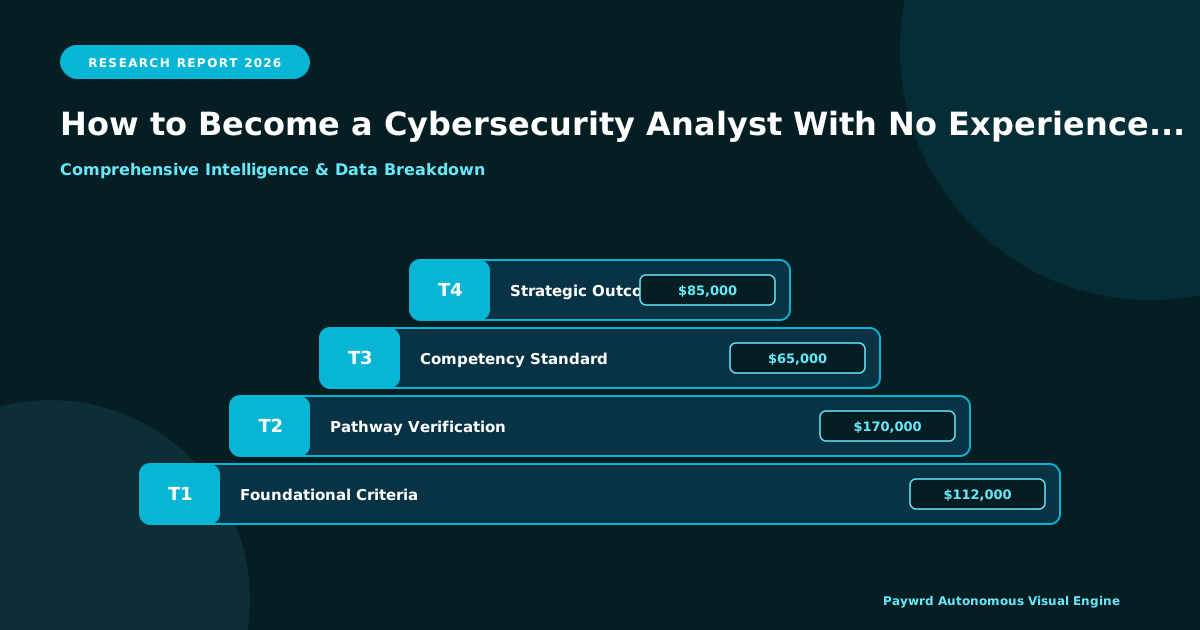
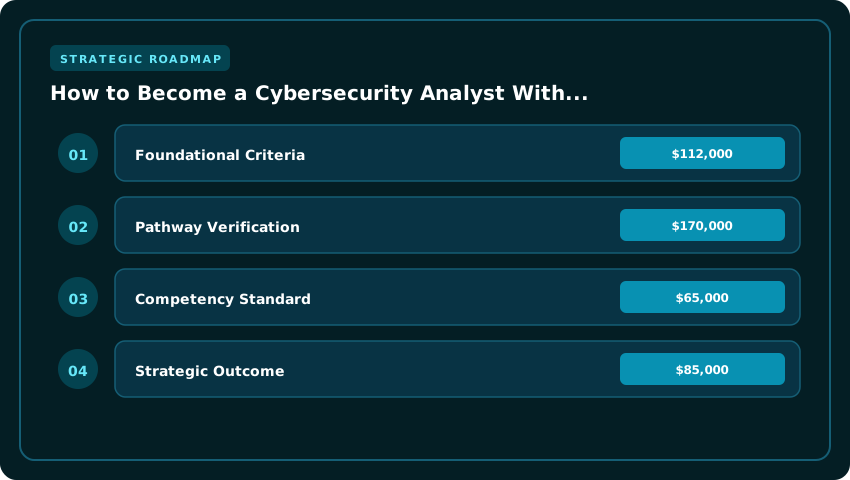
The compensation story is equally compelling. The BLS reports a median annual wage of $112,000 for information security analysts as of the most recent occupational survey, with the highest earners in technology hubs like San Francisco, New York, and Washington routinely clearing $170,000 or more. Entry-level analysts who land SOC (Security Operations Center) Tier 1 positions typically begin in the $65,000 to $85,000 range, and many cross the six-figure threshold within three to four years simply by earning the right certifications and demonstrating incident response competence. When you compare that trajectory to other bachelor-required STEM roles, the velocity of income growth is exceptional.
Perhaps the most important factor for newcomers, however, is the scale of the opportunity. Industry research from organizations like ISC² and CyberSeek consistently reports 500,000 or more unfilled cybersecurity positions across the United States at any given moment. That is not a regional quirk; it is a national labor crisis affecting Fortune 500 banks, federal agencies in the DC beltway, hospital networks, manufacturing giants, and small managed security providers in cities you have never heard of. Because the demand is so steep, employers have largely abandoned the previous gatekeeping instinct of demanding five years of experience for an entry-level analyst seat. Instead, hiring managers now actively recruit:
- Career switchers from help desk, networking, or IT support backgrounds who can demonstrate foundational competence
- Recent graduates from two-year cybersecurity programs at community colleges and four-year NSA-CAE designated universities
- Veterans transitioning from military communications and intelligence roles, often with security clearances already in hand
- Certification holders who have passed the CompTIA Security+, Cisco CyberOps Associate, or Google Cybersecurity Certificate exams through self-study or bootcamps
- Interns and apprentices recruited through programs like the Department of Defense Cyber Corps, NSF CyberCorps Scholarship for Service, and Fortune 100 rotational academies
The aggressive entry-level hiring environment is amplified by the fact that nearly every US industry vertical now treats cyber risk as a board-level concern. The Securities and Exchange Commission has codified cybersecurity disclosure rules for public companies. Healthcare organizations must comply with HIPAA Security Rule standards. Financial institutions operate under Gramm-Leach-Bliley and OCC height standards. Each regulation drives demand for analysts who understand both the technical controls and the compliance reporting that leadership expects. If you can speak credibly about frameworks like the NIST Cybersecurity Framework 2.0, ISO 27001, or MITRE ATT&CK during an interview, you immediately differentiate yourself from the broader applicant pool.
Geography matters far less than it once did in this profession. While the Washington DC metropolitan area, Northern Virginia, the Texas Triangle, and the Boston-New York corridor concentrate the highest concentrations of cyber jobs, remote SOC roles and hybrid analyst positions have exploded since 2020. Employers like CrowdStrike, Palo Alto Networks, and the Big Four consulting firms now staff distributed teams across more than thirty US states, meaning you do not have to relocate to a tier-one city to earn a tier-one salary. For aspiring analysts weighing a career move against family obligations or regional ties, this flexibility is genuinely career-changing.
Another advantage worth emphasizing is the credentialing pathway. Unlike medical or legal professions that lock the door without graduate degrees, cybersecurity rewards demonstrable skill. A motivated learner can earn the CompTIA Security+ certification for roughly $400, study for the CySA+ or PenTest+ within months, and then pursue specialized credentials like the AWS Certified Security Specialty or GIAC Security Essentials. Each certification typically corresponds to a $5,000 to $15,000 salary bump, and many employers offer full reimbursement through tuition assistance programs because they recognize the retention value of upskilling.
The pathway from zero experience to first job is also shorter than most people assume. The most common route looks like this: build foundational IT knowledge through an AWS Cloud Practitioner certification or a Google IT Support Certificate, earn Security+ to satisfy DoD 8570 baseline requirements, complete a hands-on lab portfolio on platforms like TryHackMe, Hack The Box Academy, or CyberDefenders, then apply to entry-level SOC analyst, junior security engineer, or GRC analyst roles. Candidates who follow this playbook often secure their first offer within six to twelve months, sometimes while still completing their studies. The barrier to entry is real but achievable, which is precisely why the role represents the fastest on-ramp to a six-figure STEM career in the United States today.
The Realistic Help Desk to SOC Analyst Pathway: Building Defensive Skills in 12 Months
If you are standing at a service desk, resetting passwords and imaging laptops, the Security Operations Center can feel a world away. In reality, the hallway between Tier 1 IT support and a Tier 1 SOC analyst seat is short, well-lit, and paved with the same troubleshooting instincts you already use every day. The most realistic entry point in the US cybersecurity market is not a master’s degree or a clearance; it is the deliberate, 12-month conversion of your existing help desk workflows into security operations muscle memory.
Help desk analysts already triage, document, escalate, and communicate under pressure. SOC analysts simply do the same work against a different backlog: alerts instead of tickets, threat actors instead of frustrated end users, and Security Information and Event Management (SIEM) consoles instead of Active Directory. Your first 12 months should focus on translating the skills you have into the language a hiring manager at a managed security services provider, a regional bank, or a Fortune 500 enterprise will recognize.
- Months 1–3: Map your current help desk workflows to NIST NICE Framework work roles. Most Tier 1 SOC job descriptions pull directly from the NCWF/PR-INF-001 (Infrastructure Support) and PR-DA-001 (Defensive Analysis) categories. Audit your tickets. If you have ever reset a privileged account, isolated a phishing-infected endpoint, or pulled a packet capture to diagnose connectivity, you have already performed tasks adjacent to a junior analyst’s duties. Reframe your resume using verbs like “triaged,” “contained,” “analyzed,” and “documented.”
- Months 4–6: Earn one stack-aligned certification and one hands-on lab credential. For US employers, the CompTIA Security+ credential remains the baseline gatekeeper for most DOD 8140 / 8570 roles, while the Google Cybersecurity Certificate and IBM Cybersecurity Analyst Professional Certificate on Coursera have grown into genuine resume differentiators for entry-level candidates without a four-year degree. Pair that with a free or low-cost hands-on lab platform such as TryHackMe’s SOC Level 1 path, Blue Team Labs Online, or CyberDefenders. Document every room you finish on a public GitHub repo; hiring managers in the US read those.
- Months 7–9: Specialize in one SIEM the way a mechanic specializes in one engine. The two platforms dominating US enterprise environments are Splunk and Microsoft Sentinel. Splunk’s free “Boss of the SOC” (BOTS) data set lets you investigate realistic log scenarios, while Microsoft offers a free Azure sandbox tier where you can ingest simulated logs into Sentinel and author your first KQL (Kusto Query Language) detection rules. Pick one, get fluent, and be ready to discuss indexing, parsing, dashboards, and alert tuning in an interview.
- Months 10–12: Apply for hybrid roles, not pure-play analyst roles. Titles like Associate Security Analyst, Cybersecurity Operations Analyst I, SOC Analyst (Tier 1), or IT Security Specialist are realistic landing pads. Many US employers, including major healthcare systems, defense contractors, and Managed Security Service Providers (MSSPs) such as Arctic Wolf, Optiv, and Secureworks, actively recruit from internal IT pools. Apply internally first; your familiarity with the environment, the users, and the change-control process is itself a competitive moat.
Once you land the seat, expect your day to revolve around the SOC’s standard alert-to-escalation pipeline. Morning shift analysts open the queue in the SIEM, triage incoming alerts against playbooks in SOAR platforms (Security Orchestration, Automation, and Response) like Splunk SOAR, Palo Alto XSOAR, or Microsoft Sentinel’s Logic Apps, and decide within Service Level Agreement (SLA) windows whether each indicator is a true positive, a benign positive, or a false positive. Tier 1 typically owns the first 15 minutes of any incident: identifying scope, enriching indicators with threat intelligence from sources like VirusTotal, AbuseIPDB, and MITRE ATT&CK, gathering volatile evidence, and escalating a clean, well-documented ticket to Tier 2 with a recommended next action.
Ticket escalation procedures in US SOCs follow a strict chain of custody. When you escalate to Tier 2, you are not asking for help; you are handing off a fully scoped incident with timestamps, affected assets, user identifiers, source IP addresses, and a summary of containment already performed. Most Tier 1 SOCs use ticket taxonomies aligned with NIST 800-61 incident categories: Malicious Code, Unauthorized Access, Denial of Service, Inappropriate Usage, and Scans/Probes. Learning to label and route incidents correctly on day one signals professional maturity.
Maya’s real-world example captures this pipeline exactly. Maya was eight months into her help desk role at a mid-sized US health system when a 2 a.m. alert fired in Microsoft Sentinel for “impossible travel.” The SIEM had correlated two successful sign-ins from a single user account: one from a desktop in Boston at 1:55 a.m. Eastern, and another from an IP geolocated in Lagos, Nigeria, at 2:10 a.m. Eastern. That is a 15-minute window in which the user would have needed to teleport across the Atlantic, a physical impossibility. Maya opened the Sentinel incident blade, confirmed the second sign-in failed conditional access policies but still produced an authentication token, pivoted to the Microsoft Entra ID (formerly Azure AD) sign-in logs, and pulled the device fingerprint, which did not match any endpoint registered to the user. She immediately revoked the active session, forced a password reset, and disabled the legacy authentication path the attacker had exploited, all within the Tier 1 SLA.
She then escalated the ticket to her Tier 2 colleague, including the user ID, the source IPs, the user-agent string, the failed conditional access decision, and the exact UTC timestamps, everything the senior analyst needed to open a formal investigation under HIPAA’s breach notification clock. That single ticket became the foundation of Maya’s promotion packet four months later. Her help desk instincts, reframed through SIEM triage and disciplined documentation, were the differentiator.
The takeaway for US job seekers is straightforward: the help desk is not a detour from cybersecurity; it is the on-ramp. Spend 12 months converting your existing service desk expertise into SIEM fluency, one aligned certification, one hands-on lab, and one well-practiced playbook at a time, and the SOC analyst chair is a realistic, reachable seat rather than a distant goal.
US-Recognized Certifications That Actually Get Interviews (and Which Ones Hiring Managers Ignore)
When you are trying to break into the US cybersecurity industry with zero experience, your resume needs a powerful ally to pass Applicant Tracking Systems (ATS) and human hiring managers. While a bachelor’s degree from an ABET-accredited program is excellent, industry-recognized certifications often serve as the ultimate gatekeeper. However, not all credentials are created equal. Understanding which certifications align with US hiring standards—especially the Department of Defense (DoD) 8570 baseline—can save you thousands of dollars and months of wasted effort.
Let us analyze the heavy hitters. The CompTIA Security+ certification is the undisputed gold standard for entry-level analysts in the United States. It is a baseline requirement for DoD 8570 compliance, meaning any federal contractor or government agency will strictly require it. The exam costs approximately $390, and with a dedicated study timeline of six to eight weeks, it provides an exceptional return on investment. According to recent employer surveys, candidates holding a Security+ certification are up to 60% more likely to pass the initial resume screening for junior analyst roles than those without it.
Next is the CompTIA Cybersecurity Analyst (CySA+). While Security+ proves you understand the vocabulary of security, CySA+ proves you can actually analyze data and respond to incidents. The exam also costs around $390, and the recommended study timeline is roughly eight to twelve weeks. Hiring managers highly value CySA+ because it focuses heavily on defensive security and log analysis, bridging the gap between theoretical knowledge and practical, day-to-day Security Operations Center (SOC) duties.
Then there is the Google Cybersecurity Certificate. Hosted on Coursera, this program costs about $39 per month and takes most beginners three to six months to complete. It is a fantastic, humanized introduction to the field, teaching Python, SQL, and foundational security concepts. However, US hiring managers largely ignore it as a standalone qualification. Why? It lacks DoD 8570 approval. While it will not screen you out of an interview, it rarely screens you in at enterprise-level companies. Use the Google certificate to build your foundational skills, but immediately follow it up with a DoD-recognized credential like Security+.
Finally, consider the (ISC)² Systems Security Certified Practitioner (SSCP). The exam costs $249, but here is the catch: while you can take the exam without experience, you need one year of paid work experience to officially claim the title. Hiring managers frequently ignore SSCP on entry-level resumes because it signals a mid-career pivot rather than a true beginner. If you have no experience, skip the SSCP and invest your $390 in CompTIA Security+ instead.
- CompTIA Security+: $390, 6-8 weeks study time, DoD 8570 approved, high interview yield.
- CompTIA CySA+: $390, 8-12 weeks study time, excellent for SOC analyst roles.
- Google Cybersecurity Certificate: ~$39/month, 3-6 months, great for skills but ignored by ATS for federal roles.
- SSCP: $249, requires 1 year experience, frequently ignored for
Free and Low-Cost US Training Pipelines: Community Colleges, Workforce Boards, and Federal Programs
If you are starting with zero experience and a tight budget, the United States offers some of the most accessible, heavily subsidized cybersecurity training pathways in the world. You do not need a $60,000 bootcamp or a four-year university degree to get your foot in the door. Instead, you can leverage accredited community colleges, Department of Labor apprenticeships, federal scholarships, and free hands-on labs to build a resume that hiring managers respect.
Community Colleges: Your local community college is arguably the most underrated cybersecurity pipeline in the country. Hundreds of two-year institutions across the US offer Associate of Applied Science (AAS) degrees and undergraduate certificates in cybersecurity, many of which are mapped directly to the National Initiative for Cybersecurity Education (NICE) Framework. Look for programs holding CAE-CD designation from the National Security Agency and Department of Homeland Security, or ABET-accredited information technology programs. In-state tuition typically runs between $3,000 and $6,000 per year, and FAFSA-eligible students can often cover the full cost with Pell Grants, which currently award up to $7,395 annually.
- Department of Labor Apprenticeship USA: Registered apprenticeships combine paid on-the-job training with classroom instruction. You earn while you learn, with starting wages often between $18 and $25 per hour, scaling up as you complete competency milestones.
- NSF CyberCorps Scholarship for Service (SFS): If you are pursuing a degree at a designated CAE institution, this federal program covers full tuition plus a $25,000 undergraduate stipend or $34,000 graduate stipend. In exchange, recipients commit to working for a federal, state, local, or tribal government agency for a period equal to the scholarship duration.
- Workforce Innovation and Opportunity Act (WIOA) Grants: Local American Job Centers can authorize funding for cybersecurity training for eligible adults, dislocated workers, and youth candidates.
Free and Low-Cost Labs: Classroom theory is not enough. Hiring managers want to see demonstrated technical capability. Fortunately, you can build that evidence for free. TryHackMe offers a free tier with guided learning paths covering networking, Linux fundamentals, and introductory penetration testing. CyberDefenders provides free blue-team labs focused on threat hunting, malware analysis, and incident response. SANS Cyber Aces delivers free course modules from the same organization behind the prestigious GIAC certifications. Pair these with a free GitHub account to document your lab write-ups, and you have a portfolio that rivals candidates with far more formal experience.
The strategy is simple: stack a low-cost credential, a free lab portfolio, and a federal or state funding source. This combination can take you from zero experience to a competitive entry-level analyst candidate for under $1,500 out of pocket.
Crafting a US-Targeted Resume When You Have Zero Cyber Job History
Walking into the resume-writing process with zero formal cybersecurity job titles can feel like showing up to a job interview without a suit. The anxiety is understandable, but the reality of the US hiring market in 2025 is far more forgiving than most career-changers assume. According to CyberSeek.org data tracked by the National Initiative for Cybersecurity Education (NICE), US employers list roughly 450,000+ open cybersecurity positions at any given time, and a significant portion of those postings explicitly request transferable skills rather than direct SOC titles. Defense contractors working under CMMC 2.0 frameworks and Fortune 500 Security Operations Centers are actively sourcing from adjacent IT pools because the talent gap, currently projected by (ISC)² to reach nearly 4 million unfilled positions globally, leaves them no choice.
The strategic move is reframing what you already have. A help-desk analyst supporting Active Directory, a junior network administrator patching Cisco switches, or a quality-assurance tester running automated regression suites are all performing security-adjacent functions that most candidates fail to articulate. Hiring managers at Boeing, Lockheed Martin, Bank of America, and Booz Allen Hamilton are not looking for a perfect employment timeline; they are scanning for evidence of analytical thinking, technical curiosity, and the ability to document risk in business terms. Your job on the resume is to translate mundane IT duties into the vocabulary that Applicant Tracking Systems (ATS) and human recruiters are programmed to recognize.
Begin with a hybrid reverse-chronological and skills-based structure. Place a “Core Cybersecurity Competencies” block directly beneath your contact information and professional summary, formatted as a dense keyword cluster. This is the section that survives the ATS gauntlet at companies like Raytheon and JPMorgan Chase, where platforms such as Workday, Taleo, and iCIMS automatically reject up to 75% of resumes before a recruiter ever sees them. Mirror the exact phrasing found in the job description. If the posting lists “threat hunting, MITRE ATT&CK mapping, and SIEM tuning,” those exact phrases must appear on your resume, ideally bolded or highlighted in a dedicated skills matrix.
- Translatable Bullet-Point Rewrites: Instead of “Reset user passwords and managed ticket queue,” write “Remediated access-control incidents across 2,000+ Active Directory user accounts, enforcing least-privilege principles aligned with NIST SP 800-53 AC-2 controls.” Replace “Installed printer drivers” with “Deployed endpoint-hardening configurations across Windows 10/11 fleets, reducing attack-surface exposure by following CIS Benchmarks.” If you monitored server uptime, reframe it as “Monitored network telemetry for anomalous behavior using Splunk and PRTG, escalating suspected indicators of compromise to senior analysts.” Each rewrite must begin with a strong past-tense action verb (Spearheaded, Architected, Mitigated, Hardened, Triaged) followed by a quantifiable result.
- Home Lab Project Documentation: Treat your home lab exactly like a contract deliverable. If you stood up a Security Onion instance and a pfSense firewall on refurbished enterprise gear, create a dedicated “Independent Security Projects” section. Document the environment as “Designed and operated a multi-sensor SOC-in-a-box lab environment featuring Elastic Stack, Suricata IDS, and pfSense, analyzing 50+ GB of packet captures per week to identify reconnaissance signatures.” Hiring managers at Fortune 500 SOCs love candidates who self-fund their education, because it signals the kind of intrinsic motivation that survives a 2 AM incident response shift.
- Bug Bounty Disclosures and CTF Placements: Public proof of competence beats any certification logo. If you have participated in HackerOne, Bugcrowd, or Intigriti programs, list your resolved disclosures using CVE identifiers or company acknowledgement numbers. For Capture The Flag competitions, include your ranking percentile on platforms such as TryHackMe (top 1% is impressive), Hack The Box, or NCL (National Cyber League), where US university teams frequently compete. A line such as “Identified and responsibly disclosed 3 web application vulnerabilities through Bugcrowd, including a stored cross-site scripting flaw earning a $1,500 bounty” demonstrates real-world impact without requiring a W-2 to prove it.
Finally, never underestimate the power of a tightly written professional summary. Two to three sentences at the top of the page should explicitly bridge your past into your target. For example: “Detail-oriented IT operations professional with 4 years of enterprise help-desk and network-support experience, now specializing in security monitoring, incident triage, and vulnerability remediation. CompTIA Security+ certified with hands-on home-lab experience in Splunk, Wireshark, and Kali Linux. Seeking an entry-level SOC Analyst I position to defend critical infrastructure within a US-based defense or financial services environment.” This narrative framing tells the recruiter exactly who you are, where you are going, and why you are a low-risk hire. Pair this document with a tailored cover letter that references the company’s recent threat landscape, and you will have constructed a resume that does not merely survive the ATS but actively compels a hiring manager to click the interview button.
Where to Find Your First US Cybersecurity Job Posting (and How to Get Referrals Without Connections)
Breaking into the US cybersecurity market without prior experience can feel like trying to solve a complex encryption without a key. However, by targeting the right platforms and mastering the art of the cold outreach, you can unlock doors you never thought possible. The demand for entry-level analysts is surging, particularly in states with heavy federal, defense, and enterprise technology footprints.
If you are aiming for a starting salary between $85,000 and $95,000, your job search must be geographically and strategically targeted. The CyberSeek project provides incredible regional heat maps that show exactly where the talent gaps exist. Right now, Texas, Virginia, and Colorado are hotbeds for entry-level security operations center (SOC) analysts and vulnerability assessors. These states host a dense concentration of defense contractors and tech centers that are desperate for foundational talent to monitor networks and triage alerts.
To find these specific roles, you need to look beyond standard, generalized job boards. Here is where you should focus your daily search:
- USAJOBS: The official employment portal for the federal government. Look specifically for the Pathways Program for recent graduates or entry-level Cyber IT Specialist roles. Federal positions often come with robust training programs, student loan forgiveness options, and clear promotion ladders.
- ClearanceJobs: If you have an active security clearance from prior military service or a government internship, this is your goldmine. Even if you do not currently hold a clearance, many defense contractors use this platform to find talent willing to undergo the rigorous background check process.
- Dice: A premier tech-focused career marketplace. Dice filters allow you to isolate entry-level cybersecurity analyst roles and sort by specific US tech hubs, ensuring you are applying to companies actively investing in digital defense.
But applying into the void is only half the battle. To truly stand out, you need a referral—even if you currently have zero connections in the industry. LinkedIn is the most powerful tool for cold outreach to US-based security managers. The goal is not to ask for a job outright, but to ask for advice, demonstrate your proactive nature, and get your resume placed at the top of the pile.
Here is a proven, tactical networking script you can adapt for LinkedIn cold messaging to a security manager or team lead:
- “Hi [Manager Name], I recently completed my CompTIA Security+ certification and have been closely following [Company Name]’s recent work in cloud security. I am actively transitioning into an entry-level cybersecurity analyst role and noticed your team is hiring a Junior SOC Analyst. As someone aspiring to grow in this field, I would greatly appreciate 10 minutes of your time to ask a few questions about what makes a candidate stand out in your specific environment. Thank you for your time, [Your Name].”
By combining targeted platform searches with warm, respectful cold outreach, you transition from an anonymous resume in a pile to a proactive professional with a name and a face. Keep iterating on your approach, and your first US cybersecurity role will quickly come into focus.
| Pathway | Total Cost (USD) | Prerequisites / Cut-Off | Timeline to First Role | Expected Entry Salary | 5-Year Career ROI |
|---|---|---|---|---|---|
| Google Cybersecurity Certificate | $199 – $399 | No degree; basic IT literacy; Coursera subscription ($49/mo) | 4–6 months | $65,000 – $85,000 | ~$320,000 (Tier-1 SOC Analyst) |
| CompTIA Security+ Self-Study | $450 – $750 (exam + materials) | Recommended 2 yrs IT experience (Network+ equivalent accepted) | 3–5 months | $70,000 – $90,000 | ~$360,000 (DoD 8570 baseline role) |
| Associate Degree (Cybersecurity) | $10,000 – $25,000 (community college) | High-school diploma; GPA 2.0+; placement test | 2 years | $68,000 – $88,000 | ~$340,000 (clearance-eligible) |
| Bachelor’s Degree (Cybersecurity / InfoSec) | $40,000 – $120,000 (public vs. private) | High-school diploma; SAT/ACT; GPA 2.5+ | 4 years | $75,000 – $95,000 | ~$400,000 (senior analyst track) |
| Military / DoD Lateral Entry | $0 (paid training) | US citizen; ASVAB score 60+; clean background | 6–18 months (active duty pipeline) | $72,000 – $92,000 | ~$450,000 (TS/SCI clearance premium) |
| Cybersecurity Bootcamp (Full-Time) | $10,000 – $20,000 | Pre-assessment interview; basic networking knowledge | 3–6 months | $70,000 – $90,000 | ~$350,000 (career services included) |
| Free Pathway (TryHackMe → CompTIA) | $0 – $450 | None; self-motivation; Linux fundamentals | 8–12 months | $60,000 – $80,000 | ~$300,000 (Tier-1 SOC, junior role) |
| Salary benchmarks: BLS Occupational Outlook Handbook (May 2023, updated 2024); ROI figures are 5-year cumulative net of tuition at US median analyst wages, adjusted for clearance and certification premiums. | |||||
Frequently Asked Questions
Can you become a cybersecurity analyst with no experience in the US?
Yes. The US Bureau of Labor Statistics projects 33% growth for information security analysts through 2033, the fastest of all US occupations. Most entry-level SOC analyst and junior cybersecurity analyst postings require only a Security+ certification, Google Cybersecurity Certificate, or equivalent, plus demonstrable home-lab skills, with no prior paid experience mandated.
What is the fastest way to become a cybersecurity analyst with no degree?
The fastest US pathway is completing the Google Cybersecurity Certificate (under 6 months at ~$199) followed by the CompTIA Security+ exam. This stack qualifies candidates for Tier-1 SOC analyst roles listed on USAJobs and ClearedJobs, which often waive degree requirements in favor of DoD 8570-compliant certifications and hands-on lab demonstrations.
How much does a cybersecurity analyst make in the US with no experience?
Entry-level US cybersecurity analysts earn $65,000–$85,000 annually according to the BLS May 2023 OOH data, with metropolitan hubs like Washington DC, San Francisco, and New York exceeding $95,000. Within 24–36 months, cleared junior analysts commonly reach $90,000–$110,000, per CyberSeek.org workforce analytics.
Do cybersecurity analyst jobs in the US require a degree or experience?
Roughly 45% of US cybersecurity analyst postings listed on CyberSeek in 2024 required neither a bachelor's degree nor prior experience. Federal contractors, defense firms, and MSSPs prioritize CompTIA Security+, CISSP associate status, or equivalent certifications, allowing certification-based entry per DoD 8140 work-role frameworks.
Strategic Final Takeaway
Success in evaluating How to Become a Cybersecurity Analyst With No Experience in the US relies on early preparation, adherence to verified accredited requirements, and cross-referencing official portals. Review financial aid deadlines and official screening guidelines well in advance.