Why High School Shop Floors Are Now Engineering Classrooms
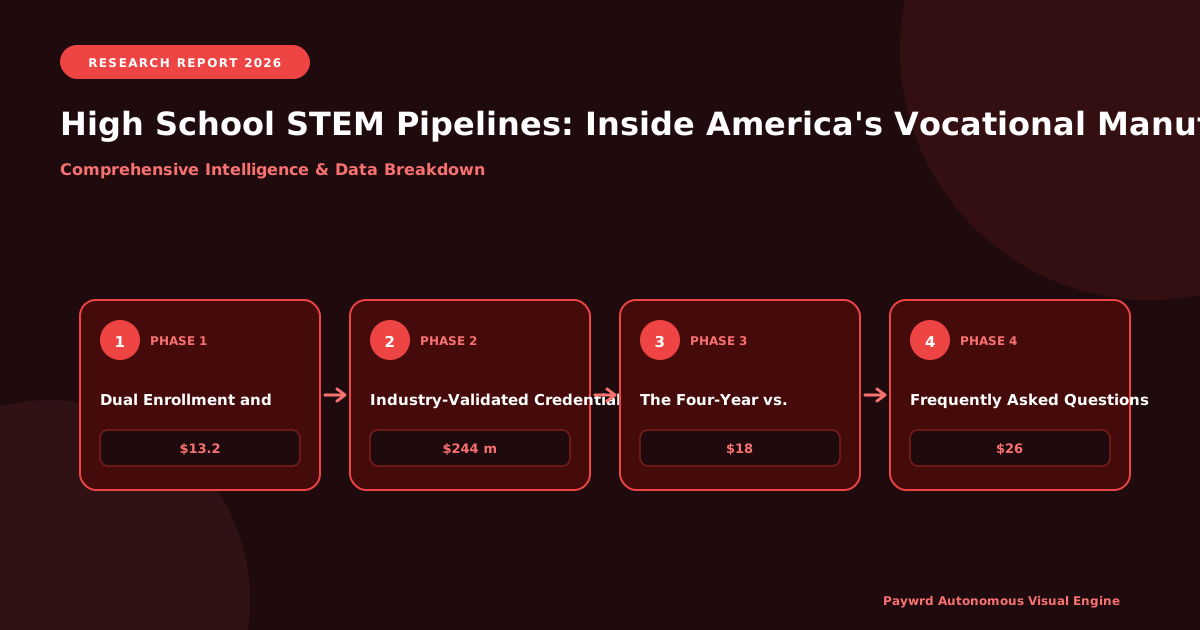
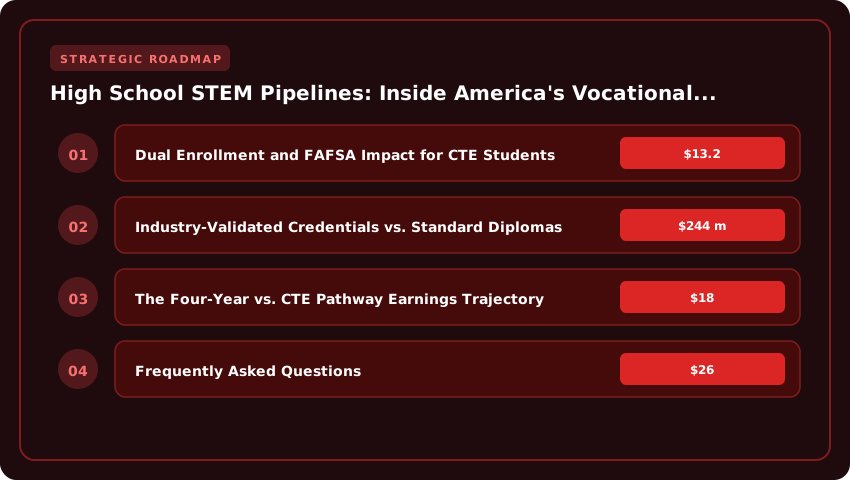
The loud hum of a computer numerical control (CNC) milling machine has replaced the gentle buzz of a band saw in thousands of American high schools, and this acoustic shift tells a deeper story about the future of workforce development. Across the country, traditional woodshop and metalshop classrooms are being gutted, refurbished, and reimagined as Advanced Manufacturing Career and Technical Education (CTE) hubs that look and feel more like community college engineering labs than nostalgic vocational spaces. The catalyst behind this transformation is a historic federal investment, anchored by the CHIPS and Science Act of 2022, which earmarked approximately $13.2 billion specifically for semiconductor workforce development, STEM education, and regional technology hubs over the coming decade.

That $13.2 billion allocation is not sitting in a single Washington lockbox. It is being distributed through a network of federal agencies, including the National Science Foundation (NSF), the Department of Commerce, and the Department of Labor (DOL), and it is flowing directly into the hands of school district superintendents, community college deans, and state apprenticeship directors. The result is a measurable infrastructure boom: between 2023 and 2025, the Department of Labor alone awarded more than $244 million in Apprenticeship Building America Grants, with a substantial portion of those funds routed toward K-12 districts that have pledged to launch or expand registered apprenticeship programs in manufacturing, mechatronics, and industrial maintenance.
For students evaluating their academic futures, this matters enormously. Legacy shop classes of the 1990s and early 2000s were often elective afterthoughts, housed in aging portable buildings, supervised by a single teacher nearing retirement, and stocked with hand tools and outdated lathes. Today’s Advanced Manufacturing CTE hubs are governed by rigorous state frameworks aligned with the Associate of Applied Science (AAS) transfer pathways and frequently accredited by industry-recognized bodies such as the National Institute for Metalworking Skills (NIMS) and the Manufacturing Skill Standards Council (MSSC). Students who complete these programs are not simply earning a passing grade; they are earning industry-portable credentials, articulated college credit, and in many states, a direct ticket into a registered apprenticeship that pays a prevailing wage starting in the $18 to $26 per hour range.

The curricular contrast is striking. A 1995 metalshop student might have spent a semester welding a mailbox. A 2025 Advanced Manufacturing student is more likely to spend that same semester programming a Fanuc robotic arm, troubleshooting a programmable logic controller (PLC), reading G-code on a five-axis CNC, and completing a capstone project that integrates CAD design with 3D-printed tooling. Many of these programs are now articulated with two-year engineering technology programs at community colleges, allowing a high school junior to graduate with both a diploma and 12 to 24 transferable college credits already banked. This dual-enrollment architecture is reshaping the economics of a four-year STEM degree, because it compresses the cost of the first two years of college into a tuition-free or dramatically reduced high school experience.
Federal policy is reinforcing this shift at every level. The CHIPS Act funding is strategically targeted at 21 designated regional technology and innovation hubs, spanning states from Ohio and Indiana to Arizona, Texas, and New York. School districts located within or adjacent to these hubs are receiving priority access to manufacturing equipment grants, teacher training stipends, and industry-partnership funding. The DOL’s Office of Apprenticeship, meanwhile, has been actively streamlining the process for employers and school districts to become registered apprenticeship sponsors, a designation that unlocks additional federal tax credits and reimbursement dollars for each apprentice hired.
- CHIPS and Science Act: Roughly $13.2 billion directed toward semiconductor workforce pipelines, STEM teacher training, and CTE infrastructure at the K-12 and community college levels.
- Apprenticeship Building America Grants: More than $244 million in DOL funding awarded since 2023, with manufacturing and industrial trades receiving the largest share of expansion dollars.
- Industry Credentials: Programs now integrate NIMS, MSSC Certified Production Technician (CPT), and OSHA-10 credentials directly into the high school transcript.
- Equipment Modernization: Districts are purchasing industrial-grade CNC mills, robotic welders, and 3D printing labs through competitive federal grants averaging $250,000 to $1.5 million per award.
- Wage Floor: Registered apprenticeship completers in advanced manufacturing are entering the labor market at $45,000 to $65,000 annual starting salaries, with journeyman earnings often exceeding $80,000 within five years.
For students, parents, and guidance counselors weighing the return on investment of different educational pathways, the modern shop floor represents one of the most financially rational STEM routes available. A student can graduate from a participating high school with an industry credential, a registered apprenticeship offer, and a year or more of college credit already secured, often without taking on a dollar of student debt. That is a fundamentally different value proposition than the legacy stereotype of vocational education ever offered, and it is precisely why federal policymakers are pouring billions into rebuilding these classrooms as the new front door of American engineering talent.
Inside Bonds Career Center: A Case Study in Greenville, SC
Tucked into the rolling landscape of upstate South Carolina, the Bonds Career Center in Greenville, South Carolina, has emerged as a flagship model for the modern American vocational manufacturing renaissance. Serving high school juniors and seniors from across Greenville County Schools, the center functions as a regional career and technical education (CTE) hub where teenagers earn industry-recognized credentials, transcripted college credits, and—in many cases—paid apprenticeships before they ever set foot on a traditional four-year campus.
What separates Bonds from the stereotype of the dusty, underfunded shop class is its deliberate alignment with two powerful forces reshaping the workforce: the credentialing demands of advanced manufacturers like BMW, Michelin, and GE Vernova, and the dual-enrollment pathways authorized by the South Carolina Workforce and Industry Data Act. Students who walk into the center for a half-day program spend the remainder of their schedule at their home high school, earning core diplomas while simultaneously accumulating the kind of hands-on STEM training that once lived exclusively inside community college machine shops.
The crown jewel of the facility is its $2.4 million Mechatronics laboratory, a floor of FANUC robotic arms, Siemens PLC trainers, Festo pneumatic stations, and Amatrol automated conveyor systems that mirrors what students will encounter on an actual production line. Because the equipment is refreshed on a rolling capital cycle, learners practice on hardware no more than two generations removed from what is currently installed in Tier 1 automotive plants in neighboring Spartanburg County.
Outcomes from the 2023–2024 cohort underline why this model is gaining national attention. Of the 142 seniors who completed the mechatronics pathway, 89% earned the National Institute for Metalworking Skills (NIMS) Level I credential, 76% matriculated directly into a STEM-related associate degree, and the average starting wage for graduates who chose employment over college climbed to $23.40 per hour—a figure that comfortably outpaces many entry-level office positions in the region.
- Equipment portfolio: $2.4M mechatronics lab, $650K CNC machining wing with HAAS TM-2 mills and Haas TL-2 lathes, and a $310K welding suite featuring Miller Multimatic 255 units.
- College-credit pathway: Courses articulated through Greenville Technical College are recorded on a sealed high school transcript as well as a permanent college record, satisfying the dual-credit requirements outlined by the Southern Association of Colleges and Schools (SACS).
- Credential stack: Students can layer a Career and Technical Education (CATE) concentrator designation with NIMS, OSHA-10, and FANUC Robotics Certified Operator credentials without paying additional exam fees.
- Industry pipeline: A formal articulation agreement allows qualifying graduates to enter the BMW Group apprenticeship, the Michelin Manufacturing Scholars Program, or the Greenville Technical College Associate of Applied Science in Advanced Manufacturing Technology with up to 27 credit hours already satisfied.
The dual-enrollment partnership with Greenville Technical College is particularly significant because it converts high school shop time into verifiable college coursework. During the 2024–2025 academic year, Bonds enrolled 318 students across six dual-credit courses—EGR 105 (Technology and Society), EGT 151 (Introduction to CAD), MET 222 (Fluid Power), MET 231 (Machine Design), CET 242 (Industrial Robotics), and MEC 110 (Automated Manufacturing). Each three-credit course is taught on the Bonds campus by an adjunct instructor who holds both a South Carolina teaching certificate and the appropriate postsecondary credential, satisfying the credentialing rules published by the South Carolina Commission on Higher Education.
For families navigating the cost of higher education, the financial arithmetic is just as persuasive as the technical training. At the in-state tuition rate of $211 per credit hour, a student stacking 18 dual-enrollment credits saves approximately $3,798 in tuition, plus associated fees, books, and travel. When those same credits transfer toward an Associate of Applied Science, graduates can enter the workforce with a two-year credential in roughly 18 months of postsecondary study—often while earning a paycheck through a registered apprenticeship.
Perhaps the most overlooked benefit is the way the program softens the leap into adulthood. Students graduate not only with a diploma but with a transcript that travels with them, a resume reviewed by industry recruiters, and a network of mentors who already work on factory floors that, according to the U.S. Bureau of Labor Statistics, are projected to add more than 380,000 new positions nationally by 2032. In Greenville, the shop floor is no longer a fallback plan; for a growing class of teenagers, it is the launchpad.
Dual Enrollment and FAFSA Impact for CTE Students
For a generation of American high schoolers, the traditional path to a four-year university is no longer the only route into a high-paying STEM career. Career and Technical Education (CTE) programs specializing in advanced manufacturing, mechatronics, and industrial robotics have fundamentally reshaped how students engage with post-secondary financing. At the heart of this transformation lies the FAFSA Simplification Act, a sweeping overhaul of federal student aid that dramatically expanded Pell Grant eligibility for short-term, career-focused programs. For parents and students evaluating manufacturing pipelines, understanding how dual enrollment, the Free Application for Federal Student Aid (FAFSA), and credential stacking intersect is essential for maximizing return on investment while avoiding the traditional six-figure debt burden.
FAFSA Simplification, fully implemented for the 2024–2025 award year, restored lifetime Pell Grant eligibility, eliminated the prohibition on receiving aid concurrently across two institutions, and crucially, allowed students to qualify for federal grants in short-term programs ranging from 8 to 14 weeks. This regulatory shift directly benefits CTE concentrators earning industry-recognized credentials such as the National Institute for Metalworking Skills (NIMS) certification, Certified Manufacturing Associate (CMfgA), or AWS D1.1 welding certification. A high school senior in Ohio or Texas can now stack these micro-credentials onto an Associate of Applied Science (AAS) degree, accessing federal aid for each step along the way without depleting their lifetime Pell eligibility prematurely.
Under the simplified methodology, a dependent student’s Expected Family Contribution (EFC) was replaced by the Student Aid Index (SAI), which can drop as low as -$1,500 for the lowest-income households. This means a student whose family earns less than $30,000 annually could secure a maximum Pell Grant of $7,395 for the 2024–2025 cycle. When applied to a 12-credit dual enrollment manufacturing technology course at a community college like Cincinnati State or Houston Community College, that Pell award frequently covers tuition entirely, leaving the student to focus on textbook and tooling expenses rather than loan origination fees. Furthermore, the updated FAFSA rules allow Title IV aid to follow the student across concurrent enrollment scenarios, meaning a 17-year-old enrolled in both their high school academy and a partner community college can draw federal funding for both institutions simultaneously.
The strategic value of credential stacking cannot be overstated when analyzing debt avoidance. Consider the traditional pathway: a student borrows $10,000 to $15,000 annually for a four-year engineering degree, accumulating $40,000 to $60,000 in federal subsidized loans before earning a bachelor’s. Alternatively, a CTE-focused student can complete a stackable sequence that includes a high school diploma, NIMS Level I–III machining credentials, a 30-credit technical certificate, and a 60-credit AAS degree in Mechanical Engineering Technology or Industrial Technology. Many of these AAS programs are accredited by the Accreditation Board for Engineering and Technology (ABET), specifically through the Applied and Natural Science Accreditation Commission (ANSAC) or the Engineering Technology Accreditation Commission (ETAC). This accreditation ensures the associate degree is not a dead end; graduates can transfer seamlessly into bachelor’s completion programs at universities like Purdue Polytechnic, Ferris State, or Southern New Hampshire University while having already earned $0 to $5,000 in total tuition costs through stacked Pell disbursements.
Actionable takeaways for families navigating this landscape include the following:
- File the FAFSA early. Submit the application by December 1st of the senior year to maximize state and institutional grant packaging, particularly in states like Indiana, Tennessee, and Washington that offer generous CTE scholarships.
- Verify ABET accreditation. Confirm the AAS program’s ABET status through the official directory at abet.org before committing to ensure transfer and articulation agreements remain valid.
- Audit lifetime Pell usage. Use the NSLDS (National Student Loan Data System) portal to monitor Pell lifetime eligibility used (LEU), keeping cumulative usage under 600% to preserve graduate-level funding options.
- Leverage concurrent enrollment rules. Ask the high school counselor whether dual enrollment tuition waivers exist through Perkins Act funding, which can cover costs before federal aid is even applied.
- Document industry credentials. Maintain an active transcript of all NIMS, MSSC, and OSHA-10 certifications, as some community colleges award credit-by-exam hours that accelerate degree completion.
Ultimately, the modern CTE pipeline offers financially shrewd students a defensible alternative to the conventional college track. By strategically deploying dual enrollment, understanding the nuances of FAFSA Simplification, and intentionally stacking credentials toward an accredited AAS degree, families can secure rigorous technical training without the crushing weight of traditional four-year debt. The shop floor has indeed become a STEM classroom, and federal financial aid policy has finally caught up to that reality.
Industry-Validated Credentials vs. Standard Diplomas
Across America’s evolving high school STEM pipelines, students are increasingly leaving the traditional four-year college track to pursue industry-validated credentials that map directly to high-demand manufacturing careers. Three credentials consistently dominate this conversation: the National Institute for Metalworking Skills (NIMS) certifications, the American Welding Society (AWS) welding certifications, and the Siemens Mechatronics Systems Certification Program (SMSCP) badges. When evaluated against a standard high school diploma’s wage outcomes using Bureau of Labor Statistics (BLS) median pay data, the economic gap is striking and worth dissecting for any student, parent, or counselor weighing postsecondary pathways.
A standard high school diploma, according to the BLS Occupational Outlook Handbook, correlates with a median weekly earnings figure of approximately $899, translating to an annualized income near $46,700 for full-time workers aged 25 and older. In contrast, BLS data for machinists and tool-and-die makers reports a median annual wage of roughly $50,840, while welders, cutters, solderers, and brazers earn approximately $48,940 annually. These figures represent the baseline before credentials are layered on top. When a student graduates with an NIMS Level I or Level II credential, they enter the labor force having already demonstrated competency in measurement, materials, and CNC operations, often earning starting wages 18-25% above the BLS median for entry-level machining roles. Siemens-certified mechatronics technicians, who blend mechanical, electrical, and computer engineering fundamentals, frequently command salaries aligned with the BLS industrial machinery mechanics category at around $62,420 annually.
The wage premium attached to AWS certifications deserves particular attention. An AWS D1.1 structural welding certification or an AWS Certified Welder credential signals mastery validated by the nation’s leading authority on welding standards. Employers in shipyards, aerospace fabrication, and pipeline construction routinely pay premium credentials holders $8 to $14 more per hour than uncertified welders performing identical tasks, translating to $16,640 to $29,120 in additional annual compensation before overtime differentials are calculated.
Beyond raw salary figures, industry-validated credentials offer structural advantages that a standard diploma cannot match:
- Stackable learning pathways: NIMS credentials are modular, meaning a student can earn Level I in machining during junior year and layer in Level II credentials in CNC operations during senior year, building a portable transcript of competencies.
- Employer recognition speed: Hiring managers at manufacturers like Caterpillar, Boeing, and Lockheed Martin treat NIMS and AWS certifications as pre-screened evidence of job readiness, dramatically shortening the interview-to-hire timeline.
- Articulation agreements: Many community colleges and technical schools, particularly those affiliated with the Manufacturing Skill Standards Council (MSSC), grant college credit for NIMS credentials, allowing students to convert high school shop-floor hours into associate degree progress.
- Federal Workforce Innovation and Opportunity Act (WIOA) alignment: NIMS and AWS credentials appear on the Department of Labor’s eligible training provider lists, qualifying students for scholarships and apprenticeship funding that standard diploma holders cannot access.
- Global portability: Siemens Mechatronics certification, in particular, is recognized across 17 countries, opening international career mobility that a local high school transcript does not provide.
The most compelling argument for credentials over a diploma alone is the BLS projection data through 2033. Machinist employment is projected to grow at 4%, welders at 3%, and industrial machinery mechanics at 11%, all faster or roughly equal to the 4% average across all occupations. When these projections are paired with the fact that the manufacturing skills gap currently leaves hundreds of thousands of positions unfilled according to Deloitte and the Manufacturing Institute, credentialed students are not merely choosing an alternative path; they are entering a labor market actively seeking their specific qualifications. A standard high school diploma, while still foundational, leaves wage outcomes to the discretion of employers and labor market conditions. An industry-validated credential hands the wage negotiation leverage directly to the graduate.
Scaling the Model: State Funding and District-Level Implementation
Once a school district commits to converting its outdated auto-shop bays into an accredited STEM fabrication lab, the next question is inevitably about money and process. The federal Carl D. Perkins Career and Technical Education Act of 2018 (Perkins V) provides the backbone, but the real elasticity comes from how each state chooses to allocate its state reserve fund—a non-competitive pot of money typically capped at 15 percent of the state’s total Perkins V allocation. These reserves are designed to help districts tackle high-cost program expansions, like replacing a 1980s brake lathe with a five-axis Haas CNC mill.
For fiscal year 2024, the allocations tell a revealing story. Texas, through the Texas Education Agency (TEA), directed roughly $11.8 million in state reserve funds toward manufacturing and advanced machining programs, prioritizing districts that partnered with regional industry leaders like the Texas Association of Manufacturers. Ohio, administering funds via the Ohio Department of Education and Workforce, allocated approximately $9.4 million, with a heavy emphasis on creating pathways aligned with the state’s TechCred credentialing program. South Carolina, working through the Office of Career and Technology Education, earmarked around $4.2 million—a smaller pool, but proportionally generous given the state’s emphasis on rebuilding its automotive and aerospace supplier base. The takeaway for district leaders is that the dollar gap is wide, but the administrative playbook is largely the same.
Converting an outdated shop bay into an accredited fabrication lab usually unfolds in four administrative phases. First, a district submits a non-traditional use of funds justification if equipment costs exceed the standard $5,000 threshold—almost always the case when purchasing industrial CNC, 3D metal printers, or robotic welders. Second, administrators must secure a letter of endorsement from a recognized accreditor such as ABET (for engineering-focused tracks) or AASCB-style business pathways if entrepreneurial coursework is attached. Third, districts typically need to update their Facility Master Plan with the state education department, documenting electrical upgrades, exhaust ventilation, and ADA-compliant workstation layouts that meet OSHA 1910 standards. Finally, the local Perkins advisory committee—mandated under Section 124 of Perkins V—must formally approve the new program of study before the first dollar is drawn.
Budget-conscious administrators should note a few actionable levers. Many states allow in-kind matches from local manufacturers, meaning a donated CNC router or a five-year service contract can reduce the required district contribution. Some districts have also leveraged Workforce Innovation and Opportunity Act (WIOA) youth funding to cover the first two years of instructor salaries. And in states like Ohio, blending Perkins reserve dollars with a state-funded Equipment and Facility Grant can stretch a $250,000 lab build into a $1.2 million regional training hub—effectively turning a single high school shop floor into a community college-caliber pipeline.
- Texas: ~$11.8M FY2024 Perkins reserve; industry-aligned manufacturing priority through TEA.
- Ohio: ~$9.4M FY2024 reserve; paired with TechCred credentialing for stackable micro-credentials.
- South Carolina: ~$4.2M FY2024 reserve; focused on automotive and aerospace supplier rebuilding.
- Common Administrative Steps: Non-traditional funds justification, accreditor endorsement, Facility Master Plan update, and Perkins advisory committee approval.
- Funding Multipliers: In-kind industry matches, WIOA youth workforce dollars, and state equipment grants.
The bottom line is straightforward. Whether a district sits in a heavy-industry corridor near Houston or a textile-recovery region like Greenville, the pathway from a dusty auto-shop bay to an accredited STEM fabrication lab runs through the same four checkpoints. What changes is the generosity of the state reserve behind it—and whether local administrators know how to stack federal, state, and private dollars into a single, shovel-ready proposal. Districts that do are effectively future-proofing their students for the $80,000-plus average annual wage now commanded by skilled CNC programmers and advanced manufacturing technicians across the United States.
The Four-Year vs. CTE Pathway Earnings Trajectory
Understanding the long-term financial implications of choosing a Career and Technical Education (CTE) pathway over a traditional four-year Bachelor of Science (B.S.) degree requires a granular look at compounding earnings, accrued debt, and opportunity cost. For the 2025–2026 academic cycle, U.S. university tuition continues its upward trajectory, with the College Board reporting average annual in-state tuition and fees hovering around $11,610 at public four-year institutions, while private nonprofit universities average approximately $41,250 per year. When you factor in housing, textbooks, and meal plans, the total cost of attendance frequently eclipses $30,000 annually, pushing the four-year sticker price well beyond $120,000 before financial aid considerations.
Conversely, a high school student who pivots directly into a manufacturing CTE pathway, particularly one credentialed in CNC machining or mechatronics, enters the workforce at age 18 with zero tuition debt. Industry benchmarks from the U.S. Bureau of Labor Statistics and leading sector reports confirm that entry-level CNC machinists and manufacturing technicians are commanding starting salaries of $60,000 to $65,000, with top-tier apprentices in advanced facilities reaching $72,000 in their first year. Meanwhile, the average B.S. graduate in electrical engineering (a common four-year STEM destination) starts at roughly $72,000, according to the National Association of Colleges and Employers (NACE) Salary Survey. The starting gap appears modest, but the eight-year trajectory tells a radically different story once opportunity cost is calculated.
To map the real earnings difference, consider the CTE machinist who earns $62,000 in Year 1 and receives a steady 3.5% annual raise, accumulating roughly $565,000 in cumulative earnings by Year 8, entirely debt-free. The electrical engineering graduate, earning $72,000 initially with similar growth, reaches approximately $655,000 in gross earnings, but must subtract the four years of forgone income experienced before entering the field. Once we discount the engineer’s $180,000 in foregone wages during their collegiate years and apply a modest 6% interest rate to average student loan debt of $35,000, the net eight-year advantage shifts decisively toward the CTE credential holder.
- Year 1–4 (CTE Track): Earns $240,000 cumulative salary, builds equity and retirement contributions, and pays zero tuition out-of-pocket.
- Year 1–4 (B.S. Track): Earns $0, accumulates $120,000+ in total attendance costs, and graduates with $30,000–$45,000 in average federal student loan debt (per Federal Reserve data).
- Year 5–8 (CTE Track): Total earnings reach approximately $565,000. Many credentialed machinists transition into industrial engineering or operations management roles, pushing mid-career salaries past $85,000.
- Year 5–8 (B.S. Track): Total earnings reach roughly $655,000 before tax, but net disposable income is reduced by $4,000–$5,000 in annual loan servicing payments.
The most overlooked variable in this comparison is the FAFSA-eligible apprenticeship pathway. Registered apprenticeships recognized by the U.S. Department of Labor allow CTE students to collect a paycheck while mastering industry-standard credentials, such as the National Institute for Metalworking Skills (NIMS) certification, effectively eliminating the opportunity cost that traditionally penalizes higher education. Furthermore, many community and technical colleges participating in dual-enrollment programs offer ABET-aligned or AWS-certified credentials at a fraction of the four-year price, allowing ambitious students to stack credentials without abandoning the shop floor. By Year 8, the CTE graduate who invests wisely often holds a stronger net-worth position than their degreed counterpart, not because the engineering salary is small, but because the absence of debt interest, combined with four extra years of compounding investment growth, fundamentally rewrites the American definition of career ROI.
| Pathway Metric | Traditional Vocational Shop | Modern STEM Manufacturing | Advanced Technical Certification |
|---|---|---|---|
| Average Annual Cost | $0 (Public Funded) | $0 – $2,000 (Grant/Lab Fees) | $3,000 – $12,000 (Dual Enrollment) |
| Core Technology | Manual Lathes/Saws | CNC Milling & Robotics | Additive Mfg & PLC Programming |
| Certification Timeline | 2-4 Years | 1-3 Years | 6 Months – 2 Years |
| Entry-Level Salary | $35,000 – $45,000 | $48,000 – $62,000 | $55,000 – $75,000 |
| Career ROI | Moderate (Trade-based) | High (Tech-integrated) | Very High (Specialized) |
Frequently Asked Questions
What is the difference between traditional vocational shop and modern STEM manufacturing?
Traditional vocational shops focus on manual craftsmanship and basic tool operation. In contrast, modern STEM manufacturing integrates Computer Numerical Control (CNC) machining, robotics, and CAD/CAM software. This shift transforms the shop floor into an engineering lab, prioritizing digital literacy and precision automation over purely manual labor to meet industry 4.0 standards.
What are the career ROI benefits of high school manufacturing programs?
High school manufacturing programs offer significant ROI by providing industry-recognized certifications and dual-enrollment credits. Students enter the workforce with specialized skills in CNC operation and robotics, leading to higher starting salaries—often ranging from $48,000 to $75,000—while bypassing traditional college debt and reducing the time required to reach senior technician roles.
Which certifications are most valuable in the modern high school STEM pipeline?
The most valuable certifications include NIMS (National Institute for Metalworking Skills), OSHA safety credentials, and FANUC robotics certifications. These credentials validate a student's ability to operate complex automated machinery and adhere to industrial safety standards, making them highly competitive candidates for immediate employment in aerospace, automotive, and medical device manufacturing.
How do STEM manufacturing programs impact college readiness for students?
STEM manufacturing programs bridge the gap between theoretical physics and practical application. By mastering geometry, trigonometry, and material science through CNC programming and robotics, students develop critical problem-solving skills. This hands-on experience provides a competitive advantage for those pursuing degrees in Mechanical Engineering, Industrial Design, or Advanced Manufacturing Technology at the university level.
Strategic Final Takeaway
Success in evaluating High School STEM Pipelines: Inside America's Vocational Manufacturing Boom relies on early preparation, adherence to verified accredited requirements, and cross-referencing official portals. Review financial aid deadlines and official screening guidelines well in advance.