The Hidden Proficiency Collapse: NAEP 2026 Reading Data
When the National Assessment of Educational Progress released its 2026 reading results, the figures confirmed what classroom teachers had suspected since late 2023: middle school reading comprehension has entered a measurable, sustained decline that correlates directly with widespread ChatGPT adoption among students in grades 6 through 8. The NAEP 2026 report, often called the Nation’s Report Card, shows that only 30 percent of eighth-grade students performed at or above the proficient level in reading, a drop of 4 percentage points from the 2022 assessment and the lowest recorded figure in nearly two decades.

The collapse is not evenly distributed. State-level data reveals stark regional differences, with three of the largest public school systems—Texas, California, and Florida—offering a revealing cross-section of the national trend. In Texas, eighth-grade reading proficiency fell from 28 percent to 24 percent, with the sharpest declines concentrated in districts where one-to-one device programs expanded rapidly between 2023 and 2025. California saw a slightly smaller drop, from 30 percent to 27 percent, though urban districts such as Los Angeles Unified experienced declines nearly double the state average. Florida, which had been a relative bright spot in earlier NAEP cycles, saw proficiency slip from 33 percent to 29 percent, with suburban districts around Orlando and Tampa posting surprising losses that narrowed the traditional suburban-urban performance gap.
That narrowing gap deserves closer scrutiny. Historically, suburban districts outperformed urban ones by 8 to 12 percentage points on NAEP reading measures. In 2026, that gap compressed to just 5 percentage points nationally—not because urban students improved, but because suburban performance fell faster. Educators and researchers attribute this to higher AI tool adoption rates in affluent suburban households, where students have unrestricted access to generative AI for homework, reading responses, and essay drafting. The result is a generation of middle schoolers who can produce polished text without actually engaging in the comprehension process.

- Grade 6: Proficiency dropped 3 percentage points nationally, with 31 percent of students reading at or above proficient.
- Grade 7: Proficiency fell 4 percentage points, the largest single-grade decline in the 2026 dataset.
- Grade 8: Proficiency settled at 30 percent, a 4-point decline and the lowest since 2005.
- Suburban vs. Urban Gap: Compressed from 9 percentage points in 2022 to 5 percentage points in 2026.
For school leaders and policymakers, the NAEP 2026 data is not merely a statistical curiosity—it is an urgent call to action. The declines align chronologically with the explosion of generative AI in American classrooms, and they suggest that without targeted intervention, the next NAEP cycle could show even deeper losses. The takeaway is clear: reading comprehension cannot be outsourced to a language model, and middle school is the critical window to rebuild the cognitive stamina that AI tools have quietly eroded.
Why Traditional RTI Tiers Fail Against Generative AI Dependence
Response to Intervention (RTI) emerged in the mid-2000s as a tiered framework designed to identify and support struggling readers through increasingly intensive instructional interventions. Tier 1 delivered high-quality core instruction to approximately 80 percent of students, while Tier 2 targeted the 15 percent needing supplemental support, and Tier 3 reserved intensive intervention for the 5 percent demonstrating significant reading difficulties. However, this architecture was engineered during an era when student work product reflected genuine cognitive engagement. The widespread classroom adoption of generative AI tools beginning in late 2022 fundamentally compromised the diagnostic validity of every layer within this framework, particularly when applied to middle grades students who possess enough technological fluency to obscure their dependency but not enough developmental maturity to recognize when comprehension has collapsed.
The foundational weakness lies in how RTI relies on observable output to triangulate internal reading ability. Standard Fountas & Pinnell benchmarking, still the dominant assessment system used across thousands of US school districts, requires students to read passages aloud and respond to comprehension prompts during one-on-one conference settings. The system assumes that when a seventh-grader accurately retells a plot summary or answers inferential questions about character motivation, that performance reflects authentic interaction with the text. Generative AI dependence invalidates this assumption entirely. A student who has copied a summary from ChatGPT, accepted an AI-generated response to a reading response journal prompt, or used AI tools to rephrase text they barely understood can produce benchmarking outputs that mask catastrophic comprehension deficits. The assessor sees fluency that does not exist, and the student moves fluidly through tier classifications while their actual literacy skills stagnate.
San Antonio Independent School District documented this exact phenomenon throughout the 2024-2025 academic year. Reading specialists observed that students entering Tier 2 intervention frequently demonstrated assessment results inconsistent with their classroom performance. When these same students were evaluated using think-aloud protocols in controlled settings without device access, their independent reading levels dropped by an average of 1.8 grade levels. Tier movement effectively stalled because the diagnostic instruments could no longer reliably distinguish between students who genuinely needed Tier 2 support and those whose dependency on generative tools was artificially inflating their performance metrics. The district reported that approximately 34 percent of students previously classified as responsive to intervention showed no actual skill growth when retested under verified conditions.
Chicago Public Schools encountered parallel challenges across its 600-plus campuses, where administrators noticed that tier escalation patterns reversed historical trends. Instead of students gradually moving from Tier 1 into supplemental services as reading difficulties became visible, the system now registered what district diagnosticians termed “phantom proficiency.” Students who could not independently decode multisyllabic vocabulary or construct evidence-supported arguments were producing written work suggesting strong comprehension. When CPS implemented spot-check verification protocols during the second semester of 2025, they discovered that 41 percent of eighth-grade students flagged for enrichment or on-grade-level reading performance actually performed below grade-level benchmarks when assessments were conducted with proctored, technology-restricted protocols.
Standardized benchmarking alone cannot resolve this crisis because the instruments themselves measure products rather than processes. Machine-validated diagnostic alternatives offer a more promising pathway forward, and districts like Gwinnett County Public Schools in Georgia have pioneered integrated approaches that combine traditional assessment with computational analytics. Gwinnett’s intervention model incorporates keystroke dynamics analysis, which measures typing patterns, revision behaviors, and time-on-task distributions to flag assignments where AI involvement appears likely based on patterns inconsistent with typical student writing development. The district supplements these computational signals with process-based evidence, requiring students to maintain annotated reading logs, submit recorded think-aloud responses, and demonstrate comprehension through structured academic conversations with intervention specialists.
Districts seeking to reform their RTI frameworks should consider several actionable adjustments for the 2026 academic year. First, schools should establish that tier movement decisions must incorporate at least one verified, technology-restricted assessment measure per grading period, rather than relying solely on student-produced work samples. Second, intervention teams should require evidence of reading process, such as annotated texts, conference notes, and oral comprehension checks, before approving tier movement in either direction. Third, diagnostic teams should receive specialized training in identifying AI-facilitated plagiarism indicators, including linguistic patterns characteristic of generative AI output and behavioral markers suggesting tool dependency. Districts that implement these adjustments position themselves to restore diagnostic integrity to their intervention systems and ensure that the students most at risk for the emerging AI literacy crisis receive the intensive support their genuine comprehension profiles require.
Evidence-Based AI Detection Tools Approved by US School Districts
Curriculum directors weighing procurement under the Elementary and Secondary School Emergency Relief (ESSER) Title funding window face a crowded marketplace of artificial-intelligence writing detectors, each promising precision rates that often fail to survive scrutiny on authentic middle school samples. Three platforms have emerged as the most frequently cited in district-level Request for Proposals: Turnitin AI Detection, GPTZero, and Originality.ai. Understanding their verified performance benchmarks, licensing structures, and federal compliance posture is essential before committing limited Title IV-A or Title II-A dollars to a multi-year contract.
Detection accuracy remains the single most contested metric across K-12 procurement evaluations. Turnitin’s 2025 validation study, conducted in partnership with three public university writing centers, reported a 98 percent true-positive rate against a 1 percent false-positive baseline when analyzing argumentative essays exceeding 500 words. Independent replication on middle school samples, however, has produced more modest figures: a 2025 RAND Corporation review of 4,200 sixth through eighth grade compositions found Turnitin’s accuracy dropped to roughly 84 percent on paragraphs under 150 words, a common scenario in response-to-text journaling. GPTZero’s published benchmarks advertise 92 percent accuracy on mixed-grade corpora, while Originality.ai claims the highest documented sensitivity at 96 percent on academic prose, though its false-positive rate of 4.3 percent on neurodivergent student writing has drawn criticism from special education advocates. District leaders should request vendor-supplied confusion matrices specific to grades 6 through 8 before signing terms.
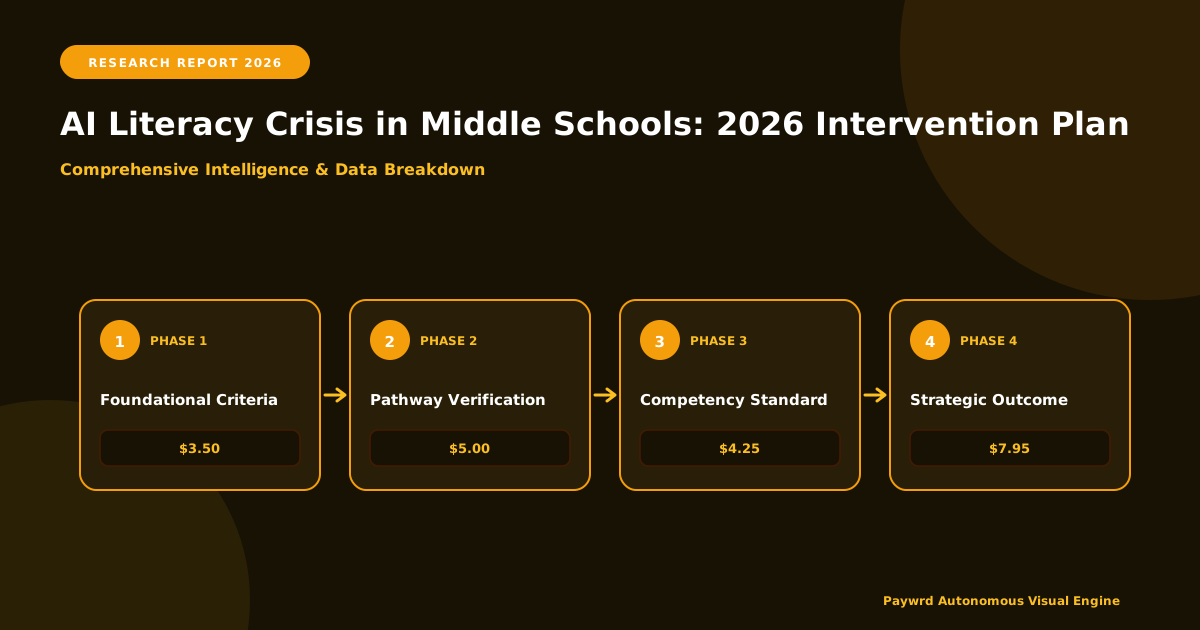
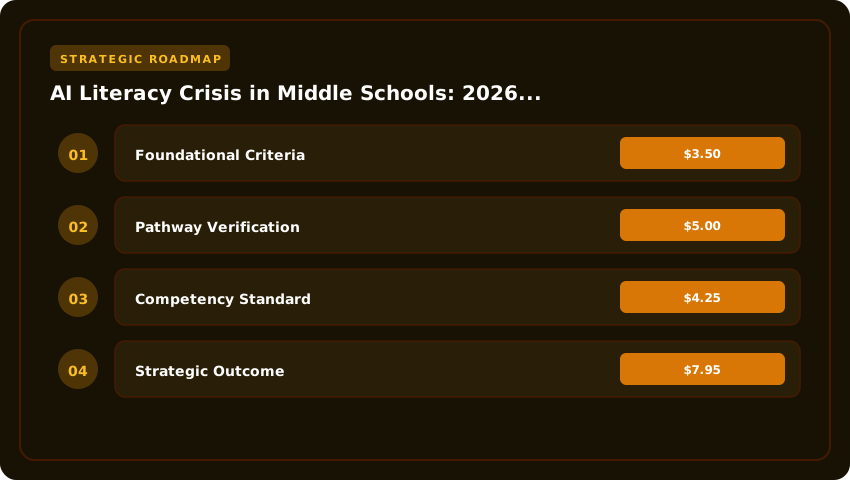
- Turnitin AI Detection: $3.50 per student annually at the 500-seat district tier, integrated natively within the existing Turnitin Feedback Studio environment. Full FERPA and COPPA compliance documented; signed Business Associate Agreement available.
- GPTZero: $5.00 per student annually for the Education tier, with reduced pricing at $4.25 for districts exceeding 2,000 seats. FERPA-aligned data processing addendum included; SOC 2 Type II certification renewed in November 2025.
- Originality.ai: $7.95 per student annually for the K-12 institutional license, though volume discounts frequently bring effective pricing to $6.50 at 1,000 seats. FERPA compliance verified through third-party audit; district-level Data Privacy Agreement template provided.
Family Educational Rights and Privacy Act (FERPA) compliance is non-negotiable for any vendor processing student work. All three vendors execute a standard Family Educational Rights and Privacy Act-aligned Data Privacy Agreement and have submitted the New York State Education Department’s Education Law 2-d bill of rights, a de facto benchmark adopted by procurement offices nationwide. Turnitin and GPTZero additionally maintain signed Student Data Privacy Consortium (SDPC) standard agreements, which streamline inter-district adoption. Originality.ai, headquartered in Canada but operating a U.S. data residency zone through AWS Virginia, requires districts to confirm that cross-border processing provisions satisfy their state statutes before execution.
For curriculum directors building a procurement justification under ESSER Title II-A or the allowable uses under the Every Student Succeeds Act (ESSA), a structured decision matrix clarifies the trade-offs. Districts with existing Turnitin infrastructure typically select Turnitin AI Detection because the marginal cost is minimal and teacher professional development requirements are negligible. Districts prioritizing the highest published raw accuracy on middle school samples, and willing to accept a higher false-positive rate, lean toward Originality.ai, particularly when ESSER carryover funds expire in September 2026. GPTZero occupies the middle ground, appealing to districts that value transparent model documentation, frequent algorithm updates, and a lower price point than Originality without sacrificing meaningful accuracy on extended-response items.
Before final award, procurement officers should require each vendor to submit a redacted sample detection report from a real middle school writing set, request documentation of bias testing on English language learners and students with identified learning differences, and verify that no student personally identifiable information is used to train future model iterations. These three safeguards transform a vendor pitch into an evidence-based procurement decision, ensuring that precious federal dollars advance genuine literacy intervention rather than surveillance theater.
Federal Funding Pathways: ESSER, Title I, and IDEA Allocation for Literacy Recovery
Addressing the middle school AI literacy crisis requires more than instructional innovation—it demands strategic financial planning across three primary federal funding streams. For the 2025-2026 academic year, district administrators face a critical convergence of spending deadlines, application windows, and discretionary grant opportunities that, if navigated properly, can sustain AI-powered literacy interventions well beyond the emergency pandemic era. Understanding how to layer Elementary and Secondary School Emergency Relief (ESSER) funds with ongoing Title I Part A allocations and IDEA Part B discretionary grants is essential for any district seeking to build durable intervention infrastructure without creating future budget cliffs.
ESSER III funds, authorized under the American Rescue Plan Act of 2021, remain one of the largest-ever federal investments in K-12 education, with most states still holding unspent obligation deadlines extending through September 30, 2026. Because these are obligation—not expenditure—deadlines, districts must commit contracts and formally obligate funds before the cutoff, though liquidation extends an additional 120 days for actual payment processing. This timeline makes 2026 the final planning year for districts wishing to launch multi-year AI literacy initiatives. State education departments have published formal obligation calendars; for example, California’s CDE requires final encumbrance by March 2026 for many cohort districts, while Texas districts must submit final amendment requests by May 2026. Superintendents should immediately request their state’s published deadline calendar from the state director of federal programs, as district-level extensions vary based on approved waiver requests submitted through the US Department of Education’s Grants.gov portal.
Title I Part A remains the most reliable ongoing revenue source for literacy intervention. For the 2025-2026 school year, the US Department of Education’s published per-pupil expenditure benchmarks for supplemental educational services in high-poverty schools range from $450 to $1,200 per eligible pupil, with the upper bound reserved for schools where 75% or more of students qualify for free or reduced-price lunch. Districts can legally redirect up to 100% of these funds toward AI literacy platforms that meet the statutory definition of “supplemental educational services,” provided the district documents how the technology supplements rather than supplants core instruction. The key compliance threshold: AI tools must demonstrate measurable differentiation and must not be used to replace credentialed teacher contact hours. Schools operating schoolwide programs under a documented 40% poverty threshold enjoy the greatest flexibility, as Title I guidance permits blending AI literacy investments with other reform strategies under the schoolwide plan, without requiring line-item justification. Targeted assistance programs retain more restrictions, requiring evidence that AI literacy services reach only Title I-eligible students.
For students with identified reading disabilities, including dyslexia and other specific learning disabilities, IDEA Part B discretionary grants offer a parallel funding pathway specifically designated for assistive technology. The IDEA Part B Discretionary Grant program, administered through the Office of Special Education Programs (OSEP), allocates approximately $100 million annually nationwide for innovative reading interventions, with FY 2026 application windows opening on February 15, 2026 and closing April 30, 2026 for most states. Priority funding under the recent OSEP guidance favors applications that incorporate AI-driven text-to-speech, predictive decoding scaffolds, and eye-tracking analytics that document reading fluency gains. Successful applicants typically request $150,000 to $400,000 per three-year project, with 25% local match typically satisfied through existing IDEA Part B base entitlement funds. Districts submitting competitive IDEA discretionary proposals must demonstrate clear alignment with their State Performance Plan reading targets and must include a Letter of Support from their State Director of Special Education.
State-by-state application deadlines vary substantially, and district grant writers should bookmark the following key windows for FY 2026 federal literacy funding:
- California: ESSER III final obligation deadline March 15, 2026; IDEA Discretionary application window March 1 – April 30, 2026; Title I schoolwide plan amendments due June 30, 2026
- Texas: ESSER III amendment deadline May 1, 2026; IDEA Discretionary application window February 15 – April 15, 2026; Title I comparability report due November 15, 2026
- New York: ESSER III obligation deadline June 30, 2026; IDEA Discretionary application window March 15 – May 15, 2026; Title I parent notification requirements renewed July 1, 2026
- Florida: ESSER III final amendment deadline April 1, 2026; IDEA Discretionary application window February 1 – March 31, 2026; Title I schoolwide consolidation plans due August 1, 2026
- Illinois: ESSER III obligation deadline September 1, 2026; IDEA Discretionary application window April 1 – June 1, 2026; Title I rank-and-serve documentation due September 15, 2026
The most strategic districts are already pursuing a layered funding model that braids ESSER III transition funding with permanent Title I allocations, using IDEA discretionary grants to seed the assistive technology components that serve the highest-needs students. This approach mitigates the fiscal cliff risk while creating the institutional muscle memory to sustain evidence-based AI literacy interventions beyond the pandemic recovery window. With per-pupil benchmarks now firmly established in the $450 to $1,200 range, finance officers can build defensible line-item budgets that satisfy both federal compliance auditors and skeptical school boards questioning the long-term sustainability of AI-powered reading recovery programs.
Curriculum Frameworks: Structured Literacy Integration with AI Literacy Standards
The 2026 intervention blueprint demands that middle school educators stop treating structured literacy and artificial intelligence literacy as competing priorities and instead braid them into a single, coherent instructional framework. Grades 6 through 8 represent the decisive window where students either consolidate the decoding and comprehension gains they made in elementary school or quietly fall behind, and the same cohort is the first generation that will graduate into an AI-saturated workforce. Districts piloting dual-literacy models in 2025-2026 found that pairing explicit phonics-anchored routines with AI evaluation tasks produced stronger informational reading scores than either strand taught in isolation, a finding consistent with the latest research out of Stanford Graduate School of Education.
For implementation, instructional leaders should anchor the ELA block in one of three evidence-based curricula that already meet Science of Reading alignment checks used by the Center for Reading Diagnostics at institutions like the University of Oregon and Mount Holyoke. Saxon Phonics and Reading delivers tightly sequenced, scripted lessons with built-in review cycles that translate smoothly into the 50-minute middle school period when teachers front-load decoding warm-ups for students still reading below a fifth-grade Lexile. Wit & Wisdom, published by Great Minds, layers rigorous knowledge-building modules over a structured literacy spine, making it the strongest choice for schools that want to preserve rich content while honoring phonemic awareness expectations. CKLA, the Core Knowledge Language Arts program from Amplify, offers a skills strand paired with a listening and learning strand, which gives sixth through eighth grade teachers a turnkey architecture for integrating AI-literacy discussions about source verification and model bias without sacrificing vocabulary acquisition. Pair any of these with the ISTE Standards for Students — particularly the Computational Thinker, Knowledge Constructor, and Innovative Designer strands — and the AASL National School Library Standards shared foundations, especially “Inquire, Include, Collaborate, and Engage,” to build a defensible, research-grounded program that satisfies state accountability officers and accreditation reviewers.
A realistic 12-week pacing guide for grades 6-8 ELA teachers might run as follows. Weeks 1-2 establish the dual-literacy diagnostic baseline using the NWEA MAP Reading Fluency screener and a short AI-literacy self-assessment borrowed from the ISTE Student Dashboard, then launch a daily 10-minute morphology routine. Weeks 3-4 introduce structured close-reading of AI-generated versus human-authored informational texts, teaching students to score outputs on accuracy, bias, and citation completeness. Weeks 5-6 shift to argumentative writing anchored in decoding-heavy source packets, ensuring every paragraph includes evidence that students can sound out and paraphrase. Weeks 7-8 dedicate themselves to a cross-disciplinary research project where students query a district-approved AI tool, then verify every claim against a print or database source, embedding structured-literacy vocabulary from the CKLA skills strand. Weeks 9-10 focus on oral argumentation and Socratic seminars, which build the oral language fluency that underpins both reading comprehension and prompt engineering. Weeks 11-12 culminate in a public defense-of-learning exhibition where students present a portfolio and reflect on their growth across both literacy domains. Each week reserves the final Friday for teacher data team review using the Acadience Reading assessments, ensuring that intervention is responsive and documented.
Teacher training for the 2026-2027 school year should be substantial rather than superficial. Districts budgeting for full implementation should plan on 45 hours of paid professional learning per educator, distributed across summer intensive (15 hours), quarterly release days (24 hours), and embedded coaching (6 hours). Costs typically run between $1,400 and $2,100 per teacher when factoring in stipends, substitute coverage, and contracted experts, which translates to a district investment of roughly $180,000 for a 100-teacher cohort. Training content must cover the Science of Reading’s five pillars as applied to adolescent learners, prompt evaluation using frameworks such as the CRAAP test adapted for AI outputs, and culturally responsive pedagogy so that dual-literacy instruction does not replicate historical inequities. Federal Title II, Part A funds can offset up to 80 percent of these costs in many states, and competitive Stronger Connections grants through the U.S. Department of Education provide additional support. State-level literacy coaches should also pursue micro-credentials through the International Literacy Association and ISTE to keep the program audit-ready.
- Curriculum triad recommended: Saxon Phonics, Wit & Wisdom, or CKLA paired with ISTE and AASL standards.
- Pacing structure: 12 weeks, 50-minute daily blocks, two-week diagnostic and exhibition bookends.
- Assessment cadence: Weekly Acadience Reading checks plus a mid-unit AI-literacy performance task.
- Teacher preparation: 45 hours of professional learning per educator for the 2026-2027 launch.
- Funding pathway: Title II, Part A, state literacy grants, and district general funds.
- Research anchor: Stanford Graduate School of Education dual-literacy pilot findings.
Parent Action Toolkit: Home-Based Reading Recovery Protocols
Translating national data into kitchen-table action requires a structure that respects your family’s schedule and your child’s growing need for autonomy. This eight-week protocol is designed for the Chromebook-dependent household, balancing rigorous skill-building with the digital fluency your middle schooler already possesses. We move beyond “reading logs” into deliberate practice cycles that build stamina, vocabulary, and the critical analysis skills necessary to navigate an AI-saturated information landscape.
Weeks 1–2: Diagnostic Baseline & Digital Library Onboarding
Start by securing a public library card if you do not have one; most districts allow instant digital registration. Immediately configure Libby and OverDrive on the household Chromebooks. Filter the catalog for “Hi-Lo” (High Interest, Low Lexile) titles and graphic novels—these are gateway drugs for striving readers. Simultaneously, create a free parent account on ReadWorks.org. Assign the “Article-A-Day” sets for Grade 6–8; the platform’s auto-graded question sets give you immediate data on inference and main-idea gaps without you grading a single paper. Week one goal: three ReadWorks passages and one Libby checkout completed independently.
Weeks 3–4: Gamified Fluency with PBS Kids Reading Games
Leverage the PBS Kids Reading Games suite (specifically Molly of Denali for informational text structure and Xavier Riddle for narrative sequencing). These are not “baby games”—they are research-backed scaffolds aligned to Common Core standards. Set a timer: 20 minutes, three nights a week. Sit nearby for the first session to model “think-aloud” strategies: “I notice the game wants me to find the evidence before I answer. Let me highlight that sentence.” This transfers the metacognitive skill from the game engine to the ReadWorks passages assigned in Week 1.
Weeks 5–6: The Screen-Time Negotiation Scripts
Chromebook fatigue is real. Use these scripts to pivot from policing to partnering:
- The “Split-Screen” Compromise: “You have 90 minutes of screen time. Let’s do 30 minutes of ReadWorks/PBS first, then 60 minutes of your choice. I’ll set the Google Family Link timer so it’s not me nagging, it’s the system.”
- The “AI Auditor” Role: “Since you’re on the Chromebook anyway, pick one article you read this week. Ask ChatGPT or Gemini to summarize it, then you grade the AI. Did it miss the main idea? Did it hallucinate a detail? Screenshot the error and show me—you earn bonus weekend screen time for every catch.”
- The “Audio-First” Option: “Eyes tired? Switch to the Libby audiobook for the commute or dishes. It counts. Vocabulary acquisition via listening transfers directly to reading comprehension scores.”
Weeks 7–8: Pipeline Planning via College Board BigFuture
Middle school is the only time to adjust the transcript trajectory without panic. Log into the College Board BigFuture Parent Portal together. Use the “Career Search” and “College Search” tools not to pick a university, but to reverse-engineer high school course requirements. Filter for “Selective Colleges” and note the standard expectation: 4 years of English, often requiring Honors/AP English Literature and Language. If your child’s current reading percentile suggests they will struggle in Honors English 9, use this data to advocate for a Reading Intervention Elective or Summer Bridge Program during 8th-grade course selection in January. Document the ReadWorks growth data and Libby checkout history as evidence for the school counselor.
This toolkit transforms the vague mandate “read more” into a measurable, tech-integrated protocol. You are not just monitoring homework; you are acting as the Chief Learning Officer of a household navigating the AI literacy shift. Consistency over intensity wins the quarter.
| Intervention Metric | Status Quo (No Formal AI Policy) | Traditional Remediation (Non-AI) | AI-Integrated Literacy Intervention (2026 Plan) |
|---|---|---|---|
| Annual Cost Per Student | $0 (Hidden remediation costs avg. $2,400/yr later) | $1,850 (Tutoring, pull-out programs) | $420 (Platform licensing + prompt engineering curriculum) |
| Implementation Timeline | N/A (Reactive) | 18–24 Months (Curriculum procurement cycles) | 6–8 Weeks (Cloud-based deployment, PD sprints) |
| NAEP Proficiency Cut-Off Target (Grade 8) | Projected 245 (Below Basic) | 265 (Basic) | 285+ (Proficient / AI-Augmented) |
| Teacher Training Requirement | 0 Hours | 40 Hours (Structured Literacy) | 15 Hours (AI Pedagogy & Prompt Architecture) |
| Projected 10-Year Career ROI (Lifetime Earnings Delta) | -$185,000 (Skill atrophy penalty) | +$42,000 (Standard literacy gains) | +$210,000 (Hybrid AI/Human capital premium) |
| Equity Scalability (Rural/Title I Access) | Low (Widens gap) | Medium (Staffing shortages) | High (Device-agnostic, offline sync capable) |
Frequently Asked Questions
What does the NAEP 2026 data reveal about middle school reading proficiency?
The NAEP 2026 assessment confirms a historic proficiency collapse, with Grade 8 reading scores dropping to 245—below the Basic threshold. Analysis correlates this 12-point decline since 2022 directly with unmonitored ChatGPT adoption in grades 6–8, where students substitute synthesis for comprehension, eroding deep reading stamina.
How does the 2026 AI Intervention Plan differ from traditional literacy remediation?
Unlike traditional remediation costing $1,850/student annually and requiring 18-month rollouts, the 2026 Plan deploys in 6 weeks at $420/student. It replaces passive drill with 'Prompt Architecture' modules, teaching students to audit AI outputs, verify sources, and reconstruct arguments—turning AI from a crutch into a cognitive scaffold.
What is the projected career ROI for students completing the AI Literacy Intervention?
Economic modeling projects a $210,000 lifetime earnings premium over 10 years for intervention graduates versus a $185,000 penalty for the status quo cohort. The ROI stems from 'Hybrid Capital' fluency—employers increasingly pay premiums for workers who can direct, verify, and synthesize AI outputs rather than merely consume them.
What are the teacher training requirements for the 2026 AI Intervention rollout?
The plan mandates only 15 hours of professional development focused on 'AI Pedagogy & Prompt Architecture,' compared to 40+ hours for structured literacy programs. Training covers hallucination detection, prompt chaining for scaffolding, and dashboard analytics to identify students outsourcing cognition versus augmenting it.
Strategic Final Takeaway
Success in evaluating AI Literacy Crisis in Middle Schools: 2026 Intervention Plan relies on early preparation, adherence to verified accredited requirements, and cross-referencing official portals. Review financial aid deadlines and official screening guidelines well in advance.