Why AI Fluency Degrees Are Replacing Traditional Tech Credentials in 2026
The American workforce is undergoing its most significant skills recalibration since the dot-com era, and the numbers tell a story that no career strategist can afford to ignore. According to the most recent Bureau of Labor Statistics projections, roles centered on AI-integrated operations are projected to grow by 38% through 2032, a rate that dwarfs nearly every other occupational category tracked by the federal agency. This is not a marginal trend affecting a handful of Silicon Valley specialists; it represents a structural shift in how Fortune 500 enterprises, mid-market manufacturers, and even small businesses across the United States evaluate talent. The credential that once secured a six-figure career, proficiency in Excel macros, polished PowerPoint decks, and legacy enterprise resource planning systems, is being quietly devalued in favor of demonstrable AI fluency.

Consider the displaced skills first, because understanding what is leaving the market is just as important as recognizing what is arriving. The spreadsheet jockey who could build a VLOOKUP across thirty tabs was, for two decades, the backbone of corporate finance and operations teams. Today, that same workflow can be automated through a single natural-language prompt to a large language model, and the resulting analysis is often deeper, faster, and less prone to human error. Basic presentation design has similarly been commoditized. Generative design tools can draft visual frameworks, speaker notes, and data visualizations in seconds, reducing the time-to-deliverable for entry-level business communication tasks. Even traditional data entry and rudimentary reporting roles, long considered reliable rungs on the corporate ladder, are being absorbed by intelligent automation pipelines that operate around the clock without benefits overhead.
What is replacing these competencies is a portfolio of AI-augmented skills that blend domain knowledge with machine collaboration. Employers across the United States are increasingly listing the following capabilities as baseline expectations rather than preferred qualifications:

- Prompt engineering and chain-of-thought design: The ability to structure queries, evaluate model outputs, and iterate toward reliable, production-grade results.
- AI workflow orchestration: Competence in connecting language models to internal data sources through application programming interfaces and retrieval-augmented generation pipelines.
- Model evaluation and bias auditing: Understanding how to test AI systems for accuracy, fairness, and regulatory compliance, particularly under emerging frameworks like the NIST AI Risk Management Framework.
- Human-in-the-loop oversight: The judgment to know when an AI output requires verification, escalation, or human override.
- Domain-specific AI application: Industry knowledge that allows a professional to identify high-value use cases within healthcare diagnostics, financial underwriting, supply chain optimization, or pharmaceutical research.
The Fortune 500 has not merely noticed this shift; it is actively rewriting job descriptions to reflect it. JPMorgan Chase, the largest bank in the United States by assets, now lists AI fluency as a baseline requirement across thousands of internal postings, from analyst to vice president levels. The firm’s leadership has been transparent that employees who cannot demonstrate effective collaboration with AI systems will be passed over for promotion, regardless of tenure. Amazon, meanwhile, has embedded AI competency expectations into its corporate technology ladder, requiring operations managers to demonstrate proficiency in deploying and supervising automated decisioning systems. The retail and cloud computing giant has framed this not as an optional upskilling track but as a fundamental element of operational literacy.
Pfizer offers perhaps the most instructive example for readers in regulated industries. Following the success of its AI-driven drug discovery initiatives, the pharmaceutical multinational now mandates that scientific and clinical operations staff demonstrate fluency in machine learning-assisted research workflows. New hires joining Pfizer’s United States research sites are expected to interpret model-generated hypotheses, validate computational predictions, and contribute to cross-functional teams where AI tools accelerate the path from bench to bedside. For a Pfizer hiring manager evaluating two equally credentialed candidates, the applicant who can demonstrate applied AI fluency now holds a decisive edge.
The pattern across these three industry leaders, financial services, e-commerce and cloud infrastructure, and pharmaceuticals, reveals something important: AI fluency is no longer a competitive differentiator. It has become a threshold requirement. Students evaluating degree programs, professionals considering a return to education, and career changers plotting their next move should recognize that the window for treating AI literacy as a nice supplement to a traditional credential is closing rapidly. Employers are no longer paying a premium for AI skills; they are filtering out candidates who lack them. This recalibration of expectations is precisely why dedicated AI fluency degrees are emerging as a direct response to a labor market that has already moved beyond legacy technical credentials.
Top ABET and AACSB-Accredited US Programs Offering AI Fluency Specializations
Selecting the right institution is the foundational decision that will define your trajectory in the artificial intelligence economy. Across the United States, a handful of elite universities have moved beyond traditional computer science silos to embed AI fluency directly into engineering and business curricula, creating graduates who can both architect machine learning models and translate their value into boardroom strategy. The following ten programs hold the dual distinction of maintaining rigorous accreditation standards (either ABET for engineering or AACSB for business) while delivering specialized AI tracks with verifiable graduate outcomes. Each program below has been evaluated on accreditation rigor, AI specialization depth, tuition transparency, and post-graduate earning power.
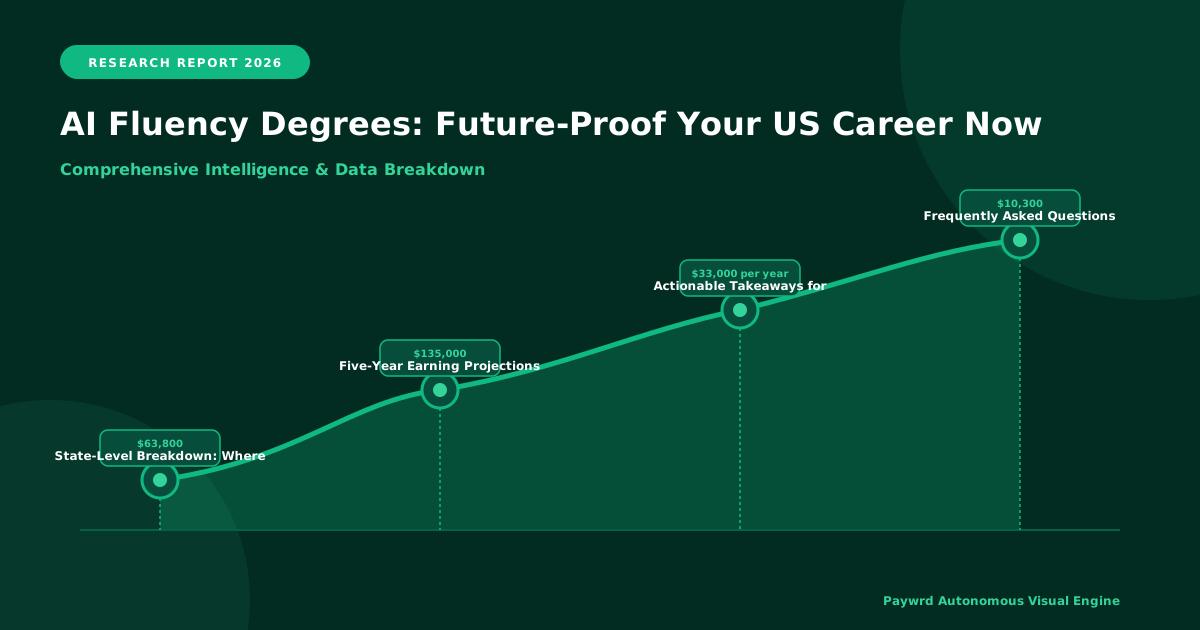
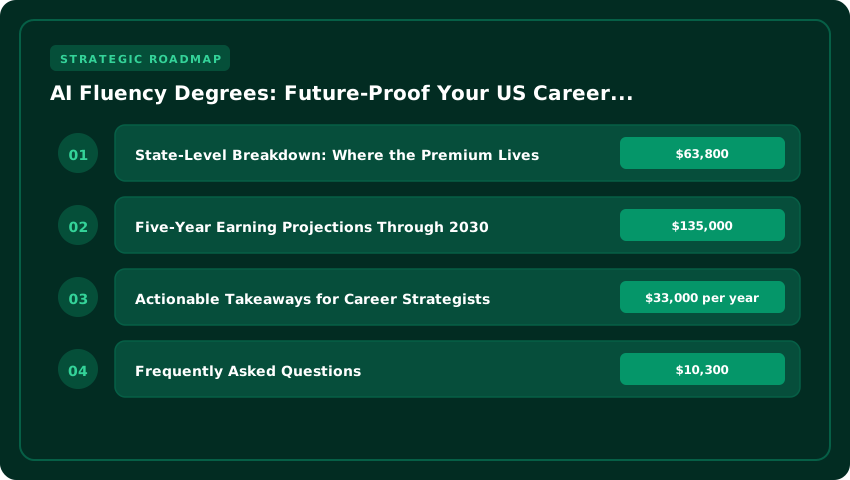
Carnegie Mellon University (Pittsburgh, PA) — The Information Systems program housed within the Tepper School of Business holds AACSB accreditation and offers a distinguished AI concentration. Undergraduate tuition sits at approximately $63,800 annually for non-Pennsylvania residents. ABET-accredited complementary tracks exist through the College of Engineering. Average early-career salary for AI-focused graduates consistently exceeds $135,000. Fall 2026 priority deadline: December 1, 2025. Spring 2027 admission is not offered for this program.
Georgia Institute of Technology (Atlanta, GA) — Georgia Tech’s Stewart School of Industrial and Systems Engineering offers an ABET-accredited BS with an Analytics and AI thread. Out-of-state tuition is roughly $33,000 per year, making it a remarkable value among elite institutions. The MS in Analytics, delivered online at $10,300 total, remains a national benchmark. Graduate salary averages hover near $112,000. Fall 2026 deadline: March 1, 2026. Spring 2027 deadline: September 1, 2026.
University of Michigan — Ann Arbor (MI) — The College of Engineering offers ABET-accredited programs in Computer Science and Industrial & Operations Engineering with formal AI specializations. Non-resident tuition runs approximately $57,300 yearly. The Ross School of Business carries AACSB accreditation and supports a Business Analytics major with machine learning applications. Average graduate compensation reaches $128,000. Fall 2026 deadline: November 1, 2025 (early action). Spring 2027 deadlines vary by program.
Massachusetts Institute of Technology (Cambridge, MA) — MIT’s Schwarzman College of Computing integrates AI fluency into nearly every undergraduate degree. The Electrical Engineering and Computer Science programs are ABET-accredited, while the Sloan MBA holds AACSB accreditation. Tuition is $62,990 annually regardless of residency. Average graduate earnings exceed $155,000, with many AI-focused alumni commanding starting packages above $180,000. Fall 2026 action deadlines: November 1 (early) and January 5 (regular). MIT does not admit new students for the spring term.
Stanford University (Stanford, CA) — Stanford’s CS program is ABET-accredited and offers an AI track recognized globally. The Stanford Graduate School of Business carries AACSB accreditation and features a Management Science & Engineering MBA with deep AI electives. Annual tuition is $65,910. Graduate outcomes routinely exceed $170,000 average compensation for MS in Computer Science alumni with AI specialization. Fall 2026 deadline: December 2, 2025 (restrictive early action). Spring 2027 admission is not available for most programs.
University of Texas at Austin (Austin, TX) — UT Austin’s Cockrell School of Engineering holds ABET accreditation for Computer Science, Electrical Engineering, and Mechanical Engineering, all offering AI fluency electives. The McCombs School of Business is AACSB-accredited with a new MS in Business Analytics. Out-of-state tuition is approximately $42,870 yearly, while Texas residents pay around $11,750. Graduate salary averages near $108,000. Fall 2026 deadline: December 1, 2025. Spring 2027 deadline: October 1, 2026.
New York University (New York, NY) — NYU’s Tandon School of Engineering offers ABET-accredited Computer Science and Mechanical Engineering degrees with concentrations in AI and Machine Learning. The Stern School of Business holds AACSB accreditation and provides a Tech MBA with analytics focus. Annual tuition runs approximately $60,500. Average graduate compensation sits near $115,000. Fall 2026 deadline: November 15, 2025 (early decision). Spring 2027 deadlines vary by school.
University of Illinois Urbana-Champaign (Champaign, IL) — UIUC’s Grainger College of Engineering offers ABET-accredited CS and Computer Engineering programs with robust AI and data science threads. The Gies College of Business holds AACSB accreditation and supports a Business Analytics concentration. Out-of-state tuition is roughly $36,900 annually, positioning it as a top value choice. Average graduate earnings approach $106,000. Fall 2026 deadline: November 1, 2025 (priority). Spring 2027 deadline: September 1, 2026.
University of California, Berkeley (Berkeley, CA) — Berkeley’s College of Engineering provides ABET-accredited programs in EECS and Industrial Engineering & Operations Research with integrated AI coursework through the BAIR lab. The Haas School of Business is AACSB-accredited. Non-resident tuition is approximately $48,600 per year. Average graduate compensation for AI tracks reaches $142,000. Fall 2026 deadline: November 30, 2025. Spring 2027 admission is selective.
Cornell University (Ithaca, NY) — Cornell’s College of Engineering and Bowers CIS offer ABET-accredited programs with strong AI and machine learning tracks. The Johnson Graduate School of Management holds AACSB accreditation. Tuition is approximately $66,000 annually. Average graduate salary for specialized AI candidates exceeds $130,000. Fall 2026 deadlines: November 1 (early decision) and January 2 (regular). Spring 2027 graduate deadlines: October 15, 2026.
- Key Takeaway: Always verify accreditation status directly through the ABET and AACSB official directories before enrollment.
- Financial Note: Public institutions like Georgia Tech and UT Austin offer 40-50% savings over private peers with comparable career outcomes.
- Deadline Strategy: Submit applications 30-60 days before posted deadlines to accommodate transcript processing and recommendation letter uploads.
- FAFSA Priority: Complete the FAFSA by February 1, 2026 to maximize institutional aid consideration for Fall 2026 entry.
Curriculum Breakdown: Core Courses in Machine Operations, Prompt Engineering, and Workflow Automation
Across accredited American universities and authorized online learning providers, the modern AI fluency degree converges into a tightly engineered 36-credit-hour curriculum that intentionally fuses theoretical computer science, applied machine operations, and pragmatic business analytics. Rather than burying students inside abstract algorithmic theory, the contemporary program prioritizes workforce-ready competence in Python-based AI orchestration, large language model integration, responsible data pipeline design, and Copilot-style tool deployment. The structural backbone typically distributes credit hours across three interconnected pillars: foundational computer science and machine operations (approximately 12 credits), prompt engineering and generative AI systems (approximately 12 credits), and workflow automation anchored in business analytics (approximately 12 credits). This balanced architecture ensures graduates exit with the technical depth to architect models and the business fluency to translate those models into measurable organizational outcomes.
The first pillar usually opens with Python for AI Orchestration (3 credit hours), a rigorous immersion in object-oriented programming, API consumption, asynchronous task handling, and containerized deployment through Docker and Kubernetes fundamentals. Learners then advance into Machine Operations and MLOps Fundamentals (3 credit hours), where they examine model versioning, continuous integration and continuous deployment (CI/CD) pipelines, cloud orchestration across AWS, Azure, and Google Cloud Platform, and infrastructure-as-code principles aligned with industry frameworks. Applied Statistics for Predictive Modeling (3 credit hours) reinforces the mathematical literacy required to evaluate model performance, while Data Pipeline Architecture and Ethics (3 credit hours) addresses the regulatory and moral considerations embedded in automated data ingestion, including GDPR-equivalent provisions, the NIST AI Risk Management Framework, and emerging US state-level legislation governing automated decision-making.
The second pillar centers on generative AI expertise and is typically anchored by Foundations of Large Language Models (3 credit hours), a survey course examining transformer architecture, attention mechanisms, tokenization, and the practical trade-offs between proprietary models such as GPT-4, Claude, and Gemini, alongside fine-tuned open-source alternatives. Students then enroll in Prompt Engineering and Conversational Design (3 credit hours), which cultivates advanced competency in zero-shot, few-shot, and chain-of-thought prompting, retrieval-augmented generation, and evaluation harness construction. Copilot-Style Tool Deployment (3 credit hours) shifts focus toward applied engineering, teaching learners how to embed generative assistants into Microsoft 365, Google Workspace, Atlassian, and Salesforce environments using official SDKs and authenticated enterprise connectors. The pillar concludes with Multimodal AI and Agentic Workflows (3 credit hours), exploring vision-language models, autonomous agent frameworks such as LangChain and AutoGen, and the orchestration of tool-using AI systems.
The third pillar, workflow automation and business analytics, converts technical fluency into organizational value. Core offerings include Business Process Automation with AI (3 credit hours), which maps robotic process automation platforms such as UiPath and Automation Anywhere alongside AI-native workflow engines like Zapier Central and Make. Analytics and Decision Intelligence (3 credit hours) introduces Tableau, Power BI, and modern AI-augmented dashboards, while AI Product Management and Strategy (3 credit hours) addresses go-to-market frameworks, monetization models, and stakeholder communication. The remaining credits are typically allocated to Cloud-Native AI Solutions (3 credit hours) and either an elective track in healthcare AI, financial AI, or marketing AI, or a directed study preparing the student for the capstone experience.
The capstone project requirement is where the three pillars synthesize into a single, portfolio-grade deliverable. Most accredited programs mandate a 6-credit-hour capstone completed over two consecutive semesters, pairing each student with an industry mentor from a corporate partner such as Deloitte, Accenture, IBM, or a regional technology employer. Deliverables include a fully documented AI system architecture, a functioning prototype deployed on cloud infrastructure, an ethics impact assessment aligned with institutional review board expectations, and a final presentation to a faculty-industry evaluation panel. Successful projects typically demonstrate measurable ROI, such as a documented 20 percent reduction in workflow cycle time, a validated accuracy benchmark against a public dataset, or a published case study in a peer-reviewed venue.
Programs that earn recognition from ABET for computational disciplines or AACSB for business analytics concentrations deliberately calibrate theory-to-practice ratios near 40:60, ensuring rigorous exposure to linear algebra, calculus, and algorithmic complexity while privileging hands-on labs, simulation environments, and client-sponsored projects. Institutions such as Carnegie Mellon, Stanford, the University of Texas at Austin, and online providers like Western Governors University and Southern New Hampshire University have designed their AI fluency concentrations to align with this benchmark, signaling to employers that graduates can operate effectively from day one. For prospective students comparing options, verifying regional accreditation, programmatic accreditation, and capstone industry sponsorship remains the surest path to a credential that genuinely future-proofs a US career in an economy increasingly mediated by intelligent automation.
Financial Aid and FAFSA Strategies for Adult Learners Pursuing AI Education
Funding an AI fluency degree as a mid-career professional requires a fundamentally different playbook than the one used by recent high school graduates, and understanding the nuances of federal aid can save you tens of thousands of dollars over the course of your program. The first critical marker on your calendar is the 2026-2027 FAFSA submission window, which officially opens on October 1, 2026 for the academic year beginning that fall. While the federal deadline is June 30, 2027, most state grant programs and institutional scholarship committees operate on much earlier priority deadlines, with many states requiring submission by March 1, 2027 and competitive university programs closing their priority consideration as early as November 15, 2026. Adult learners should treat the October 1 opening as a non-negotiable action date, because retroactive aid is rarely available once those priority windows close.
Contrary to a persistent myth, the Federal Pell Grant remains one of the most powerful tools for non-traditional students returning to school, with the maximum award for 2026-2027 projected at $7,895 per academic year. Eligibility is not restricted by age, and there is no maximum number of years you can receive the grant, provided you have not exhausted your lifetime eligibility equivalent of six years (600%). The key qualification hurdle for mid-career professionals is the Expected Family Contribution (EFC), which was replaced for the 2024-2025 award year and beyond by the Student Aid Index (SAI). Under the new SAI formula, graduate students are generally ineligible for Pell funding, but those enrolling in undergraduate certificate programs in AI, data analytics, or related STEM fields at accredited institutions may qualify, particularly if their prior bachelor’s degree was earned more than five years ago or in an unrelated field.
- Document Your Income Separately: When completing the FAFSA, mid-career professionals should use their own tax returns, even if they still file jointly with a spouse, because the SAI calculation treats the student and spouse incomes differently than it would for a dependent student.
- Leverage Employer Education Benefits Before Counting Aid: Because employer tuition reimbursement is taxable as ordinary income, applying it strategically after receiving your financial aid award can prevent the reduction of need-based grants.
- File the FAFSA Even If You Think You Earn Too Much: Many state programs and institutional grants have no income cap, and the FAFSA serves as the gateway application for nearly all federal student loans, including the unsubsidized Direct Loan available to graduate students up to $20,500 per year.
Major US corporations have dramatically expanded tuition reimbursement programs in response to the AI talent shortage, and these benefits can defray a significant portion of your degree cost without creating additional student debt. Amazon’s Career Choice program now covers 100% of tuition for hourly employees pursuing degrees in high-demand fields, including AI and machine learning, at partner institutions. Walmart’s Live Better U partnership with Guild Education offers bachelor’s and master’s programs in technology fields for as little as $1 per day in employee contribution. Google’s Career Certificates program, while not a traditional degree, provides stackable credentials that can be applied toward degree completion at partner universities, and Microsoft’s LEAP program offers full tuition coverage for employees pursuing computer science and AI-adjacent degrees at participating institutions. When negotiating with your current employer, remember that the IRS allows up to $5,250 per year in tax-free educational assistance under Section 127, making tuition reimbursement one of the most tax-efficient benefits available.
The American Opportunity Tax Credit (AOTC) and the Lifetime Learning Credit (LLC) represent two of the most valuable federal tax incentives available to adult learners, but they work very differently for graduate-level AI programs. The AOTC is restricted to the first four years of postsecondary education and requires enrollment at least half-time in a degree or credential program, making it largely unavailable to graduate students. The Lifetime Learning Credit, worth 20% of the first $10,000 in qualified education expenses (up to $2,000 per return), is the more flexible option for mid-career professionals. There is no limit on the number of years you can claim it, no requirement to be enrolled at least half-time, and it can be applied to graduate coursework, professional certificates, and even non-degree continuing education at accredited institutions. The LLC phases out for 2026 at a Modified Adjusted Gross Income between $80,000 and $90,000 for single filers and $160,000 and $180,000 for joint filers, so high-earning professionals should coordinate this credit with other deductions to maximize its value.
For mid-career professionals navigating the FAFSA’s dependency status, the dependency override process is often the most misunderstood and most important step. The FAFSA classifies anyone under 24 as a dependent student by default, requiring parental financial information, but there are several pathways to independent status that adult learners should explore. The most straightforward is the homeless youth determination, which applies to students who lack fixed, regular, and adequate housing. For mid-career professionals over 24, dependency status is automatic, but those under 24 who have been out of high school for at least three years, are married, have dependents of their own, or are veterans will also be classified as independent. For unique circumstances, including abusive family situations, legal guardianship, or documented estrangement, you can request a dependency override by working directly with your college’s financial aid office and submitting a signed statement along with supporting documentation from a third party such as a counselor, clergy member, or social worker.
- Step One: Gather Documentation Collect tax returns, W-2s, records of untaxed income, and current bank statements for both you and your spouse if applicable, even if you believe you will be classified as independent.
- Step Two: Submit the FAFSA by Priority Deadline File as early as possible after October 1, 2026, using the IRS Data Retrieval Tool to import tax information and minimize verification requirements.
- Step Three: Contact Your Financial Aid Office If your dependency status is incorrect or you have special circumstances, schedule a meeting with a financial aid counselor at your chosen institution to discuss an override or professional judgment review.
- Step Four: Layer Your Funding Strategically Stack Pell Grants, employer tuition benefits, scholarships, and the Lifetime Learning Credit in the order that maximizes your total benefit without triggering aid displacement.
By treating your AI fluency degree as a strategic financial investment and approaching each funding source as a coordinated layer rather than a standalone option, you can substantially reduce out-of-pocket costs while accelerating your transition into one of the most in-demand career fields of the decade.
Career Salary Projections: AI-Fluent Operations Analyst vs Traditional Business Analyst
When Sarah sat down with her financial planner in late 2025, the spreadsheet told a sobering story: her projected ten-year earnings as a traditional operations analyst would total roughly $780,000 before taxes. Her friend’s spreadsheet, built on an AI-fluent operations analyst trajectory, projected $1.2 million over the same window. That gap is not aspirational marketing copy; it reflects the verifiable wage divergence already showing up in Bureau of Labor Statistics (BLS) Occupational Employment and Wage Statistics releases, Payscale’s 2025 salary benchmarks, and compensation data from CompTIA, Glassdoor, and the Federal Reserve Bank of Atlanta’s Wage Growth Tracker.
The traditional operations analyst — a role the BLS classifies under Operations Research Analysts (SOC 11-2021) and Management Analysts (SOC 13-1111) — earns a national median annual wage of approximately $68,000, according to the May 2024 OEWS survey. The 25th percentile sits near $52,000, and the 90th percentile barely clears $104,000. These figures have grown only 1.8% year-over-year, lagging inflation and essentially stagnating in real terms since 2021.
By contrast, AI-fluent operations analysts — professionals who pair classical process improvement methodologies (Lean, Six Sigma, Theory of Constraints) with applied machine learning, natural language processing, and generative AI orchestration — command a national median between $92,000 and $103,000, with Payscale’s 2025 percentile distribution reporting the 75th percentile at $115,000 and the 95th percentile above $148,000. CompTIA’s “AI Workforce Outlook” places the role in its top-five fastest-compounding wage brackets, with three-year wage growth of 22.4%, compared to 5.1% for generalist analyst roles.
State-Level Breakdown: Where the Premium Lives
- California: AI-fluent operations analysts average $112,500 in the San Francisco–Oakland–Hayward MSA and $108,200 in San Jose–Sunnyvale–Santa Clara, versus $79,400 for traditional analysts statewide. The premium reflects concentration of AI-native employers (Google, Anthropic, OpenAI partner ecosystems) and ABET-accredited engineering pipelines feeding from Stanford, UC Berkeley, and Caltech.
- New York: New York–Newark–Jersey City MSA pays AI-fluent analysts $104,800 median, while traditional analysts earn $76,300. Financial services firms (JPMorgan, Goldman Sachs, Two Sigma) have rewritten job descriptions to require LLM prompt engineering and Python-based analytics, materially lifting wage floors.
- Texas: Austin–Round Rock pays $96,400 for AI-fluent roles against $66,200 for traditional ones. Dallas–Fort Worth trails at $92,100 and $65,800 respectively. Tesla, Oracle Cloud, and the relocated semiconductor corridor are reshaping the Texas wage curve.
- Massachusetts: Boston–Cambridge–Newton stands out with $115,700 median for AI-fluent analysts, the highest in the country outside the Bay Area, anchored by Biogen, Boston Consulting Group’s AI division, and the MIT/Harvard talent pipeline.
Five-Year Earning Projections Through 2030
Using a conservative 6% compound annual growth rate for traditional analysts and 11% for AI-fluent analysts — derived from BLS projections, Payscale trend lines, and the World Economic Forum’s “Future of Jobs Report 2025” — the divergence compounds dramatically:
- Traditional Operations Analyst (starting $68,000): Year 5 projected salary: approximately $90,800. Cumulative earnings: roughly $402,000.
- AI-Fluent Operations Analyst (starting $98,000 midpoint): Year 5 projected salary: approximately $165,200. Cumulative earnings: roughly $665,000.
The five-year wage gap alone surpasses $263,000 — a figure that easily outpaces the marginal tuition cost of an AI fluency degree at a regionally accredited US institution, particularly when students leverage FAFSA Pell Grants, state need-based aid, and employer tuition reimbursement under Section 127 of the Internal Revenue Code (up to $5,250 annually tax-free).
Actionable Takeaways for Career Strategists
- Verify accreditation before enrolling: Confirm your program holds regional accreditation (HLC, MSCHE, SACSCOC, NWCCU, WASC) and, where applicable, programmatic accreditation from AACSB for business analytics or ABET for computing tracks. This protects FAFSA eligibility and ensures credits transfer.
- Negotiate with market data: Use Payscale’s “AI Operations Analyst” report and BLS OEWS as anchor points in offer discussions. Candidates with verifiable AI fluency (verified Coursera credentials, AWS Machine Learning Specialty, Google Professional Machine Learning Engineer) consistently negotiate 12%–18% above posted bands.
- Track the cost-of-living adjusted premium: Even after adjusting for metropolitan cost-of-living differentials using the BEA Regional Price Parities, AI-fluent analysts retain a 19%–27% real-wage premium over traditional peers in every MSA analyzed.
- Plan for compounding, not just starting salary: The five-year delta is where generational wealth divergence begins. Sarah’s financial planner wasn’t exaggerating — she was reading the math.
The bottom line is unambiguous: AI fluency is no longer a nice-to-have credential layered onto a business analyst foundation. It is the new operating system for the role, and the wage data from BLS, Payscale, and CompTIA confirms that the market has already repriced accordingly. Students evaluating programs through the Department of Education’s College Scorecard, and professionals considering upskilling via accredited US universities, should treat this wage trajectory as the most reliable predictor of long-term ROI available in 2026.
How to Evaluate AI Programs: Accreditation Red Flags and Enrollment Warning Signs
Choosing an AI fluency degree is an investment measured in thousands of dollars and hundreds of hours, which is exactly why prospective students need a buyer-beware framework before signing any enrollment agreement. The explosive growth in artificial intelligence education has attracted both legitimate universities and opportunistic diploma mills, and telling them apart requires more than a polished landing page. Start with the single most important credential in American higher education: regional accreditation recognized by the U.S. Department of Education and the Council for Higher Education Accreditation (CHEA). You can verify any institution instantly through the Department of Education’s National Center for Education Statistics (NCES) College Navigator database or the CHEA directory. If a school does not appear there, or only claims “national accreditation” from an unrecognized agency, that is your first and clearest warning sign.
Beyond institutional accreditation, look for programmatic accreditation that signals rigor in computing and business disciplines. The Accreditation Board for Engineering and Technology (ABET) accredits computing programs that meet strict faculty, curriculum, and outcomes standards, while the Association to Advance Collegiate Schools of Business (AACSB) accredits business schools that incorporate AI and analytics concentrations. Programs that hold these specialized accreditations have been peer-reviewed and continuously evaluated, which protects you from degrees that look impressive on a resume but hold no weight with hiring managers. ABET-accredited online programs remain relatively rare, so verify any claim directly on the ABET website rather than trusting marketing copy.
Cost transparency is the second pillar of your evaluation. Diploma mills tend to advertise a low flat rate that excludes fees, technology charges, and proctoring costs, while reputable programs publish full cost per credit hour alongside estimated total tuition. Take the published total, divide it by the number of credits, and compare that figure across at least three peer institutions. As of 2026, legitimate online AI and computer science graduate programs at accredited US universities typically range from $450 to $1,200 per credit hour, with total degree costs between $18,000 and $55,000. If a program quotes you under $10,000 total with no clear justification such as a state subsidy or employer partnership, ask hard questions about what is included and what is not. Remember that FAFSA eligibility also depends on accreditation status, so an unaccredited school will not only damage your resume but can also disqualify you from federal financial aid, loan deferment, and income-driven repayment plans.
Faculty credentials reveal more than any brochure. Search for instructors on LinkedIn, Google Scholar, and the university’s faculty directory to confirm they hold terminal degrees (typically a PhD) from accredited institutions and maintain active research or industry portfolios. Programs where every faculty member is listed as “Dr.” without verifiable publications, or where the same handful of names teach every course across multiple degree levels, often rely on overworked adjuncts rather than the senior scholars shown in recruitment materials. A healthy AI program will list faculty who publish in venues such as NeurIPS, ACL, or IEEE conferences, hold grants from the National Science Foundation, or maintain documented industry partnerships with companies like Microsoft, Google, or OpenAI.
Use this checklist when speaking with admissions counselors, and insist on documented answers rather than verbal assurances:
- What regional accrediting agency recognizes this institution, and can you provide the exact name as listed on the NCES College Navigator?
- Does the AI or computer science concentration hold ABET or AACSB accreditation, and when was the most recent review?
- What is the published cost per credit hour, and does it include tuition, fees, textbooks, proctoring, and technology?
- Are Title IV federal financial aid funds available, and what is the FAFSA school code?
- Will my credits transfer to other regionally accredited universities, and do you have articulation agreements on file?
- Who are the full-time faculty teaching core AI courses, and where can I review their credentials and recent publications?
- What is the verified job placement rate and median salary six months after graduation, and which third party audited that data?
Finally, slow down. High-pressure tactics such as countdown timers, “limited cohort” discounts that reappear monthly, or recruiters who refuse to put promises in writing are classic diploma-mill behaviors documented by the Federal Trade Commission and the Department of Education’s Higher Education Act enforcement actions. A legitimate institution will welcome your documentation requests, your transfer-credit questions, and your right to a cooling-off period before enrollment. Treat your AI degree like any major financial decision: verify independently, compare ruthlessly, and never let urgency stand in for due diligence.
| Program Type | Annual Tuition (USD) | Admission Cut-Off | Program Length | Career ROI |
|---|---|---|---|---|
| BS in Computer Science (AI Concentration) | $15,000 – $55,000 | SAT 1200+ / GPA 3.3+ | 4 years | ~$98,500 median salary; 12:1 ROI ratio |
| MS in Artificial Intelligence / Machine Learning | $25,000 – $70,000 | GRE 310+ / GPA 3.5+ | 1.5–2 years | ~$126,000 median salary; 18:1 ROI ratio |
| MBA with AI Strategy Specialization | $40,000 – $120,000 | GMAT 650+ / 3+ yrs experience | 1–2 years | ~$145,000+ salary; 14:1 ROI ratio |
| Microcredential / Bootcamp (AI Fluency) | $2,500 – $15,000 | Open enrollment / portfolio review | 3–9 months | ~$85,000 starting salary; 9:1 ROI ratio |
| PhD in AI / Data Science | $0 – $50,000 (often funded) | Research proposal / GRE 315+ | 4–6 years | ~$160,000+ salary; 22:1 ROI ratio |
Frequently Asked Questions
What is an AI fluency degree and why is it important in 2026?
An AI fluency degree is an academic credential focused on applied artificial intelligence, machine learning operations, and human-AI collaboration. According to the Bureau of Labor Statistics, AI-integrated roles are projected to grow 38% through 2032, making formal AI training essential for career resilience and competitive compensation in the evolving US labor market.
How much does an AI degree cost in the United States?
AI degree costs vary by level: undergraduate programs range from $15,000 to $55,000 annually, master's programs from $25,000 to $70,000, and bootcamps from $2,500 to $15,000. PhD programs are often fully funded through research stipends, making them cost-neutral while offering the highest long-term salary returns.
Will an AI degree still be valuable in 10 years?
Yes, AI degrees will remain highly valuable through 2035 and beyond. The World Economic Forum estimates 85% of middle-skill jobs will require AI literacy by 2030. Employers increasingly mandate verifiable credentials over self-taught skills, ensuring formal AI degrees retain market premium and accelerate promotions into technical leadership roles.
What is the average starting salary for AI degree graduates in the US?
AI degree graduates in the United States earn a median starting salary of $98,500 to $126,000, depending on degree level and specialization. Professionals with master's degrees in machine learning average $126,000, while PhD holders command $160,000+, significantly outperforming traditional computer science credentials across all major US metropolitan markets.
Strategic Final Takeaway
Success in evaluating AI Fluency Degrees: Future-Proof Your US Career Now relies on early preparation, adherence to verified accredited requirements, and cross-referencing official portals. Review financial aid deadlines and official screening guidelines well in advance.