The Real Cost of a Software Engineering Master’s in the United States
Understanding the true financial commitment of a software engineering master’s degree requires looking far beyond the published tuition rate. While prestigious programs at Stanford, the Georgia Institute of Technology, and the University of Texas at Austin frequently dominate ranking lists, the sticker price tells only a fraction of the story. When you factor in housing, health insurance, technology fees, and the opportunity cost of leaving a full-time salary, the realistic investment climbs significantly above the advertised numbers. For the 2024-2025 academic year, these three institutions offer an instructive comparison of public versus private pricing models, in-state versus out-of-state tuition disparities, and the often-overlooked “hidden costs” that can stretch a lean budget into an unsustainable one.

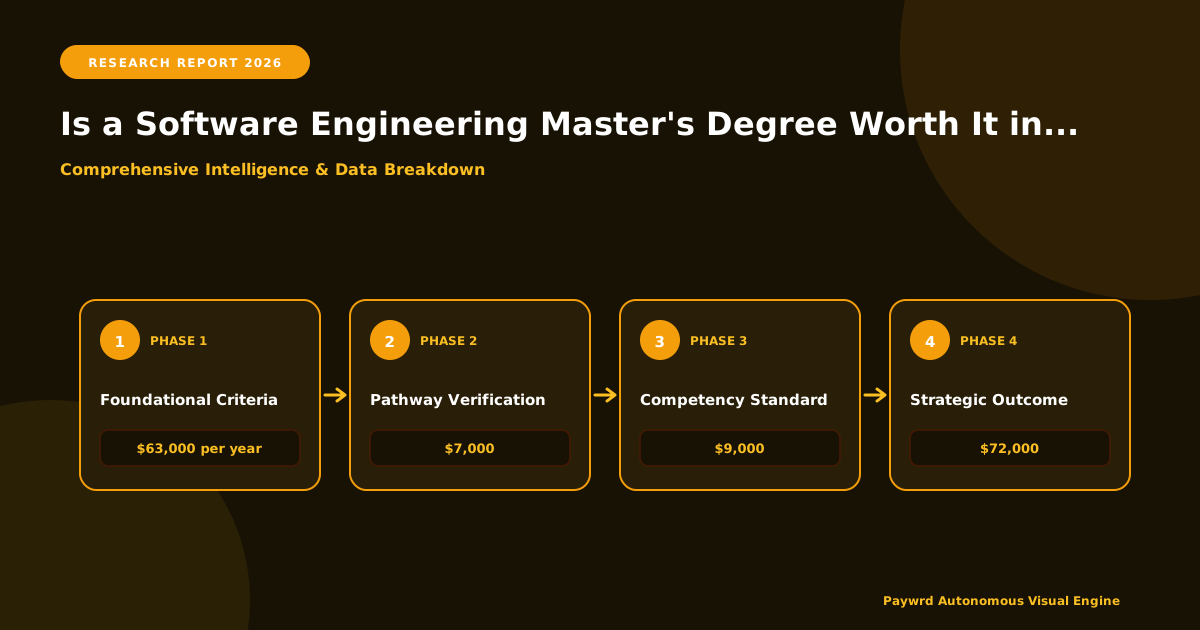
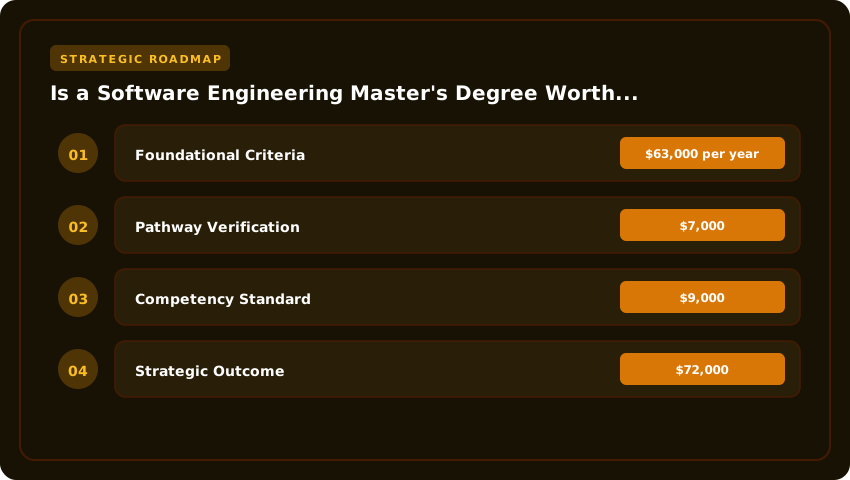
Stanford University’s Master of Science in Computer Science operates as a private institution and charges a uniform rate regardless of residency. For the 2024-2025 academic year, tuition is set at approximately $63,000 per year, with the 45-unit program typically completed across three quarters. Mandatory fees, including the campus health insurance plan, add another $7,000 to $9,000 annually, pushing the first-year cost of attendance closer to $72,000. Over the full degree, most students budget between $115,000 and $125,000 when accounting for course materials, a high-cost Palo Alto housing market, and modest living expenses.
Georgia Tech presents a dramatically different financial profile. The OMSCS (Online Master of Science in Computer Science) program charges roughly $180 per credit hour for residents and non-residents alike, one of the most accessible ABET-aligned pathways in the nation. Total tuition for the 30-credit hour program typically lands near $5,400. However, the on-campus Master of Science in Computer Science tells a different story: Georgia residents pay approximately $14,000 per year in tuition, while non-residents face roughly $32,000. Mandatory student fees, graduate activity fees, and the institution’s health insurance requirement bring the total estimated cost of attendance to roughly $28,000 for in-state students and $46,000 for their out-of-state peers each academic year.
The University of Texas at Austin, another flagship public research institution, structures its tuition around a unique distinction. Texas residents enrolled in the Master of Science in Software Engineering (MSSE) benefit from some of the most competitive public pricing in the country, with annual tuition near $10,000. Non-Texas residents, by contrast, face tuition closer to $22,000 per year. After adding estimated living expenses in Austin’s rapidly appreciating housing market, books, and university-mandated fees, the total program cost spans roughly $30,000 for in-state students and $60,000 for out-of-state students.
FAFSA plays a pivotal role in how prospective students manage these costs, though graduate aid operates under stricter constraints than undergraduate packages. Graduate students qualify for the Federal Direct Unsubsidized Loan, capped at $20,500 per academic year. Interest accrues from disbursement, and the aggregate graduate borrowing limit sits at $138,500, including any prior undergraduate federal loans. Because most full-time master’s programs cost between $25,000 and $72,000 per year, students typically face an annual funding gap of $5,000 to $50,000 that must be closed through assistantships, employer sponsorship, savings, or private loans.
To estimate your own total debt burden accurately, build a line-item budget that includes:
- Annual tuition and mandatory institutional fees, verified through the university’s official financial aid portal
- Health insurance premiums, which can exceed $4,000 per year for graduate students without employer coverage
- Rent and utilities in the campus housing market, recognizing that Palo Alto, Austin, and Atlanta vary widely in cost
- Course materials, software licenses, and required computing hardware
- Transportation, personal expenses, and professional development or conference fees
- Opportunity cost, calculated as the salary you forgo by attending full-time rather than working
The honest financial picture, in other words, demands more than a tuition comparison. A Stanford admit weighing the program’s prestige should budget a realistic $130,000 all-in. A Texas resident accepted into UT Austin’s MSSE program may complete the degree for closer to $32,000. Before committing, request the official cost-of-attendance letter from each institution’s financial aid office, complete the FAFSA to determine unsubsidized loan eligibility, and pressure-test your assumptions against a conservative monthly living budget. Numbers grounded in verified data transform a degree decision from a hopeful leap into a calculated investment.
What Employers Actually Evaluate in 2026: Degrees vs Portfolios
The hiring landscape for software engineering in the United States has undergone a fundamental restructuring since 2023, driven primarily by the mainstream adoption of AI-assisted coding tools, GitHub Copilot, Cursor, and Claude Code now being standard productivity multipliers rather than novelties. According to the 2025 Dice Technology Job Market Report, only 34 percent of software engineering job postings in the US now explicitly list a master’s degree as a requirement, down from 51 percent in 2022. However, the story beneath that headline is considerably more nuanced, and understanding it can save prospective graduate students tens of thousands of dollars in tuition.
Major US tech employers have publicly shifted toward skills-based evaluation. In a landmark November 2024 announcement, Google expanded its US hiring program to include “skill certifications and demonstrable portfolio work” as equivalent qualifiers to a four-year degree across roughly 40 percent of its engineering roles. IBM, Accenture, and Dell followed suit with similar policy updates published on their official careers portals. The US Chamber of Commerce estimates that degree-deletion job listings grew by 88 percent between 2021 and 2025, signaling a structural rather than cyclical shift in recruiter behavior.
Yet a closer examination of hiring data reveals an important counter-pattern. For senior, staff, and principal engineer roles, especially those involving distributed systems architecture, machine learning infrastructure, or security-critical applications, a master’s degree continues to function as a powerful filter. LinkedIn’s 2025 US Workforce Report indicates that 62 percent of staff-level software engineers hired at FAANG-equivalent firms hold a master’s degree or higher, even when the job posting does not require one. The degree acts as a credibility signal during resume screening, particularly when competing against applicants with non-traditional or self-taught backgrounds.
Portfolio quality has emerged as the decisive differentiator in entry-level and mid-level roles. Hiring managers surveyed by Stack Overflow consistently rank production-grade portfolio projects above GPA, above university prestige, and, in many cases, above degree completion itself. A GitHub repository demonstrating a deployed application with real users, CI/CD pipelines, observability tooling, and thoughtful documentation now outweighs a transcript showing three semesters of theoretical computer science.
- 34 percent of US software engineering postings explicitly require a master’s degree in 2025, down from 51 percent in 2022.
- 88 percent growth in degree-deletion job listings occurred between 2021 and 2025, per the US Chamber of Commerce.
- 62 percent of staff-level engineers hired at FAANG-equivalent firms hold a master’s degree or higher, per LinkedIn’s 2025 Workforce Report.
- AI-assisted coding proficiency is now listed as a “preferred” qualification in 71 percent of new grad postings, according to HackerRank’s 2025 US Hiring Benchmark.
- Production portfolio projects with deployed infrastructure rank as the top differentiator among hiring managers surveyed by Stack Overflow, surpassing GPA and school prestige.
The actionable takeaway for prospective students is straightforward: a master’s degree in software engineering delivers the strongest ROI when it is pursued through an ABET-accredited program that pairs rigorous computer science foundations with a structured, industry-sponsored capstone project. Candidates who can present both a graduate credential and a portfolio of deployed, AI-augmented production work consistently outcompete peers who hold either qualification alone. Before committing $40,000 to $90,000 in tuition, verify that your target program offers a practicum or thesis option that produces documented artifacts a hiring committee can evaluate.
ABET Accreditation and Program Quality: What to Verify Before Enrolling
When evaluating a software engineering master’s degree in 2026, accreditation serves as the single most reliable proxy for whether a program meets rigorous academic and professional standards. ABET, formerly known as the Accreditation Board for Engineering and Technology, has been the gold-standard accreditor for applied science, computing, engineering, and technology programs in the United States since 1932. For prospective students sorting through a crowded field of online and on-campus offerings, understanding what ABET accreditation actually guarantees, and what it does not, can mean the difference between a credential that accelerates a career and one that gathers dust in a drawer.
ABET accreditation matters for software engineering programs specifically because the discipline sits at the intersection of computer science, electrical engineering, and systems design. Unlike a general computer science master’s degree, a software engineering program must demonstrate coverage of software lifecycle management, requirements engineering, verification and validation, quality assurance, and ethical practice. ABET’s Computing Accreditation Commission reviews curricula against published program criteria that require institutions to document student outcomes, continuous improvement processes, and faculty qualifications. Programs that earn accreditation have undergone a multi-year self-study followed by a peer-reviewed site visit. The result is a credential that employers, licensure boards, and other universities recognize as having passed a transparent quality bar.
Verifying accreditation status takes only a few minutes but is the step most applicants skip. Start at the ABET.org accredited program search tool, which lists every currently accredited institution, the degree level covered, and the campus or online modality included in the accreditation scope. Cross-reference the listing with the program’s own website; if the program claims accreditation but does not appear in the ABET database, treat that as a serious red flag. Confirm that the specific software engineering or computer science degree you intend to enroll in is named in the accreditation record, because some universities hold accreditation only for certain concentrations. Finally, check the next general review year listed by ABET, since accreditation is renewable and the most recent review date signals how current the evaluation is.
ABET accreditation guarantees several concrete qualities in the curriculum. Students can expect documented program educational objectives that align with industry needs, assessment evidence showing graduates achieve the stated outcomes, and a faculty roster with sufficient full-time tenure-track or professionally experienced members to deliver the program. Accredited programs must publish enrollment data, graduation rates, and placement outcomes, which gives applicants the raw material to compare return on investment. They also must include a general education component that ensures graduates can communicate effectively, work in teams, and understand the societal impact of their work, competencies that employers consistently rank alongside technical skill when making six-figure hiring decisions.
Non-accredited programs are not automatically low quality, but they do require deeper due diligence. Common red flags include vague language about curriculum rigor, no public data on graduate employment rates, faculty composed entirely of adjunct instructors, and the absence of any external advisory board with industry representation. Tuition at unaccredited programs is often comparable to accredited alternatives, which means the price premium for accreditation is usually modest while the career premium can be substantial. For international students, ABET accreditation is frequently a prerequisite for professional licensure and for credential evaluation services used by U.S. immigration and employers. Veterans using GI Bill benefits should note that the U.S. Department of Veterans Affairs maintains its own approval list, and ABET accreditation is one pathway to that approval.
Employment outcomes diverge meaningfully between ABET-accredited and non-accredited programs. Hiring managers at major U.S. employers, including the federal government, defense contractors, and large technology companies, often use accreditation as an initial filter when screening candidates from less familiar institutions. Surveys from the National Association of Colleges and Employers consistently show that graduates of accredited programs report higher starting salaries and faster promotion timelines than peers from non-accredited schools in the same field. While individual talent and experience always matter, accreditation reduces friction in the hiring process and signals that the candidate has been trained against an industry-vetted standard. For students weighing a software engineering master’s degree against direct entry into the tech workforce, choosing an ABET-accredited program is one of the clearest ways to protect the investment and maximize long-term ROI in 2026 and beyond.
Salary Outcomes: Master’s vs Bachelor’s vs Bootcamp Graduates
When weighing a master’s degree against a bachelor’s degree or a coding bootcamp, the most decisive factor for most prospective students is the long-term earning potential. According to the United States Bureau of Labor Statistics (BLS), the median annual wage for software developers was $132,270 in May 2023, with the highest earners pulling in more than $208,000 per year. However, this aggregate figure masks significant variation based on credential level, geographic region, and industry sector. Understanding these nuances is essential for calculating a realistic return on investment.
Industry data consistently demonstrates that advanced degrees correlate with accelerated compensation growth. The National Association of Colleges and Employers (NACE) reports that Class of 2024 master’s degree candidates in computer science received starting salary offers averaging $88,000, substantially exceeding the $75,000 average offered to bachelor’s degree holders in the same discipline. While bootcamp graduates often begin their careers at lower entry points, typically ranging from $55,000 to $75,000 depending on market and specialization, their trajectories diverge based on continuous skill development and professional experience.
- Bachelor’s Degree Holders: Median starting salary of approximately $75,000 to $85,000, with 5-year earnings averaging $105,000 to $120,000 and 10-year earnings reaching $135,000 to $155,000.
- Master’s Degree Holders: Median starting salary of approximately $95,000 to $115,000, with 5-year earnings averaging $130,000 to $160,000 and 10-year earnings frequently exceeding $170,000 to $200,000.
- Bootcamp Graduates: Median starting salary of approximately $55,000 to $75,000, with 5-year earnings averaging $85,000 to $110,000 and 10-year earnings reaching $115,000 to $145,000, provided continuous learning and career advancement.
The wage premium associated with a master’s degree reflects more than just technical proficiency. Employers increasingly seek candidates with advanced training in distributed systems, machine learning architecture, and software engineering leadership, competencies typically reserved for graduate-level curricula. BLS Occupational Employment Projections indicate that demand for software developers will grow 25 percent through 2032, far outpacing the average occupation. Within this expanding market, master’s-prepared professionals frequently secure senior-level roles two to four years sooner than their bachelor’s-holding colleagues.
Calculating the break-even point requires subtracting the total cost of education from cumulative incremental earnings. For a master’s degree costing $60,000 in tuition and lost wages, against an annual salary premium of $15,000 compared to a bachelor’s degree alone, the break-even point arrives at approximately four years post-graduation. Bootcamps, despite their lower sticker price of $10,000 to $20,000, often yield break-even points within twelve to eighteen months due to faster time-to-employment. However, the 10-year cumulative earnings gap between a bootcamp graduate and a master’s degree holder can exceed $300,000, particularly for those targeting research-intensive or principal-level positions at FAANG-tier organizations.
Ultimately, the credential that delivers the strongest return depends on individual career ambitions, financial constraints, and specialization preferences. Students targeting algorithmic engineering, artificial intelligence research, or technical leadership typically find the master’s degree investment justified by accelerated promotion timelines and access to restricted roles. Conversely, those prioritizing rapid workforce entry with lower upfront risk may find bootcamp credentials paired with self-directed learning deliver competitive, though ceiling-limited, lifetime earnings.
Specializations That Command Premium Salaries in 2026
When evaluating the return on investment of a software engineering master’s degree, the specialization you choose matters just as much as the institution you attend. In 2026, the United States tech market is heavily favoring graduates with advanced expertise in four critical domains: Artificial Intelligence and Machine Learning (AI/ML), Cybersecurity, Distributed Systems, and Cloud Architecture. By aligning your master’s program with these high-demand areas, you can significantly accelerate your earning potential and secure long-term career stability.
Artificial Intelligence and Machine Learning (AI/ML) engineering remains the undisputed king of tech compensation. The US Bureau of Labor Statistics projects robust growth for computer and information research scientists, with AI driving much of this demand. Graduates specializing in AI/ML can expect base salaries ranging from $140,000 to $180,000, often accompanied by substantial equity packages. For students targeting this lucrative niche, ABET-accredited programs like the Master of Science in Computer Science with a focus on AI at Stanford University or the specialized Machine Learning program at Carnegie Mellon University are gold standards. These institutions provide the rigorous mathematical foundations required to build scalable, ethical AI models.
- Artificial Intelligence and Machine Learning (AI/ML): Projected salary premium of $25,000 to $40,000 over general software engineering roles. Top programs: Stanford University, Carnegie Mellon University.
- Cybersecurity: As cyber threats grow in sophistication, employer demand for defensive engineers is soaring. A master’s degree in this field often yields a 15% to 20% salary bump, pushing median compensation to $135,000. Programs at Georgia Tech and the University of California, Berkeley are renowned for producing top-tier security professionals equipped to handle enterprise-level vulnerabilities.
- Distributed Systems: The backbone of modern big data and global applications, distributed systems engineers are highly sought after by tech giants. Mastering concurrency, fault tolerance, and consensus algorithms can command salaries exceeding $150,000. The University of Illinois Urbana-Champaign (UIUC) and the Massachusetts Institute of Technology (MIT) offer exceptional coursework in this complex discipline.
- Cloud Architecture: With enterprise migration to AWS, Azure, and Google Cloud accelerating, cloud architects are commanding premium compensation. Professionals with a master’s-level understanding of cloud infrastructure design frequently earn between $145,000 and $165,000. The University of Washington and the University of Texas at Austin offer outstanding cloud computing specializations that align perfectly with industry needs.
Ultimately, selecting a specialization that aligns with these macroeconomic trends ensures your educational investment yields compounding dividends. By choosing a program with strong industry ties and ABET or AACSB accreditation in one of these four pillars, you position yourself at the forefront of the 2026 tech labor market. Take the time to analyze your personal interests
Strategic Alternatives: When a Master’s Is Not the Answer
A master’s degree in software engineering remains a powerful credential, but it is far from the only viable pathway into high-paying technical careers in the United States. For many professionals, the opportunity cost of pausing full-time employment for 18 to 36 months, combined with $40,000 to $120,000 in total tuition, makes alternative credentials exceptionally attractive. Before committing to a graduate program, it is critical to honestly evaluate whether your career goals, financial runway, and target employer profile align better with professional certificates, immersive bootcamps, or a self-directed portfolio strategy. Each alternative delivers verifiable competencies, but the speed, cost, and recruiter perception vary dramatically depending on your specific situation.
Professional certificates from Amazon Web Services, Google Cloud, and Microsoft Azure represent the most employer-recognized non-degree credentials in the American tech ecosystem. The AWS Certified Solutions Architect Associate, Google Professional Cloud Architect, and Azure Administrator Associate certifications each cost between $165 and $300 to attempt, with most candidates requiring 60 to 120 hours of study. When paired with structured platforms like A Cloud Guru, Stephane Maarek’s Udemy courses, or Linux Academy, total preparation investment typically ranges from $500 to $2,000 when including practice exams and study guides. The time-to-employment metric is particularly compelling: motivated learners frequently pass these exams in 8 to 16 weeks and can immediately add the credential to LinkedIn profiles and résumés, often seeing interview callbacks increase within 30 to 60 days.
Specialized bootcamps offer a more intensive alternative, with tuition ranging from $7,000 for part-time programs to $20,000 for full-stack immersive tracks. Programs accredited or recognized by organizations like the Council on Integrity in Results Reporting (CIRR) publish verified employment outcomes showing average starting salaries of $65,000 to $85,000 for graduates, with time-to-employment averaging 3 to 6 months post-graduation. However, outcomes vary significantly by program reputation, local tech labor market, and individual commitment level.
For disciplined learners, a self-built project portfolio represents the lowest-cost and highest-autonomy pathway. Building 4 to 6 production-quality projects, deploying them on AWS or Vercel, documenting the architecture in detailed GitHub READMEs, and writing technical blog posts can demonstrate proficiency equivalent to a degree for many mid-level positions. This approach costs essentially $0 to $500 in cloud infrastructure expenses, though it requires 400 to 800 hours of self-directed learning over 6 to 12 months.
Use this decision framework to identify your optimal pathway:
- Choose a master’s degree if: You are targeting research-oriented roles, FAANG engineering management tracks, or positions at defense contractors (Lockheed Martin, Raytheon, Boeing) that explicitly require an ABET-accredited graduate credential. Also ideal if your employer offers $10,000+ in annual tuition reimbursement, effectively neutralizing the cost differential.
- Choose professional certificates if: You are a working software engineer seeking a 20 to 40 percent salary increase by pivoting into cloud architecture, DevOps, or machine learning engineering. This is the highest-ROI option for career-stage professionals already earning $80,000+ who cannot afford to pause income.
- Choose a bootcamp if: You are a career-changer with 0 to 2 years of professional experience, have $10,000 to $20,000 in liquid savings, and benefit from structured accountability, cohort learning, and career coaching services included in the tuition.
- Choose a self-directed portfolio if: You have 12+ months of financial runway, strong intrinsic motivation, and learn effectively through documentation and open-source contribution. This pathway is particularly effective when combined with active open-source contributions to established projects, which provide third-party validation of your skills.
For most early-career professionals weighing the cost-benefit analysis, the data increasingly supports a hybrid approach: earn one or two high-value cloud certifications ($500 to $1,000 total), build a portfolio of 4 to 6 substantial projects ($0 to $500), and pursue strategic open-source contributions rather than committing to a $90,000 master’s program that delivers diminishing marginal ROI for traditional software engineering roles at most U.S. companies. The exception remains specialized pathways in artificial intelligence research, formal verification, or systems engineering, where the master’s credential carries lasting market value that alternatives have not yet matched.
| Metric | Traditional Master’s (On-Campus) | Online Master’s (e.g., GT OMSCS) | Coding Bootcamp |
|---|---|---|---|
| Average Tuition Cost | $40,000 – $80,000 | $10,000 – $25,000 | $10,000 – $20,000 |
| Total Cost (with living) | $80,000 – $120,000 | $15,000 – $30,000 | $15,000 – $25,000 |
| Time to Complete | 1.5 – 2 Years | 2 – 3 Years (Part-time) | 3 – 6 Months |
| Admission Cut-offs | GPA 3.0+, GRE required | GPA 3.0+, GRE often waived | Basic coding assessment |
| Average Starting Salary | $115,000 – $140,000 | $110,000 – $135,000 | $80,000 – $100,000 |
| 5-Year Career ROI | High (Leadership/Architect roles) | High (Promotions/Transitions) | Moderate (Entry-level ceiling) |
Frequently Asked Questions
How much does a software engineering master's degree cost in the US?
Tuition for a software engineering master's in the US typically ranges from $25,000 at public universities to over $70,000 at elite private institutions. Factoring in living expenses and materials, the total investment can easily exceed $100,000 for traditional on-campus programs, though online options often provide significant cost savings.
What is the ROI of a software engineering master's degree?
The ROI of a software engineering master's degree depends on prior experience and specialization. Graduates often see a 20% to 30% salary increase, with average starting salaries around $120,000. Most professionals recoup their educational investment within three to five years, especially if they secure roles in high-demand tech hubs.
What are the admission requirements for a software engineering master's?
Admission requirements typically include a bachelor's degree in computer science or a related field, a minimum GPA of 3.0, and competitive GRE scores. Many programs also require prerequisite coursework in data structures and algorithms, letters of recommendation, a statement of purpose, and relevant professional or internship experience.
Is a software engineering master's degree worth it in 2026?
Yes, a software engineering master's degree remains worth it in 2026 for professionals seeking advanced roles in AI, cybersecurity, or systems architecture. While bootcamps offer quick entry, a master's provides deeper theoretical knowledge and leadership opportunities, yielding higher long-term earning potential and resilience against industry automation and market shifts.
Strategic Final Takeaway
Success in evaluating Is a Software Engineering Master's Degree Worth It in 2026? ROI Uncovered relies on early preparation, adherence to verified accredited requirements, and cross-referencing official portals. Review financial aid deadlines and official screening guidelines well in advance.