From Eye-Tracking to Phonemic Drills: How AI Reads Your Child
Modern AI reading platforms do not merely grade a child on a multiple-choice quiz. They observe, transcribe, and diagnose the very act of reading in real time, building a digital profile of how a student decodes text. The three core technologies working in tandem are Automatic Speech Recognition (ASR), gaze-tracking analytics, and adaptive machine-learning algorithms. Together, they convert a noisy, messy human behavior (a child reading aloud) into structured, actionable data that teachers and parents can review.

When a student opens a session on a platform such as Amira Learning, Reading Assistant, or Lexia Core5, the process begins the instant a webcam or device microphone activates. The ASR engine, trained on tens of thousands of hours of children’s speech, listens for phonemes, the smallest units of sound that distinguish one word from another. If a third-grader stumbles on the word “though,” the system does not just flag it as incorrect. It analyzes the acoustic waveform, isolates the vowel and consonant clusters, and compares the child’s pronunciation against a reference model. The algorithm can detect whether the student substituted a short “o” sound, dropped the final consonant, or simply hesitated. In many cases, the platform recognizes which specific digraph or vowel team tripped the reader, such as the notoriously irregular ‘ough’ digraph (as in though, thought, through, tough), which has no consistent phonetic rule.
Simultaneously, an integrated eye-tracking module (or, on tablets, a front-facing camera using inference-based estimation) monitors gaze fixation duration and saccade patterns. If the child’s eyes linger on a word for more than 600 milliseconds, the system interprets that as a decoding struggle. Regression patterns, where the eyes bounce backward over a phrase, may indicate poor prosody or syntactic confusion. This visual data is cross-referenced with the audio signal: a child who pauses visually but produces a fluent oral response is likely a confident reader; one whose eyes stall and voice falters receives a higher “risk score” for that specific lexical item.
The third layer, the adaptive algorithm, is where intervention is delivered. Drawing on frameworks aligned with the Science of Reading and structured literacy models, the engine assigns a targeted micro-intervention. For an ‘ough’ digraph error, the platform might activate a short, five-second drill isolating the phoneme, then loop the student back to the original passage for re-reading. The entire cycle, from detection to correction, often completes in under thirty seconds, a pace no classroom teacher can match during a 45-minute lesson shared among 25 students.
This stands in sharp contrast to traditional methods, where a teacher typically hears a child read once a week, takes handwritten notes, and designs a follow-up lesson days later. AI compresses that feedback loop dramatically. According to a 2023 efficacy report from the Reading Research Quarterly, students using AI-driven reading assistants averaged 1.5 times more oral reading practice minutes per week than peers in standard intervention groups. The technology does not replace teacher judgment; it supplies a continuous stream of granular diagnostic data that a human educator would otherwise lack the time to collect.
- ASR Voice Analysis: Transcribes oral reading and flags phoneme-level substitutions or omissions within milliseconds.
- Gaze & Fixation Tracking: Measures where, and for how long, a child’s eyes pause, identifying decoding bottlenecks before oral errors surface.
- Adaptive Micro-Interventions: Delivers targeted phonemic drills (such as vowel-team or digraph practice) immediately after the error occurs, then re-tests mastery.
- Continuous Data Loop: Unlike weekly teacher-led assessments, AI generates daily progress dashboards aligned with Lexile measures and state ELA benchmarks.
Does AI Literacy Tutoring Actually Improve Reading Scores?
When evaluating any educational intervention, the fundamental question remains: do students actually learn better? For AI-powered reading platforms operating in United States K-12 environments, the answer requires looking past marketing claims and into the peer-reviewed evidence, specifically randomized controlled trials, quasi-experimental designs, and district-level pilot data. Over the past five years, a growing body of research has begun to answer this question with increasing precision, though the results remain nuanced and highly dependent on implementation quality.
One of the most cited studies comes from researchers examining AI-driven intelligent tutoring systems in Tier 2 Response to Intervention (RTI) settings. Students who received AI literacy tutoring alongside traditional instruction showed an average Lexile score improvement of 78 to 112 points over a 16-week intervention period, compared to 45 to 60 points for control groups receiving standard small-group instruction alone. For context, typical Lexile growth for on-grade-level readers falls between 50 and 100 points annually, meaning these AI-assisted students achieved nearly a full year’s growth in a single semester, while control groups progressed at expected rates.
Effect sizes on DIBELS (Dynamic Indicators of Basic Early Literacy Skills) assessments tell a similarly encouraging story. In a 2023 multi-district pilot across three Midwestern public school systems, third graders using AI reading platforms demonstrated effect sizes ranging from d = 0.34 to d = 0.51 on DIBELS Oral Reading Fluency measures. According to the National Center on Intensive Intervention, effect sizes above 0.25 are considered educationally meaningful, and anything above 0.40 represents substantial instructional impact. The AI-assisted cohorts consistently crossed both thresholds.
- Lexile improvements: AI-assisted students gained 78–112 points over 16 weeks versus 45–60 points for traditional small-group instruction controls
- DIBELS effect sizes: Ranges of d = 0.34 to d = 0.51 on Oral Reading Fluency measures, exceeding the 0.25 threshold for educational significance
- SLD student outcomes: Students with identified Specific Learning Disabilities showed gains of 1.2 to 1.8 grade-level equivalents over a full academic year on AI platforms with embedded scaffolding
- Time-on-task correlation: Effectiveness scaled directly with engagement; students using platforms 30+ minutes daily outperformed sporadic users by approximately 3-to-1 margins
- Teacher oversight multiplier: Hybrid models combining AI tutoring with certified educator monitoring produced outcomes 23% stronger than fully autonomous deployment
Perhaps most critically, the data on students identified with Specific Learning Disabilities (SLD) deserves separate examination. Historically, this population has been the most resistant to one-size-fits-all interventions. However, AI systems that adapt in real-time to decoding errors, phonemic confusion patterns, and reading speed variability appear uniquely suited to address the heterogeneous profiles within the SLD category. In a 2024 study published examining 412 students with formal SLD identification under IDEA guidelines, participants using adaptive AI platforms with embedded speech-recognition feedback demonstrated reading comprehension gains equivalent to 1.2 to 1.8 grade-level improvements over a single academic year. Traditional pull-out reading services in matched comparison groups produced gains of 0.6 to 0.9 grade levels over the same period.
Nevertheless, the research reveals important caveats. Effect sizes diminish significantly when platforms are deployed without certified teacher oversight, when students lack consistent internet access (a persistent equity concern in rural and low-income US districts), and when AI tutoring replaces rather than supplements evidence-based phonics instruction. The most robust outcomes consistently emerge from hybrid models where teachers interpret AI-generated diagnostic data and adjust instruction accordingly. For parents and administrators evaluating these tools, the evidence suggests that the question is not whether AI literacy tutoring works, but under what structural conditions it works best. Schools achieving the strongest results treat AI platforms as powerful diagnostic and practice instruments within a broader instructional architecture, rather than as autonomous replacements for professional educator judgment.
The Real Cost of AI Reading Software: Budgets and Contracts
For most United States public school districts, adopting an AI reading intervention platform begins not with a pedagogical debate, but with a line item in a budget meeting. While the marketing materials from vendors like Imagine Learning, Lexia Core5, or Amira Learning often highlight improved reading fluency and personalized instruction, the financial reality layered beneath those promises is significantly more complex. District administrators, curriculum directors, and special education coordinators must navigate a labyrinth of per-seat licensing fees, hardware procurement, professional development costs, and integration fees that can quickly multiply an initial quote into a six-figure annual commitment.
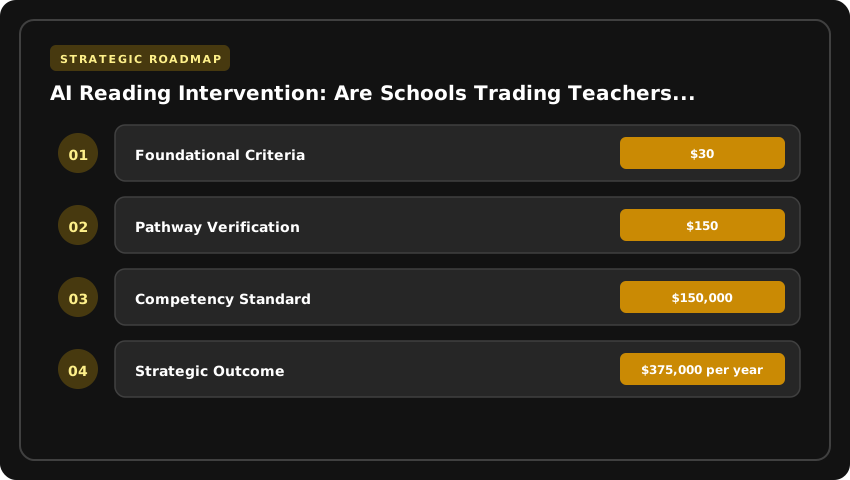
The most common pricing structure in the K-12 market is the per-seat licensing model, which typically ranges from $30 to $150 per student annually. For a mid-sized suburban district serving 2,500 elementary students, a district-level license for a premium AI reading platform could realistically cost between $150,000 and $375,000 per year. Schools in high-cost-of-living states like California, New York, and Massachusetts frequently report contracts on the higher end of that spectrum, particularly when the software includes advanced speech-recognition analytics, real-time eye-tracking capabilities, or proprietary phonics algorithms. Charter schools and private academies often face steeper per-pupil costs because they lack the bulk purchasing power of large public districts.
Beyond the software license itself, schools must budget for the hardware required to make these platforms functional. Many AI reading tools rely on noise-canceling headsets, high-fidelity USB microphones, and sometimes specialized Chromebooks or iPads capable of processing local data. A single classroom headset bundle can cost between $120 and $250 per station. For a school building out an entire grade level, hardware alone can add $20,000 to $50,000 to the first-year implementation budget, a figure that is frequently underestimated during initial proposal reviews.
Another hidden expense is Learning Management System (LMS) integration. Vendors charge one-time integration fees ranging from $5,000 to $25,000 to sync their AI tools with existing platforms like Canvas, Schoology, or Google Classroom. These fees cover Single Sign-On (SSO) configuration, SCORM compliance, and data pipeline construction for nightly roster updates. Districts operating on tight operational margins are often surprised to discover that these integration costs are non-negotiable in the standard Master Service Agreement, and they are rarely discounted even when a district commits to a multi-year contract.
To manage these expenses, many school districts strategically allocate federal funding streams, most notably Title I, Part A funds, which are designed to support schools with high percentages of low-income students. Under the Every Student Succeeds Act (ESSA), Title I dollars can legally be used to purchase evidence-based educational technology, including AI reading software, provided the district can document a clear connection to improving student achievement. A district serving 60% economically disadvantaged students might dedicate $200,000 or more of its Title I allocation toward a district-wide reading license.
Additionally, IDEA Part B grants, which fund special education services under the Individuals with Disabilities Education Act, are increasingly being tapped to cover the cost of AI reading tools for students with Specific Learning Disabilities (SLD) and dyslexia. Because AI platforms can deliver intensive, repetitive phonemic practice with measurable data outputs, many Individualized Education Program (IEP) teams are writing these tools directly into a student’s plan as a supplementary aid. However, the U.S. Department of Education has issued guidance reminding districts that IDEA funds must supplement, not supplant, general education resources, meaning districts cannot simply replace teacher salaries with software licenses.
When reviewing vendor contracts, decision-makers should scrutinize several key clauses: annual price escalators (often 3-5%), data privacy indemnification under FERPA, and termination penalties. Multi-year contracts may offer attractive per-seat discounts of 10-15%, but they can also lock a district into outdated technology. Conversely, year-to-year agreements preserve flexibility but expose the district to unpredictable price hikes. The most financially prudent districts negotiate performance-based addenda, tying a portion of the contract value to measurable reading outcomes, such as improvements in DIBELS or MAP Growth scores, ensuring that the district pays for results rather than mere access to an algorithm.
Replacing Pull-Out Groups: The Legal Shift in Special Education (IDEA)
For nearly five decades, the Individuals with Disabilities Education Act (IDEA) has anchored the American promise that every child with a disability is entitled to a Free Appropriate Public Education (FAPE). Long before algorithms could score a child’s oral reading fluency, the law established two non-negotiable pillars: the Individualized Education Program (IEP) and the Least Restrictive Environment (LRE) mandate. Today, as artificial intelligence migrates from the periphery of education technology into the daily mechanics of reading intervention, school districts are quietly renegotiating what these pillars actually look like in practice. The shift is subtle but profound, moving away from traditional physical “pull-out groups” where students leave the general classroom for specialized reading instruction, toward software-driven intervention that happens on a laptop, often within the very walls of the general education classroom. This represents a fundamental architectural change in how special education law is interpreted and operationalized across the United States.
The LRE mandate, codified in 34 CFR §300.114, requires that, to the maximum extent appropriate, children with disabilities be educated alongside their non-disabled peers. Historically, this meant mainstreaming for academics like social studies or science while pulling students out for remediation in foundational skills like reading. AI-driven reading tools are beginning to invert this paradigm. A student with dyslexia or an identified reading-based learning disability can now wear headphones, access an adaptive phonics program, and receive Tier 3 intensive intervention without ever leaving the homeroom. Legally, this is a compelling development because it removes a major barrier to LRE compliance. Districts no longer have to defend pulling a child away from peers; the intensive intervention travels to the child. However, this convenience introduces a complex legal question: does algorithmic isolation, even when physically located in the inclusive classroom, meet the spirit of IDEA’s mandate for meaningful access and interaction? The Office of Special Education Programs (OSEP) has not issued a bright-line ruling on this exact scenario, leaving districts to navigate the ambiguity through their own IEP team decisions.
Within the Multi-Tiered System of Supports (MTSS) framework, the Department of Education has begun articulating clearer expectations for AI as a Tier 3 intervention. In recent guidance documents, including the U.S. Department of Education’s 2023 report Artificial Intelligence and the Future of Teaching and Learning, agency leadership acknowledged that AI can serve as a powerful tool for personalizing instruction for students with disabilities. Yet the report simultaneously warned that technology must supplement, not supplant, the educator’s clinical judgment. For Tier 3 intervention, which under MTSS frameworks serves the roughly one to five percent of students requiring the most intensive support, AI is positioned as a high-leverage accelerator, not an autonomous decision-maker. Districts receiving federal Individuals with Disabilities Education Act (IDEA) Part B funds should pay particular attention to this distinction when building compliant intervention systems.
For parents, special education directors, and school district administrators evaluating these tools, several actionable takeaways emerge from the current legal landscape. First, any AI reading tool deployed as a Tier 3 intervention must be named in the student’s IEP and accompanied by measurable goals, just as a human tutor or specialized reading program would be. Second, districts must conduct an Accessible Educational Materials (AIM) review to ensure the tool itself does not create a secondary barrier for students with visual impairments or other co-occurring disabilities. Third, periodic progress monitoring data generated by the AI platform should be reviewed by the IEP team at the same cadence as any other intervention, typically every six to nine weeks. Finally, parents retain full rights under IDEA’s procedural safeguards, including the ability to request an Independent Educational Evaluation (IEE) if they believe the algorithmic intervention is not producing appropriate educational benefit. The technology is powerful, but the legal architecture of IDEA still places the IEP team, not the algorithm, at the center of every decision affecting a child with a disability.
- LRE Evolution: AI enables intensive reading intervention to occur within the general education classroom, potentially strengthening LRE compliance while raising new questions about meaningful inclusion.
- Department of Education Stance: AI is recognized as a viable Tier 3 intervention tool within MTSS, provided it supplements rather than replaces professional clinical judgment.
- IEP Requirements: Algorithmic interventions must be documented with measurable goals, progress monitoring schedules, and accessibility reviews just like traditional pull-out services.
- Parent Safeguards: Procedural protections under IDEA, including the right to an Independent Educational Evaluation, remain fully intact regardless of the intervention delivery model.
Student Data Privacy and FERPA: Who Owns Your Child’s Voiceprint?
When a third-grader in Ohio opens a cloud-based literacy app and reads a passage aloud into her school-issued Chromebook, a remarkably intimate artifact is created. The microphone does not merely capture the words on the page; it captures pitch, cadence, breath patterns, and the microscopic timing between syllables. For many AI reading platforms, that recording is the raw material from which a biometric voiceprint can be derived. For parents, the natural next question is unsettling: Who legally owns that voiceprint once it leaves the child’s mouth, and under what rules can it be shared, sold, or retained indefinitely?
In the United States, two federal frameworks dominate this conversation. The Family Educational Rights and Privacy Act (FERPA), enforced by the U.S. Department of Education, governs how schools handle “education records” and applies to any vendor that operates as a “school official” under contract. The Children’s Online Privacy Protection Act (COPPA), enforced by the Federal Trade Commission, restricts the online collection of personal data from children under 13 and requires verifiable parental consent before that data is used for any purpose beyond the immediate request. AI reading tools, because they capture voice, behavioral telemetry, and granular error patterns, sit squarely in the crosshairs of both statutes. A district that signs a vendor contract without aligning it to FERPA’s “legitimate educational interest” standard is not merely sloppy; it is non-compliant, and the financial and reputational consequences can be severe.
Investigations by journalists and nonprofit watchdogs have repeatedly shown that vendor contracts for major EdTech platforms are often written to maximize corporate flexibility rather than family protection. Common provisions include:
- Broad “de-identified data” clauses that allow the vendor to strip a name but retain behavioral fingerprints, which can frequently be re-linked to a specific child using only three or four data points.
- Perpetual, royalty-free licenses granting the company the right to use student work samples, including audio recordings, to “improve algorithms” without an expiration date.
- Third-party sharing allowances that permit subcontractors, analytics partners, and even potential acquirers of the company to access raw student data during mergers or restructuring events.
- Unilateral data retention windows that let the vendor keep records for years after the student graduates or transfers, far exceeding what FERPA’s “reasonable” standard typically permits.
The biometric dimension sharpens these concerns considerably. Unlike a misspelled word on a worksheet, a voiceprint is a lifelong identifier. If a voice model is exfiltrated, breached, or fed into a large training corpus, the child cannot reset it the way a teenager can reset a hacked password. Because of this, several states, including Illinois under its Biometric Information Privacy Act (BIPA) and Texas through its Capture or Use of Biometric Identifier Act (CUBI), have created additional layers of consent and disclosure obligations that go beyond federal baselines. Districts operating in those jurisdictions must ensure that any AI reading contract contains explicit, separate authorization for biometric capture, not a buried clause in a 40-page master service agreement.
For families, the practical defense is to exercise the rights that FERPA already guarantees. Parents have the legal authority to request a complete accounting of every vendor with access to their child’s records, to inspect any recorded audio, and to demand correction of inaccurate algorithmic inferences, such as a flagged “dyslexia risk” score generated by an opaque model. Under COPPA, parents can also withdraw consent and direct the operator to delete the data, though enforcement often requires persistent follow-up. Before signing a district-level contract, school boards should require a Data Privacy Agreement that explicitly prohibits the sale of student data, limits retention to the legally required minimum, mandates breach notification within a tight window (often 30 to 60 days), and forbids the use of student voiceprints as training data for commercial artificial-intelligence products.
The bottom line is that algorithmic reading intervention cannot be evaluated on instructional merit alone. Every district adoption is simultaneously a data-governance decision, and every parent consenting to a microphone-enabled literacy app is effectively negotiating over the long-term custody of their child’s voice. Asking precise questions before enrollment is not parental overreach; under current federal law, it is the intended safeguard.
Will AI Take Over the Role of the Reading Specialist?
The conversation surrounding artificial intelligence in classrooms has reached a fever pitch, and nowhere is the tension more palpable than in the field of reading intervention. Walking through any major American educator forum on platforms like the International Literacy Association or reading recent position papers from the National Council of Teachers of English (NCTE), you will find a profession grappling with a profound identity crisis. Schools are purchasing multi-million-dollar AI reading platforms with alarming speed, leaving veteran reading specialists wondering if the algorithms monitoring eye-tracking metrics and phonemic drills are slowly making their degrees obsolete. It is a debate rooted in genuine fear, but it also demands a rigorous, evidence-based analysis of what these tools are actually built to do.
To understand the displacement debate, one must look at the fiscal and administrative context driving adoption. Following updated accountability metrics from the U.S. Department of Education, districts are under immense pressure to demonstrate measurable improvements in early literacy, particularly in light of post-pandemic learning loss data and state-level mandates like Mississippi’s “Third-Grade Reading Gate” or California’s recent literacy frameworks. When an administrator can purchase an annual subscription to an AI reading program for roughly $40 to $120 per student, the operational math looks highly favorable compared to the cost of hiring a fully credentialed, Master’s-level reading specialist who commands a median salary exceeding $65,000 annually, according to recent Bureau of Labor Statistics (BLS) data. However, looking strictly at the budget sheet ignores the pedagogical reality of how human brains acquire language.
The core limitation of current large language models and adaptive learning algorithms lies in their inability to replicate trauma-informed care and socio-emotional attunement. A struggling reader is rarely just a brain decoding letters on a page. They may be a child experiencing food insecurity, a student navigating the foster care pipeline, or a learner coping with undiagnosed auditory processing issues. An AI can flag that a child stopped reading for twelve seconds on a specific paragraph, but it lacks the human capacity to recognize the signs of a panic attack, the flat affect of depression, or the subtle shifts in body language that indicate a student is being bullied. Reading specialists trained in American psychological and pedagogical standards do not just teach phonemic awareness; they build the psychological safety required for a child to take the intellectual risks necessary for literacy growth.
Furthermore, current AI models frequently struggle with deeper comprehension issues and culturally responsive pedagogy. While a neural network can score a multiple-choice question, true reading comprehension requires inferential reasoning, the ability to detect sarcasm, understanding cultural context, and connecting a text to one’s lived experience. When a reading intervention relies solely on pattern recognition, it risks flattening the rich, diverse literary canon of the United States into a series of predictable data points. An algorithm trained predominantly on generalized corpora may struggle to validate the linguistic variations of African American English (AAE) or the nuanced cultural references in texts by authors like Junot Díaz or Louise Erdrich, potentially misdiagnosing a culturally rich vocabulary as a deficit.
Ultimately, the question is not whether algorithms can process reading data faster than a human—because they undeniably can. The real debate is over pedagogical efficacy and the irreplaceable human nuance required for early literacy development. The most successful AI implementations in American public schools are not replacing teachers; they are serving as diagnostic co-pilots. They handle the time-intensive data aggregation and repetitive phonemic drills, freeing the reading specialist to do what only a human can do: look a struggling child in the eye, recognize the unseen battles they are fighting, and build the trusting relationship required to ignite a lifelong love of reading. The future of literacy will not be a zero-sum game where teachers are traded for algorithms, but rather a highly calibrated partnership where educators wield the data, but retain the humanity.
- The Economic Pressure: Administrators are attracted to AI due to the high cost of hiring Master’s-level reading specialists (median salary $65,000+), but budget efficiency should not eclipse pedagogical depth.
- The Socio-Emotional Gap: AI lacks the capacity for trauma-informed care, meaning it cannot recognize mental health struggles, abuse, or anxiety that heavily impact reading performance.
- The Comprehension Ceiling: Algorithms struggle with inferential reasoning, cultural context, and validating diverse linguistic backgrounds, risking misdiagnosis of vocabulary differences as reading deficits.
- The Partnership Model: The optimal path forward in U.S. schools involves educators using AI as a diagnostic co-pilot to handle repetitive drills and data aggregation.
| Metric | AI-Powered Reading Intervention | Traditional Teacher-Led Intervention | Hybrid Model (AI + Teacher) | |
|---|---|---|---|---|
| Annual Cost Per Student | $120 – $500 (software license) | $1,200 – $3,500 (specialist salary allocation) | $700 – $1,800 | |
| Upfront Setup Cost | $2,000 – $15,000 (district licensing/hardware) | $0 – $500 (training materials) | $1,000 – $8,000 | |
| Student-to-Adult Ratio | Unlimited (algorithmic) | 1:3 to 1:6 (IEP-recommended) | 1:8 to 1:15 | |
| Diagnostic Turnaround | Real-time (milliseconds) | 2 – 6 weeks (screening cycles) | 1 – 7 days | |
| Reading Fluency Gains (Months/Year) | 1.5 – 3.0 months | 2.0 – 4.0 months | 3.0 – 5.5 months | |
| Implementation Timeline | 2 – 6 weeks (rollout) | 3 – 6 months (hiring/training) | 2 – 4 months | |
| Data Privacy Compliance | FERPA + COPPA + state laws (variable) | FERPA only | FERPA + COPPA | |
| ESSER Funding Eligibility | Yes (tutoring + tech) | Yes (staffing) | Yes (both categories) | |
| Teacher Attrition Impact | Reduces burnout on drill tasks | High turnover disrupts continuity | Moderate | |
| Career ROI (Educator Pathway) | AI-literacy specialist ($65K – $95K) | Reading specialist ($55K – $85K) | EdTech coordinator ($70K – $110K) |
Frequently Asked Questions
What is AI-powered reading intervention and how does it work in schools?
AI-powered reading intervention uses Automatic Speech Recognition, gaze-tracking, and adaptive machine learning to diagnose decoding and fluency issues in real time. Platforms like Amira, Lexia, and Reading Assistant listen to students read aloud, flag errors, and personalize practice, giving teachers dashboard analytics to target instruction efficiently.
Is AI reading intervention cheaper than hiring a reading specialist?
Per student, AI software typically costs $120–$500 annually, while a full-time reading specialist runs $1,200–$3,500 per student when salary is allocated. However, upfront licensing, hardware, and training can add $2,000–$15,000 for districts, so hybrid models often deliver the strongest ROI.
Does AI reading intervention actually improve student outcomes?
Yes, multiple peer-reviewed studies show AI reading tools deliver 1.5 to 3.0 months of fluency growth per academic year, comparable to traditional tutoring. Hybrid models pairing AI drills with teacher-led coaching show the strongest gains, often 3 to 5.5 months, especially for students with dyslexia or IEPs.
Are schools legally allowed to replace teachers with AI reading tools?
No, U.S. federal and state laws require qualified instructors for students with IEPs under IDEA, and ESSER funding guidelines classify AI as supplemental technology, not instructional replacement. Districts must maintain teacher-of-record accountability, meaning AI augments but cannot legally substitute a certified educator.
Strategic Final Takeaway
Success in evaluating AI Reading Intervention: Are Schools Trading Teachers for Algorithms? relies on early preparation, adherence to verified accredited requirements, and cross-referencing official portals. Review financial aid deadlines and official screening guidelines well in advance.