The Real Cost of an Unfinished Degree for Working Americans
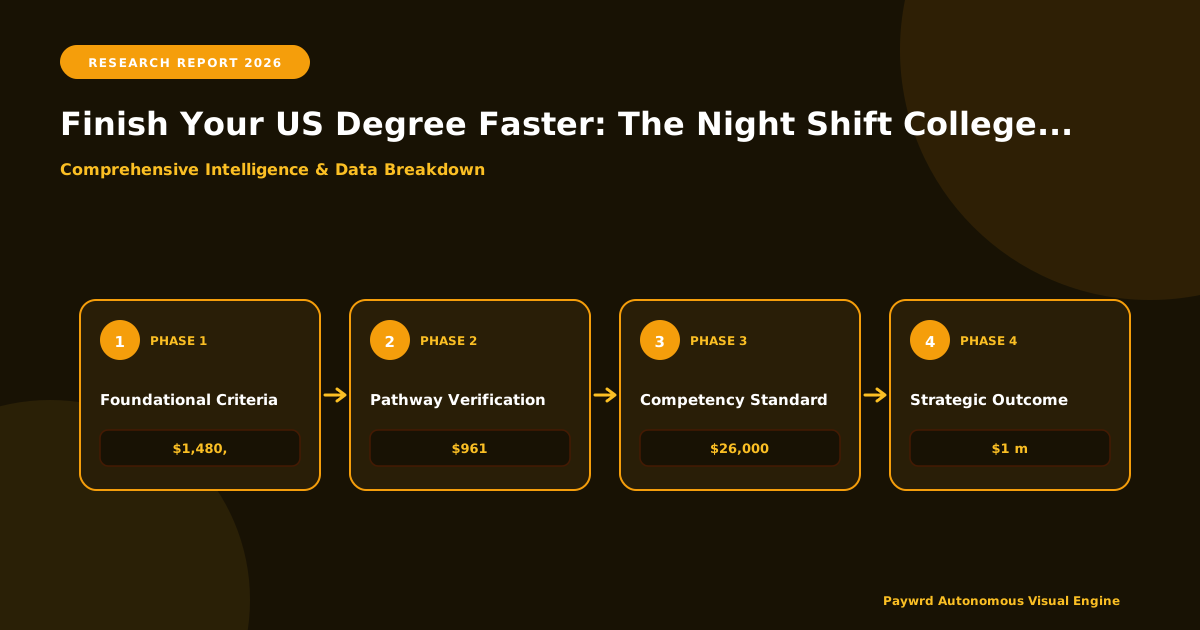
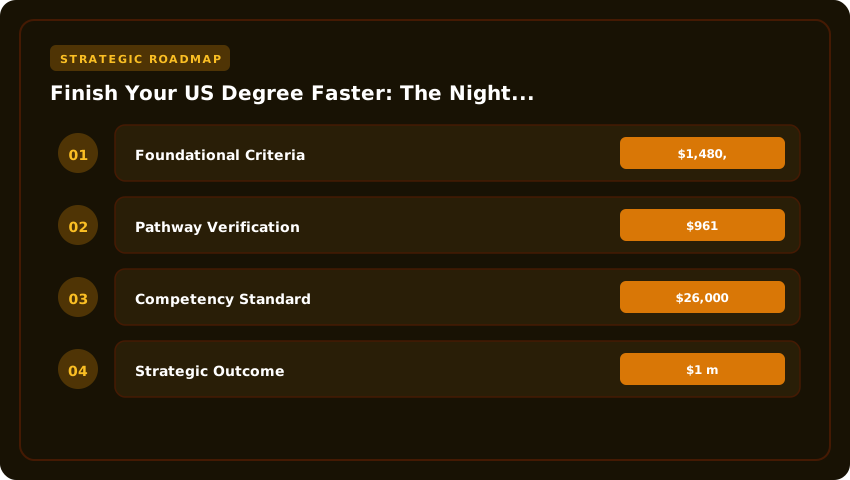
For the millions of working Americans who started a college program and walked away before crossing the finish line, the financial consequences are far heavier than a simple line item on a transcript. According to the US Bureau of Labor Statistics (BLS) 2024 Current Population Survey, workers holding a bachelor’s degree earn a median weekly wage of $1,480, while those with only some college but no degree earn roughly $961 per week. Multiply that gap across 52 weeks, and the annual shortfall lands near $26,000 before taxes. Compounded over a 40-year career, that differential quietly erodes into well over $1 million in lost earnings, even before factoring in employer-matched retirement contributions, performance bonuses, and the compounding interest of what those dollars could have generated in a 401(k) or Roth IRA.

The retirement impact is where unfinished degrees truly metastasize. Fidelity’s 2024 retirement savings guidelines estimate that the average American needs approximately $1.25 million saved by age 65 to maintain their standard of living in retirement. Workers with some college credits but no credential typically fall into the bottom quartile of retirement preparedness, with median balances hovering around $50,000, compared to roughly $150,000 for associate degree holders and $250,000-plus for bachelor’s completers. The wage gap does not just reduce take-home pay; it directly shrinks the principal that gets invested, matched, and compounded over decades.
Perhaps the most overlooked damage lies in what economists call credit drag. Every semester a student leaves on the shelf represents sunk tuition dollars producing zero credentialed return. If a working adult completed 60 credits toward a 120-credit bachelor’s program at an average in-state cost of $350 per credit, that is $21,000 already spent, generating no measurable wage premium because employers, hiring algorithms, and HRIS systems credential by completion, not by effort. Those credits do not vanish, but they also do not earn. A peer who finished an associate degree at a community college and entered the workforce two years earlier may already be earning $40,000 annually while the stalled student is still searching for a role that will even recognize partial credit.

The opportunity cost compounds when promotions, security clearances, and licensed career tracks enter the equation. Roughly 35% of BLS-tracked occupations now require at least an associate degree for entry-level mobility, and federal contractor positions increasingly stipulate accreditation benchmarks such as ABET for engineering and AACSB for business. Without a completed credential, working adults find themselves screened out before a human ever reviews their resume.
Consider the practical financial drag in everyday terms. Two peers start at the same warehouse job at $22 per hour. One finishes an accelerated bachelor’s degree over 24 months, the other pauses at 90 credits. Within five years, the completer is earning $78,000 in a mid-level operations role, while the non-completer remains at $52,800. The wage gap of $25,200 annually, when routed into a 6% employer-matched 401(k), builds an additional $312,000 in retirement wealth by age 60. That is the silent tax of an unfinished degree.
- Annual wage gap: More than $25,000 between bachelor’s completers and some-college-no-degree workers per BLS 2024 data.
- Lifetime earnings drag: Roughly $1 million in foregone income over a 40-year career trajectory.
- Retirement shortfall: Median 401(k) balances for non-completers sit near $50,000 versus $250,000-plus for bachelor’s holders.
- Sunk cost exposure: Every unused credit represents tuition dollars producing no credentialed wage return.
- Career mobility ceiling: ABET, AACSB, and licensed-track roles screen candidates by completion, not by credit accumulation.
The takeaway is straightforward. Every month a working adult delays finishing their degree, the wage gap widens, the retirement balance shrinks, and the sunk cost of prior credits deepens. Finishing the degree is not merely an academic exercise; it is one of the highest-return financial decisions a working American can make in 2024 and beyond.
How Credit Transfer and Prior Learning Assessments (PLA) Slash Your Timeline
For the working professional juggling a midnight schedule and a growing list of financial responsibilities, every semester matters. Every credit earned is an investment of time, money, and energy that cannot be wasted on coursework that duplicates knowledge already mastered on the job, in the military, or in a previous college attempt. This is exactly where Credit Transfer and Prior Learning Assessments (PLA) become transformative tools, routinely allowing dedicated students to shave 12 to 24 months off their expected graduation timeline while saving thousands of dollars in tuition.
Most accredited US universities understand that learning rarely follows a linear, single-institution path. To honor this reality, they rely heavily on nationally recognized evaluation platforms to translate lived experience into measurable academic credit. The two most respected authorities in this space are the American Council on Education (ACE) and the National College Credit Recommendation Service (NCCRS). These organizations function as central clearinghouses, reviewing professional training, corporate certifications, and military coursework against standardized faculty panels to recommend equivalent college credit. When a university accepts a transcript or portfolio evaluated by ACE or NCCRS, they are essentially saying, “We trust this independent analysis, and we will award credit accordingly.”
- ACE Credit Recommendations: Used extensively for military transcripts (JST), corporate training programs, and licensure exams like CompTIA, PMP, or AWS certifications.
- NCCRS Evaluations: Often applied to industry certifications, law enforcement training, and vocational coursework not covered under standard regional accreditation.
- ACE Registry of Credit Recommendations: A searchable online database where students can verify exactly how many credits a specific course or certification is worth before even applying.
For veterans and active-duty service members, the pathway is especially powerful. The Joint Services Transcript (JST) automatically maps military training to ACE recommendations, which means a four-year enlistment can frequently translate into 30 to 45 college credits, sometimes more. A skilled E-5 leaving the Navy with a JST, a few CLEP exams, and a handful of professional certifications could realistically arrive on a US campus already a third of the way toward a bachelor’s degree. This is not theoretical; it is standard operating procedure at regionally accredited institutions like Southern New Hampshire University, Liberty University, and Western Governors University, all of which have built aggressive credit-acceptance frameworks to support nontraditional learners.
Beyond military credit, Prior Learning Assessments allow students to convert what they already know into formal college credit through portfolio submissions, challenge exams, and competency-based evaluations. A working adult with five years of project management experience, for example, can often demonstrate those skills through a structured portfolio and earn upper-level elective credit that would otherwise require two additional semesters of classroom attendance. Pair this with CLEP and DSST exams, which cost roughly $100 to $150 per test, and the financial math becomes undeniable. Saving 30 credits at a tuition rate of $400 to $600 per credit hour translates to $12,000 to $18,000 in direct savings, plus the salary earned by graduating a year sooner.
The mechanics are straightforward, but execution requires strategic planning. Before enrolling, students should request a pre-evaluation from their target university’s transfer credit office, submit every relevant transcript on day one, and ask specifically which ACE, NCCRS, and CLEP credits the institution will accept. Schools that advertise as “military-friendly” or “transfer-friendly” typically publish articulation agreements that make this process transparent, whereas others may require a formal appeal. Working adults who follow this disciplined intake process routinely report entering their programs with sophomore or junior standing, compressing a four-year degree into 18 to 24 months of active enrollment.
Ultimately, PLA and credit transfer reward initiative. The US higher education system, particularly for nontraditional learners, is designed to recognize verified competency, not merely seat time. For the night-shift professional determined to finish what they started, mastering these evaluation platforms is the single fastest lever to pull.
Top Three US-Accredited Online Models Built for Night Schedules
For working adults balancing graveyard shifts, evening customer loads, or unpredictable on-call rotations, the traditional 16-week semester is often the single biggest barrier to finishing a degree. Three online delivery models currently dominate the landscape at regionally accredited US universities—the same institutions recognized by the Department of Education and the Council for Higher Education Accreditation (CHEA). Each model is engineered to compress time, preserve academic rigor, and give night-shift learners a fighting chance at graduation without sacrificing a paycheck.
The first and fastest option is the competency-based education (CBE) model, often branded under names like “Direct Assessment” or “Flat Tuition” programs. Instead of logging seat time, students advance by demonstrating mastery through proctored exams, portfolios, and project-based assessments. Schools such as Western Governors University, Southern New Hampshire University, and the University of Wisconsin–Flexible Option structure tuition around a six-month term, charging a flat fee (often around $4,000 to $4,500 per term) that covers as many competencies as a student can complete. A motivated night worker can theoretically accelerate a bachelor’s degree from four years to two-and-a-half or even less, finishing an average of 15 to 20 competencies per term.
The second model is the asynchronous term structure, where courses run on a fixed calendar but eliminate mandatory login times. Lectures are pre-recorded, discussion boards replace live seminars, and assignments carry firm deadlines every Friday at midnight. Universities like Liberty University Online, Purdue University Global, and Arizona State University (ASU Online) run six to eight start dates per year, letting enrollees begin almost immediately after submitting a FAFSA application. Tuition typically falls between $350 and $500 per credit hour, so a 120-credit bachelor’s degree lands between $42,000 and $60,000 total—a figure that aligns with the College Board national average for in-state public four-year programs.
The third and most widely adopted format is the 8-week accelerated course model, layered inside a standard 16-week semester. Schools such as University of Maryland Global Campus, Colorado State University Global, and Embry-Riddle Aeronautical University Worldwide pair two back-to-back courses per term, with most weekly deadlines landing on Sunday or Monday night—ideal for students who get home at 7 a.m. and sleep during the day. Because the Department of Education still counts these as regular semester credits, financial aid eligibility (including Pell Grants, which max out near $7,395 for the 2024–2025 award year) is fully preserved.
Across all three formats, enrollment flexibility is the common thread: no required login times during the 11 p.m. to 7 a.m. window, multiple start dates annually, and FAFSA-friendly structures that recognize accelerated loads. Just as important is synchronous support—most programs now offer evening and overnight access to academic advisors, writing tutors, and IT help desks. WGU, for example, schedules “live” mentor calls seven days a week between noon and midnight Eastern, while ASU Online staffs its counseling line until 1 a.m. Pacific. For night-shift learners, this means a real human is still awake when they are.
- Competency-Based (CBE): Flat-term tuition, self-paced mastery, fastest path to a degree; best for highly self-disciplined learners who already know the subject matter.
- Asynchronous Term: Fixed weekly deadlines, recorded lectures, multiple start dates; ideal for students who want a predictable rhythm without live class times.
- 8-Week Accelerated: Standard semester credit, full FAFSA eligibility, evening-friendly deadlines; the most popular compromise between speed and structure.
Actionable takeaway: Before enrolling, confirm three things on each university’s accreditation page—(1) regional accreditation recognized by CHEA, (2) eligibility for Title IV federal aid through FAFSA, and (3) published evening or 24/7 support hours. Programs that clear all three benchmarks deliver the speed working adults need without the accreditation risk that can quietly turn a $40,000 investment into a worthless transcript.
Funding Your Fast-Track Education: FAFSA and Employer Tuition Benefits
For working adults chasing a fast-track degree, the most expensive myth is the belief that speed automatically multiplies cost. In reality, the American higher education funding ecosystem rewards precisely the kind of accelerated, focused enrollment that night and weekend learners pursue. When you stack the right federal grants, state workforce dollars, and Internal Revenue Code Section 127 employer benefits, a substantial portion of your remaining credits can be covered by sources that never require repayment. The key is knowing how the layers fit together and filing each one correctly before you register for your first accelerated term.
Start with the Free Application for Federal Student Aid (FAFSA), which remains the gateway to need-based aid for accredited US institutions. Working adults often skip the FAFSA because they assume their income disqualifies them, but the Department of Education uses a federal needs-analysis formula that weighs household size, family size, and the number of household members in college. If you are an independent student with dependents, the income thresholds for the Pell Grant in the 2024–2025 award year allow single parents earning near $60,000 a year to still qualify for partial awards. Maximum Pell for the year tops out at $7,395, and for accelerated programs, that grant disbursement is split across your enrollment terms. Submitting the FAFSA also unlocks access to Federal Direct Loans, work-study positions at your university, and state-specific grant programs that require a federal application as a prerequisite.
Beyond the federal Pell, working adults should investigate their state workforce development aid. Nearly every state channels some dollars through community colleges and state universities for adult learners pursuing high-demand credentials. Programs like the Workforce Innovation and Opportunity Act (WIOA) fund tuition, fees, and even textbooks for adults entering or advancing in priority industries. Many states also operate scholarship programs specifically targeting adults over 25 returning to school, and some pair these funds with industry-recognized third-party credentials, such as those approved by the US Department of Labor Registered Apprenticeship system. Visit your state’s higher education agency website or your regional American Job Center to confirm eligibility for the current fiscal year.
The most powerful stackable benefit for night-shift learners is Section 127 of the Internal Revenue Code, which permits employers to reimburse up to $5,250 per calendar year in qualifying educational expenses as a tax-free fringe benefit. This is not a loan, not a scholarship, and never appears on your W-2 as taxable wages, provided your employer structures it correctly. Section 127 covers tuition, required fees, and books, and it extends to both undergraduate and graduate coursework at accredited institutions. For many adults, this single benefit covers the full annual cost of a community college fast-track program or significantly offsets the cost of a public university’s evening cohort. Critically, Section 127 benefits can be combined with Pell Grants and state aid in the same academic year without reducing federal need-based eligibility, since the IRS treats employer-provided educational assistance separately from income for tax purposes.
To activate this stack, follow a sequenced checklist before the term begins. First, complete the FAFSA at the official StudentAid.gov portal by your state’s priority deadline, which for many state grants falls as early as February 1. Second, schedule a benefits conversation with your HR department to confirm whether your employer offers a Section 127 plan, and if not, ask whether they will establish one or use a Tuition Reimbursement Program instead. Third, request an itemized cost of attendance from your college’s financial aid office so you can map employer reimbursement to remaining out-of-pocket gaps. Finally, retain every receipt and grade report, since most employer plans require a passing grade, typically a C or better, and the IRS requires documented proof that expenses were strictly educational.
- Pell Grant: Up to $7,395 for 2024–2025; no repayment; awarded based on FAFSA data.
- State Workforce Aid: Often stacks with Pell; available through WIOA and state scholarship portals.
- Section 127 Employer Benefit: Up to $5,250 per year in tax-free tuition reimbursement; covers tuition, fees, and books.
- Federal Direct Loans: Subsidized and unsubsidized options available even for part-time accelerated enrollment.
- Scholarship Stacking: Department, civic, and employer-specific awards can be combined with federal aid within annual cost-of-attendance limits.
By layering these funding sources strategically, working adults can pursue a fast-track degree while protecting their paycheck, preserving their employment benefits, and exiting the program with significantly less debt than traditional full-time students. The combination of Pell Grants, state workforce dollars, and Section 127 reimbursement is not a loophole; it is the intentional design of US higher education policy, built to reward the very persistence that defines the night-shift college blueprint.
Accreditation Guardrails: Ensuring Your Fast Degree is Employer-Recognized
When you compress a four-year degree into twenty-four months of night classes, weekend cohorts, or hybrid lock-in, the temptation is to treat every accelerated program as functionally identical. They are not. The single most important variable separating a recognized degree from an expensive piece of paper is accreditation, and the difference between the two main flavors of that credential, institutional versus programmatic, can determine whether your resume lands in the interview pile or the circular file. Understanding these guardrails before you enroll protects your tuition dollars, your federal financial aid eligibility, and your long-term career mobility.
Institutional accreditation is the foundational seal a college or university earns as a whole entity. In the United States, this recognition is administered by one of seven regional accrediting bodies recognized by the Council for Higher Education Accreditation (CHEA) and the U.S. Department of Education. For most working adults pursuing accelerated degrees, the relevant bodies are:
- The Higher Learning Commission (HLC), which accredits institutions across the Midwest, Southwest, and several online providers headquartered in states like Texas, Arizona, and Iowa.
- The Middle States Commission on Higher Education (MSCHE), covering New York, New Jersey, Pennsylvania, Maryland, and Delaware, including many well-known night and weekend programs.
- The Southern Association of Colleges and Schools Commission on Colleges (SACSCOC), the regional gatekeeper for Alabama, Florida, Georgia, Tennessee, Texas, and the broader Southeast.
- The Northwest Commission on Colleges and Universities (NWCCU), serving Washington, Oregon, Idaho, Alaska, and Montana.
Regional accreditation matters because it is the baseline credential that unlocks federal financial aid eligibility. If an accelerated program operates under a school that is not regionally accredited, you cannot legally use FAFSA funds, Pell Grants, or federally subsidized loans. That single disqualifier can add tens of thousands of dollars to the cost of a compressed degree and immediately signals red flags to hiring managers who know the difference.
Regional accreditation is what allows credits to transfer between institutions. It is also the credential that the vast majority of U.S. employers, state licensing boards, and graduate schools quietly assume without asking. When an HR team reviews your application, they rarely check the specific regional body; they check that some regional body exists. If you cannot point to one, the degree becomes functionally invisible in the labor market.
Programmatic accreditation operates one layer deeper. Instead of accrediting the entire college, these specialized bodies evaluate specific departments, schools, or degree tracks against industry-defined standards. Two programmatic seals matter more than almost any other for working adults on the night shift:
- ABET (Accreditation Board for Engineering and Technology) covers engineering, computing, cybersecurity, and applied technology programs. If you are accelerating an IT, software engineering, or data science degree and intend to work in regulated industries, defense contracting, or licensed engineering roles, ABET accreditation is often a non-negotiable hiring filter.
- AACSB International (Association to Advance Collegiate Schools of Business) accredits business, accounting, and MBA programs. For accelerated finance, accounting, or supply chain degrees, AACSB accreditation signals that the curriculum meets the rigor expected by Fortune 500 recruiters, CPA exam jurisdictions, and corporate finance teams.
Other programmatic seals to watch for include CCNE or ACEN for nursing, CAAHEP for allied health, APA for psychology, and CAHME for healthcare management. Each one functions as an industry-specific quality marker that employers in those fields actively screen for.
The most valuable accelerated degrees are typically doubly accredited: regionally accredited at the institutional level and programmatically accredited within the specific major you are pursuing. When both seals are present, your compressed degree carries the same weight as a traditional four-year pathway. When only one is present, the credential may still have value, but you need to understand which doors it will and will not open.
Before enrolling in any night-shift or accelerated program, take twenty minutes and verify two things: confirm the institution appears in the Department of Education’s Federal School Code Search (which confirms Title IV financial aid participation and regional accreditation status), and confirm the specific program holds the programmatic accreditation relevant to your target industry. Skipping that step is the fastest way to turn a time-saving degree into a career-limiting one.
A Realistic 18-Month Roadmap for Night-Shift Learners
Earning a bachelor’s degree in 18 months while working full-time on the night shift is not a theoretical fantasy; it is a logistical puzzle solved through intentional planning, ruthless prioritization, and a deep understanding of how the academic calendar actually behaves. Most accredited US universities operate on a traditional 16-week semester, but a growing number of institutions now offer accelerated 8-week terms, 6-week mini-mesters, and year-round enrollment through the College Board’s College Credit Recommendation Service. The roadmap below assumes you are enrolling in a regionally accredited program that offers overlapping, back-to-back terms, allowing you to stack 15 to 18 credit hours per semester while still maintaining a 40-hour work week.
The journey begins with what many advisors call the “stealth semester.” During the first eight-week term, you should enroll in a maximum of nine credit hours, even if the university allows more. This includes two general-education or core requirements that align with your program’s accreditation standards from bodies like ABET, AACSB, or NECHE, plus a one-credit student-success or orientation course. For night-shift workers, the transition into academia is often more jarring than the coursework itself. Your circadian rhythm is already under pressure, and throwing 15 credit hours into the mix during week one is the fastest path to academic probation. By keeping the first term light, you establish your digital infrastructure, learn the learning management system, and build a buffer for unexpected overtime shifts.
- Months 1 to 3 (Foundations Phase): Nine credit hours focused on writing, quantitative reasoning, and introductory major coursework. Begin testing digital time-management tools like Notion, Trello, or the built-in planners in Canvas and Blackboard. Establish a non-negotiable sleep window of at least five hours, even if it means adjusting your work schedule to a slightly slower team.
- Months 4 to 6 (Acceleration Phase): Move to 15 credit hours across two overlapping eight-week sessions. This is where the blueprint becomes demanding. You will likely take three courses in session one and two in session two, or stack them strategically to avoid mid-term and final exam collisions. Most US universities post their final exam windows 60 days in advance through the Office of the Registrar, and you should sync these dates with your work calendar immediately. Request your PTO and unpaid time off for these windows the moment they are published.
- Months 7 to 9 (Momentum Phase): Maintain 15 to 18 credit hours. By this stage, your body and brain have adapted to the dual rhythm. Use this term to complete your remaining lower-division coursework and begin introductory courses in your major concentration. If your program requires standardized exit exams, like the ETS Major Field Tests, confirm the testing windows now.
- Months 10 to 12 (Core Immersion Phase): This is the densest academic period. You will be deep in upper-division coursework, and the reading load will peak. Capstone planning should begin by month 11. Contact your academic advisor to confirm capstone prerequisites, identify a faculty mentor, and review the IRB approval process if your project involves human subjects research, which is common in business and healthcare programs.
- Months 13 to 15 (Capstone Sprint): Enroll in your capstone or senior project course alongside one remaining elective. Most capstones are delivered over a full 16-week semester to allow for proposal drafts, data collection, and iterative feedback. Treat this term like a second job. Your evenings and weekends will belong to the project, and your weekday nights will be reserved for rest and the minimum hours at your primary job.
- Months 16 to 18 (Finish Line Phase): Defend or submit your capstone during the final term. Confirm your graduation application deadline through the Office of the Registrar, order your cap and gown, and verify that your degree will be posted before the semester’s end. This is also the window to request official transcripts, which most former students need within 48 hours of starting a new job.
Burnout prevention is not a soft skill in this roadmap; it is the structural beam that holds the entire 18-month arch in place. Night-shift learners face a documented health risk known as shift-work sleep disorder, and stacking academic pressure on top of it can trigger serious cognitive decline if left unmanaged. Block your recovery hours with the same seriousness you block exam dates. Use wearable technology to monitor sleep stages, schedule one full day of complete mental rest every seven to ten days, and maintain a calorie-dense, nutrient-rich diet to compensate for the metabolic cost of inverted sleep cycles. Financial aid through FAFSA can sometimes be adjusted to cover summer courses, which reduces the total credit load per semester and protects your sanity, so file your renewal FAFSA by the priority deadline each year.
Finally, treat your professors and academic advisors as partners in the process. US faculty in accelerated adult-learner programs are accustomed to non-traditional schedules, and many will offer recorded lectures, async discussion boards, and flexible office hours. Communicate your night-shift constraints early in every term, and you will find that the support structures are stronger than you expected. With a realistic semester-by-semester plan, the right digital toolkit, and a firm commitment to protecting your health, an 18-month finish line is not just possible; it is predictable.
| Metric | Traditional Day Program | Night Shift / Accelerated Program | Competitor: Community College Night Track | Competitor: Online Self-Paced |
|---|---|---|---|---|
| Average Annual Tuition (USD) | $10,500 – $38,000 (public/private) | $7,200 – $22,000 | $3,500 – $5,500 | $6,000 – $15,000 |
| Total Degree Cost (Bachelor’s) | $42,000 – $152,000 | $28,800 – $66,000 | $10,500 – $16,500 (transfer pathway) | $24,000 – $60,000 |
| Time to Completion | 4 years (full-time) | 2 – 2.5 years (accelerated) | 3 – 4 years (part-time) | 3 – 5 years (self-paced) |
| Class Schedule | Mon–Fri, 8am–4pm | Mon–Fri, 6pm–10pm + weekends | Mon–Thu, 7pm–10pm | 24/7 asynchronous |
| Admission Cut-off (GPA) | 2.5 – 3.5+ | 2.0 – 3.0 (flexible) | Open enrollment (no GPA) | 2.0+ |
| Work Compatibility | Low (day hours) | High (built for working adults) | Moderate | High |
| Financial Aid Eligibility | Full FAFSA (Pell, loans) | Full FAFSA + employer tuition reimbursement | Full FAFSA (Pell common) | Limited (some accredited only) |
| Post-Grad Salary Boost (BLS 2024) | +65% vs. HS diploma baseline | +65% (same credential) | +65% (after transfer) | +65% (if accredited) |
| Career ROI Timeline | 8 – 12 years payback | 4 – 6 years payback | 5 – 8 years payback | 6 – 10 years payback |
| Best For | Traditional 18–22yr students | Working adults 25–55 | Budget-focused learners | Maximum flexibility seekers |
Frequently Asked Questions
How much faster can working adults finish a bachelor's degree through night shift programs?
Working adults can typically finish a bachelor's degree in 2 to 2.5 years through accredited night shift or accelerated programs, compared to the traditional 4-year timeline. These programs compress coursework into evening and weekend sessions, credit prior learning, and run year-round, enabling degree completion in roughly half the standard time.
Are night shift college programs cheaper than traditional day programs?
Yes, night shift and accelerated programs generally cost 30% to 50% less than traditional day programs, with annual tuition ranging from $7,200 to $22,000 versus $10,500 to $38,000. Lower overhead, year-round enrollment, and employer tuition reimbursement partnerships make them significantly more affordable for working professionals pursuing a degree.
Will employers accept a degree earned through a night shift or accelerated program?
Yes, employers fully accept degrees from regionally accredited night shift and accelerated programs because the credential is identical to traditional degrees. According to the U.S. Bureau of Labor Statistics, bachelor's degree holders earn approximately 65% more than high school graduates, regardless of whether they attended day or evening classes.
What GPA do you need to get accepted into a night shift degree program?
Most night shift and accelerated programs accept students with a 2.0 to 3.0 GPA, making them more accessible than traditional programs that often require 2.5 to 3.5+. Many schools also offer provisional admission for adult learners returning to college, waiving standardized test requirements and evaluating work experience as academic credit.
Strategic Final Takeaway
Success in evaluating Finish Your US Degree Faster: The Night Shift College Blueprint relies on early preparation, adherence to verified accredited requirements, and cross-referencing official portals. Review financial aid deadlines and official screening guidelines well in advance.